Projects


Mechanism of action of known longevity genes in mammalian cells


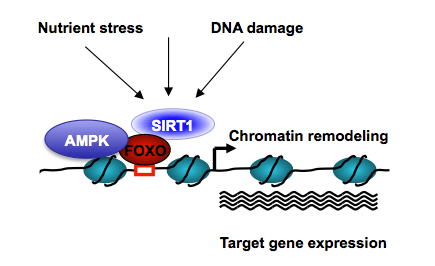
A first goal of the laboratory is to determine the molecular mechanisms of action of known longevity genes, including FOXO transcription factors, SIRT1 deacetylase, and AMPK, in mammalian cells (1-3).

We combine molecular biology with high throughput approaches (chromatin immunoprecipitation followed by ultra high throughput sequencing) to analyze how longevity genes integrate external stimuli to remodel chromatin and trigger long-term changes in gene expression. One of our hypotheses is that FOXO post-translational modifications serve as a 'molecular code' to recruit FOXO to subsets of target genes in response to specific environmental stimuli (4).


Role of longevity genes in neural stem cells during aging in mammals

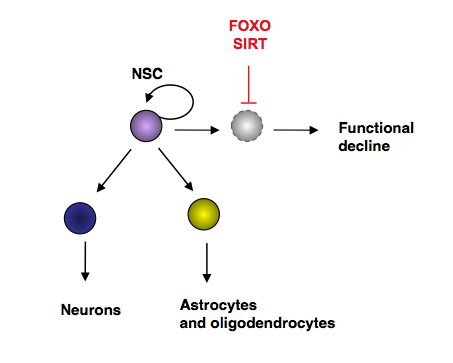
During mammalian aging, the pool of functional adult neural stem cells (NSC) decreases (5, 6). The depletion of functional adult neural stem cells (NSC) may contribute to cognitive changes associated with normal or pathological aging. Preserving the pool of stem cells may help in the repair of the nervous system and may prevent the decline in age-dependent cognitive functions. To gain insight into the molecular mechanisms responsible for the maintenance of adult NSC, we are currently examining the importance and the mode of action of FOXO factors and SIRT1 in regulating the adult NSC pool during aging, using NSC cultures and in vivo approaches in mice. Understanding the mechanisms underlying the maintenance of adult NSC should provide critical insights into the regenerative potential of these stem cells.


Learning and memory during aging in mammals

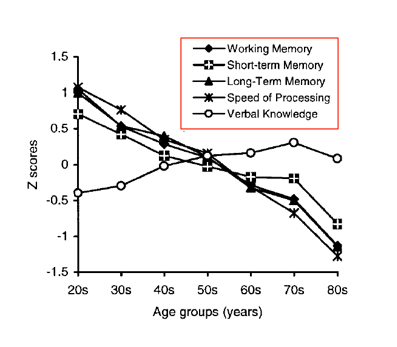
Cognitive functions, for example learning and memory, strikingly declines with age. As neural stem cells are thought to contribute to learning and memory, an exciting possibility is that the depletion in neural stem cells during aging may underlie at least in part the age-dependent decline in cognitive functions. Our laboratory generates new mouse models coupled with behavioral tests to study the importance of longevity genes, such as FOXO factors and SIRT deacetylases in cognitive functions during aging. Understanding the role of longevity genes in age-dependent behaviors will help identify ways to prevent the decline in cognitive functions during aging. 


Identification of new genes and processes involved in longevity using the short-lived invertebrate C. elegans

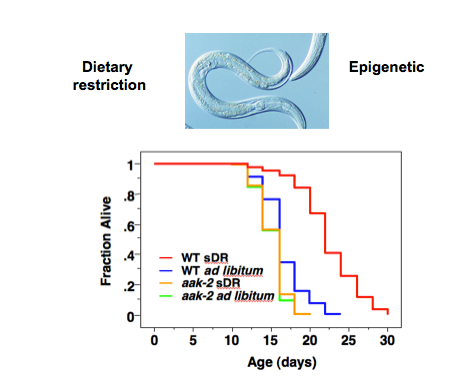
We are using the short-lived worm Caenorhabditis elegans to investigate how dietary restriction (DR) extends lifespan. DR, the restriction of food intake without malnutrition, has the remarkable ability to slow the onset of age-dependent traits and diseases in most, if not all, species. We have developed a DR regimen (sDR) in C. elegans and have found that the energy-sensing protein kinase AMPK (aak-2 in worms) is crucial for sDR to extend lifespan (7). AMPK acts in part by enhancing the activity of DAF-16, the worm FOXO transcription factor (7). AMPK also regulates FOXO factors in mammals (8). Using genome wide microarray analysis, we found that AMPK phosphorylation of human FOXO3 induces changes in the expression of specific target genes, including energy metabolism and stress resistance genes (8). We are continuing to investigate the importance of AMPK and FOXO in DR in worms and mammals (9).

In addition to our studies on DR, we are using C. elegans to investigate the importance of epigenetics, in particular chromatin regulation, in the aging process.


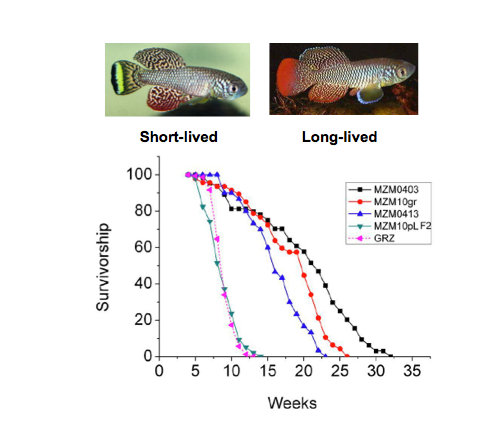
Development of the African killifish Nothobranchius furzeri as a new model to study longevity


The search for genes that control longevity has greatly benefited from invertebrate model organisms. However, identifying and studying novel longevity genes in higher animals has been hampered by the absence of short-lived vertebrate models. To circumvent this limitation, we are studying a new aging model system, the exceptionally short-lived killifish Nothobranchius furzeri (10, 11). This vertebrate species has a maximal lifespan of only 2.5 months and it comprises several natural populations that strikingly differ in life expectancy.
We are developing genetics and genomics tools to study longevity and aging in N. furzeri. Our goal is to use this rapidly aging model system to discover novel genes and mechanisms underlying longevity in vertebrates.


References

1. Greer EL, Brunet A. (2005) FOXO transcription factors at the interface between longevity and tumor suppression. Oncogene 24(50):7410-25. Abstract PDF

2. Carter ME , Brunet A. (2007) FOXO transcription factors. Current Biology 7(4): R113-114 . PDF

3. Greer EL and Brunet A. (2008) Signaling networks in aging. Journal of Cell Science. 121: 407-412. Abstract PDF Poster

4. Calnan DR and Brunet A. (2008) The FoxO code. Oncogene. 27: 2276-2288. Abstract PDF

5. Brunet A and Rando T (2007) From stem to stern. Nature 449:288-289. Abstract PDF

6. Salih DA and Brunet A (2008) FoxO transcription factors in the maintenance of cellular homeostasis during aging. Curr Opin Cell Biol. 20: 126-136. Abstract PDF

7. Greer EL, Dowlatshahi D, Banko MR, Hoang K, Blanchard D and Brunet A (2007) An AMPK-FOXO pathway mediates the extension of lifespan induced by a novel method of dietary restriction in C. elegans. Current Biology 17:1646-56. Abstract PDF

8. Greer EL, Oskoui PR, Banko, MR, Maniar JM, Gygi MP, Gygi SP, Brunet A (2007) The energy sensor AMP-activated protein kinase directly regulates the mammalian FOXO3 transcription factor. J. Biol. Chem. 282:30107-19. Abstract PDF

9. Greer EL, Brunet A. (2009). Different dietary restriction regimens extend lifespan by both independent and overlapping genetic pathways in C. elegans. Aging Cell. In press.

10. Genade T, Benedetti M, Terzibasi E, Roncaglia P, Valenzano DR, Cattaneo A, Cellerino A (2005) Annual fishes of the genus Nothobranchius as a model system for aging research. Aging Cell. 4:223-233. Abstract PDF

11. Valenzano DR, Terzibasi E, Genade T, Cattaneo A, Domenici L, Cellerino A (2006) REsveratrol prolongs lifespan and retards the onset of age-related markers in a short-lived vertebrate . Current Biology. 16:296-300. Abstract PDF