 Introduction Introduction Update 2000 Virus Profiles Update 2000 Virus Profiles NLV Norwalk SLV Sapporo Pathogen Cards St. Louis Encephalitis HPV2 Had5 Kuru HTLV-1 Guanarito Drug Profile Amantidine AZdU (CS-87) References Web Links NLV Norwalk SLV Sapporo Pathogen Cards St. Louis Encephalitis HPV2 Had5 Kuru HTLV-1 Guanarito Drug Profile Amantidine AZdU (CS-87) References Web LinksElizabeth Salas & Melissa Valadez Humans and Viruses Human Biology 115A Winter, 2000 Robert Siegel, Instructor Date completed: 3/6/00 |
. |
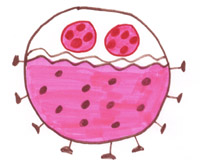 Guanarito Description: Member of the arenavirus family. Virus is enveloped with four particle polypeptides and is single stranded RNA. Power: Transmitted by wild rodents to humans and then causes hemorrhagic fever. Offenses Molecular Attack: Infects lymphocytes, macrophages and neurons that have already differentiated. Enters the cell through smooth wall vesicles and replicates in the cytoplasma. Clinical Manifestations: Guanarito causes fever, malaise, headache, sore throat, vomiting, convulsions, and hemorrhagic manifestations. Incubation/Length of Infection: Incubation is on average 6 days and infection can last 5-7 days before death or recuperation. 33% of the cases are fatal. Defenses Vaccine: None. Treatment: Passive antibody therapy and controls for fluid, electrolyte and osmatic imbalances. Drugs: No specific antiviral drug, ribivirin has been suggested. Behavioral: Rodent control and avoidance of wild rodents by humans. Game Action: Cause opponent platelet dysfunction and degeneration of the capillary beds which causes leakage of bodily fluids. Guanarito virus: the culprit behind Venezuelan Hemorrhagic Fever. |
. |