 Laurel Stell, PhD
Dr. Stell is in the Department of Biomedical Data Science, but Ophthalmology is
funding part of her salary to provide biostatistical support for its clinical
and laboratory research.
She has extensive experience in statistical modelling (developing predictors or
classifiers), inference, and multiple hypothesis testing; but she can assist in
many types of analyses. She is particularly adept at manipulating and
visualizing data to discover general patterns and highlight interesting features
and relationships—or perhaps errors. Furthermore, she can help guide your
research approach before you even have data.
To arrange a meeting to discuss how Laurel can help with your project, please
fill in the consultation request form.
Due to her other commitments outside of Ophthalmology, it is best to allow
plenty of time for her to fit your analysis into her queue. You should also
consider whether any of the resources listed below are more appropriate,
depending upon your needs and affiliations.
If you have funding or would like to include a biostatician on a grant, that
will also affect your options.
Other Biostatistics Resources
The Quantitative Sciences Unit
(QSU)
is a collaborative statistics unit in the Biomedical Informatics Research (BMIR)
Division in the Department of Medicine. They do not have an arrangement with
Ophthalmology, but they do have arrangements with
Stanford Cancer Institute (SCI), Child Health Research Institute
(CHRI, including applicants for their grants), and several other centers do.
For an up-to-date list, see the
QSU Project
Initiation Form (about a third of the way down).
The Department of Biomedical Data
Science (DBDS) provides free
time-limited consultation to investigators in the School of Medicine. It also
collaborates on longer term projects with other departments. In particular, if
you are designing a clinical trial, you should request a consultation with DBDS.
For more information about DBDS services,
click here.
Data
Studio is a collaboration between Spectrum (The Stanford Center for
Clinical and Translational Research and Education) and DBDS. Its fundamental
goal is to foster dialog between statisticians/data scientists and researchers
in clinics and laboratories.
Data Studio meets weekly during the fall, winter, and spring quarters.
One session per month is drop-in consulting. Most sessions, however, consist of
an extensive and in-depth consultation for a Medical School researcher.
Bioinformatics and Omics Resources
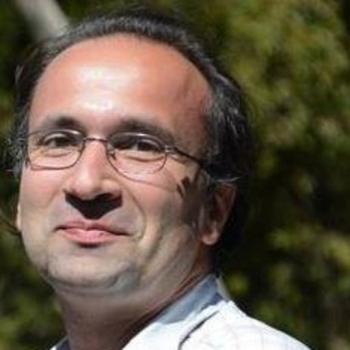 Bogdan Tanasa, MD, PhD
Dr. Tanasa collaborates with the faculty in the Department of Ophthalmology on
the bioinformatics analysis of the genomics datasets. His expertise is in
integrative genomics and in the computational analysis of a large variety of
HT-seq technologies (including ChIP-seq, RNA-seq, ATAC-seq, GRO-seq/PRO-seq, 4C,
5C, HiC, WES (whole exome sequencing), WGS (whole genome sequencing).
His Stanford email account is bogdan.tanasa.
As with "biostatistics", the term "bioinformatics" is very
broad, encompassing many different areas of expertise. The remainder of this
section gives a high level overview of some of the relevant domains and
resources.
The first step in omics research is to collect samples and perform laboratory
work. This might involve sequencing, which can be done by the
Genome Sequencing Service Center
(GSSC)
or the
Stanford Functional Genomics Facility
(SFGF) (which also provides microarray services).
The resulting FASTQ files must be aligned to a reference genome and then
quantified in some way. This is one of Dr. Tanasa's areas of expertise, and the
Genetics Bioinformatics Service
Center (GBSC) also does this. These Stanford service centers and
facilities are fee-based, whereas Dr. Tanasa is employed by Ophthalmology.
Once measurements have been made by whatever means, the data must be visualized
and analyzed to gain insight. Common goals are to discover associations between
genomic variants and phenotypes or to identify genes that are differentially
expressed between groups of samples. There are many software packages and
Web resources to help you do this yourself. Dr. Tanasa is also knowledgeable
about these pipelines, and the GBSC services extend to this area as well. If
your data require adapting the pipeline or interpreting unusual results,
additional statistical expertise may also be beneficial. Some examples of the
complications are:
- Are there batch effects? Are there effects from other factors, including
hidden factors? How should all these factors be taken into account without
biasing the experiment?
- When should data be log-transformed? Should the statistical model
include an interaction term or random effects? Which machine learning
algorithm is appropriate?
- Why don't the largest estimates of effect size or fold change have the
smallest p-values? Which is more important? How do I shrink fold change
estimates so that they agree better with the p-values?
- How should I correct for testing a huge number of hypotheses? What if I
have many phenotypes as well as many genes or variants? What if I am looking
for differential expression between more than two groups?
Dr. Stell and Dr. Tanasa can collaborate with you and with each other to ensure
that you have the necessary expertise for your particular analysis.
Dr. Stell also has extensive experience in statistical modelling, which is
relevant, for example, in developing biomarker signatures.
Once the initial analysis identifies a set of genes or proteins of interest,
further exploration of that set is often necessary in order to gain insights.
This typically involves incorporating annotation into the analysis, as in gene
set enrichment analysis for example. Dr. Tanasa can provide more information
about these techniques.
Data Management and Database Repositories
There are many SOM resources to help with data access. If you need to create
and manage your own database, you might consider using
REDCap, which requires funding for certain services,
or the more advanced services provided by the
Data Coordinating
Center (DCC), which is a service center.
Stanford also has access to many existing databases containing data from a wide
array of sources such as:
The menu at
the SOM IT Web page
lists some additional databases.
Other Resources
This is an initial start at listing SOM resources that might be useful to
Ophthalmology researchers.
It will be updated based on feedback and as the SOM updates its Web pages.
Some additional "meta" resources are: