It was published three years later as
Archaeological realities: embodiment and a critical romanticism
in M. Tusa and T. Kirkinen (eds) The Archaeologist and their Reality: Proceedings of the 4th Nordic TAG Conference, Helsinki, Department of Archaeology, 1995
Many of the ideas were worked out in more detail in my book Experiencing the Past (Routledge 1992).
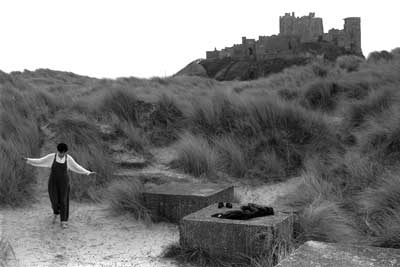
ONE: SOME EXPERIENCES OF VISITING
Amgueddfa Werin Cymru
By the village of Saint Fagan's near Cardiff is Amgueddfa Werin Cymru, the National Folk Museum of Wales. The wooded valley is setting for cottages, farmhouses, rural industrial buildings, a methodist chapel. The buildings have been brought from all over Wales and rebuilt here. Guide books give information about the different buildings: timber construction or the arrangement of accommodation for animals and people together in a long house. Uniformed museum officials are at hand to answer questions. But wandering around the exhibited structures is less about information than it is an evocation of pre-modern, pre-industrialised times. Fragmented: a collage of spare puritan methodism, dark smoky interiors, warm glow of blacksmith's fire, rural labour. No particular dates, simply pre-modern. You may buy traditional stone-ground flour and bread, taste organic farm cheeses. Schoolchildren visit, dress up, sit in old school benches and listen to teacher forbid them to speak in Welsh.
At one edge of the museum is a more recent addition. A 'Celtic' farm has been constructed: round houses in a small palisaded enclosure. The draughty walls and puddles on the earth floors do not make for congenial interiors. But a primary focus in the other buildings at Saint Fagan's is the homely interior. Period detail; contemporary consumers are sensitive to style and design. The bedspreads and furniture in Llainfadyn cottage; country kitchen of the Abernodwydd farmhouse from Powys. Period style. Perhaps we would all wish for a country cottage with interior one better than Laura Ashley. The round farm houses are called 'Celtic': here are connotations of those who are indigenous, belonging before Roman invaders. This is the Welsh National Folk Museum. The Museum's theme is the folk, a term which raises images of folk costume, ideas of national identity, belonging and attachment to the countryside, land, the soil. It may be somewhat quaint too: folk tales and fairies; cauls and love-spoons. Hitler's volk was more than a little different.
The institution and discourse of the museum supply an authenticity - this is all accredited by an academic and authorised body. Money and resources have been invested by the state. The transported buildings were carefully chosen because of their value to history, to Welsh history, to the history of the Welsh people, the lowly folk rather than great public figures. The museum curates, takes care of the material history in its keeping.
The museum and heritage
Complaint may be made that this is a very particular authentic Welshness which is being presented. What of the major nineteenth and twentieth-century experiences of the south Wales valleys - coal mining and steel production? There is a row of industrial workers' cottages, but again the vehicle to understanding is domestic interior. Saint Fagan's is reminiscent of John Ford's film How green was my valley (1941) - Welsh miners' singing community, wandering down the hill from the colliery pit head, mams at doors with roast dinners waiting. Staged romanticism.
The comparison with Hollywood is not an arbitrary one. Outdoor museums such as Amgueddfa Werin Cymru invite comparison with heritage centres and theme parks. The lack of heavy and detailed interpretive presence offering information and historical, chronological and social context could bring the criticism that visits verge on the historically incoherent, being more to do with spectacle and entertainment than the 'real' past . Another 'Celtic' village has been built at Castell Henllys, a genuine prehistoric hillfort in Dyfed, west Wales. This was originally the project of Hugh Foster an entrepreneur who developed the London Dungeon, with its vignettes of medieval and gothic torture and horror. Visitors at Castell Henllys are greeted by a plastic mammoth.
Amgueddfa Werin Cymru is concerned with Welsh heritage: the rural life of Welsh people in 'the past'. For us to visit. The London Dungeon presents a dank and black entertainment of medieval racked bodies and talking executed monarchs, all under a nineteenth-century railway viaduct. A diorama, son et lumière, reenacts the great fire of London, 1666, every half an hour or so. English heritage?
What might be some of the things which would come under a heading of English heritage? A thatched country cottage; Sunday cricket on a village pitch; the smell of wild garlic in a spring bluebell wood; ornamental fountain before a Vanbrugh stately home; disused lime kilns by a drovers' track over a sheep moor; fish and chips eaten from newspaper; oak trees; Beefeaters and ravens at the Tower of London; a pint of cask ale; a ruined Norman castle ... .
Eurodisney and authenticity
Outside of Paris and east along the Marne is now to be found Eurodisney. There you can fly in a gondola through a window in a London terraced house, out with Peter Pan into the night sky and over to Never-never land. On an underground boat trip swashbuckling model pirates sack a town of oldendays; a stuffed goat bleats as the runaway mining train careers out of control; ancient holograph ghosts feast in Norman Bates's house from Hitchcock's Psycho.
Much of Eurodisney makes reference to time and temporalities: lost and better pasts, nostalgias, storyland historical romances, progress and technological futures. Heritage generally, taking it as legitimate to write of a unity 'heritage', references time and the past. The archaeological, that is the material past, is being used more than ever. And a major complaint against heritage is that it involves an ignoral or distortion of the 'real' past; heritage contaminates. A typical response of an archaeologist may be to check the references to the past that are made in the cultural work of heritage, proposing instead a 'better', more real or authentic account, less contaminated by spectacle and the present, more in line with the discipline of archaeology. The Dyfed Archaeological Trust and archaeologist Dr Harold Mytum assist the new National Park owners of Castell Henllys in presenting an educational experience, and an archaeological 'experiment', such as that of Peter Reynold's Iron Age farm at Butser in England (Reynolds 1979). The past is to be decontaminated from the present and in this the rational and archaeological pursuit of knowledge of the past is preserved. On one hand criticism is made on the grounds of authenticity; on the other hand those assemblages of artifacts and experiences such as I have just outlined for museums and heritage are less the concern of conventional archaeologists than cultural critics. I doubt many archaeologists visit Eurodisney for archaeological reasons.
Authenticity? The country cottages of Saint Fagan's are as authentic as they can be; they are the real thing. You might expect Eurodisney to be cheap and shallow - it is not. The old disused mine is carefully staged with all sorts of 'genuine' artifacts and equipment brought from industrial workings in the United States; in this it fascinates and is not easily dismissed as superficial. In 'Toad Hall', which is presented as an English pub (without the beer), are served fish and chips. Cliché perhaps, but the designers have, in detail and ambience, excelled in producing a non-pub which is far more 'authentic' than many English pubs I know.
So what is the difference between Amgeuddfa Werin Cymru, Castell Henllys, other sites aiming at historical and archaeological respectability, and places such as Eurodisney?
Archaeologists gather objects. Archaeologists interested in the past do not want fakes. They select those to be studied on the basis, ultimately, of age and authenticity, originality. But authenticity is not an intrinsic property or essential quality. What would be an essential quality of 'authenticity'? Truth to self? If so then the hope for a quality such as authenticity involves abstract definitions of self (object self) and truth, on the basis of which the inessential and contaminating may be excluded. This is all very philosophical and difficult. Alternatively, and more usually, the archaeologist prefers to guarantee authenticity through context - where the object comes from, the traces remaining of the object's 'present'. Although the traces of the past are now part of our present, authenticity and the value of a genuine artifact to (archaeological) knowledge depend upon it being removed from the present. If you mix up old artifacts and spectacle, entertainment, interests of the present, then that old artifact is of less use to proper archaeological concerns such as producing knowledge of the past.
(As I have indicated for Castell Henllys, a proper and respectable mixing of authenticity and entertainment is that for purposes of education. The designers of Jorvik Viking Centre in York learned a great deal from Disney's 'imagineers', and produced an entertaining trip in a time car to a reanimated Viking settlement and through to an archaeological excavation frozen in time (Wishart 1984). But, arguably, Jorvik is considered more respectable than Disney. Why? Because the spectacle sticks to the facts of the past and is educational? Or because the profits go back into archaeology?)
Value and desire
I have made reference to value and use. What use is an entertaining experience to archaeology? What is value in this context? Value may be exchange value, what something means to someone else, the value of something for an other. Or it may be use value, the relevance of an object to a purpose or interest. Use value refers to the object as a tool. Tools are fitted to some purposes, and are useless for others. Use value is the relevance of an object to a purpose or interest. Here archaeologists are exercising choice in selecting and gathering artifacts (and experiences) according to archaeological purpose. It is important to note that both forms of value include acts of choice on the part of agencies beyond the object itself. In this way authenticity and value are about desire.
To think of authenticity as essential and intrinsic obscures the relation of exchange which exists between past and present. It is to forget that the object's value is decided in moving from past to present through the work of desire. Archaeologists want what they find and use. What is found is not naturally 'authentic'; its 'original' context is not natural. (What is natural about the comminglings of the cultural garbage heap, of the abandoned home? Only perhaps the entropy, decay and rot). There is no archaeological 'record'. What is found becomes authentic and valuable because it is set by choice in a new and separate environment with its own order, purpose and its own temporality - the time coordinates of the discipline archaeology which give the object its date. This is a moral setting.
The systems of value according to which archaeologists gather and order their 'finds' are not natural then, but tactical and strategic. This is not to write arbitrary. But the archaeologist's choice is no more or less meaningful than the choices and juxtapositions of Eurodisney imagineers. To recognise choices made makes archaeology and Disney comparable and commensurable. No longer are there archaeologists on one side virtuously holding on to the past while on the other Disney corporation adulterates for contemporary interests of profit and perhaps the American way of life. Here there is no reasonable choice and we can only suppose that all those people who visit Eurodisney are stupid or conned or both. Both archaeology and Disney are mobilising heterogeneous assemblages of artifacts, reason, ingenuity, experiences, knowledges, interests, purposes. And we can now judge both.
The value of heritage: consumption
Disney's and heritage's choice of things is made according to criteria which are very different from those of archaeology. Heritage is not about the attractive presentation of a past as it is understood by archaeology. The power of heritage, its seduction, is that it is about signification - things meaning for what we are now. Heritage is a symbolic exchange like sacrifice, wherein a victim is given in exchange for a favour from an other - this for that. Heritage is a sacrifice of the past for the present. But this does not mean that the past is necessarily of no importance. In fact the opposite is true of sacrifice; it is vital that the victim is appropriate and correct for its purpose. It must be scrutinised thoroughly to achieve the power of sacrifice which is communion with an other. What is this other? It depends upon the heritage site, but it is ex hypothesi to do with things and qualities which are desired.
The symbolic exchange of heritage is about sacrifice and consumption (of the victim) rather than accumulation and the hoarding of new knowledge. In this logic the meaning of the past does not lie in the dusty cellars of a museum. The meaning is what the past can do for the present. Nor does consumption mean that the past is necessarily served up for a consumer society, suitably trimmed and cooked. Consumption (potentially) means that it is taken within the self .
Up another of the south Wales valleys is a site of industrial archaeology, the Big Pit at Blaenafon. On a bleak and scarred hillside, snow-flecked when I last visited in October, is one of the few remnants of the South Wales coalfield, in its heyday at the turn of the century, the biggest in the world. The pit was closed in 1980, then opened again three years later as a visitor centre. The colliery is not cleaned and 'tarted up', other than at the entrance and reception. Bits of machinery lie around. The pithead is worn, dirty and used. Ex-miners take visitors down the pit and walk them around the now disused workings. The miners speak about the history of coal mining, but the chronology is imprecise. They speak of the way it was; was, because work stopped. No romanticising of the past, very little nostalgia. Just talking about what they did and showing us where and how. Here was a simple contact with another order of experience. Mediated by a vitality - the life of the ex-miner and his experiences expressed in anecdote and incidental detail, and by a site which had not been sanitised, but left. In the pit baths, again just left, a plain photo exhibition expanded with old pictures of miners and a few stories told mostly through contemporary journalism. They added to a physiognomy of Blaenafon.

Big Pit, Blaenafon, South Wales
Disney helped construct many of us in childhood, whether we like it or not. Generations have grown up with those animated and animal features, with manifold entertainments. This is all referenced in a visit to Eurodisney. So too those mysteries of earlier childhoods - pirates and 'the past', the exotic, adventures and escapes, nourishing nostalgias and dimmed memories. Was it really all like this?
I believe that this symbolic exchange is the vital energy of heritage, an energy which we might both beware and recruit. Above all it is this exchange which makes heritage accessible to people other than those acquainted with the academic value system of archaeology. Archaeologists might learn from this.
Affective experiences
The experiences and impressions of heritage, such as those heterogeneous assortments I have listed, seem to be tokens of a (post)modern condition of fragmentation. Now the heritage site may not fit into a coherent and chronological account. Sites are interpreted for me, but in spite of the didactic reliance on words (guide books and interpretive signs scattered around a museum for me to digest), heritage is about experiences of encounter and imaging. Not the objects and sites themselves so much as what they say of us, of our selves, of national or local identity, what they symbolise and evoke. What it was to be rural Welsh; the experiences of a mining community; experiences of 'fun', the wonder of childhood, fabled storyland pasts and futures at Eurodisney. These are not primarily intellectual experiences where facts and knowledge about the past are acquired from the official learned guide book. They are affective. And like the disorder of memory, heritage is piecemeal. In Britain heritage places considerable emphasis on this relationship with memory, relating sites and objects with images, sounds, impressions of a sort of cultural collective memory. Things we may think we may hear from our grandparents.
Romance and the haunting past
The eclipse of academic values of 'rational' knowledge by sentiment, sensation and melodrama may be termed romanticism. The mobilisations of the past in the service of nationalist and regional identities (with no necessary reference to the academic) add weight to the use of the term, given the traditional association of romantic ideologies and nationalism. There are grounds here upon which criticism can validly be made. Sensation and melodrama often use cliché and stock characterisation and scenes for a predictable and easy response. The particularity, otherness and difference of the past may be ignored because upon these work is required. The past is not attended to. We may wish to criticise nationalist sentiment when past evidences are ignored. Again however I stress that these criticisms cannot claim that the past is hereby being contaminated by the present. Criticism is of the character of the relationship between the past and the present. I want to consider this relationship in expanding upon the notion of romanticism, learning from these mobilisations of the past in the service of heritage.
There is an artificial lake at Eurodisney in the American West. You can take the Mississippi paddle steamer, a smaller river boat, or 'indian' canoes. On the river boats the character at the tiller talks to his dozen or so passengers. In French, German and English he tells of his life on the river Mississippi, points out features of Westworld and local friends of his. He stays in character. But his friend is an animated dummy on a rocking chair at a cabin by the water, water which is a weird shade of green.
The guide at Blaenafon Big Pit also told of his times and points out things of note. He just shows you around in circumstances which are as staged as Westworld. The character at Eurodisney just shows you around too. You know it's not 'real'. He is a character, and plays his part well. Visitors are there to use their imagination. In this perhaps Blaenafon and Eurodisney are not comparable. But there is another difference in the type of experience afforded. Much of Eurodisney is as sterile as the lurid green water; which is not to say that it does not attract. The antique leather volumes shelved at Toad Hall are very collectable, but try to take down to leaf through the copy of Pope's Iliad and you find it is glued to the fine hardwood shelving. The machinery and equipment at the disused mine have all been imported from Montana. It is all in place as if just left there. Empirically it looks right. But it isn't. The underground machinery has mostly been removed from Blaenafon and the coal workings are empty. In this it is not anything like the way it was: Blaenafon has changed and the visitor perceives this. But the empty underground stables echo, resonate, evoke. Blaenafon haunts. The ghosts at Eurodisney are the special effects in the replica clapboard house on the hill.
Again I want to stress that the haunting of the past is not to do with 'authenticity', meaning the simple material and empirical presence of the past. Many museum displays, traditional and contemporary, are as sterile, sanitised and dead as Eurodisney. The authenticity of Blaenafon is the character of the changes we perceive it has undergone.

Tintern Abbey: J.M.W. Turner 1794
Tintern Abbey: memory, loss and imagination In the Welsh Marches along the river Wye is Tintern Abbey, a ruin now in the care of the National Trust. William Gilpin used the Wye Valley in his definitions of the picturesque (1782, 1792). Girtin painted it in 1793, Turner in 1794. Tintern Abbey is an archetypal beauty spot, a jewel of English heritage. William and Dorothy Wordsworth visited the Wye in 1793 and again in 1798.
The second visit became the reason for a poem whose subject is the interplay of memory and imagination. William Wordsworth had visited five years earlier; he examines his memories, his experience of place and what memory and time have done with them. The poem is Lines composed a few miles above Tintern Abbey during a tour. July 13, 1798. The date is the eve of Bastille Day. The title makes it clear that the poem is not about the abbey, but the Wordsworths were on a tour such as those commended by Gilpin. The poem may not be about the ruin, but it does reflect on the meaning of place, natural objects and sensation. I suggest that a great deal of archaeological interest can be gained from a reading of this careful exploration of relations between self and what was, between self and that which is other.
Under a 'dark sycamore' (10), Wordsworth compares his memories with what he now sees.
And now, with gleams of half-extinguished thought,
With many recognitions dim and faint,
And somewhat of a sad perplexity,
The picture of the mind revives again (58-61)
He writes of the mind's picture, but the poem is not simply concerned with pictures represented by words:
Once again
Do I behold these steep and lofty cliffs,
That on a wild secluded scene impress
Thoughts of more deep seclusion; and connect
The landscape with the quiet of the sky. (4-8)
Here are fusions and translations which go beyond the pictorial: the cliffs impress thoughts of more deep seclusion, and the thoughts connect the landscape not to the sky, but to its quietness.
I cannot paint
What then I was. The sounding cataract
Haunted me like a passion: the tall rock,
the mountain, and the deep and gloomy wood,
Their colours and their forms, were then to me
An appetite; a feeling and a love,
That had no need of a remoter charm,
By thought supplied, nor any interest
Unborrowed from the eye. (75-84)
The colours and forms of waterfall, rock, mountain and wood are the elements of a painting of the picturesque post card. But here the waterfall haunts like a passion, and the forms and shapes of things are experienced not simply in themselves but as an appetite, a desire for nourishment. This is all beyond mere thought. Here feelings and things intermingle in evocations and associations of experience. Such evocation and association involve the work of imagination upon experiences and relations with natural, objective things. The 'natural' world of objects is
the mighty world
Of eye, and ear, - both what they half create,
And what perceive; well pleased to recognise
In nature and the language of the sense
The anchor of my purest thoughts, the nurse,
The guide, the guardian of my heart, and soul
Of all my moral being. (106-11)
Here is a creative union of person or self and object or nature. We half create as well as perceive nature because senses are not wholly passive but highly selective. Choice of what is perceived amounts to a kind of creation and it is guided by memory, searching for continuities in the linking of earlier and later experiences of things. But this creativity is also the natural and empirical anchor of 'purest thoughts'.
This is a unity then with the object world. Rooted in creativity and the imagination, it is more than a simple sharing of materiality or corporeality or objectivity. It is a principle of reciprocity between self and object world.
So Wordsworth hears humanity in nature:
To look on nature, not as in the hour
Of thoughtless youth; but hearing oftentimes
The still, sad music of humanity, (89-91)
And the unity is a disturbing one:
a sense sublime
Of something far more deeply interfused,
Whose dwelling is the light of setting suns,
And the round ocean and the living air,
And the blue sky, and in the mind of man:
A motion and a spirit, that impels
All thinking things, all objects of all thought,
And rolls through all things. (95-102)
Things are not fixed but shifting and flowing in a creative communion between self and otherness.
What has happened to his memories of standing by the river Wye? He has felt the forms of scene, the 'soft inland murmur' (4), 'plots of cottage ground' (11), 'hedge-rows, little lines of sportive wood run wild' (15-6). Forms felt and restored, renewed in 'purer mind' (29). These are not accurate images, simply pleasurable snap-shot memories of the picturesque. They involve feelings of 'unremembered pleasure' (31). These are feelings and moods which cannot be put into words. And they bring to him an
.. aspect more sublime; that blessed mood
In which the burthen of the mystery,
In which the heavy and the weary weight
Of all this unintelligible world,
Is lightened (37-41)
The strangeness, otherness and unintelligibility of the object world become sensible:
We see into the life of things (49)
What do we have here? We may consider Wordsworth's examination of these experiences as mystical and irrational. Unlike Wordsworth we may be content with picturesque sensation and spectacle, postcard tourism. We might ascribe them to a field separate from the archaeological. But is it not an impoverishment to hold that the only contribution an archaeologist may make to the understanding of a visit to a site such as Tintern Abbey is to supply a measured plan of foundations? Who are we to look to, if not to archaeologists, for guidance about the action of time upon material culture, about the place of the past in the present, what may be done with it and how it may be perceived? Wordsworth was exploring the aesthetic, which may be defined as the intelligence of perception. Archaeological experience too involves the perception of the material past. Should archaeologists not attend to this intelligence?
Tintern Abbey holds that simple picturing or representation are inadequate models of memory or experience. There is more to reality, objects and experiences than what can be captured by reason's dissection of the empirical. This is revealed in Wordsworth's consideration of the temporal gap between his two visits to this place. Memory selects and elaborates, working on associations and evocations. This work has been part of the changes he has undergone since the first visit. So the experiential loss of the past, its ruin, is converted by the imagination and by reason or thought, contemplation, into poetic gain:
That time is past,
And all its aching joys are now no more,
And all its dizzy raptures. Not for this
Faint I, nor mourn nor murmur; other gifts
Have followed; for such loss, I would believe,
Abundant recompense. (83-8)
The gain is one of reconstructing the past, renovation; it lives on (Wordsworth hopes desperately for continuity through memory, experience and into the future), changed.
Nature and its objects can haunt. Things, times and experiences evoke harmonies and associations other than what they are: things are in motion, just as the beauty of things harmonises in the scene before Wordsworth. Involved is the creative power of the mind and of intelligent perception, a reciprocity between the poet's self and Nature, the other which stimulates him to all this feeling and discovery. Wordsworth calls this the sublime: the otherness, the independence of the object world, its fundamental mystery which can never be captured (it is 'heavy' and 'unintelligible'), yet which at the same time is sensible, perceived and thought. Haunting; evocation; the ineffable remainder even after scrupulous description; mystery; independence: these are the life of things, and discovered in experiential loss or ruin (Shanks 1993).
Experiences of archaeological reality
Visits are a primary mode of archaeological experience. Sites which may come under the heading heritage are visited in people's leisure time; archaeologists themselves visit each others' excavations, visit sites for survey, travel to museums to view collections. I argue that archaeology is as much a set of experiences (such as a type of visit) as it is a body of methodological principles or of techniques. Techniques themselves are far more than neutral algorithms, and involve different modes of experience of the material past, different skills acquired. Thin sectioning a ceramic fragment and viewing it under a microscope in polarising light is a way of experiencing a pot no more or less meaningful than filling a teapot, lifting it and pouring. Both involve a set of (conventional) operations performed to a purpose.
It may be argued that archaeologists should concern themselves with the 'real' past rather then what is done with the past in the present. But the objects of the past will not simply speak for themselves. They have to be perceived by us, measured, counted, examined, whatever. If archaeologists wait passively for the past to appear they will have nothing of the past because it will rot away or be ploughed up or demolished in some industrial or redevelopment project. Archaeologists have to incorporate the objects of the past in their projects. They have to be active. Potsherds will not thin section themselves and lie on a microscope slide under the gaze of a languorous archaeologist. Archaeologists must attend to the past. Archaeological knowledge has to be produced. Acting upon, attending to the past, producing knowledges of the past: these are dimensions of archaeological experience. And they are inseparable from the things of the past. There would be no 'real' past without them.
If it is objected that the past happened, that this is its reality with which archaeologists should concern themselves, what are archaeologists to do? Suppose that the past stopped being itself at some point in time, stopped being real? The objects traces of the past are with us now. Is this not part of the reality of the past? Are they less real than what they were then? Are we to suppose that it does not matter to Skara Brae that Gordon Childe arranged its excavation? Without the storm that uncovered the site and without the subsequent excavation we would not know of Skara Brae. But, it may be argued, the site was there all along. The past happened, this is its reality and archaeologists look at the traces of that reality. This is fair enough, to a point. It is quite permissible to believe that Skara Brae was there all along, but how would you know? Are archaeologists to invent a time machine and check that Skara Brae was there in 1413, 806, and all other times between and beyond? But, a reply comes, scientific observation shows us that materiality has duration. Excavate Skara Brae and the stone construction (and any C-14 dates) signifies its duration. This is precisely my point. A house does not stop being real when it is abandoned and collapses, when it ceases to be tied to the history of the people who once lived in it. That house has its own history. Other things keep on happening to it - it rots and decays, worms work their way through its walls and floors. In that we do not perceive this, it is the secret life of things. But then at some point the history, the life, the reality of that house may again involve a person, some people, archaeologists. In discovering the house and excavating it they change it, turning it into a spoil heap, photographs, museum exhibits, macrofaunal samples. The house becomes real evidences. All these changes are part of the historical reality of the past. The history of that house doesn't stop; it keeps on going. And part of this history is archaeological work and its experiences; therein are reciprocally joined the histories of people and things. Deny this and so too is denied the possibility of archaeological knowledge .
All this is elaboration of the simple observation of the duality of the artifact from the past: it was then and it is now. This is the root of one of the basic fascinations of archaeological experience. Through the category of experience I argue that archaeology and heritage are comparable and commensurable because they are both active mobilisations of people and things from the past. Heritage projects are concerned with work done on the past for the present; as projects they look forward too (to expansion, more visitors, conservation and such). Archaeologists, visitors, things, times, feelings, perceptions, images, books, places are related. Heritage and archaeology both deal with perceptions and experiences of the times of things and how these are connected with knowledges of who we are, have been and want to be.
A significant difference is that heritage often explicitly focuses upon the place of the past in the present. This is foregrounded, not least because heritage attends to those who will be visiting or who want to relate to the past. The difficulty of giving a precise definition of heritage, and the dangers of treating as a unity such a disparate and heterogeneous assemblage (exceptions and anecdotes contrary to any particular argument can usually be found) attests to the dispersal of heritage through indeterminate fields of feeling, sentiment, culture, knowledge, experience, many of which are not consciously or discursively formulated. Courses in Cultural Resource or Archaeological Heritage Management are academic attempts to colonise, to service the heritage 'industry'. For most academic and professional archaeology these are concerns separable from producing knowledge of the past. The conventional main task, I suggest, is to make sure that heritage and all it represents does not stop archaeologists from doing what they want to do.
I have tried to raise the issue of the judgement of experience, how some visits are sterile, others live and edify. Examining different forms of visit brings awareness of the dangers of an uncritical and romantic appropriation of the past. Easy sentiment, spectacle and melodrama may be profferred in the place of work done upon the past. Cliché, stereotype, stock metanarratives or myths (for example nationalism) may take the place of careful empirical attention to the past as 'other', as an agent reciprocal in our self definition. There are many such 'consumerist' experiences where gratification comes from the act of consumption, abstract consumption where the item consumed is of no importance or is assimilated with no effort, without reflection or critique. A consuming interest is one which is self-gratifying, introverted and erosive, returning nothing. I have suggested that consumption of the past may also be seen as an exchange: the past renovated as it is taken within the self, providing material for personal and cultural construction. This reciprocality is the potential power of heritage - the past developed for the present. Reciprocality was also the subject of Wordsworth's Tintern Abbey.
Romantic poetics
These are all issues of a romantic poetics. I am treating the romantic here not just as that complex movement of European thought and culture from the eighteenth to nineteenth century, but as an attitude, as aspect. I define the main features of the romantic as follows :
- local self-assertion as opposed to universal systems which may be termed arrogant;
- an attention to the ordinary and the particular;
- an interest in the darker side of experience in the sense of that remainder which always escapes the claims of a rational system;
- defamiliarising what is taken as given, revealing the equivocality of things and experience;
- reality conceived as historical process;
- an attitude critical and suspicious of orthodoxy, because of the impossibility of any final account of things.
I will sketch the lineaments of a critical and romantic archaeology. The intention is to render archaeological reason and knowledge accountable to the present; to bring archaeological reason on a par with other experiences which may be termed archaeological; thereby to realise the necessary inseparability of archaeological knowledge and heritage management; to attend to the autonomous historicity or 'life' of the past through archaeological accounts; to find a rational and necessary place in archaeology for dimensions of experience other than the intellectual or scholastic.
TWO: ARCHAEOLOGICAL SKETCHES FOR A CRITICAL ROMANTICISM
From the history of the same and classical archaeology ...
Is it not curious that the same stories crop up in archaeology over and again? The story, an imperialist one, of conquest and takeover, invasion and acculturation, was common in traditional archaeology; prehistory used to be explained entirely in this line. Another, more recent, narrative of prehistoric archaeology is that of competition between wealthy individuals and conspicuous consumption of luxury exotic and imported goods. Going under the title of prestige-goods economies, these are proposed as the motors behind many an ancient society . Again, it is not an unfamiliar story. Processual archaeology has developed from anthropology a universal classification of types of society: bands, lineage societies, chiefdoms, states, and their variants . These can be found throughout history and across the globe.
Great stretches of history become familiar and accountable under such stories and explanations. Is this reasonable? Well yes, common threads of what it is to be human may be expected to run through prehistory. As homo sapiens sapiens has been physically present for several tens of thousands of years it might reasonably be expected that history will form a unity of sorts. This is a 'classical' archaeology, operating under the rule of the same (Ricoeur 1984). Prehistory is reasonable, subject to reason's schemes; cyclical (stories recurring); and the tendency is to eliminate or marginalise the wonder and variability of the archaeological past (awe as irrational and unreasonable). One of its methods is classification whereby a large number of examples are taken and then analysed according to how they are similar, the same, what they have in common. This is a legitimate strategy for coping with the immense empirical variety and particularity archaeologists have to deal with, but a side-effect is that much is blurred in the revelation of common categories. Classification does not give the general picture but the average. It is not a general picture because it is not possible to assess the norm or the variations and their relationship, nor the variability of variability. It cannot cope with particularity: why is one chiefdom different to another; why are they all not the same?
... to a romantic sublime
An alternative may come under the label of the romantic sublime. Instead of smoothing over we can also attend to that which does not fit, to the rough and irregular, to the texture of things. Everyday life is not neat and tidy. History is a mess. The sublime attends to the equivocal, to the absences in our understanding. Wordsworth focused on the gap, revealed by the character of memory, between what is and what was. Similarly the houses of Skara Brae are in ruins, and the archaeological focuses upon the gap between the lived past and its ruin now. Conspicously in archaeology there can be no final account of the past. Because it is now an equivocal and ruined mess, but also because even when the past was its present it was to a considerable extent incomprehensible. So much has been lost and forgotten of what never was particularly clear. We are not classical and omniscient gods but immersed in equivocality, everyday uncertainty. What really is happening now? There are no possible final answers.
Wordsworth cannot 'picture' his experiences and his past. How do you represent a castle? We can measure it, plan it, count the stones, note the condition of the masonry and fabric, note the sequence of construction. These are usual activities of the medieval archaeologist organising their perceptions. But why stop there? There is so much more information regarding how it may be perceived. Architecture cannot simply be about drawing elevations and floor plans, estimating quantities of materials and specifying a sequence of construction. Building is about so much more.
Turner's paintings of castles are about the action of light upon building in a transformed picturesque idiom. The castles are put in a setting which is a unity of the natural and the cultural. Is this less objective than a measured plan? The archaeologist subjectively attends to the edges of stones and walls and translates this information into lines upon paper. Turner attends to the setting and play of light across a landscape and translates this into oil and pigment upon canvas. Both archaeologist and Turner work upon reality. Turner is less interested in empirical information than accuracies of another kind. A measured plan says little about all those treatments of and references to castle architecture, all the reverberations through medieval power in the land, the picturesque and gothic, Mervyn Peake and Franz Kafka, to conceptions of heritage.
The clear drawings, plans and sections of an archaeological report rationalise and linearise. The past is carefully dissected as a corpse by the pathologist. But an anatomical atlas contributes only partly to an understanding of living process . The living process in this archaeological context is not that of the past, but of the excavation of the past, the convergent histories of objects and archaeologists. This is a heterogeneous and contingent (there is nothing necessary about it) assemblage of people, actions, equipments, disciplines, projects old and new, career trajectories, events in the past, decayed remnants ... . If we were to report objectively the detail of an excavation, all the resonances and associations, all the thoughts, materials and events, the result would be very confusing and of perhaps infinite length. So the paradox is that specificity of detail brings into doubt the validity of sensory evidence, and points to the necessity of creative choice. Turner's accuracy of depicting light upon architectural landscape leads to a blurring of other details. The measured plan leads to a blurring of other informations.
Materiality and the necessity of poetry
Equivocality and the sublime mean that we can never get to raw reality. There is always more. A pot thin sectioned and viewed microscopically explodes into other worlds of micro-particles and mineral inclusions. How do we depict this pot or the castle and all it is and was? Because reality is ultimately ineffable, poetry is necessary. And discovery is invention. The archaeologist uncovers or discovers something; they come upon it. An inventor may be conceived to have come upon a discovery. Discovery and invention are united in their etymology: invenire in Latin means to come upon, to find or invent. Invention is both finding and creative power. The logic of invention, poetry and the imaginary is one of conjunction, making connections. It is both/and, between self and other; not either/or. The pot found by the archaeologist is both this and that (vessel and mineral inclusions), it is there and here, past and of the present. Archaeology's poetry is to negotiate these equivocations and make connections. This is the work of imagination.
Compare how Wordsworth's imagination worked between what he was, and the memories he had of his first visit to the Wye, and what he had become, compare his notion of the sublimity of nature's object with the following:
The task of poetry's unceasing labour is to bring together what life has separated or violence has torn apart. Physical pain can usually be lessened or stopped only by action. All other human pain, however, is caused by one form or another of separation. And here the act of assuagement is less direct. Poetry can repair no loss but it defies the space which separates. And it does this by its continual labour of reassembling what has been scattered. ... Poetry's impulse to use metaphor, to discover resemblance, is not to make comparisons (all comparisons as such are hierarchical) or to diminish the particularity of any event; it is to discover those correspondences of which the sum total would be proof of the indivisible totality of existence. (Berger 1984, p96-7)
Equivocality and horror
The notion of materiality as equivocal refers also to the strangeness of things, their mystery or indeed horror. We are again here in the gaps between ourselves and that which is other than us. Poe wrote a strange (and ludicrous) story about a man's fascination with the world around him (Berenicë, 1980 [1835]). 'This monomania, if I must so term it, consisted in a morbid irritability of those properties of the mind in metaphysical science termed the attentive' (1980, p20). The subject of the story attends obsessively to the thing-ness of things. His cousin Berenicë is dying of a consumptive, wasting disease which erodes her beauty:
The eyes were lifeless, and lustreless, and seemingly pupilless, and I shrank involuntarily from their glassy stare to the contemplation of the thin and shrunken lips. They parted; and in a smile of peculiar meaning, the teeth of the changed Berenicë disclosed themselves slowly to my view. Would to God that I had never beheld them, or that, having done so, I had died! (1980, p23). His cousin expires; his fascination continues. He is found to have disinterred her body, out of his senses, and extracted her teeth, and she to have been buried alive.
Horror fiction is about such themes of morbidity, the materiality which is ourselves, the relations between our categorisations and what is left out. The living dead, from zombies to vampires. It confronts absence or the formless, explores the gap between self and other. And horror is not really about fear; it is about fascination. Strange worlds, making visible the unseen, discovery. And a desire to know, to pursue fascination, to confront the other, the imaginary which has not yet been caught and tamed by the symbolic (Jackson 1981).
Heterogeneity
The equivocality of materiality and the otherness of particularity, the sublime, are aspects, I contend, of the archaeological. They contribute to the fascination of archaeology: the discovery of things from the past; the setting of the past in the present, and our contact with it. Because this attention to texture which escapes classification is outside of qualities of sameness (the homogeneity of what is contained within the class), it may be termed heterogeneity.
The autonomy of the past
The old pot found by an archaeologist is equivocal also because it belongs both to the past and to the present. This is its history. And the equivocality confers upon the pot an autonomy because it is not limited to the moment of its making or use, or to the intentions of the potter. It goes beyond. The archaeologist can look back with hindsight and see the pot in its context, so time reveals meanings which are accessible without a knowledge of the time and conditions of its making. The pot transcends. In this it has qualities which may be called timeless.
Here also historicism (understanding in historical context) must be denied, otherwise we would only be able to understand a Greek pot by reliving the reality of the potter, a reality which anyway was indeterminate and equivocal. We would be fooling ourselves in thinking that we were appreciating and understanding the art and works of other cultures.
Pots are often used as a means to an end by archaeologists. They are used for dating a context; they may be conceived as telling of the past in different ways. Historicist interpretation reduces the significance of a cultural work to voluntary or involuntary expression: the pot expresses the society, or the potter, or the date. But there is also the pot itself, its equivocal materiality, its mystery, which open it to interpretation.
On the other hand the pot does indeed preserve aspects of its time. So the integrity and independence of the pot does not mean that it does not refer outside of itself. It means that no interpretation or explanation of a pot can ever be attached to the pot forever, claiming to be integral or a necessary condition of experiencing that pot. The autonomy of the pot is the basis of opposition to totalising systematics: systems of explanation or understanding which would claim closure, completeness, a validity for all time. We must always turn back to the pot and its particularity.
The autonomy of the past is also the reason why heritage has no necessary need of archaeological interpretation. It can build its own authentic structures. Authentic because archaeological method has no monopoly on the creation of knowledges and truths about the material past. Does a painting of a castle by Turner reveal no truths of its object in comparison with archaeological treatment? Were there no truths about the material past before the formalisations of archaeological method from the late nineteenth century onwards?
Ruin, decay and understanding
There is a gap between the autonomy and dependency of the pot. What are the conditions of this gap? If we were back in ancient Korinth working in a pottery we might have a good awareness of the meaning of a black figure pot. If we were the one who actually made the pot then it would very much be dependent upon us. But its materiality, equivocality, heterogeneity always withholds a complete understanding: the clay is always other than its maker; the pot is always more than its classification. People may interpret in all sorts of different ways. The material world provides food for thought. This may not be of much concern for most of the time, but it becomes crucial when controversy arises .
There is another source of the tension between autonomy and dependency and one which is the basis of the archaeological. The pot was made long ago in Korinth and depended upon the potter taking clay and giving it form, relating it also to knowledges and structures which went beyond the potter. But the potter, Korinth, its people and buildings, the conditions wherein similar pots were made and used are mostly gone. The pot remains. It is a fragment, part of a ruined past, and independent through its materiality, temporality, its duration. The pot is autonomous now because it is no longer the past due to the death, decay and loss which have occured.
Poe's short story about the obsessive fascination of material particularity and its transcendence or mystery is headed by two lines of poetry:
Dicebant mihi sodales, si sepulchrum amicae visitarem,
curas meas aliquantulum fore levatas
(My friends told me that if I visited the tomb of my beloved I would find some little alleviation of my cares).
Death, decay and fascination attend one another.
So the tension within the pot between dependency and autonomy is a tension between its expressive (or significative) character and its materiality. It is a gap between, for example, an image (which has an autonomous existence) and its meanings. Or between the sound of a word and its meaning to which it cannot be reduced. To bridge these gaps requires effort, work, the time of decipherment. This work is one of reconstruction, putting back together the pieces which have been separated.
When a pot becomes part of the ruin of time, when a site decays into ruin, revealed is the essential character of a material artifact - its duality of autonomy and dependency. The ruined fragment invites us to reconstruct, to exercise the work of imagination, making connections within and beyond the remnants. In this way the post-history of a pot is as indispensable as its pre-history. And the task is not to revive the dead (they are rotten and gone) or the original conditions from whose decay the pot remained, but to understand the pot as ruined fragment. This is the fascination of the archaeological.
The sacred fascination of the past
The transcendence of a work from the past is a condition of its authority and contributes greatly to its fascination. It is a quality of the sacred; this authority once belonged with the sacred image. Consider an icon: the image, the physical painting is more than the simple form that it represents, that of a saint or deity. Objects can have cult value. Benjamin relates this to a quality of aura (1970a and 1970b). Many cultural works even today acquire a mystique which turns them into 'cult objects': from Harley Davidson motorbikes to Doctor Marten Boots to Leica Cameras. Many of these are 'collectables'. It is also clear that many are closely tied to sub-cultural identities. The concept of a 'designer' article also attempts to tap this cult value.
Here the artifact is reaching a condition of the inexpressive. The analogy of (material) culture as text is one which has taken a great hold in archaeology and the social sciences . The idea is that things form systems of communication which are like the systems and structures of language. If this analogy is followed in this context we can say that the fascination held by cultural works involves aspects of language which cannot be reduced to communication. The sacred text may be held to be the word of God, more than what it communicates, and possessing an authority which forbids the posing of those normal questions which test the validity of communication by comparing it with experience (did the person mean what they say? perhaps they were mistaken?). Magical formulae and slogans also belong with this aspect of language which is not reducible to communication. Attention is shifted to the texture of language itself .
This is the topic of many art works which reference prehistoric artifacts and monuments: Richard Long's landscape sculpture for example; see also the artists in Lucy Lippard's book Overlay (1983). It is also where many 'fringe' archaeologies lie: interests in those mysterious and mystical aspects of the past which escape orthodox scientific discourse: dowsing to ley-lines.
There is a fundamental point to be learned here. It is that things (or indeed words) are not simply signs. They only become signs, expressing and standing arbitrarily for something else, in certain circumstances. Language is more than a tool for communication; it has its own texture which is independent of our intentions. So too with objects: they are dependent on people, but also autonomous.
Embodying the archaeological
Archaeology is more than method and techniques and a body of knowledge concerning the past. Over the last ten years and more a good number of archaeologists have argued that archaeological knowledge cannot be isolated from contemporary society and culture as neutral knowledge: archaeology is situated in its present . I am developing this realisation by drawing out archaeology's embodiment. Archaeology is not only of the mind, but also of the material body. To hold this is not very exceptional. The archaeological past can arouse powerful feelings. I have homed in on some experiences of visiting. These, of course, are not peculiar to archaeology, but there is something which may be termed archaeological about many visits. The archaeological is to do with our relationships with the material world, its character and temporality. It includes how we perceive and represent these relationships. This is why it is possible to consider together orthodox academic archaeology, the houses at Saint Fagan's, a reconstructed Iron Age hillfort, Eurodisney, a poem by Wordsworth, paintings by Turner, a horror story by Poe. The archaeological is a means of forming an assemblage of such experiences and constructions. The archaeological is an aspect, an aspect of people's being in the world.
This is prior to formulations of method and the development of techniques; these are specific to the history of the discipline archaeology and are contingent. The conventions of archaeology, the discipline and discourse, have no abstract necessity.
To explain this, let us suppose that current archaeological method is rational and objective, as rational and objective as it can be made. This is surely the way we would wish it. What then of times before the formalisation of such scientific archaeology. Were archaeologists in the 1920s less rational and objective? Perhaps they too were working towards rational and objective method only they weren't as developed as we are; but this can be forgiven because we have built upon their work. But what about attitudes towards the material past before the formalisation of the discipline after the Enlightenment. People then, and in some quarters today, had all sorts of views incompatible with rational and scientific archaeology. Stone tools were celestial phenomena; history was conceived according to religious teaching, there being no room for prehistory with a creation date of 4004 BC. Native American people may express no desire to have archaeological knowledge of the past because their spiritual traditions give them what they need. Is it to be supposed that these are religious dogma, irrational belief, opposed to rational knowledge? If so a dualism is erected between religion, society, history and belief on one side, and science, nature, rationality and universality on the other. One is conceived contingent and weak, the other objective, strong and necessary. We archaeologists are, of course, on the right side. We have reason and the quest for truth. This is no way to go about understanding other attitudes towards the archaeological, because those who disagree with orthodox method are taken for irrational or mad fools from the start . Those who believed (or believe now) in Archbishop Ussher's creation date of 4004 BC have been duped by religion; those who believe in the sanctity of the prehistoric landscape, ley-lines and all are stupid fools or cranks.
I have argued that the archaeological, conceived as a mode or aspect of experience prior to the formalisations of method and technique, is a way of bringing together different attitudes to relations with the temporality and character of the material world. The attitudes and experiences are comparable, but that does not mean they are all equally valid. I have indicated some means of judgement according to a respect for the autonomy and independence of the material artifact .
Here is a way of understanding the history of the discipline. No longer is there a story of the inexorable progress of reason (a principle detached from history), but different and commensurable ways of dealing with the archaeological.
To consider that archaeology is first and foremost a particular set of rational methods and techniques throws immediate suspicion and doubt upon those things and people who are (and were) outside of orthodoxy and do not adhere to those methods and techniques. Instead it might be argued that archaeology is not first a substantive, the noun 'archaeology', a separable field or discipline. As an adjective, archaeological, all sorts of experiences and practices become comparable. We are able to make connections and locate archaeology firmly in the present.
************************************************************************
A careful attention to the archaeological reveals the autonomy of things. Their materiality is equivocal; there is always more to what they are. We do not just passively absorb their reality, but we need to choose what we are interested in and to work upon the equivocality or heterogeneity. Things always need reconstructing in the sense of work done upon them. So the artifact is a sort of ruin. The passage of time also opens up associations and connections which go beyond an artifact itself, its simple classification and information about it. This going beyond is something essential about an artifact. It is not an addition because its reality was always equivocal and multiple.
How do archaeologists deal with all of this?
THREE: THE ARCHAEOLOGICAL IMAGINATION
Heterogeneity and exact fantasy
The equivocality or heterogeneity of the material world means that choices must be made in perception and to what we attend. It is important to accept this creative component: the necessity of imagination. Attending to the empirical involves an exact fantasy, in Adorno's phrase.
Working on the heterogeneity of things: rather than reducing to the same, follow incongruous contacts, resonances, associations, as in the work of heritage (what can be more incongruous than an assemblage of Norman castle, fish and chips, a steam traction engine, Stonehenge, a cuckoo in spring, a play by Shakespeare). These assemblages can be tailored to various interests: the appetite which leads to consumption, taking within the self rather than consumerism, is one which has been my concern here. Archaeologists have their immediate heterogeneous assemblages of remains: fibulae, molluscs, wall foundations, luxury imports, animal bones. We can tie these to our familiar classifications and understanding, but also defamiliarise. Hodder has united prehistoric houses and tombs, gender, death and conceptions of the domestic. Anthropology supplies many examples of the strangeness of things: consider the longhouses of the Tukanoa described by Christine Hugh-Jones (1979, especially p43f, and chapter 7).
Commentary and critique
The tension within the (temporality of an) artifact between past and present, between autonomy and dependence upon its conditions of making, corresponds to the complementarity of critique and commentary. Commentary teases out the remnants of the time of the artifact, places it in historical context. Critique works on the autonomy of the artifact, building references that shift far beyond its time of making. It may be compared artistically with artifacts from other times and cultures in critical art history. Critique may consider different understandings of the artifact in our present. Critique may use the integrity of the artifact as a lever against totalising systems, undermining their claims to universality.
Both are necessary. Commentary without critique is empty and trivial information with no necessary relation to the present. Critique without commentary may be a baseless and self-indulgent appreciation of the aesthetic achievements of the past, or a dogmatic ideology, an unedifying emanation of present interests.
Commentary is made on the dependency of things upon their time of making, fleshing out information of times past. But the flesh needs to be brought to life, and this is the task of critique: revealing heterogeneity, yoking incongruity, showing the gaps in the neat orders of explanation, revealing the impossibility of any final account of things. This is a living reality because it is one of process rather than arrest.
I hope it is clear that the complementarity of commentary and critique is also an argument for the unity (albeit in tension) of orthodox academic archaeology and heritage.
The obligation to reconstruct
Commentary is not enough. The archaeological past needs reconstructing now. Something edifying can be made of the most meagre things. Janet Spector (1991) develops so much from an awl, just as an artist may make much of an ordinary still life, nature morte.
Narrative and collage
Two means of reconstruction are narrative and collage. Collage is a particularly effective way of using the energy of the independence of the material: juxtaposing fragments of reality to make something different. It is an old technique. Walter Benjamin provides seminal examples in his project (unfinished) on the material culture of Paris in the nineteenth century (1989; see also Buck-Morss 1989).
Attending to local interest
I suggest a strategic logic of particular situations attuned to the textures of popular experience, attending to popular concerns rather than abstract and academic philosophies and methodologies. Although the latter are legitimate topics of discussion, they exist primarily in relation to practical interest and experience, as I have tried to indicate, albeit obliquely. Archaeologists might search through experiences, via the things found, for dimensions which will deepen and add to those normally the focus of archaeology. I mention the themes which have concerned me in this essay: the construction of personal and social identity, issues of belonging (central to conceptions of race and class), the intimate experience of the material, architectural, artifact, natural world.
Critical regionalism
Regional development is a field where archaeologists are already active. Development of an inner city ideally involves the reconciliation of planning, place and community, and archaeologists may well be active in avoiding and mitigating the destruction of the past, perhaps involving remains or architecture in the project. Their contribution is markedly enhanced if their expertise is not only located in empirical and analytic study of remains, but also includes an understanding of the meaning and significance of the past in terms of contemporary experience. Such an archaeology can be a vital part of something such as Kenneth Frampton's 'critical regionalism' (1986). Critical regionalism is regional development conceived in terms grander than a sentimental revival of a region's vernacular. It aims to maintain an expressive variety, density and resonance in architecture which resists homogeneity and placelessness. Archaeology inscribing its artifacts in development projects composed of building sites - literally projects which build or cultivate sites. Layering through a site, representing transformations of a place through time, letting the idiosyncrasies of place find their expression. In this connection the work of Alexander in architectural design is particularly relevant (Alexander 1979; Alexander, Ishikawa and Silverstein 1977).
Science and aesthetic intelligence
A critical romanticism is quite compatible with scientific analysis. Science provides many means of access to the plurality of reality: I cite again the example of thin section petrological analysis of ceramic fabric. Techniques such as these, quantification and statistical analysis reveal the density of the empirical and can help fine tune our sensuous receptivity to materiality and its patterning. These are, in a romantic account, essential in attending to the particularity of things. Science is a legitimate part of an aesthetic intelligence.
Ruin and conservation
I have argued for an acceptance of change and ruin, and for the potential vitality of fragmentation because they are incitements to create, to labour upon material and make constructions which can enhance life now. Conservation programmes rightly aim to arrest decay. But ruin is appealing and not simply as an element of the picturesque (Lowenthal 1991). The experiential loss of the past is the condition of gaining other knowledges, as I have tried to indicate. Fragments evoke. Wear and ageing are congenial. Many architectures are designed to age well. Sites to be visited do not have to be 'over conserved', where all evocations of ruin and loss are removed. Museum exhibitions do not have to be over-interpreting, so that there is little space for creating with what the visitor experiences. There should be room for playing on the aesthetic of ruin and fragmentation, because therein is so much of the fascination of the past.
These are issues of tasteful conservation (see, for example the collection Faut-il restaurer les ruines: entretiens du patrimoine (1990)).
Romanticism, techniques and cultural production. I am suggesting that archaeologists pay attention to contemporary experience and provide an enlightening exploration through the material past. This requires a loosening of the disciplinary regime of archaeology. Not to avoid the responsibility to truth involved in any production of knowledge, but to allow alternatives to flourish. The attention to particular experiences of the past opens up an archaeological romanticism. With both critique and commentary this is an attention to the material content and expression of the past, as well as its order and form, its patterning.
Theoretical advances in archaeology now allow a sound and critical appreciation of the place of archaeology in the present. The ground is set for breaking the old dichotomies between artifact and archaeologist, objective science and subjective experience. The obligation is to experiment around these emergent dialogues between past and present, archaeologist and community.
Archaeology is here accepted not simply as discovery of the past, but work upon its traces: archaeology as a mode of production of the past (McGuire and Shanks 1991, Shanks 1992, part 4). So the obligation to experiment may also be translated as an obligation to develop techniques of expression and representation, report and narrative. These are issues which have been raised in Museum Studies and Archaeological Heritage Management. The development of a technical repertoire of address, illustration and quotation is a condition of the political progress of archaeology.
BIBLIOGRAPHY
Abrams, M.H. 1953. The mirror and the lamp: romantic theory and the critical tradition. New York: Oxford University Press.
Alexander, C. 1979. The timeless way of building. Oxford: Oxford University Press.
Alexander, C., Ishikawa, S. and Silverstein, M. 1977. A pattern language: towns, buildings, construction. Oxford: Oxford University Press.
Benjamin, W. 1970a. On some motifs in Baudelaire. In Illuminations (trans H. Zohn). London: Jonathan Cape.
Benjamin, W. 1970b. The work of art in the age of mechanical reproduction. In Illuminations (trans H. Zohn). London: Jonathan Cape.
Benjamin, W. 1977. The origin of German Tragic Drama (trans J. Osborne). London: New Left Books.
Benjamin, W. 1989. Paris, capitale du XIXe siècle: le livre des passages (trans J. Lacoste). Paris: Cerf.
Berger, J. 1984. And our faces, my heart, brief as photos. London: Writers and Readers.
Bloom, H. and Trilling, L. (eds) 1973. Romantic poetry and prose. New York: Oxford University Press.
Bloor, D. 1976. Knowledge and social imagery. London: Routledge and Kegan Paul.
Bradley, R. 1984. The social foundations of prehistoric Britain. London: Longmans.
Buck-Morss, S. 1989. The dialectics of seeing: Walter Benjamin and the Arcades project. Cambridge MA: MIT Press.
Clay, J. 1981. Romanticism. London: Phaidon.
Eagleton, T. 1981. Walter Benjamin: or towards a revolutionary criticism. London: Verso.
Faut-il restaurer les ruines? Entretiens du Patrimoine. Actes des Colloques de la Direction du Patrimoine, 1990.
Frampton, K. 1985. Towards a critical regionalism: six points for an architecture of resistance. In Postmodern culture (ed H. Foster). London: Pluto Press.
Friedman, J. and Rowlands, M. 1978. Notes towards an epigenetic model of the evolution of 'civilisation'. In The evolution of social systems (ed J. Friedman and M. Rowlands). London: Duckworth.
Furst, L. (ed) 1980. European Romanticism: self-definition. London: Methuen.
Gathercole, P. and Lowenthal, D. (eds) 1990. The politics of the past. London: Unwin Hyman.
Gilpin, W. 1782. Observations on the river Wye and several parts of south Wales etc. Relative chiefly to picturesque beauty made in the summer of the year 1770. London
Gilpin, W. 1792. Three essays: on picturesque travel; and on sketching landscape: to which is added a poem, on landscape painting. London.
Gosling, J.A., Harris, P.F., Humpherson, J.R., Whitmore, I. and Willan, P.L.T. 1985. Atlas of human anatomy. London: Gower Medical.
Hodder, I. 1986. Reading the Past. Cambridge: Cambridge University Press.
Hodder, I. 1989. This is not an article about material culture as text. Journal of Anthropological Archaeology 8: 250-69.
Hugh-Jones, C. 1979. From the milk river: spatial and temporal processes in northwest Amazonia. Cambridge: Cambridge University Press.
Jackson, R. 1981. Fantasy: the literature of subversion. London: Methuen.
Knorr-Cetina, K. D. and Mulkay, M. (eds) 1983. Science observed: perspectives on the social study of science. London: Sage.
Knorr-Cetina, K.D. 1981. The manufacture of knowledge: an essay on the constructivist and contextual nature of science. Oxford: Pergamon Press.
Latour, B. 1987. Science in action: how to follow scientists and engineers through society. Milton Keynes: Open University Press.
Latour, B. 1989. Clothing the naked truth. In Dismantling truth: reality in the post-modern world. (eds H. Lawson and L. Appignanesi). New York: St Martin's Press.
Lawson, H. and Appignanesi, L. (eds) 1989. Dismantling truth: reality in the post-modern world. New York: St Martin's Press.
Layton, R. (ed) 1989a. Conflict in the archaeology of living traditions. London: Unwin Hyman.
Layton, R. (ed) 1989b. Who needs the past? indigeneous values in archaeology. London: Unwin Hyman.
Lippard, L. 1983. Contemporary art and the art of prehistory. London: Pantheon.
Lowenthal, D. 1991. The value of age and decay. Paper given in Oxford; Building Pathology.
McGuire, R. and Shanks, M. 1991. The craft of archaeology. Paper delivered at the Society for American Archaeology Meetings, New Orleans.
Pickering, A. (ed) 1992. Science as practice and culture. Chicago: University of Chicago Press.
Poe, E.A. 1980. Selected tales. Oxford: Oxford University Press.
Renfrew, C. and Bahn, P. 1991. Archaeology: theories, methods and practice. London: Thames and Hudson.
Reynolds, P. 1979. Iron Age Farm: the Butser experiment. London: British Museum.
Ricoeur, P. 1984. The reality of the historical past. Milwaukee: Marquette University Press.
Rosen, C. 1988. The ruins of Walter Benjamin. In On Walter Benjamin: critical essays and recollections (ed G. Smith). Cambridge MA: MIT Press.
Shanks, M. 1992. Experiencing the past: on the character of archaeology. London: Routledge.
Shanks, M. 1993. The life of an artifact. Paper presented to the Department of Archaeology, University of Wales, Lampeter.
Shanks, M. and Tilley, C. 1987a. Re-Constructing archaeology: theory and practice. Cambridge: Cambridge University Press.
Shanks, M. and Tilley, C. 1987b. Social theory and archaeology. Cambridge: Polity Press.
Solomon, R.C. 1988. Continental philosophy since 1750: the rise and fall of the self. Oxford: Oxford University Press.
Spector, J. D. 1991. What this awl means: toward a feminist archaeology. In Engendering archaeology: women and prehistory (eds J.M. Gero and M.W. Conkey). Oxford: Blackwell.
Thorlby, A.K. (ed) 1966. The romantic movement. London: Longmans.
Vaughan, W. 1978. Romantic art. London: Thames and Hudson.
Walsh, K. 1992. The representation of the past: museums and heritage in the postmodern world. London: Routledge.
Wishart, T. 1984. Sights and sounds of 10th century Coppergate. Popular Archaeology 5.12: 11-14.
Wordsworth, J., Jaye, M.C. and Woof, R. 1987. William Wordsworth and the age of English Romanticism. New Brunswick: Rutgers University Press.
