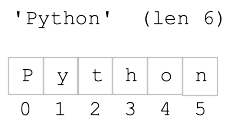
Today: more string algorithms, str in, if/else, quick-return, str.find(), slices
More detailed guides: Python-String, Python-If
Problems today:
> str2 functions
Loop over string, adding to result as we go.
>>> 'a'.isalpha()
True
>>> '5'.isdigit()
True
>>> 'H'.isupper()
True
>>> 'H'.islower()
False
>>> 'H'.lower()
'h'
>>> 'H'.isalpha()
True
>>> 'a'.upper()
'A'
>>> '5'.isalpha()
False
>>> '5'.upper()  # other chars unchanged
'5'
'12abc34' -> 'ABC'
Given string s. Return a string made of all the alphabetic chars in s, converted to uppercase form.
Use string functions .isalpha() and .upper()
Solution
def alpha_up(s):
    result = ''
    for i in range(len(s)):
        if s[i].isalpha():
            result += s[i].upper()
    return result
if test:
  Lines-A
else:
  Lines-B
'12abc34' -> 'ddxxxdd'
Solution code
def str_dx(s):
    result = ''
    for i in range(len(s)):
        if s[i].isdigit():
            result += 'd'
        else:
            result += 'x'
    return result
'xCtxxxAax' -> 'CtAa'
Return a string made of the chars from the original string, whenever the chars are 'c' 'a' or 't', (either lower or upper case). So the string 'xaCxxxTx' returns 'aCT'.
Solution
def catty(s):
    result = ''
    for i in range(len(s)):
        # Create "low" var of intermediate result
        low = s[i].lower()
        if low == 'c' or low == 'a' or low == 't':
            result += s[i]  # Use original, not low
    return result
    # Cute non-obvious alternative: use "in"
    # to do the "or" logic for us, like this:
    # if low in 'cat':
Without Decomp-by-var
if s[i].lower() == 'c' or s[i].lower() == 'a' or s[i].lower() == 't':
With Decomp-by-var - better
low = s[i].lower()
if low == 'c' or low == 'a' or low == 't':
in Test>>> 'c' in 'abcd' True >>> 'bc' in 'abcd' True >>> 'bx' in 'abcd' False >>> 'A' in 'abcd' False
'123abc' -> 'a'
Given a string s, return the first alphabetic char in s, or None if there is no alphabetic char. Demonstrates quick-return strategy.
Solution
def first_alpha(s):
    for i in range(len(s)):
        if s[i].isalpha():
            return s[i]
            # 1. Exit immediately if found
    # 2. If we get here,
    # there was no alpha char.
    return None
Use quick-return strategy, returning True or False.
Given a string s, return True if there is a digit in the string somewhere, False otherwise.
Solution - same pattern as first_alpha(), but returns boolean instead of a char
    for i in range(len(s)):
        if s[i].isdigit():
            # 1. Exit immediately if found
            return True
    # 2. If we get here,
    # there was no digit.
    return False
>>> s = 'Python'
>>> s.find('t')
2
>>> s.find('th')
2
>>> s.find('n')
5
>>> s.find('N')
-1
>>> s.find('x')
-1
>>> s = 'Python'
>>> s[1:3]
'yt'
>>> s[1:5]
'ytho'
>>> s[1:1]    # "not including" dominates
''
>>>
>>> s[:3]     # omit = from/to end
'Pyt'
>>> s[4:]
'on'
>>> s[4:999]  # too big = to end
'on'
>>> s[:4]     # "perfect split" on 4
'Pyth'
>>> s[4:]
'on'
>>> s[:]      # the whole thing
'Python'
A first venture into using index numbers and slices. Many, many problems work in this domain - e.g. extracting all the hashtags from your text messages.
'cat[dog]bird' -> 'dog'
> brackets
Solution
def brackets(s):
    left = s.find('[')
    if left == -1:
        return ''
    right = s.find(']')
    # Use slice to pull out chars between left/right
    # make a drawing!
    return s[left + 1: right]
>>> s = 'Python'
>>> s[len(s)-1]
'n'
>>> s[-1]
'n'
>>> s[-2]
'o'
>>> s[1:-3]
'yt'
>>> s[-3:]
'hon'