
CS 106B: Programming Abstractions (C++), Summer 2016
 Home
Home Handouts
 Textbook
 SCPD Info
 Pair Programming
 Lectures
 Homework
 Sections
 Exams
Exams Socrative
 Staff/SLs
 LaIR Hours
 Message Forum
 Qt Creator
 Stanford C++ Lib
 CppRef
 C++.com
 106B Style Guide
 CodeStepByStep
 FAQ
FAQ Links
LinksLecture Preview: Graph Implementation
(Suggested book reading: Programming Abstractions in C++, Chapter 18 sections 18.2 - 18.3, 18.5)
Today we will learn about how a graph class is actually implemented.
The Stanford C++ library includes a class BasicGraph that contains several useful members related to graphs, vertices, edges, and paths. For example, if you wanted to create an object to represent the following graph:
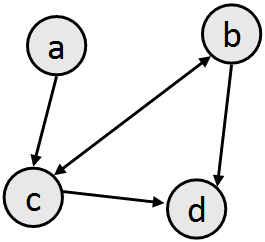
Then you could create a BasicGraph as follows:
BasicGraph graph;
graph.addVertex("a");
graph.addVertex("b");
graph.addVertex("c");
graph.addVertex("d");
graph.addEdge("a", "c");
graph.addEdge("b", "c");
graph.addEdge("c", "b");
graph.addEdge("b", "d");
graph.addEdge("c", "d");
But how exactly is BasicGraph implemented?
What's inside of a BasicGraph object?
How does it represent the vertices, edges, and so on?
The answer is that there are multiple ways a graph can be implemented internally.
Consider the following graph:
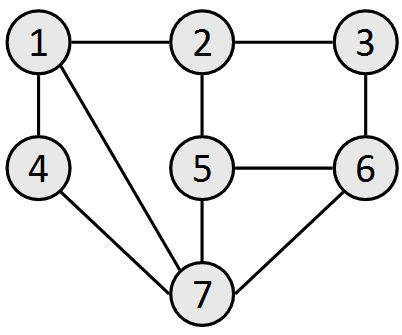
One way to implement a graph is using an edge list, where the only structure you store is a list (vector) of the edges. The information about the vertices is implicit inside the edges. Here is an edge list for the above graph:

A second way to implement a graph is using an adjacency list, where the only structure you store is a list of the vertices, where each vertex contains a nested list of other vertices that are its neighbors. The information about the edges is implicit inside the vertices' neighbor lists. Here is an adjacency list for the above graph:
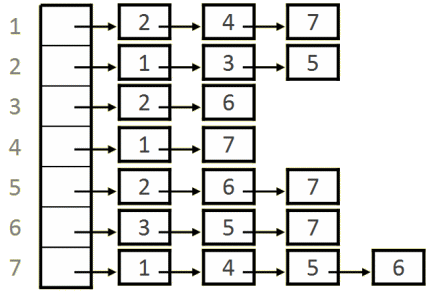
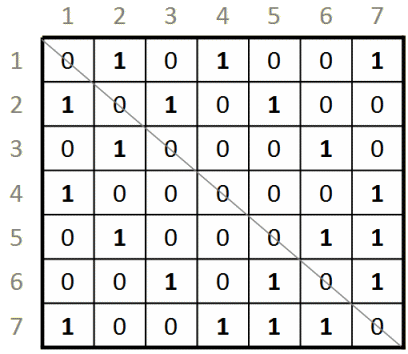
A third way to implement a graph is using an adjacency matrix, where the only structure you store is a two-dimensional grid where each row represents a start vertex and each column represents an end vertex. The grid cell [i, j] stores information about the edge, if any, from vertex i to vertex j. Here is an adjacency matrix for the above graph:
We will discuss details of each approach as well as their relative pros/cons in lecture.