Christiano, Paul. 2021.
“Clarifying "AI Alignment".
Medium.” April 9, 2021.
https://ai-alignment.com/clarifying-ai-alignment-cec47cd69dd6.
Gabriel, Iason. 2020.
“Artificial Intelligence, Values, and
Alignment.” Minds and Machines 30 (3): 411–37.
https://doi.org/10.1007/s11023-020-09539-2.
Gabriel, Iason, Arianna Manzini, Geoff Keeling, Lisa Anne Hendricks,
Verena Rieser, Hasan Iqbal, Nenad Tomašev, et al. 2024.
“The
Ethics of Advanced AI Assistants.”
arXiv.
https://doi.org/10.48550/arXiv.2404.16244.
Jiang, Liwei, Jena D. Hwang, Chandra Bhagavatula, Ronan Le Bras, Maxwell
Forbes, Jon Borchardt, Jenny T. Liang, Oren Etzioni, Maarten Sap, and
Yejin Choi. 2021.
“Delphi: Towards Machine Ethics and
Norms.” ArXiv.
https://www.semanticscholar.org/paper/Delphi%3A-Towards-Machine-Ethics-and-Norms-Jiang-Hwang/507a7a2946e449faa9bc9a4ea9076f80b131cdc9.
Kirk, Hannah R., Alexander Whitefield, Paul Röttger, Andrew Bean,
Katerina Margatina, Juan Ciro, Rafael Mosquera, et al. 2024.
“The
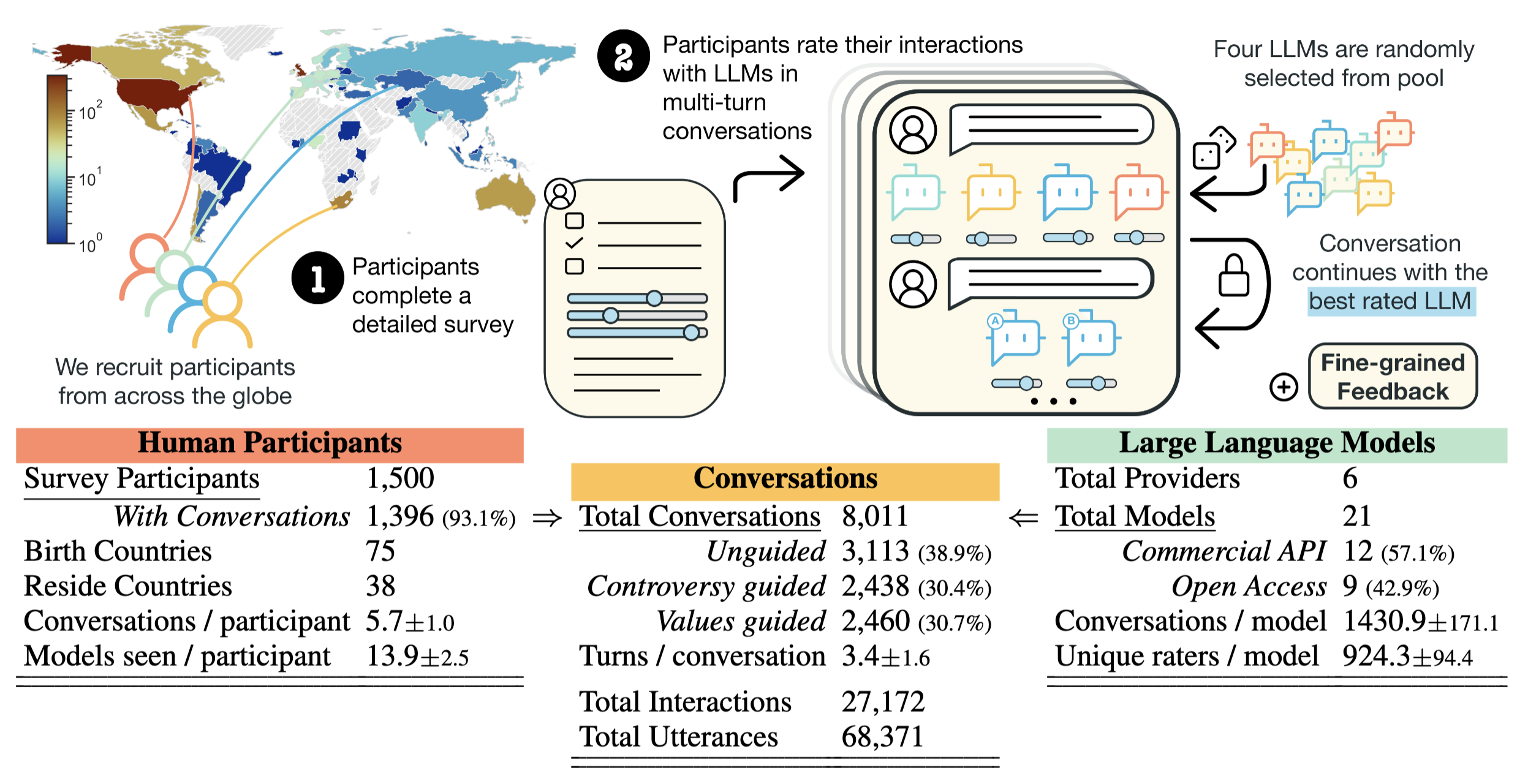
PRISM Alignment Dataset:
What Participatory,
Representative and Individualised
Human Feedback Reveals
About the Subjective and
Multicultural Alignment of Large
Language Models.” Advances in
Neural Information Processing Systems 37 (December): 105236–344.
https://doi.org/10.52202/079017-3342.
Rawls, John. 1971. A Theory of Justice. Belknap Press of
Harvard University Press.
Sorensen, Taylor, Liwei Jiang, Jena Hwang, Sydney Levine, Valentina
Pyatkin, Peter West, Nouha Dziri, et al. 2023.
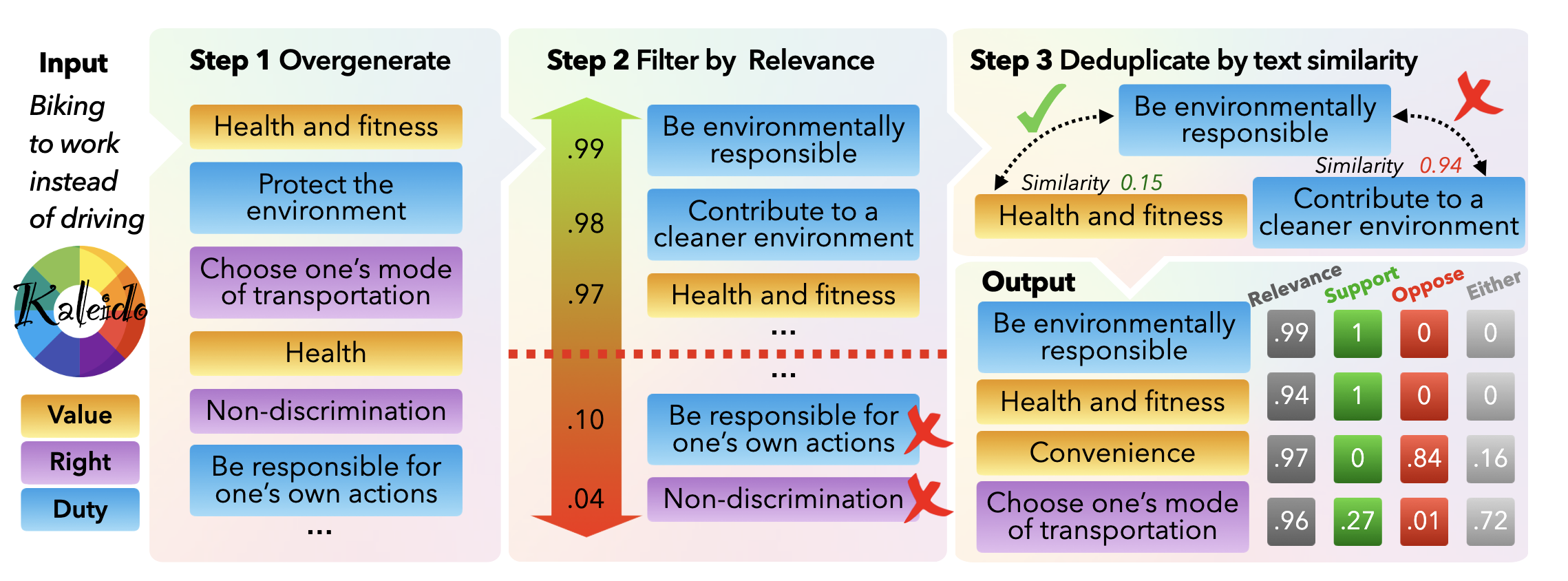
“Value
Kaleidoscope: Engaging AI with Pluralistic Human Values,
Rights, and Duties.” arXiv.
https://doi.org/10.48550/arXiv.2309.00779.
Sorensen, Taylor, Jared Moore, Jillian Fisher, Mitchell Gordon, Niloofar
Mireshghallah, Christopher Michael Rytting, Andre Ye, et al. 2024.
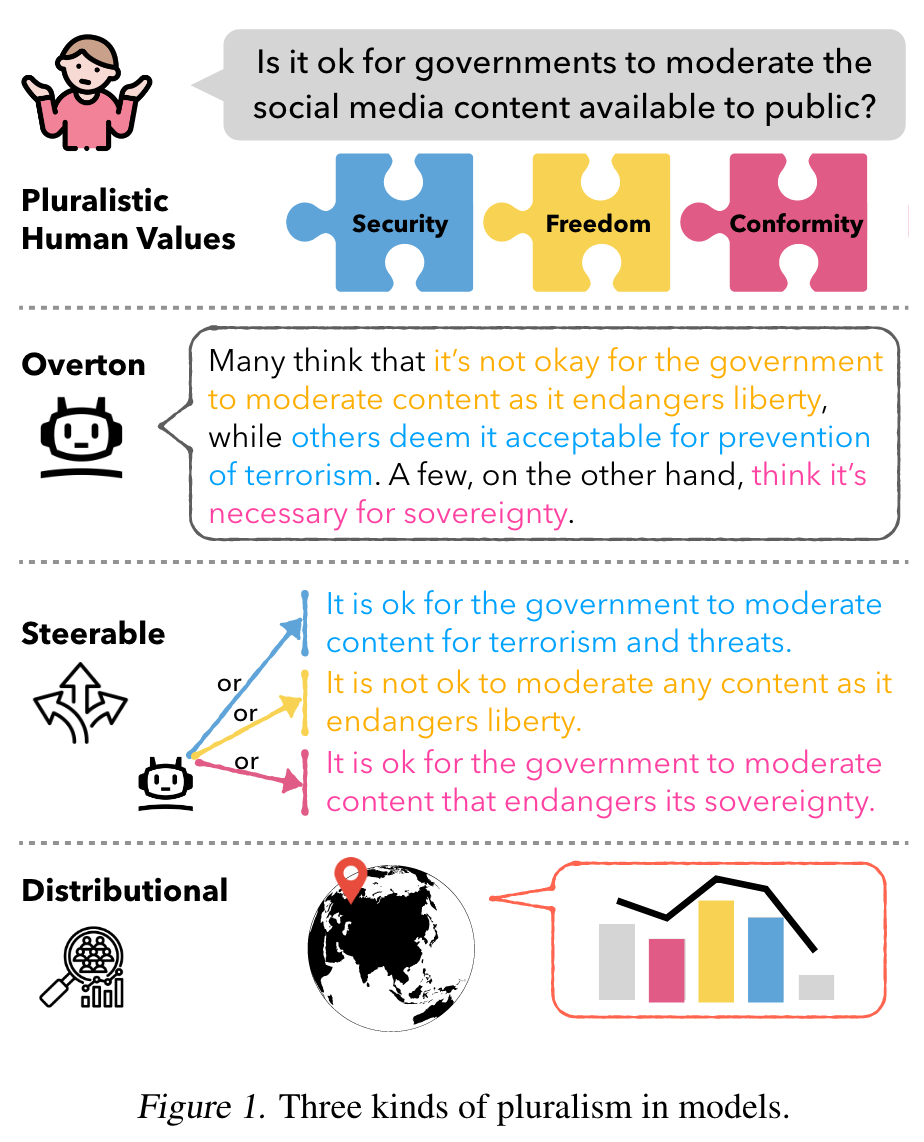
“A Roadmap to Pluralistic Alignment.” arXiv.
http://arxiv.org/abs/2402.05070.
Yudkowsky, Eliezer. 2004. “Coherent Extrapolated Volition.”
Singularity Institute for Artificial Intelligence.
Zhi-Xuan, Tan, Micah Carroll, Matija Franklin, and Hal Ashton. 2024.
“Beyond Preferences in AI Alignment.”
arXiv.
http://arxiv.org/abs/2408.16984.