Leaky bags of charged fluid
Jared Moore and David Gottlieb
Nutshell
Is there something in your brain that makes you moral?
and does this somehow “explain away” morality?
Neural Mechanisms
Lost marbles

The equilibrium or balance, so to speak, between his intellectual faculties and animal propensities, seems to have been destroyed. He is fitful, irreverent, indulging at times in the grossest profanity (which was not previously his custom), manifesting but little deference for his fellows, impatient of restraint or advice when it conflicts with his desires, at times pertinaciously obstinate, yet capricious and vacillating [Harlow, John Martyn (1868).]
Pair bonding
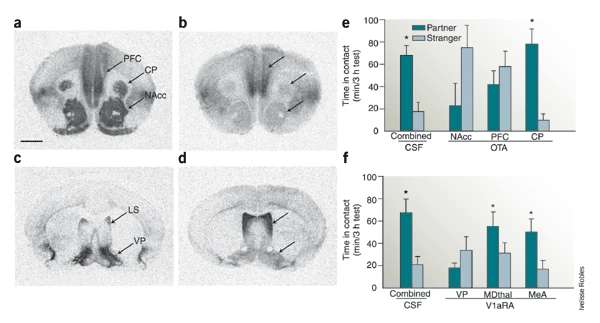
Lim, Murphy, and Young (2004)
Mammals whose circuitry outfitted them for offspring care had more of their offspring survive than those inclined to offspring neglect. (Churchland 2018)
My little OXT
Think of a time when you have felt attached. Perhaps you held an infant. You gave a hug. Etc.
Further consider:
You’re unwinding at home after your trip, tired from last night’s parties. One more year. What will your graduation be like? Will you continue with the well-heeled venture you’re interning at this summer? Your mother steps in. “Anything you don’t box up we’ll handle.” Take to the dump, she means. You hold up [Mr. Snufflekins]. You wonder: would it be wrong to throw him away?
(Swap [Mr. Snufflekins] with some replaceable childhood object you feel attached to.)
My little OXT
Rationally, it seems as if objects like Mr. S shouldn’t matter—you could just get another. And yet we feel attached to him.
Does this mean that our attachment system has gone awry?
Or, conversely, that rational ideas of what should matter fail to account for proper human morality?
Wire mother, cloth mother

Self-other harm aversion
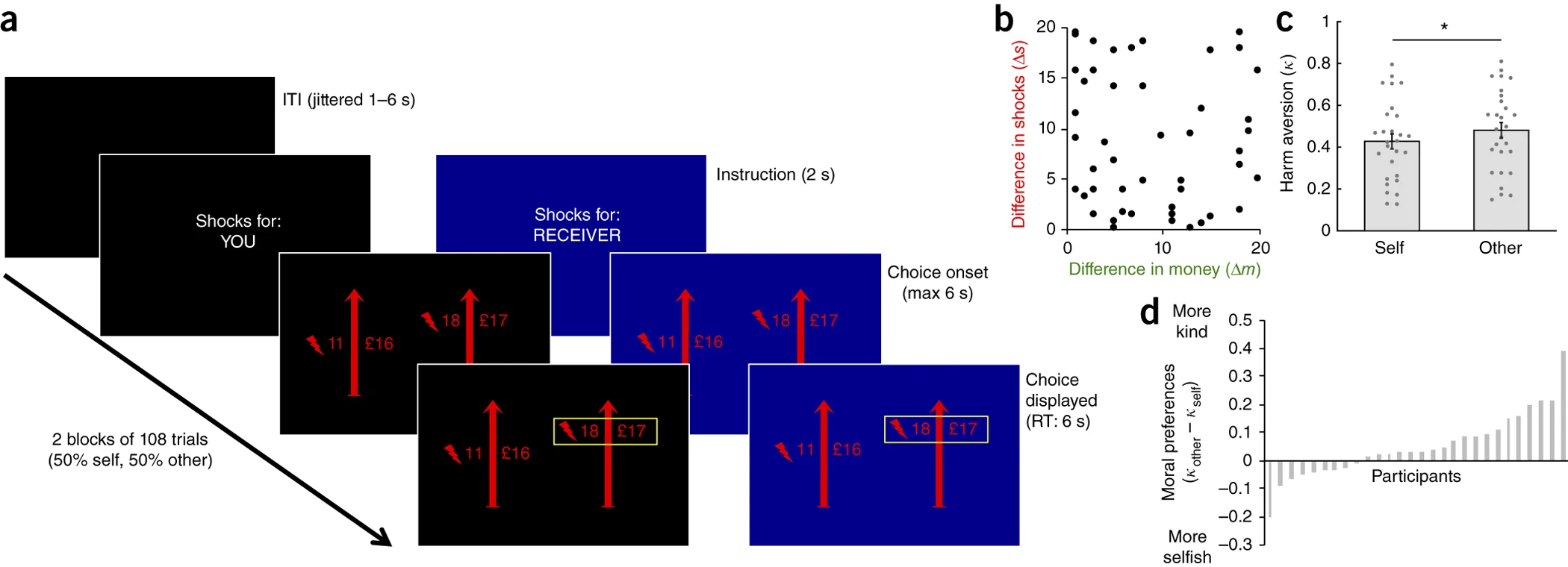
Crockett et al. (2017)
It sure doesn’t feel like I’m doing this to help you
In general, evolutionarily, the goal of cooperation makes sense, but still doesn’t seem to explain satisfactorily why people feel such strong emotions, such as guilt when having done something wrong, even years down the line. Even kin selection, though sensical in theory, doesn’t seem to truly explain why I wouldn’t want my brother to be harmed. […] gene preservation seems to be one of the last reasons I would be upset about someone harming my brother. (Kristine)
Can I take this to mean that the felt experience is irrelevant to why the mechanism exists and what it does? (Fiona)
Eyes

Greene (2013)
Mutual benefit?
You’ve been grinding on your CS 186 project for months, cancelling VC calls to make Jared and David’s project syncs, wracking your brain on how to “go meta” and address what it means to be moral as opposed to what is moral, and now you’re about to submit your report on training an LM on baby babble to see if it shows group bias.
Then, suddenly, a classmate with whom you had considered working texts:
“hey do you want to submit the project or should i”
Would you…
say, “sorry you didn’t help”
let them put their name on the project, but…
refuse to work with them again
when asked in an anonymous survey, say they did little work
What if this was not your partner, but someone from a different project group?
Greene (2013)
Which do you prefer?


Greene (2013)
IAT
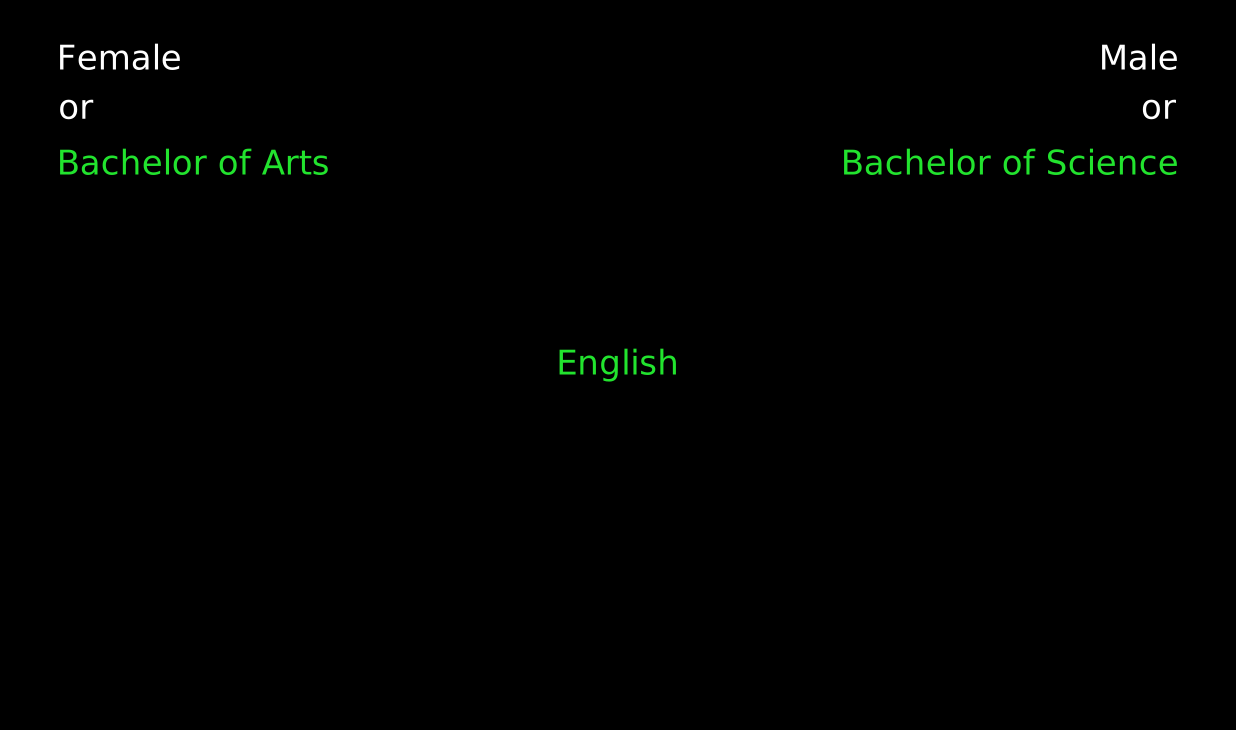
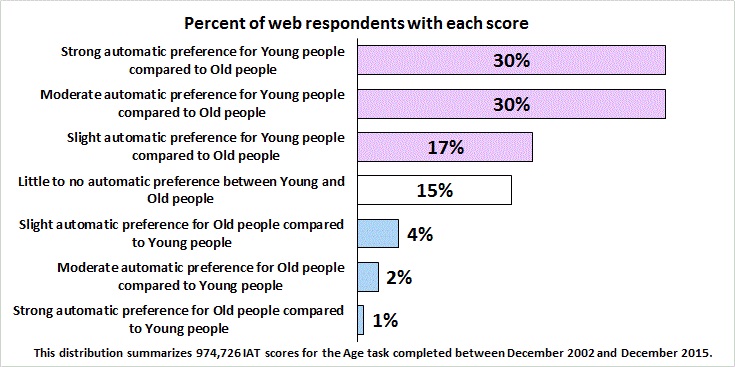
Are intuitions really what is moral?
Greene says forgiveness is important because in a world where mistakes happen […] But he doesn’t really explain what determines when we forgive versus when we stay angry […] our moral instincts aren’t too stable and while they work well most of the time, they can also break down in situations where cooperation matters most and lead us to not cooperate. (Jolie)
Why should the fact that a disposition promotes cooperation give me a solid reason to follow it, especially in cases where it conflicts with my interests, or when it sustains a system I reject? […] does “morality” name this evolved system, or is philosophy trying to construct something that corrects it? (Susie)
If humans were bees
If … men were reared under … the same conditions as hive-bees, … our unmarried females would, like the worker-bees, think it a sacred duty to kill their brothers, and mothers would strive to kill their fertile daughters; and no one would think of interfering. (darwin_1871_descent?)
Discussion Questions
Is morality just social rationality?
- Is what is right what fits the circumstances?
When does deliberation correct bias vs rationalize it?
Is feeling a certain way what matters or is it the behaviors those feelings produce? (Thinking about AI)
If we were to build agents that cooperate automatically and intuitively, would that even count as genuine cooperation? (Akshay)
does that mean the fact that LLM’s don’t feel is also irrelevant to its qualification as an moral agent, so long as it reliably produces cooperative outputs? (Fiona)
is [making AIs have feelings] something we should avoid when developing agents due to humans’ predisposition to tribalism and an “us vs. them” mentality? (Kate)
if human cooperation is scaffolded by emotion, what happens when you try to build a cooperative agent without that? (Estella)
Do we even want AIs to be like us?
Moral Varieties
Social differences
People vary in their abilities to attend to social situations, to engage in the behavior putatively necessary for moral agency.
(Think of psycopathy, dementia, opioid addition, autism spectrum disorders, and hydroencephaly.)
Does that mean some people have more or less moral agency?
“Quasi” sociality
“Quasi” sociality
A Moral Cicle
Can we draw a non-arbitrary behavioral boundary between what counts as a moral agent and what doesn’t?
(E.g. those sharks seem like they could access aspects of sociality and therefore could eventually yield recognizable moral agents.)
If not, should we use moral agency as a requirement for moral patiency?
What else would we use?
(We’ll talk about this more next week.)
Social AI
Say we have a device able to recognize prosocial and antisocial stimuli.
The low-level constraints this system faces would be very different than those humans face. (It doesn’t use oxytocin, e.g.)
Does this matter?
How close would we need to match the context (environment) of the AI and humans? (Would we need to raise it like a child?)
- E.g. does it need to express the same biases that we do? (Punish free riders?)
Morality vs. self-interest
Are morality and self-interest compatible?
- We usually think acting morally requires more than
just acting in your own interest.
- Kant: only actions done from duty (not from interest) have moral worth.
- But cultural and biological evolution can cause our self-interest to coincide with benefiting others.
- Are our altruistic motivations “really” self-interested?
Why it might debunk
- Explaining away: We have our moral beliefs because we evolved to, not because they’re “true”
- Covert self-interest: When we care about others, we “really” do it because it serves our reproductive interests
Explaining away argument
If humans were bees
If … men were reared under … the same conditions as hive-bees, … our unmarried females would, like the worker-bees, think it a sacred duty to kill their brothers, and mothers would strive to kill their fertile daughters; and no one would think of interfering. (darwin_1871_descent?)
Does this give a reason for moral skepticism?
Parfit’s explanation
Here’s Parfit making a parallel argument in a very different context:
[I]f some attitude has an evolutionary explanation, this fact is neutral. It neither supports nor undermines the claim that this attitude is justified. But there is one exception. This is the claim that, since we all have this attitude, this is a ground for thinking it justified. This claim is undermined by the evolutionary explanation. Since there is this explanation, we would all have this attitude even if it was not justified. (Parfit 1984, 308)
Parfit is saying: if we all think we have a self because of evolution, this undermines the explanation that we all think we have a self because we really have one.
Can we apply the same reasoning to morality?
By the same reasoning, if we all share certain moral attitudes because of evolution, this undermines the explanation that we share them because they are true or good.
A challenge to “moral realism”?
The challenge for realist theories of value is to explain the relation between … evolutionary influences on our evaluative attitudes, on the one hand, and the independent evaluative truths that [moral] realism posits, on the other. (street_2006_darwinian?)
If morality evolved along with the human race, then asking how we ought to live makes as much sense as asking what animals ought to exist, or which language we ought to speak. [Binmore, 2005, p. 2]
In schematic form:
- Morality consists of “independent evaluative truths” (“moral realism”).
- If our moral beliefs are the product of selection for reproductive success, it would be pure coincidence for them to line up with “independent evaluative truths.”
Therefore,
- They probably don’t.
- Our moral beliefs are probably false.
Is morality really cloaked interest?
Plato
Thrasymachus: “Justice is nothing other than the advantage of the stronger.” (Plato, Republic I, 338c)
Callicles: “The makers of laws are the majority who are weak; and they make laws and distribute praises and censures with a view to themselves and to their own interests.” (Plato, Gorgias)
Popeye

Is altruism fake?
It is sometimes claimed that there is no such thing as altruism. Why?
Altruistic behaviors can only exist because they provided selective advantages in the past.
What about self-sacrifice?
It is sometimes claimed that the most moral acts are utterly selfless. For example, Jesus is supposed to have sacrificed himself for the redemption of all humanity. Notably, Jesus did not have any offspring.
The most extreme forms of altruism and self-sacrifice are often associated with religious systems, where individuals are encouraged to emulate figures like Jesus, who are portrayed as embodying ultimate selflessness. Such emulation can lead individuals to act in ways that may reduce their own reproductive success, suggesting that these moral systems can promote behaviors that transcend individual genetic advantage. (alexander_1987_biology?)
If altruism is cloaked interest, how do we explain self-sacrificing behaviors?
Summary
- If we act the way we do because our dispositions made our lineage more reproductively successful, this makes it harder to see those acts as genuinely moral.
- If someone does something outwardly altruistic, we might think to ourselves: that’s not really altruistic. You’re really indirectly pursuing your long-term reproductive interest.
- Compare Kant: only actions done from duty (not from interest) have moral worth.
Basically,
- something is rationally self-interested if it promotes your long-term reproductive interest, and
- if it is rationally self-interested, it is not genuinely moral.
Which lineage is the most reproductively successful?

Which lineage is the most reproductively successful?

Which lineage is the most reproductively successful?
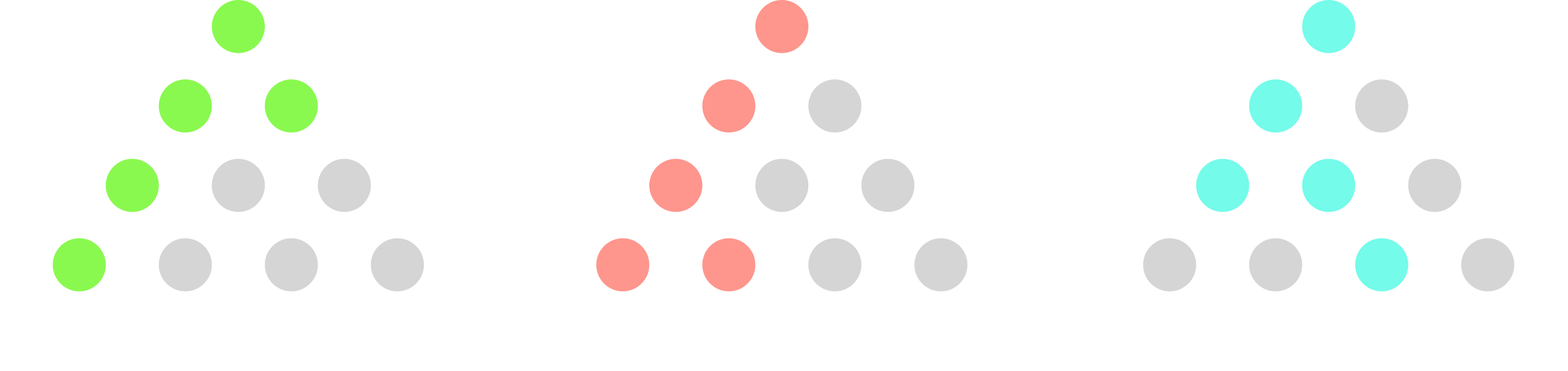
Which lineage is the most reproductively successful now?
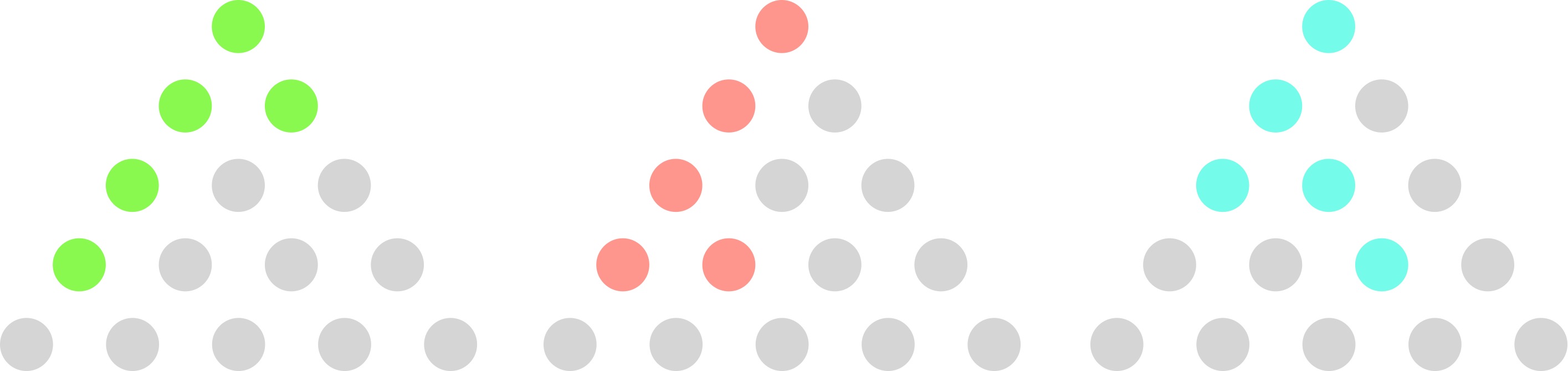
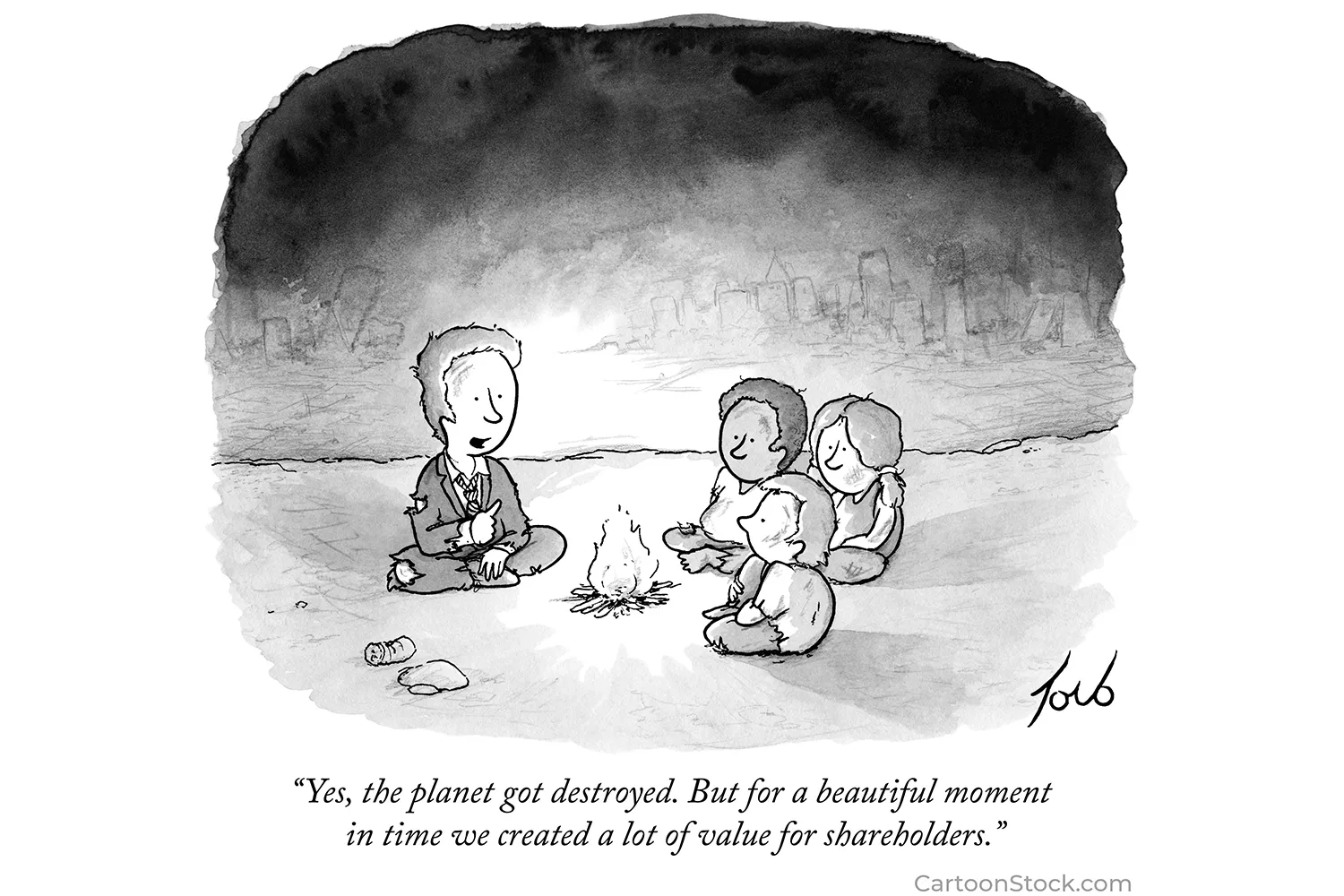
A beautiful moment in time
Long-term reproductive success
Suppose the Earth was struck by a meteor tomorrow, eliminating all animal life. All animals alive today would be complete failures in terms of reproductive success. Does anything you do today matter?
- What if, because of a disaster like climate change, most humans alive die, so that in 1,000 years almost no current humans have living descendants?
- What if, in 4 billion years, the Earth along with most of the solar system is physically swallowed by an expanding red giant sun, killing all life.
- What if, in 10 billion years, all matter and energy concentrates in a “Big Crunch,” so hot and dense that no reproductive lineages can survive?
- What if, in a quadrillion or so years (give or take), all matter and energy in the universe becomes so diffuse that no organized life is possible, so all life everywhere is extinct?
In the long run, we’re all dead
- The skeptical argument suggested that the reason for moral behavior was long-run reproductive success.
- However, long-run reproductive success seems to be impossible.
- Accordingly, either:
- there is no reason for moral behavior (nihilism), or
- the reason is something other than long-run reproductive success.
Social Mechanisms