Can they suffer?
Jared Moore and David Gottlieb
Intrinsic perspective
The Case of Edgar
- We can feel sympathetic pain and discomfort for Edgar
- When we do this, we take his perspective
- But Edgar does not have a perspective
- … Except when we sympathize
- His perspective is constituted by our perspective-taking
- He has no intrinsic perspective
Human beings
- Human beings have intrinsic perspectives
- This is one of the things that makes them morally
significant
- Edgar’s pain is in a sense not real – it goes away when we stop thinking about it
- My pain doesn’t go away if you stop thinking about it
What it’s like to be something
- Nagel: an organism is conscious “if and only if there is something that it is like to be that organism – something it is like for the organism”
- Nagel’s formulation has two key elements:
- “what it’s like”: the qualitative aspect of experience (“qualia”)
- “for the organism”: it is the organism’s own (intrinsic) perspective
- Both are required for moral patiency
The problem of consciousness
- The problem of other minds: I know what it’s like to be me. How do I know it’s like anything to be you?
- In general: what things in the universe have intrinsic perspectives?
Functionalism
as flight


- Is it a difference that makes a difference (Bateson)?
The “computation” (or function) of flight
L = ∮pn ⋅ k dS
where
- S is the projected (planform) area of the airfoil, measured normal to the mean airflow;
- n is the normal unit vector pointing into the wing;
- k is the vertical unit vector, normal to the freestream direction.
https://en.wikipedia.org/wiki/Lift_(force)

Human minds have a particular biochemical basis, but this is a contingent feature, not a necessary one. A physical system has mental states in virtue of its abstract causal organization, that is, in virtue of how its states are connected to sensory input, behavioral output, and each other. In us, the causal roles characteristic of the mental have particular physical realizers, and those physical realizers are brain states with a chemistry of proteins, lipids, nucleic acids, and so on. But other realizers could, in principle, play the same roles. This means that a computer with a very different chemistry could have physical states that realize the causal roles characteristic of a human mental life, if suitably programmed and (perhaps) if connected to a robot of the right kind. […] Further, any system that has the same functional and hence cognitive profile as a human agent must have the same subjective experiences (Godfrey-Smith 2016)
- What does this mean? Explain to your neighbor
The Neural Doctrine
nervous systems and probably parts of nervous systems are themselves naturally evolved computers—organically constituted, analog in representation, and parallel in their processing architecture. They represent features and relations in the world and they enable an animal to adapt to its circumstances. (Churchland and Sejnowski 2016)
Neural Replacement
[A neuron is replaced with] a silicon chip that performs precisely the same local function as the neuron. We can imagine that it is equipped with tiny transducers that take in electrical signals and chemical ions and transforms these into a digital signal upon which the chip computes, with the result converted into the appropriate electrical and chemical outputs. As long as the chip has the right input/output function, the replacement will make no difference to the functional organization of the system. (David J. Chalmers 1995b)
- What do you think?
Functionalism and AI
- For a long time, it was assumed that, if functionalism is true, then computers can think and be conscious (“Strong AI” thesis)
- Why?
Why replacing a neuron is hard
Spatiotemporal characteristics of a neuron’s spiking responses.
- e.g., very fast, small, and long extensions
Transducers and chemical signaling
- e.g., many kinds of input; “tens of thousands of selective ion channels”; nitrous oxide spreads everywhere
Biophysical sensitivities
- e.g., temperature dependence, anything could be used
Self-modification and other non-spiking effects
- e.g., plasticity, growing new connections
The functional role of glia and other non-neuronal cells
- If all neurons do is influence each other, why not include astrocytes?
Cao (2022)
Differences that makes a difference?

Theories of Consciousness
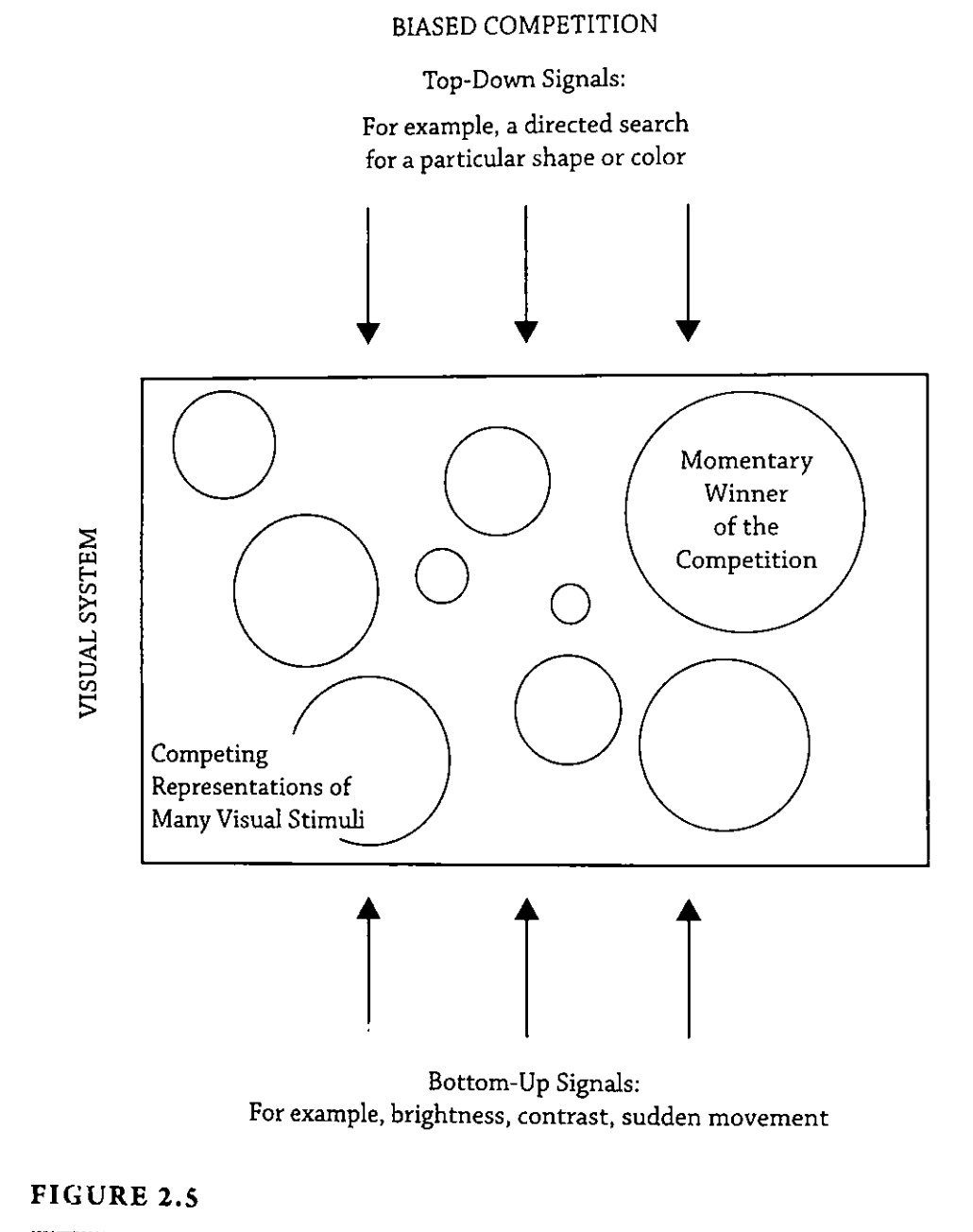
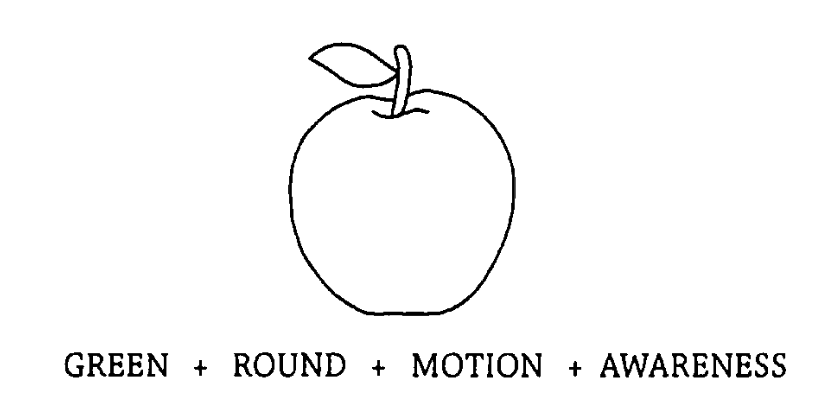
Awareness is a description of attention (Graziano 2013)
- [I] [am aware of] [X].
Graziano (2013)
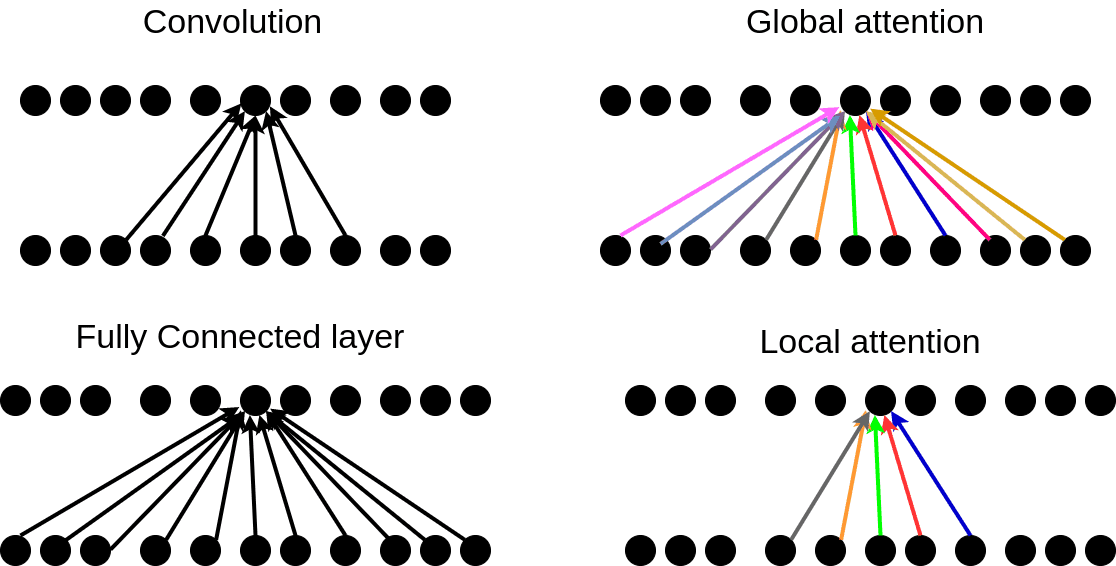
multiple realizability of attention?
Life and consciousness
After the Strong AI thesis
- Arguments for Strong AI are weaker than we might
have thought, since the cognitively relevant functional profile of the
brain can’t be exactly cloned in a computer
- If we could reproduce the cognitively relevant functional profile of the brain exactly, then (if functionalism is true) we could make a machine with any of our cognitive states, including conscious states
- If we can only produce the cognitively relevant functional profile of the brain approximately or good enough for some purposes, then we don’t have that guarantee
My claim is not that non-biological materials that do all the same things might not count because of their physical nature. Rather, the usual candidates offered as a non-biological basis for mentality will not do the same things. (Godfrey-Smith 2016)
Consciousness and Metabolism
I will use the phrase “subjective experience” for the broadest category of phenomena here, also describable by saying that some states of some systems feel like something to the system itself, and others do not. (Godfrey-Smith 2016)
- Godfrey-Smith’s suggestion is that metabolic
processes in simple organisms are cognitive or “proto-cognitive”
- They modulate the organism’s behavior in relation to environmental and internal conditions
- For example, the chemotaxis of E. coli is (1) sensitive to whether the cell is moving up the concentration gradient of a good chemical and (2) randomizes its motion if not.
- Similarly, “metabolic conditions such as thirst, the need for salt, or the feeling of not having enough air” are cognitive or proto-cognitive states
- These proto-cognitive states define “a literal ‘point of view’” (491)
- Maybe it is an intrinsic point of view and these states count as feeling states (however primitive)
Can your muscles feel anoxia?
- When you start a hard workout, your muscle tissues use up their oxygen and (via a complex signaling pathway) stimulate your heart and lungs to deliver more oxygen faster
- These cells are metabolic systems, in cognitive or proto-cognitive states – are they feeling states?
Our consciousness is strictly limited
“Our access to our own thinking, and especially to the causation and dynamics of its subpersonal parts, is really no better than our access to our digestive processes; we have to rely on the rather narrow and heavily edited channel that responds to our incessant curiosity with user-friendly deliverances, only one step closer to the real me than the access to the real me that is enjoyed by my family and friends” (Dennett 2017, 12)
Attention Check
Phi
The organism’s perspective and the organism’s good
- Godfrey-Smith’s picture seems to over-generate
consciousness, at least for complex creatures like us.
- It doesn’t explain why subsystems like our muscle tissues aren’t themselves conscious (if they aren’t).
- It doesn’t account for how our conscious experience is filtered and constructed by integrating information from many sources.
- The suggestion of Cao-Gottlieb-Moore: a system can
is conscious when …
- it has an intrinsic good, and …
- information relevant to that good is globally integrated across the organism …
- so that it can drive behavior.
Exit ticket
Close your eyes
Take some time to simply notice what you are conscious of. If you find yourself thinking of something else, that’s fine, just notice that and continue the exercise. If anything feels either good or bad, notice that as well. On your exit ticket, describe what you were conscious of.
How things seem
Vitalism, Cartesian

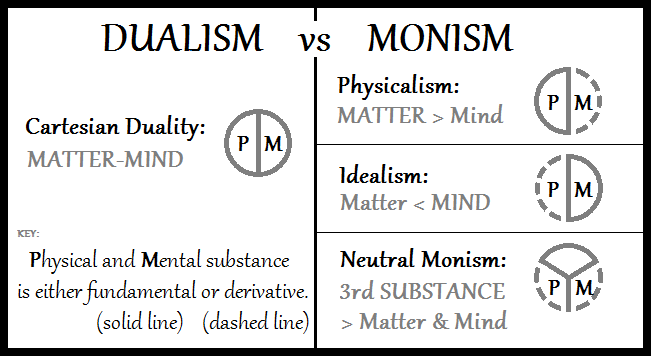
Homunculi
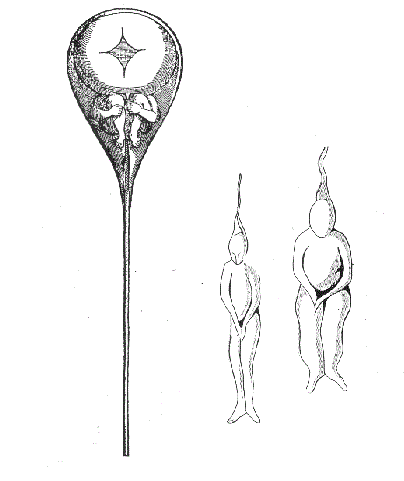
Things are not what they appear to be
http://www.lifesci.sussex.ac.uk/home/Chris_Darwin/SWS/
Things are not what they appear to be
Our conscious experience does not arrive raw from nature.
http://www.lifesci.sussex.ac.uk/home/Chris_Darwin/SWS/
Consciousness is not what it appears to be
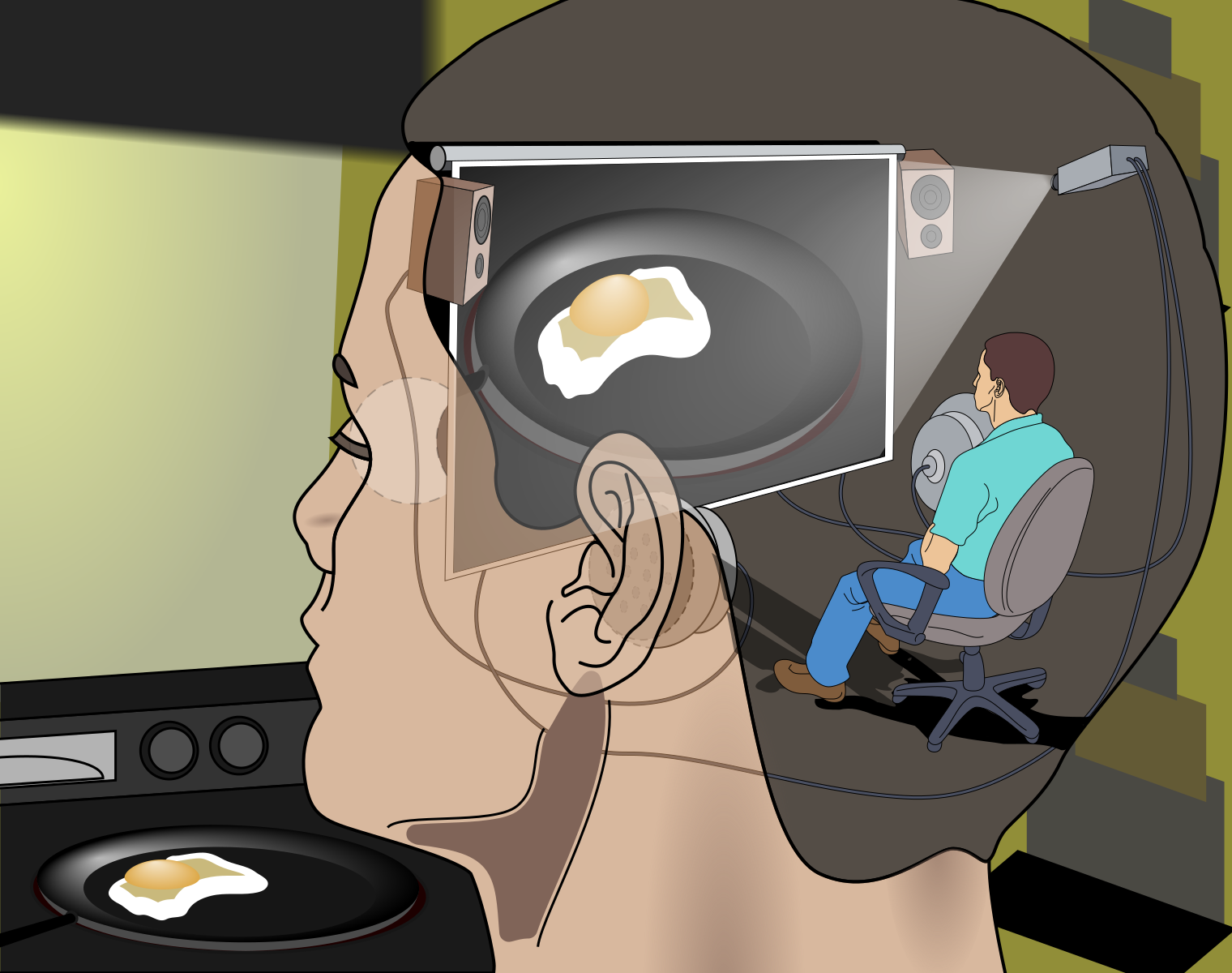
Presenting the Cartesian Theater staring: You!
(Consciousness is an “illusion.”)
Zombies and the “Hard Problem”
Why should physical processing give rise to a rich inner life at all? It seems objectively unreasonable that it should, and yet it does (David J. Chalmers 1995a, 2)
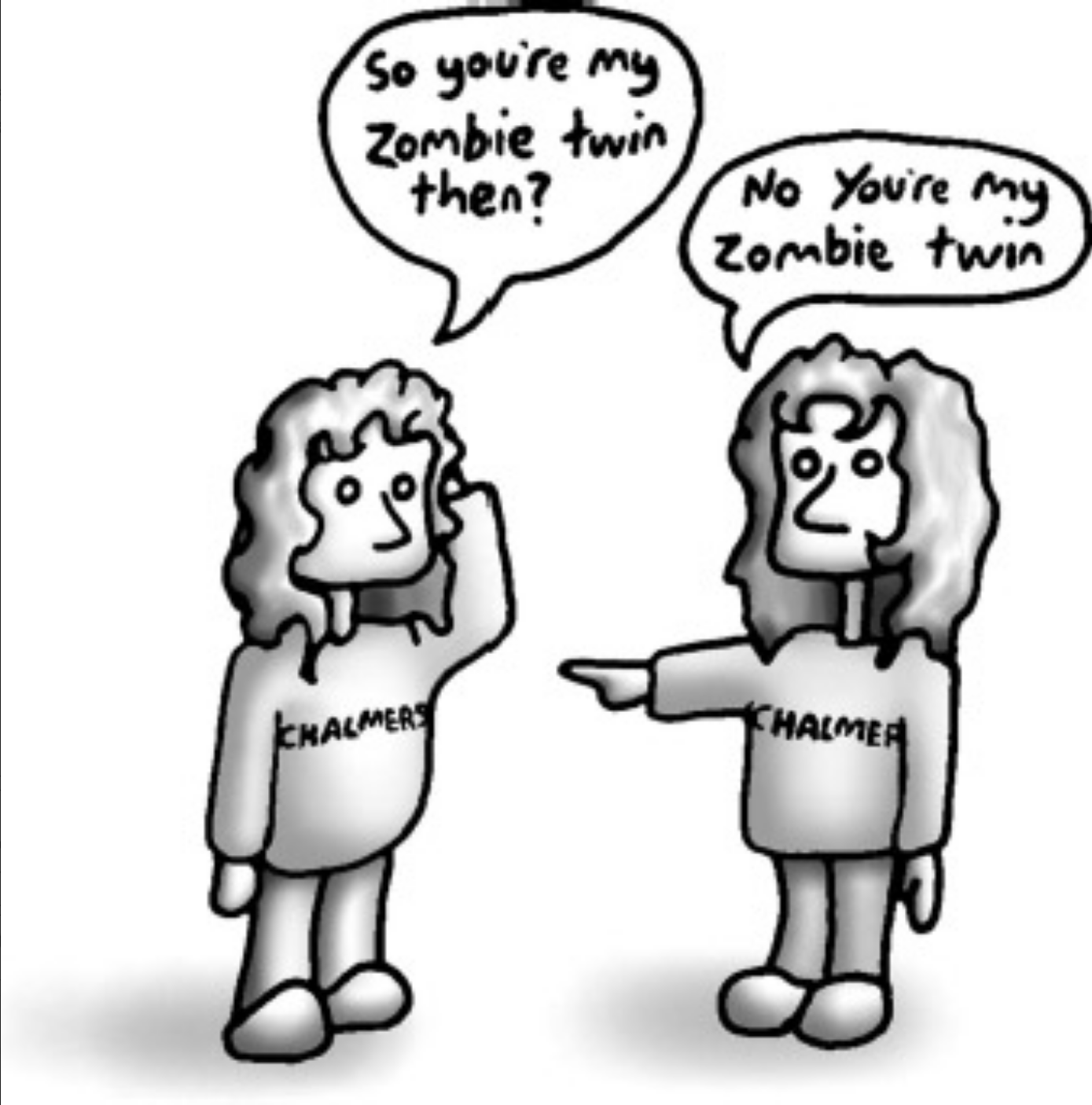
Blackmore and Troscianko (2018)