|
 The
year 1995 saw the release of two movies
that passed significant and seemingly contradictory social commentary
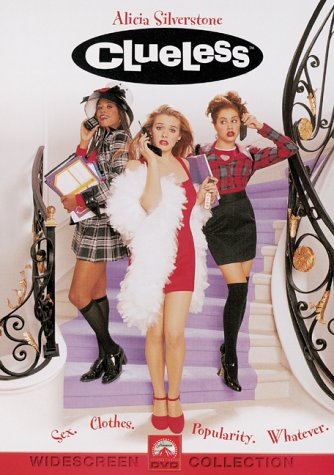
on modern American teenagers: Amy Heckerling’s Clueless and Larry Clark’s Kids.
Where the former movie celebrates a teen culture of carelessness
and consumption, the latter paints a world of rife with danger and self-destruction.
Evaluating the respective meaning imbued by these two movies in the
arbitrary construct of virginity, which simply means the passing from
not having had sex to having had sex, reveals a non-obvious similarity
in their social goals. Specifically, Clueless
and Kids, while seeming binary
opposites of modern virginity discourse, both manifest hegemonic attitudes
towards girlhood that work to deny girls political and social power. The fantasy world of Clueless, where problems of sexism, racism, poverty, and social injustice
ostensibly do not exist, establishes Cher as a The
year 1995 saw the release of two movies
that passed significant and seemingly contradictory social commentary
on modern American teenagers: Amy Heckerling’s Clueless and Larry Clark’s Kids.
Where the former movie celebrates a teen culture of carelessness
and consumption, the latter paints a world of rife with danger and self-destruction.
Evaluating the respective meaning imbued by these two movies in the
arbitrary construct of virginity, which simply means the passing from
not having had sex to having had sex, reveals a non-obvious similarity
in their social goals. Specifically, Clueless
and Kids, while seeming binary
opposites of modern virginity discourse, both manifest hegemonic attitudes
towards girlhood that work to deny girls political and social power. The fantasy world of Clueless, where problems of sexism, racism, poverty, and social injustice
ostensibly do not exist, establishes Cher as a 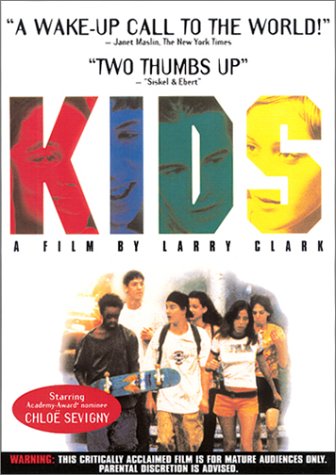 white,
upper-class neocolonial ideal of femininity. This world allows Cher
the privilege of romanticizing her virginity as bastion of power, though
it actually holds no concrete power.
As Gayle Wald argues, this romantic
construction of virginity comes from a “subject-position that paradoxically
denies [girls] status as political and intellectual agents” because
it attaches specific importance to female sexuality and purity that
enforces heterosexual, hegemonic norms of male dominance. In rigid virgin/whore
dichotomy, the society that gives Cher romantic, imaginative control
over her virginity disempowers her as soon
as she decides to engage in sexual activity. Where Clueless
is self-consciously fantastical, Kids
bills itself as “current teen reality,” which purports to subvert the
traditional social paradigm. Though
filmed to look spontaneous and real, Clark admits that it was filmed
in an attempt to “wake everyone up,” which points to an underlying political
message. Kids
hypersexualizes teenagers, and portrays girls as passive holders of
their virginity. For these girls,
sexual initiation is harsh, forcing them to reject romantic meaning
attached to it. In addition,
the specter of disease and AIDS extends over all their sexual activity. This tenuous connection of girls to their own virginity, and the
direct connection of sex to death, disempowers girls because they do
not truly have control over their sexuality.
Thus, both of these movies, one of the “teen movie” genre and
the other a cutting-edge reality movie about teens, construct virginity
in a similar manner that hegemonically controls their position as sexual
objects in society. white,
upper-class neocolonial ideal of femininity. This world allows Cher
the privilege of romanticizing her virginity as bastion of power, though
it actually holds no concrete power.
As Gayle Wald argues, this romantic
construction of virginity comes from a “subject-position that paradoxically
denies [girls] status as political and intellectual agents” because
it attaches specific importance to female sexuality and purity that
enforces heterosexual, hegemonic norms of male dominance. In rigid virgin/whore
dichotomy, the society that gives Cher romantic, imaginative control
over her virginity disempowers her as soon
as she decides to engage in sexual activity. Where Clueless
is self-consciously fantastical, Kids
bills itself as “current teen reality,” which purports to subvert the
traditional social paradigm. Though
filmed to look spontaneous and real, Clark admits that it was filmed
in an attempt to “wake everyone up,” which points to an underlying political
message. Kids
hypersexualizes teenagers, and portrays girls as passive holders of
their virginity. For these girls,
sexual initiation is harsh, forcing them to reject romantic meaning
attached to it. In addition,
the specter of disease and AIDS extends over all their sexual activity. This tenuous connection of girls to their own virginity, and the
direct connection of sex to death, disempowers girls because they do
not truly have control over their sexuality.
Thus, both of these movies, one of the “teen movie” genre and
the other a cutting-edge reality movie about teens, construct virginity
in a similar manner that hegemonically controls their position as sexual
objects in society. |