| Multicultural
Utopia or White Girl Power? Race, Revenge, and Consequence in Jim McKay's
Girls Town |
| Meredith
King |
|
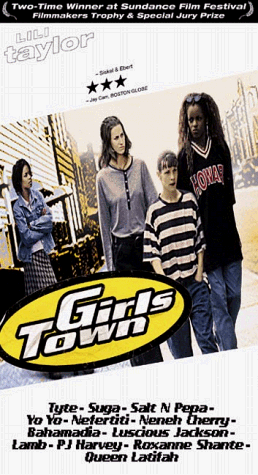
"This ain't no 90210," reads the tagline for the 1996 film, and without a doubt we'd never see Brenda, Kelly and Donna committing acts of crime for a common good other than expanding their Beverly Hills wardrobes, nor would we see them releasing such rage as we see from Patti, Emma, and Angela. I suggest that the anger of working class, racialized women is both easier for an audience to accept as reality, and to champion as an act of empowerment. Yet, although race is never mentioned in this multicultural group of friends, race and class determine who is allowed to show the most anger, the most emotion, and who does and doesn't get punished for it. Though the film has been contrasted with the Southern California dreamscape of Clueless, in both films, race and class determine the standing of each girl within their group of friends. Why do we only hear the voices of the young black women in voiceover, or in their stereotypically domineering mothers? Why are they considered "bad girls" when their anger is still so contained? In what ways does their black friend's suicide allow for the personal transformation of the two white girls? One thing is for sure-this ain't no 90210. |
 Is
a world where young black and white women take revenge on rapists with
few consequences a gritty urban reality or a utopian vision of girl
power? In Girls Town, Jim McKay creates three "feminist
vigilantes" in the characters of Patti, Emma, and Angela, who are
spurred on by the suicide of a friend to enforce justice on all the
men that have wronged them. They assault a rapist, vandalize another
rapists' car and rob the abusive father of Patti's child, all in the
name of rage, revenge, justice and control. However, they recognize
impact of their gender on their situations, and want to begin to make
change not just for themselves, but for other women as well.
Is
a world where young black and white women take revenge on rapists with
few consequences a gritty urban reality or a utopian vision of girl
power? In Girls Town, Jim McKay creates three "feminist
vigilantes" in the characters of Patti, Emma, and Angela, who are
spurred on by the suicide of a friend to enforce justice on all the
men that have wronged them. They assault a rapist, vandalize another
rapists' car and rob the abusive father of Patti's child, all in the
name of rage, revenge, justice and control. However, they recognize
impact of their gender on their situations, and want to begin to make
change not just for themselves, but for other women as well.