|
1
|
|
|
2
|
- Evidence of the Quartos and contemporary reports: the Parliament and
deposition scenes were written, known about, but not publicly performed
in Elizabeth’s lifetime
- (with one exception).
|
|
3
|
- February 7, 1601: The Lord Chamberlain’s Men play Richard II, on special
request of the Earl of Essex
- February 8: Essex attempts to lead a popular rebellion against
Elizabeth; the attempt fails
- February-April: conspirators arrested, tried and beheaded
|
|
4
|
- Elizabeth to William Lambarde, guardian of the records of the Tower of
London: “I am Richard II, know ye not that? He that will forget God will
also forget his benefactors; this tragedy was played forty times in open
streets and houses."
|
|
5
|
- makes “compassing or imagining the death of the king, his queen, or his
heir” a capital offense
|
|
6
|
- Watergate
- CReEP
- Executive privilege
- How works of art acquire successive meanings: like historical sequence
of performances of a play
- “judicial restraint”
|
|
7
|
- “this precious stone set in the silver sea / which serves it in the
office of a wall / or of a moat” -- ?
- Territory: a dispersed “body” of land
- Inheritance and succession claims
- Feudal obediences
- Charters (special grants of power)
- Negotiation as an art of rulership
|
|
8
|
- Meeting place of many forces and interests
- Succession and inheritance
- Delegation
- Consent
- Lawfulness
- “God’s representative”?
(St. Paul: “the powers that be are of God”)
|
|
9
|
- Blackstone, 1778: “Persons are divided by the law into either natural
persons, or artificial. Natural persons are such as the God of nature
formed us: artificial are such as created and devised by human laws for
the purposes of society and government; which are called corporations or
bodies politic.”
|
|
10
|
- “However the crown may be limited or transferred, it still retains its
descendible quality, and becomes hereditary in the wearer of it: and
hence in our laws the king is said never to die, in his political
capacity; though, in common with other men, he is subject to mortality
in his natural: because immediately upon the natural death of Henry,
William, or Edward, the king survives in his successor.”
|
|
11
|
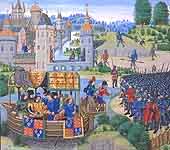
- “they all cried, as with one voice, that they would not leave until they
had the traitors in the Tower, and also charters declaring them free of
all manner of service… The king graciously granted their request, and
had a clerk write a bill in their presence, which read:…
|
|
12
|
- “Richard, king of England and of France, thanks his good commons
heartily for their desire to see him and hold him for their king, and
pardons them all manner of trespass and offense and felony made until
this hour… and wishes and commands that each send to him his grievances
in writing…”
|
|
13
|
- “And when the commons heard the bill, they said it was all trifles and
tricks, and therefore they returned to London and announced throughout
the city that all men of law… and all who knew how to write a brief of a
letter, should be beheaded wherever they might be found”
- (Anonimalle Chronicle, cited in Stephen Justice, Rebellion and Writing)
|
|
14
|
- The king’s position above the fray in doubt
- Confiscation of estates
- External wars
|
|
15
|
- -- As if, indeed, the Royal Person were immortal and had survived the
years from 1400 to 1600 intact, and bearing the same grudges
- Every ruler is Richard II?
|

 Notes
Notes