|
1
|
|
|
2
|
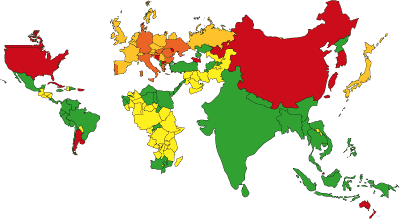
- Despite a deluge of news about the prospect of a war against Saddam
Hussein, only 13% of Americans tested could point Iraq out on a map of
the world.
- 11% of Americans could not find America.
- 71% of Americans could point out where the Pacific Ocean - the world's
largest body of water - was located. Worldwide, three in 10 of those
surveyed could not locate the Pacific Ocean.
- Apart from the Swedes, only 40% or fewer young adults could name China
and India as the two countries with a population over one billion.
- Less than 25% of French, Canadian, Italian, British and Americans could
name four countries that officially acknowledged owning nuclear weapons.
- 58% of Americans know the Taleban and al-Qaeda were based in
Afghanistan, compared with 84% of Britons, but only 17% of Americans can
locate the country.
- (courtesy of National Geographic Magazine and BBC News World Edition)
|
|
3
|
|
|
4
|
|
|
5
|
|
|
6
|
|
|
7
|
|
|
8
|
- Monuments (“reminders”)
- Walkers cut paths through cities
|
|
9
|
|
|
10
|
|
|
11
|
|
|
12
|
|
|
13
|
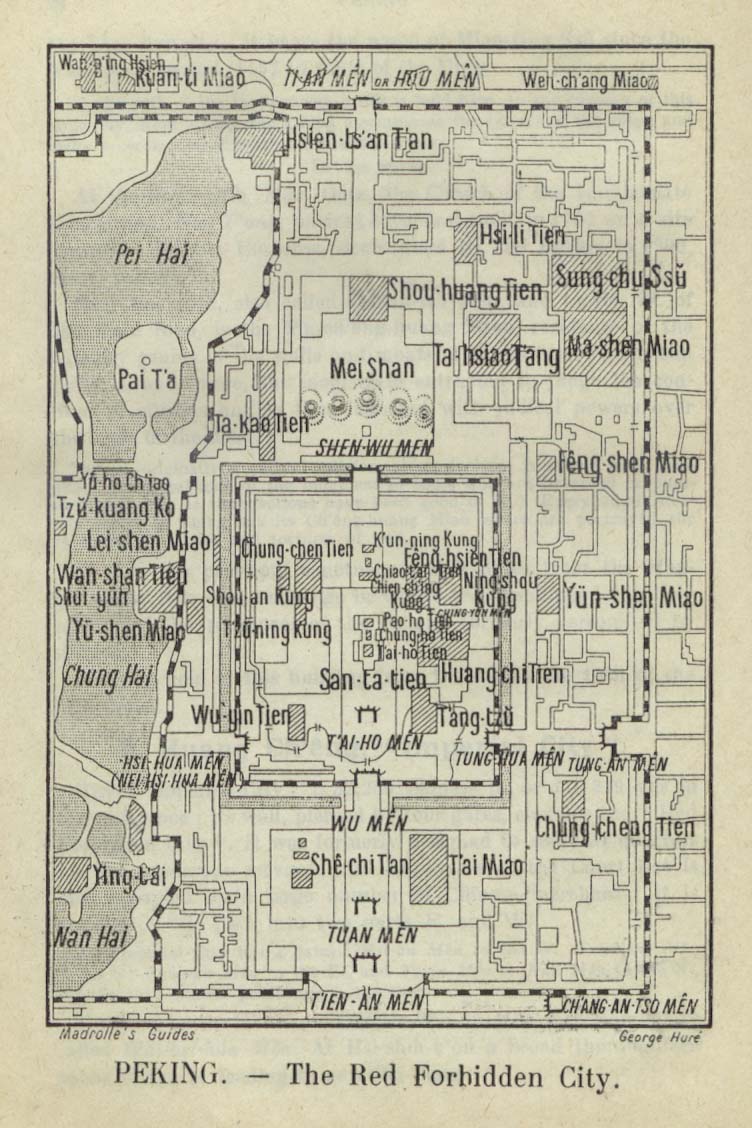
- Palaces, churches, squares, avenues, walls, canals; places of
pilgrimage, forbidden places
|
|
14
|
- First dimension: hierarchy (“inside” more powerful than “outside”)
- Second dimension: gender (“inside” more restricted than “outside”)
- Exile: “When a woman lives alone, her house should be extremely
dilapidated, the mud wall should be falling to pieces, and if there is a
pond, it should be overgrown with water-plants”
|
|
15
|
- The disintegration of the world order laid out in 1815 (Vienna
conference, to design post-Napoleonic Europe) and 1884 (Berlin
conference, to regularize colonial conquest)
- Emergence of a new space: “the Third World” (Alfred Sauvy, 1952), the
“non-aligned movement” (Bandung conference, 1955)
|
|
16
|
- Shared virtual worlds
- Geographical annotation programs
- The metaphor of “cyberspace”: what does it reveal, both in its accuracy
and its inaccuracy?
- Space still defined by social interactions and behavior
|
|
17
|
- “Space is an order of coexistences, as time is an order of successions”
(Leibniz)
- What’s primary: relation (between things in coexistence or mutual
sequence)
|

 Notes
Notes