R E S O U R C E S
Home
Syllabus
Student
Projects
Research
Links
Film
Series
Announcements
Spring 2000
Brazil: Demographic Profile and Case
Study
Desirée Allen
General
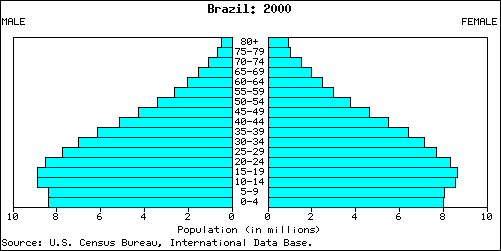
- Total Population: 171,853,126 (July 1999 est, CIA)
- Urban Population: 113,403,263 ; 67.57% of total (1980, US Census Bureau)
- Rural Population: 58,449,863 ; 32.43% of total (1980, US Census Bureau)
- Capital: Brasília
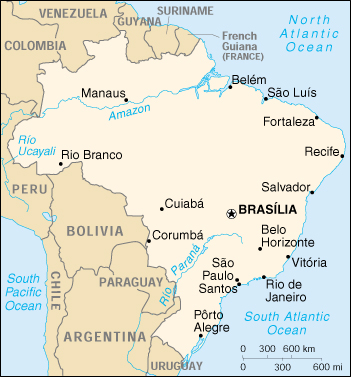
- Three Largest Cities: São Paulo (16.42) , Rio de Janeiro (9.89) , Recife (3.17) ("Latin American Mega City")
- Population under 14: 51,546,937 ; 30% of total (CIA)
Hmmm . . .
- 50% of Brazil’s population lives in absolute poverty. (Mid 1999, UNDP)
- 43.5% live on less than USD 2/day (Mid 1999, UNDP)
- Over I million children under 5 are malnurished (Mid 1999, UNDP)
- Brazil is 8th largest industrial nation, but 62nd on UNDP Human Development Index
- Lowest 10% of population holds 8% of total wealth, highest 10% holds 47.9% of the wealth. (1995, CIA)
Brazil has an estimated 10 million street children, which is 17% of the population.

Students Helping Street Kids International
is a tax-exempt, nonprofit organization incorporated in the state of Oregon
in 1997 to provide a service-learning opportunity to U.S. students and
others. It enlists their help to raise funds to pay for scholarships for
street kids in Brazil and elsewhere in the world so they can attend school
in their own communities. Additionally, other projects benefitting street
kid will be funded.
Goals:
- To provide funding for educational scholarships to needy children in developing countries to attend school in their own countries.
- To provide funding for other projects that benefit children in the developing world.
- To provide a service-learning opportunity to those students who get involved in fundraising to help the disadvantaged children in developing countries.
Locations: Oregon USA, Rio, Recife, Goiania (Brazil)
Major Participants: Students of local schools
through out the United States, The State of Oregon, schools in previously
listed cities in Brazil and, impoverished Brazilian Youth.
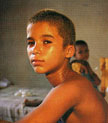 |
Pablo Aurélio da Conceição - Born 7/5/84. Pablo is an orphan living with his brother, sister-in-law and their three children in the shantytown of Maré. He is a third grader. He is at a critical age for being drawn into the drug trade which is rampant in his shantytown. He is bright, personable and determined to walk the straight and narrow and get a good education. |

Serviço de Educação
e Organização Popular
(People's Education and Training Service - SEOP).
Ideology Behind Novartis and SEOP
"On the one hand this is positive; on the other hand, it sometimes leads to the "Calcutta Syndrome", where compassion is temporarily lavished mainly on smaller children. Street children are actually wooed by many projects. As a result, the streets become particularly attractive to children from the slums. They move rapidly from project to project, taking advantage of what is on offer, although this does nothing to get them off the streets.
For this and numerous other reasons, the "palliative" approach should increasingly be abandoned in favour of a preventive approach focusing mainly on organising the poor settlements and providing them with what is most necessary in terms of infrastructure."
Location of SEOP: Petrópolis has 300,000 inhabitants and is located outside of Rio.
SEOP Bio:
- Founded in 1990 by Leonard Boff a liberation theologian, and Dr. Giuseppe Volonterio, aformer opera director.
- Works in 12 communities working to build "self-help groups" (movimentos populares)
- Motivates poor to develop their own initiatives in order to bring about equal opportunities, human rights, and integration into democratic society.
- Tries to avoid programs that make people dependant or "objects of charity"
- Works by direct involvment with the day to day poor.
- Creates job opportunities by relying on local labor ad much as possible.
This shelter is a small building built by the community and run by a local woman, Mrs. Macedo of 65 years. Novartis through soliciting funding from individuals in Switzerland and the "One World" German group, was able to assist SEOP in improving the building by building showers and bathrooms, providing food, and adding a second floor.