R E S O U R C E S
Home
Syllabus
Student
Projects
Research
Links
Film
Series
Announcements
Spring 2000
Nicaragua: Demographic Profile and
Case Study
Jenni Gonzales

*Total Population: 4,717,132 (July 1999 estimate)
**Urban Population: (1995 estimate) 2,938,887 (67 % of
total population)
**Rural Population: 1,447,511 (33 % of total population)
**3 largest cities:
Managua - 1,500,000 (1992 estimate)
León - 150,000 (1995 estimate)
Masaya - 100,000 (1995 estimate)
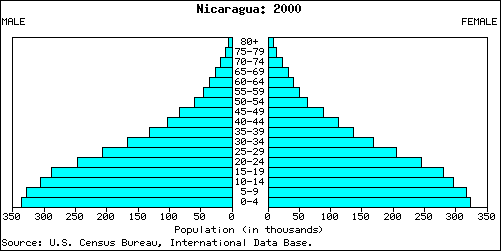
*Age Structure: (1999 estimate)
0-14 years: 2,056,178 (44% of total population) male 1,037,269; female1,018,909
15-64 years: 2,533,682 (54 % of total population) male 1,236,326; female 1,297,356
65 years and over: 127,272 (2% of total population) male 54,706; female 72,566
*Population below poverty line: 50.3% (1993 estimate)
**Literacy: (1995 estimate)
Definition: age 15 and over can read and write
Male: 64.6%
Female: 66.6%
**Data from www.nicaragua.com/facts/population.html; this site compiles population information from many different sources.
This graph, as well as future projections of the population of Nicaragua
can be found at http://www.census.gov/ipc/www/idbpyr.html.
GEOGRAPHY
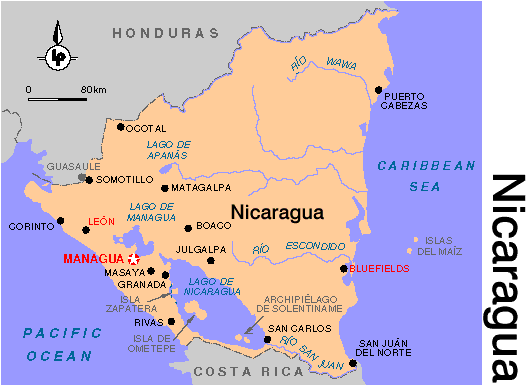
Map of the country from "Destination Nicaragua"
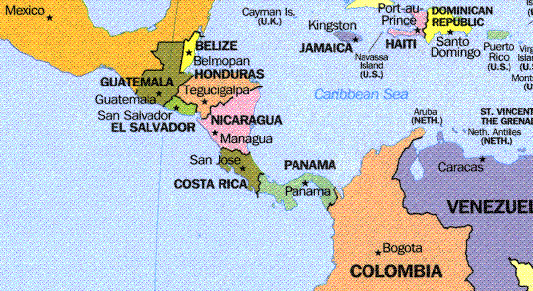
Context of Nicaragua within Central America and the Caribbean

A thousand
villages. A thousand miracles.

Who They
Are:
| Agros helps poor farmers in developing countries buy land, establish villages, and cultivate farms. Our efforts enable people to break the cycle of poverty and share hope, dignity, and purpose with their neighbors. |
Their Vision:
| To establish 1,000 Agros villages among the world’s neediest people by the year 2020. Each village will be self-sustaining, self-governing, and owned by the people who live there. |
About Their
Name:
Agros
is Greek for field, earth, and soil. We are also very mindful of two Spanish
words:
Mil-Agros: A thousand villages. A thousand miracles. |
|
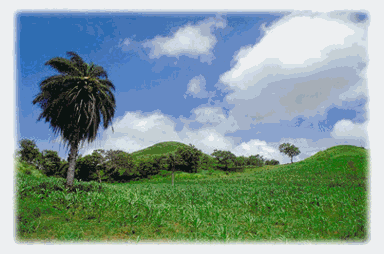
The Rivas-Tola
Village
Agros purchased the Rivas-Tola property on December 14, 1997, and then spent some time ensuring that potential villagers could receive and keep the title to the land. The villagers broke ground in the spring of 1999.
The Rivas-Tola property sits 15 minutes from the world's 10th largest fresh-water lake and 30 minutes from the Pacific ocean. The property lies in the heart of an area ravaged by civil war and unemployment.
Central America’s largest country, Nicaragua once exported huge quantities of rice, coffee, and natural resources. A long civil war devastated the economy, so the new village will help alleviate the area’s chronic poverty and unemployment.
The
first work party from the United States traveled to Nicaragua in August
and helped build a water tank. The tank provides water for drinking, irrigation,
and building projects. The team also laid out housing plots and celebrated
with the villagers as they drew lots for their homes.
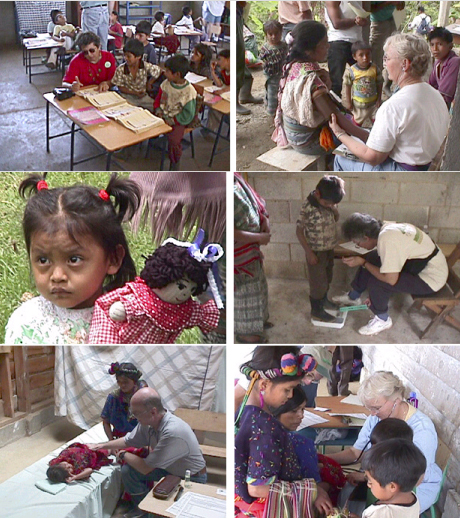
Photos from Nicaragua
 The
United Nations, World Bank
The
United Nations, World Bank
and Inter-American
Foundation
Cite Agros
for Excellence
In July 1998, an alliance of the United Nations, World Bank, and the Inter-American Foundation recognized the Agros Foundation for providing lasting solutions to poverty in Guatemala.
The alliance presented the award to Fundacion Agros, our partner organization in Guatemala.
The alliance examined the work of hundreds of organizations in 11 countries throughout Latin America. To be eligible for the award, the groups had to show that they effectively utilized local entities, international entities, and assistance from the private and public sectors to help marginalized people become self-reliant. The alliance specifically wanted to recognize organizations that assist poor people in accessing services and increasing productivity.
The alliance chose Agros because:
- Agros connects local leaders with international funding.
- Agros offers long-term commitment to impoverished, indigenous people.
- Agros has a proven track record of self-sufficiency through land ownership.
- Agros passes the scrutiny of financial accountability.
- The villagers' willingness to serve as a governing committee.
- The villagers' willingness to build their own homes and community buildings.
- The villagers' willingness to establish farms and provide food and cash crops for themselves.
- The villagers' willingness to earn a profit and repay their startup loans.
- The villagers' willingness to access to health care, education, agricultural development, animal husbandry, micro enterprises, and spiritual care.
How This Relates to Poor Children
Though this foundation does not deal with street children directly, it’s far-reaching implications impact street-children immensely. Agros’ vision is to enable poor, Christian families in Latin America to own their own land. This prevents families from migrating to the cities and adding to the problem of overpopulation and crowding which are one of the primary causes of street children.
Agros’ goal to help families in turn helps poor children who are major parts of poor families, giving them an opportunity to live full and healthy lives within a safe community.
My Experience with Agros
I participated in a work team in Guatemala in January of 1999. I helped people living in a village called La Bendición (The Blessing). When I was there, I saw poverty like I had never seen before (as I had never before been in a third world country).
The children in the Agros villages are precious. I saw many and though I was not able to meet all of them, the ones that I did meet are still very dear to my heart. I remember two in particular:
- Nila is a little girl who lives in the village of La Bendición. She was four years old when I went on my trip last year and touched my heart with her little smile. She was my little amiga and loved to sit in my lap and talk to me in Spanish. I remember being amazed when she helped her mother cook corn tortillas over an open fire. She was able to make them almost all by herself.
- Eliezar is the son of one of the leaders of the town where we worked. He came and visited us at the "Waldorf" where we stayed and brought a smile to everyone who saw him. I remember gathering firewood with he, his two older siblings, and his mom one afternoon.