ME 137|237 Teaching Team

Dr. Larry Leifer
PhD Professor & Co-PI
Larry Leifer, PhD, is a Professor of Mechanical Engineering at Stanford University and Director of the Hasso Plattner Design Thinking Research Program. He has taught ME310 for over 20 years and continues to redesign the course ever year with new methodologies and technologies. Once a design student himself at Stanford University, he has started many design initiatives at Stanford including the Smart-Product Design Program, Stanford-VA Rehabilitation Engineering Center, Stanford Learning Laboratory, and most recently the Center for Design Research (CDR). A member of the Stanford faculty since 1976, his research themes include: 1) creating collaborative engineering environments for distributed product innovation teams; 2) instrumentating that environment for design knowledge capture, indexing, reuse, and performance assessment; and 3), design-for-wellbeing, socially responsible and sustainable engineering.
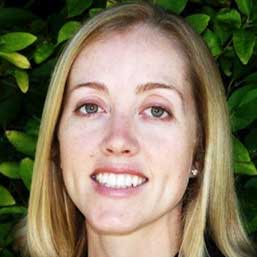
Lauren A. Shluzas
PhD Lecturer & Co-PI
Lauren Aquino Shluzas, PhD, is the Executive Director of Healthcare Design Research at Stanford’s Center for Design Research. Lauren aims to apply her background in medical device design towards improving the usability, quality, and adoption of healthcare products, at a reduced cost to patients and providers. She earned a PhD in Mechanical Engineering from Stanford University, with a minor in Management Science & Engineering. Her doctoral thesis examined design and development strategies that influence the clinical and financial outcomes of early stage medical device companies. She earned a Bachelor of Science in Mechanical Engineering from MIT, and a Master of Science in Mechanical Engineering from Stanford. Lauren’s industrial experience includes serving as a Senior Engineer at Omnisonics Medical Technologies. Prior to that, Lauren was a Product Development Engineer for the Minimally Invasive Surgery Group at Johnson & Johnson's Depuy Spine. Lauren had previously served as an Engineering Analyst for Boeing’s Flight Crew Systems Division.

Katherine Stephenson
MS, Lead Instructor
Kate Stephenson is a professional mechanical engineer and project manager who has worked in the aerospace, telecomm and medical technology industries. She has over 15 years of CAD and prototyping experience and comes from a multi-generational family of machinists. She returned to Stanford at the end of 2012 to complete a PhD in the Mechanical Engineering department and is currently in her last year. Kate holds a B.S. in Engineering (Product Design) and a M.S. in Mechanical Engineering from Stanford University. While her specialty is in the medical field, her research has wide implications for how digital manufacturing technology can empower individual innovators from a range of backgrounds to design and develop new products.
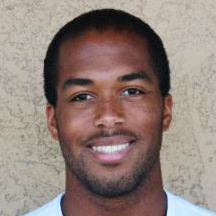
Phillip Dupree
Class Assistant
Phillip grew up in the quiet state of Maryland before moving to the not so quiet New York City to study at Columbia University. After four years of mechanical engineering, political science, robotics, mechatronics, and skating through hot summers and slushy winters he moved to Southern California to work in the Phantom Works division of Boeing Defense, Space, and Security. After three years on the Structures and Mechanisms Design team of the CST-100 capsule, Phillip found his way up to Stanford to continue his education and learn all he could about product design and embedded systems.
Phillip's primary design interest is cutting edge cool stuff, particularly - but not limited to - the fields of wearable technology, augmented reality, connected devices, and industrial automation. He plans to put his skills in mechanical design and mechatronics to use to create fascinating, useful new products. Feel free to contact him at any time about design, mechatronics, politics, parkour, space, and science fiction novels.

Betsy Soukup
Class Assistant
Betsy Soukup is a masters student in mechanical engineering who has worked at several different manufacturing and product design companies. She got her bachelor of science in mechanical engineering from MIT, did research in the Hatsopoulos Microfluids Laboratory and rowed for MIT's varsity crew team. Ever since she interned among the gigantic autonomous robotic arms at Harley Davidson, she's been interested in learning as much as she can about how products are manufactured and assembled. Betsy will work at SpaceX after graduation and help develop some of the first mass-produced rockets. She also thinks that 3D printing is the closest thing we have to magic, and can't wait to see the awesome projects this class creates!
ME 137|237 Guest Speakers
Gabriel Aldaz
PhD Guest Lecturer
Gabriel Aldaz recently completed a PhD in Mechanical Engineering within the Stanford Center for Design Research. His research was sponsored by Oticon A/S, a leading hearing aid manufacturer based in Copenhagen, Denmark. In 2000, Gabriel co-founded SparkWorks Engineering, an electro-mechanical engineering consulting firm that he ran until 2006. During that time, he had the opportunity to work with established organizations (Hewlett-Packard, VA Hospital, Maxim Integrated Circuits) as well as advise early-stage technology ventures (Jawbone, Retail Inkjet Solutions, EMC Solutions). During his 15 years of work experience, Gabriel has also helped design innovative automotive interfaces (BMW), furniture systems (IDEO), a unique cargo-carrying bicycle (Xtracycle), the Incredible Hulk roller coaster in Orlando, Florida (MTS Systems), and medical devices for respiratory care (Thayer Medical). Gabriel earned his BS in Mechanical Engineering from the University of Arizona and his MS in Mechanical Engineering from Stanford University.

Mark Schar
PhD Guest Lecturer
Mark has extensive background in consumer products management, having managed more than 50 consumer driven businesses over a 25-year career with The Procter & Gamble Company. In 2005, he joined Intuit, Inc. as Senior Vice President and Chief Marketing Officer and initiated a number of consumer package goods marketing best practices, introduced the use of competitive response modeling and "on-the-fly" A|B testing program to qualify software improvements. Mark is the Co-Founder and Managing Director of One Page Solutions, a consulting firm that uses the OGSP® process to help technology and branded product clients develop better strategic plans. Mark is a member of The Band of Angels, Silicon Valley's oldest organization dedicated exclusively to funding seed stage start-ups. In addition, he serves on the board of several technology start-up companies. He is a Lecturer in the School of Engineering at Stanford University and teaches the course ME310x Product Management and ME305 Statistics for Design Researchers.
Alan E. Shluzas
MS Guest Lecturer
Alan E. Shluzas is the Director of Research and Development for the medical device incubator, Reprise Technologies. His work focuses on early stage disruptive technologies in structural heart disease, general surgical, and orthopedic product spaces. Prior to Reprise, Mr. Shluzas was Director of R&D at Endius Inc., a medical device start-up that was acquired by Zimmer Spine in 2007. In that role, he invented and developed minimally invasive spinal fusion implants that transformed the standard of care in spine surgery. Prior to joining Endius, Mr. Shluzas held engineering positions at Acufex Microsurgical, which was acquired by Smith & Nephew in 1995. He was a key contributor to Smith & Nephew's line of bio-resorbable fixation devices. Mr. Shluzas holds a B.S. and M.S. in Mechanical Engineering from Northeastern University, and is an inventor on 37 issued and 66 pending US patents related to the fields of structural heart disease, endoscopy, and orthopedics.

Jules Sherman
MFA Guest Lecturer
Jules has designed hundreds of products for companies such as Limited Brands, Costco, Macys, Walmart, Martha Stewart Home, Crate & Barrel, Restoration Hardware, Target and TSUM. Her focus has been in the house-wares, home accessory and fashion industries. She recently completed a graduate degree at Stanford to learn "design-thinking," which emphasizes empathy, rapid prototyping, and user testing to create meaningful products and services. During her studies she developed a patent pending medical device that supports human lactation, a health-related mobile app, personal emergency response system concepts and a toy that promotes family communication. She started a consultancy in June 2012 with a focus on health and wellness products. She has since been working on design projects for the bio-tech, mobile health, personal care and PERS industries. She enjoys working for both start-ups and established companies in this space.