


``You can't reduce people to numbers''.
Are numbers informative?
Are numbers objective?
One-dimensional, to use another disparaging term from common parlence that is a definite virtue in the statistical realm. Capturing some interesting aspect of life on a one- dimensional scale, such as the proportions of crimes reported in Table 1, gives us a leg up on its analysis.
But we have to turn the data around so that one-dimension IS enough:
Here is an example:

Two dimensional picture of a three dimensional object, choice of how we project is of the first importance, in a sense that is what we do when we do comparative studies too.
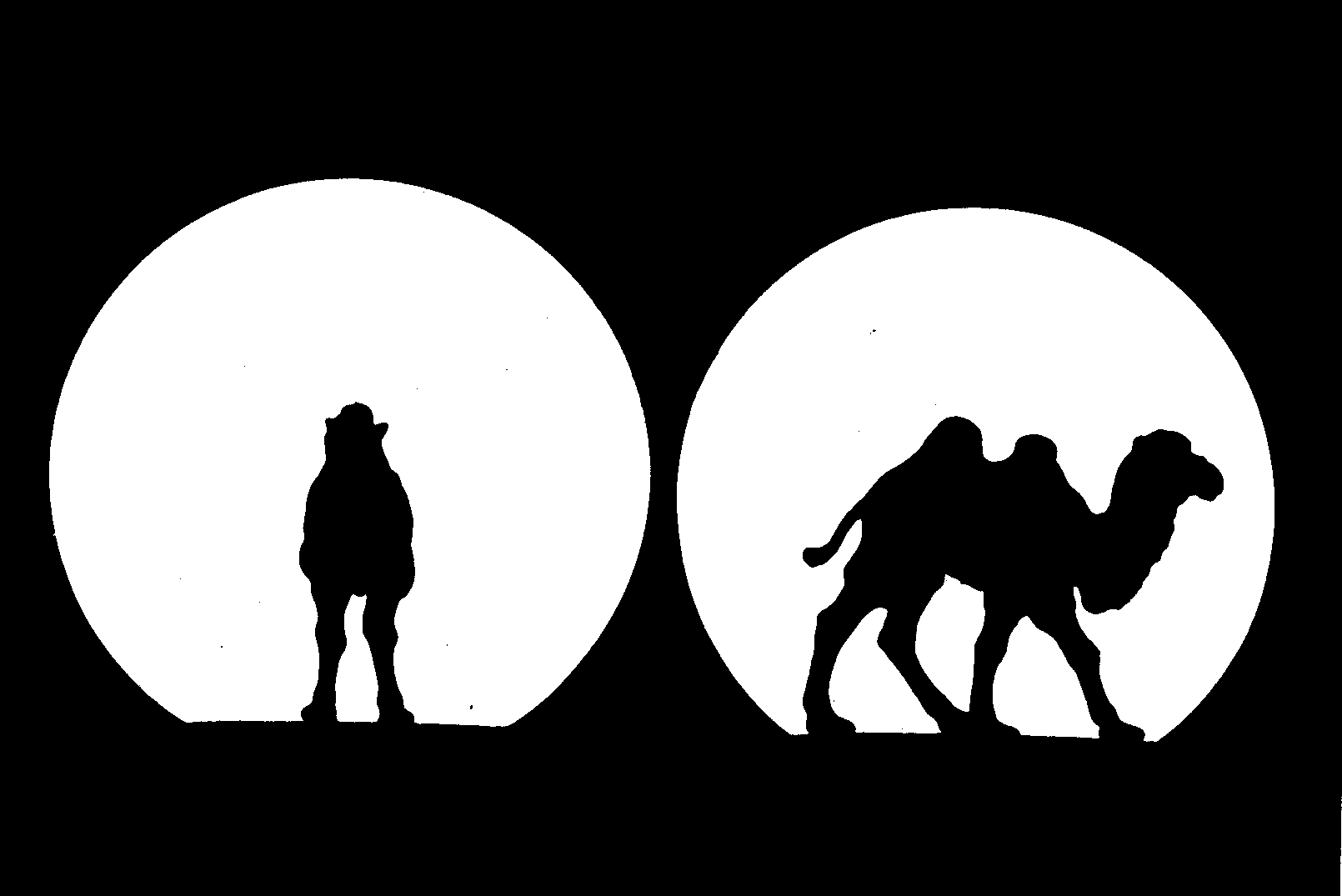
In this case, variation is good, the variability contains the hidden structure. The direction of variation is called a variable, something that changes from person to person.
We have seen two types of variables:
Continuous 1.345 1.432 .....
Categorical red green purple coded often as 1 3 2 ...
More significant digits does not necessarily mean better in statistics.
Think of Galileo's experiment, the variable `before/after' is better than 4 digits of time, if the differnce is in the 6th digit.
Questions: