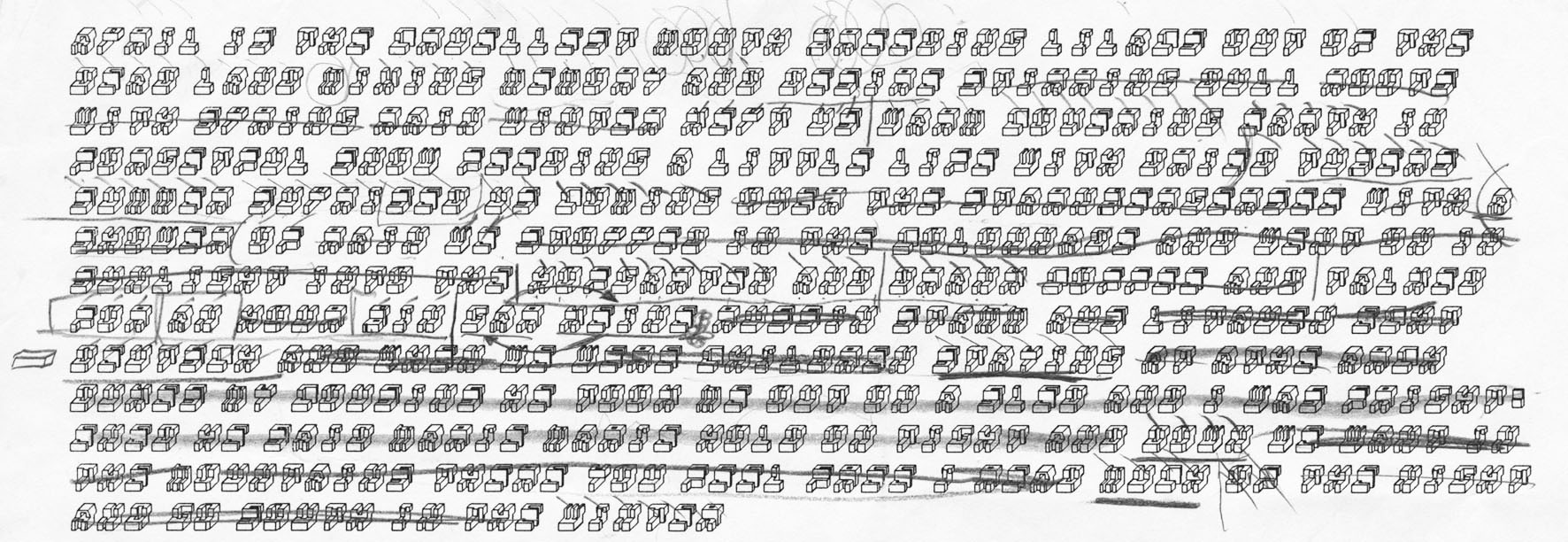
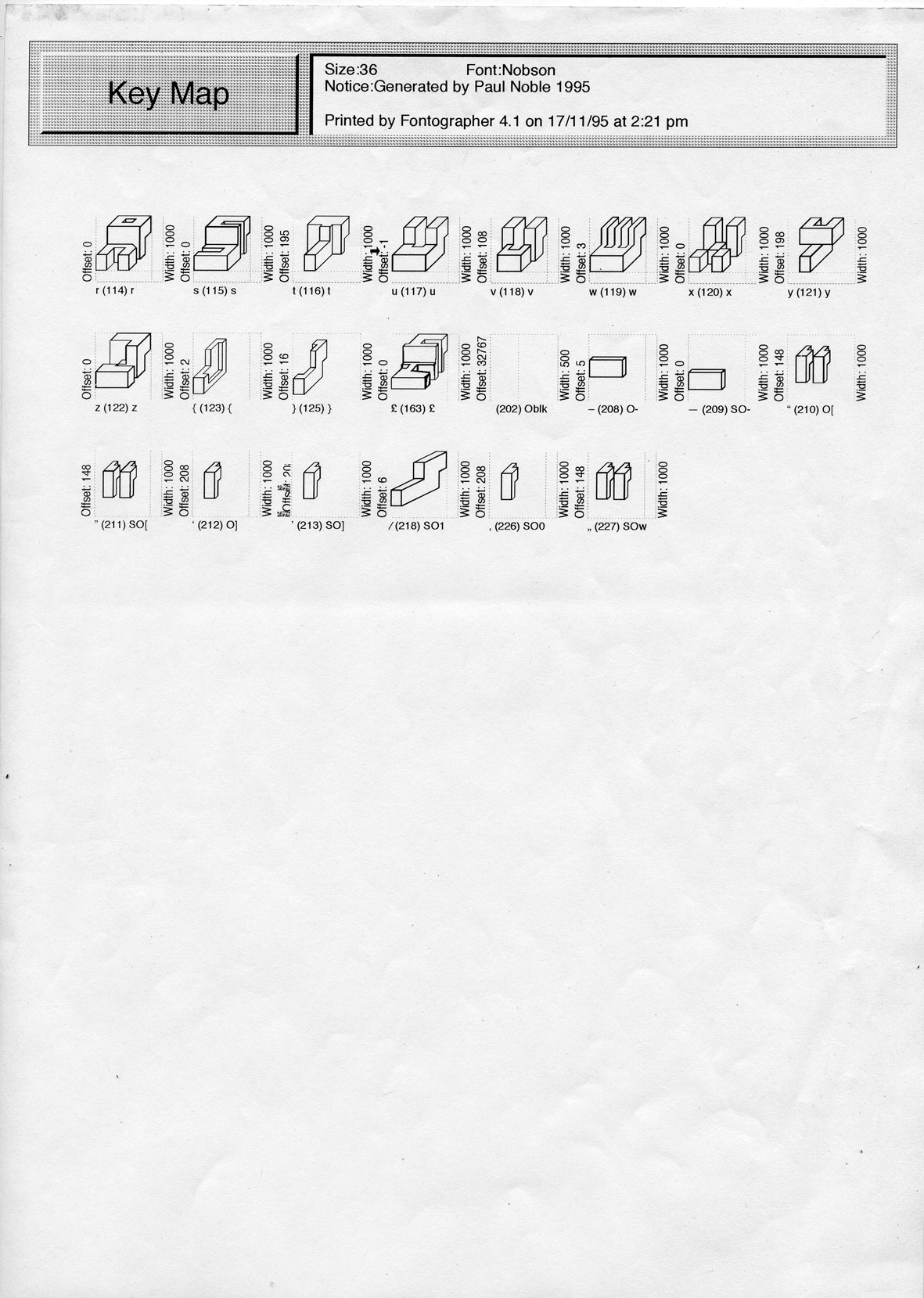
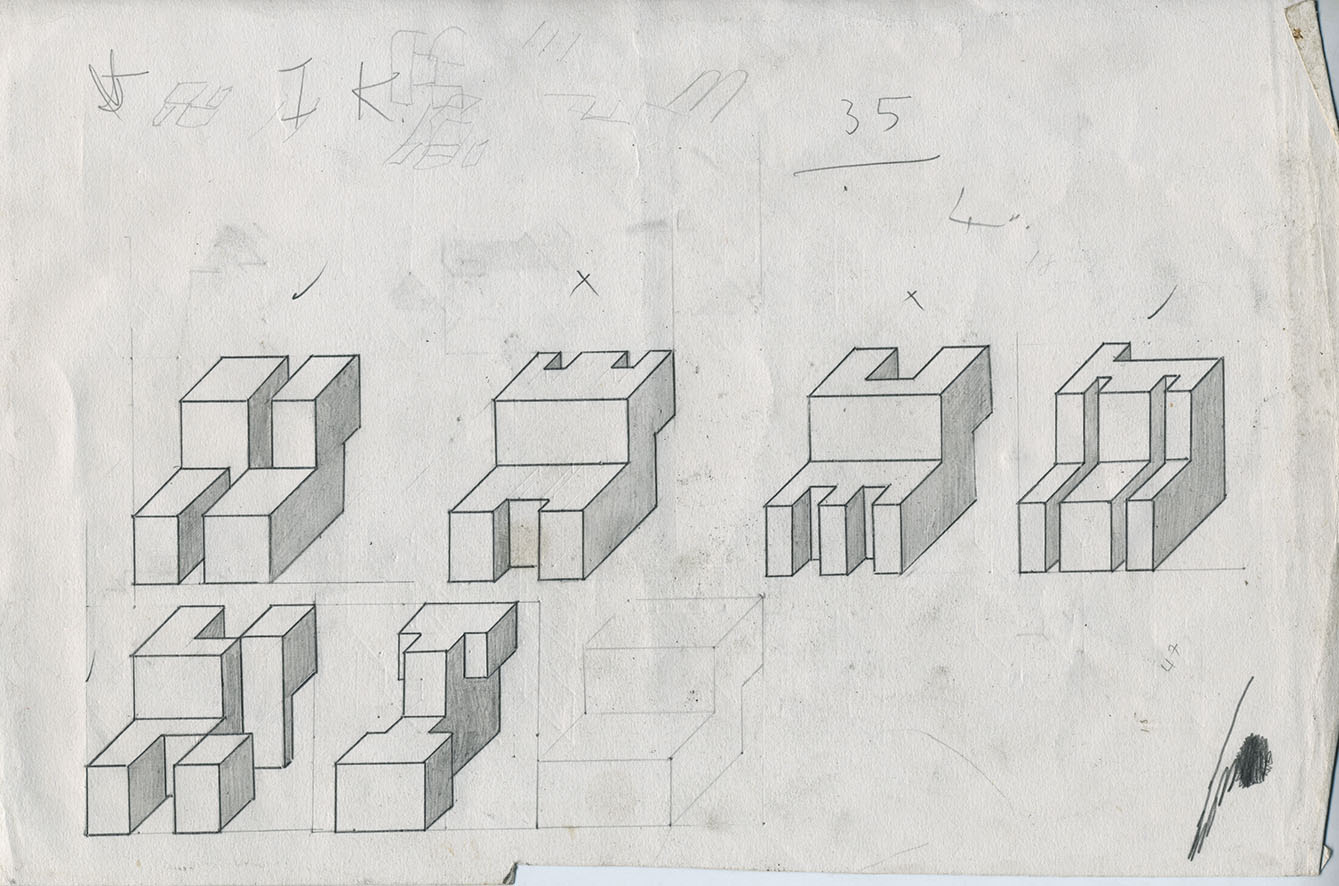
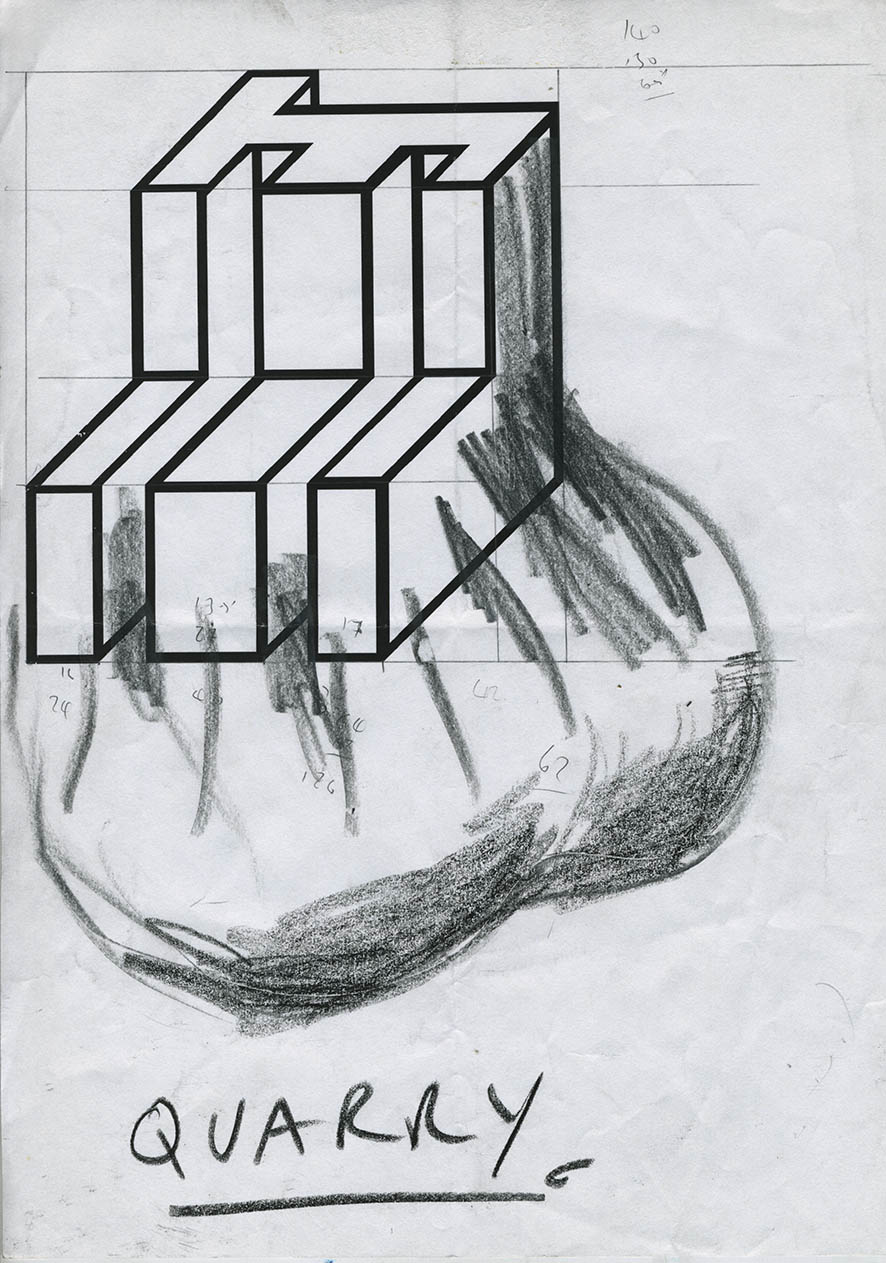
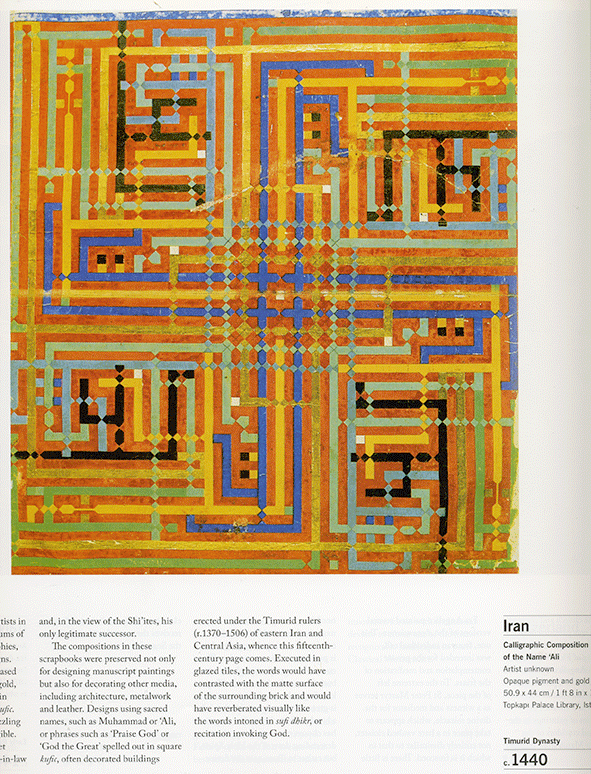
MS: Illuminated manuscript.
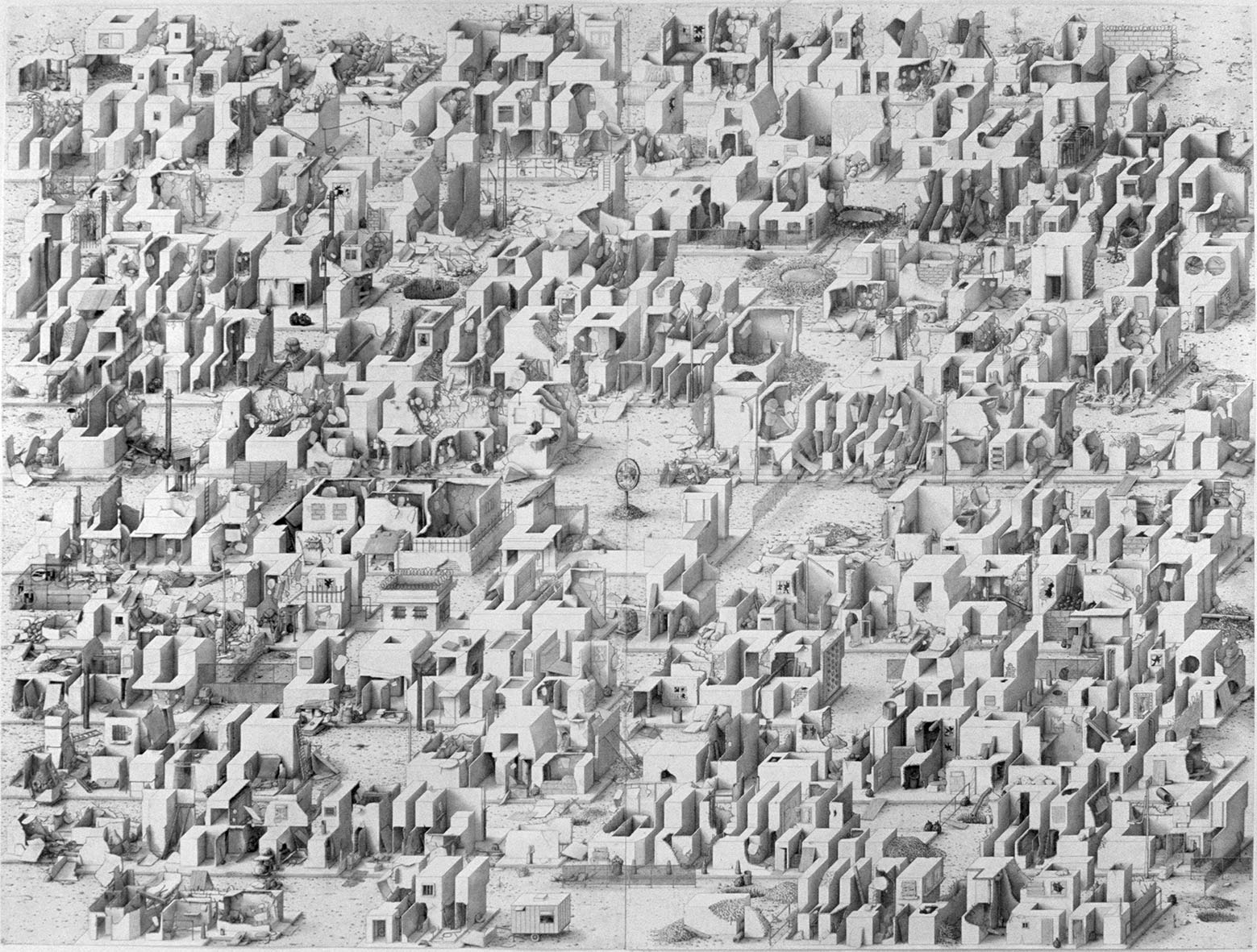
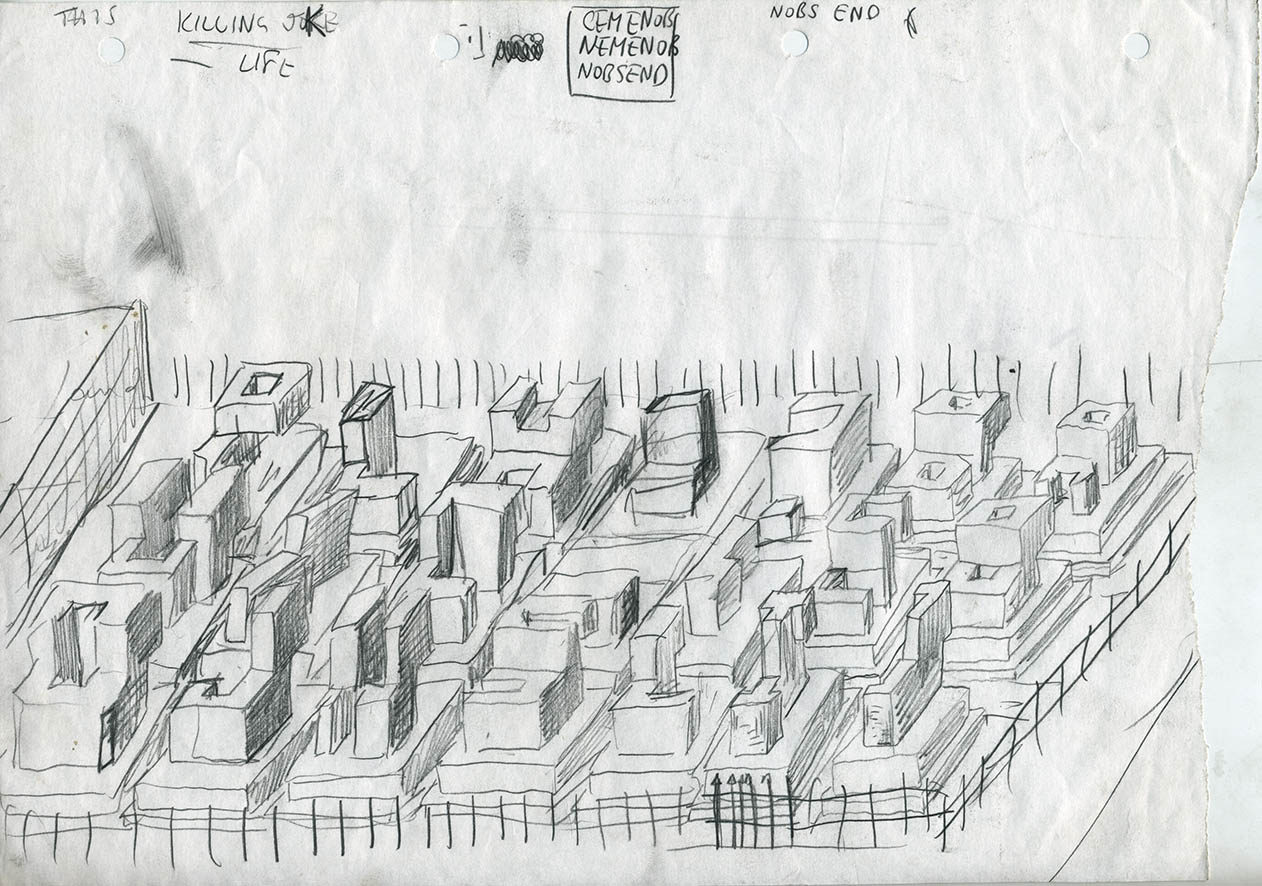
Nobson is bathed in an even light, but what lights Nobson isn't the sun. The light source is outside the viewer’s field of vision. The shadows are all at the same angle, and there’s no converging perspective, so the light in Nobson must come from a prism or angled slats that are above but parallel to the land, not from a point source such as the sun. The sun in Nobson is not about light.
So the light in Nobson is a function of the projection and its grid, the way Nobson is drawn. Illumination actually therefore comes from the reflective qualities of the paper, shining through the pencil graphite, the drawing, while the angled shadows offer the impression of three dimensional modeled form. Nobson’s light is brightness — tone.
PN: I mostly use hard, or technical, pencils — 4H,5H,6H,7H,8H and 9H. Each of these hardnesses has their own tone — or a darkness they can't go beyond. The more 9H pencil you apply to your paper doesn't increase it's darkness, it simply compresses the paper so that it becomes shiny, reflective and thus a pale mirror.
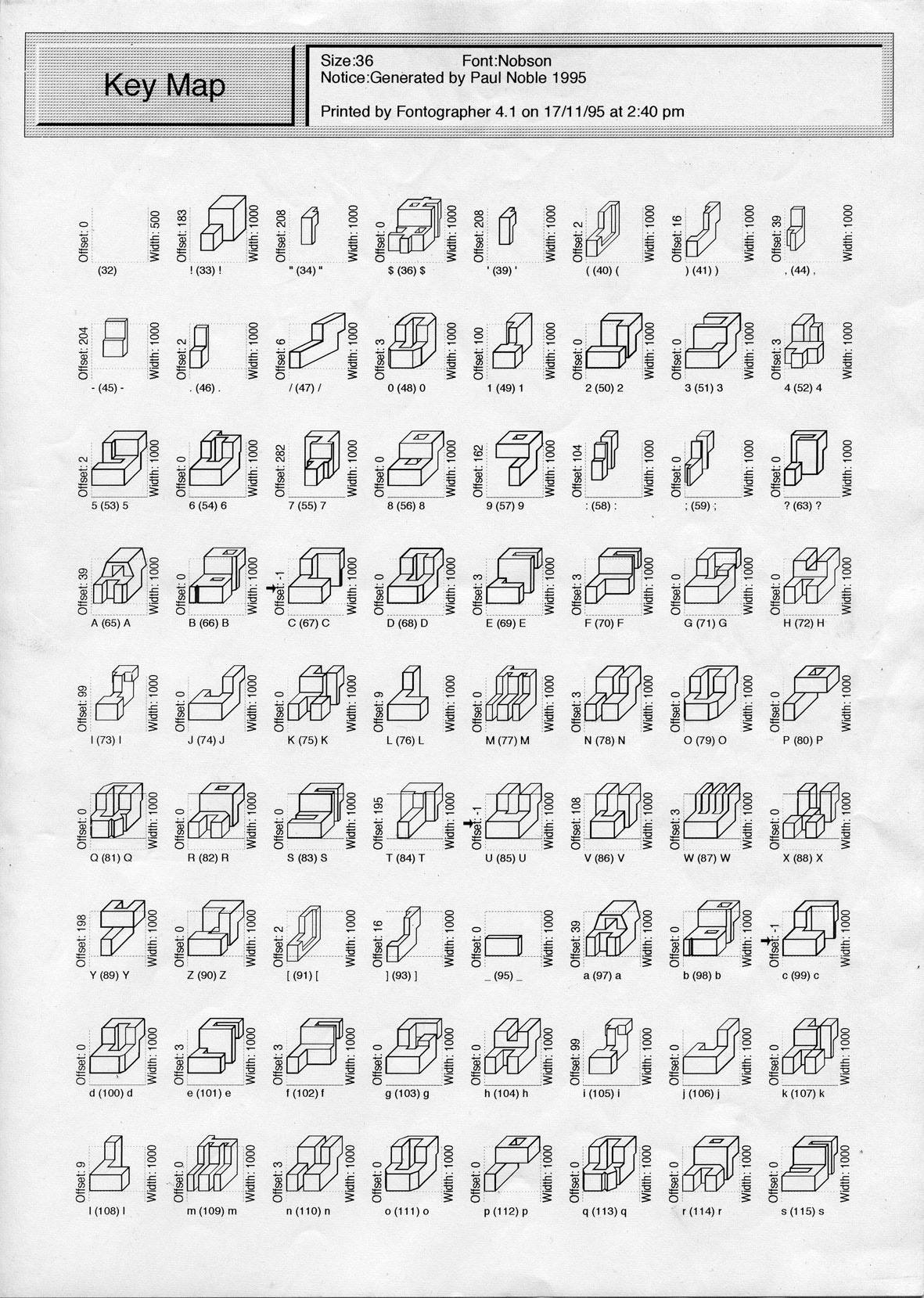
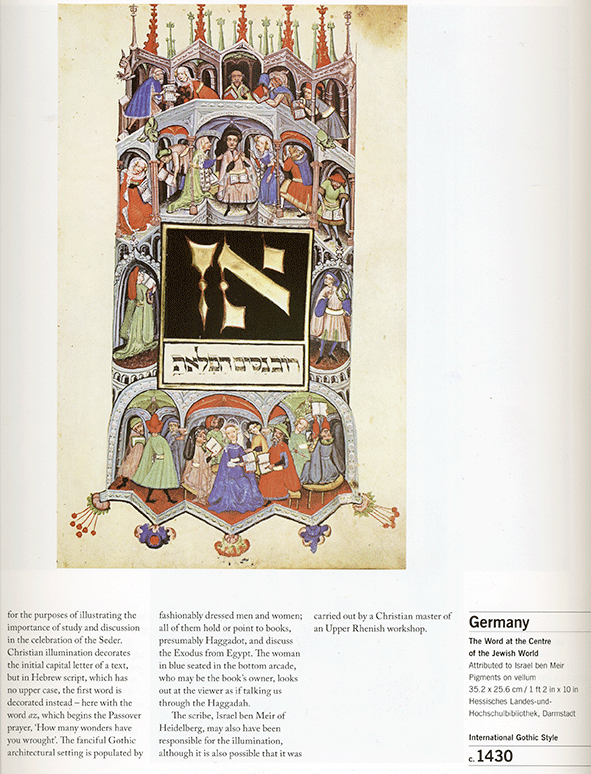
These drawings are chirographic, scripted by hand, manu-script. Given the organizing principle that word and letter forms are the basis of so many buildings, features, landforms, Nobson is a kind of illuminated manuscript.
PN: "For it was not so much by the knowledge of words that I came to the understanding of things, as by my experience of things I was enabled to follow the meaning of words"
Plutarch - preamble to discussing Demosthenes in the The Lives of the Noble Greeks and Romans.
PN: Many complain that the words of the wise are always merely parables and of no use in daily life, which is the only life we have. When the sage says: “Go over,” he does not mean that we should cross over to some actual place, which we could do anyhow if the labor were worth it; he means some fabulous yonder, something unknown to us, something too that he cannot designate more precisely, and therefore cannot help us here in the very least. All these parables really set out to say merely that the incomprehensible is incomprehensible, and we know that already. But the cares we have to struggle with every day: that is a different matter.
Concerning this a man once said: Why such reluctance? If you only followed the parables you yourselves would become parables and with that rid yourself of all your daily cares.
Another said: I bet that is also a parable.
The first said: You have won.
The second said: But unfortunately only in parable.
The first said: No, in reality: in parable you have lost.
Parables and paradoxes by Franz Kafka, tr. by Clement Greenberg and als., Schocken Books, 1961, p. 11.
PN: "(it) is not the office of art to spotlight alternatives, but to resist by its form alone the course of the world, which permanently puts a pistol to men's heads." Adorno. Commitment, Aesthetics and Politics
PN: De-Illumination - see 'Nobson Central'