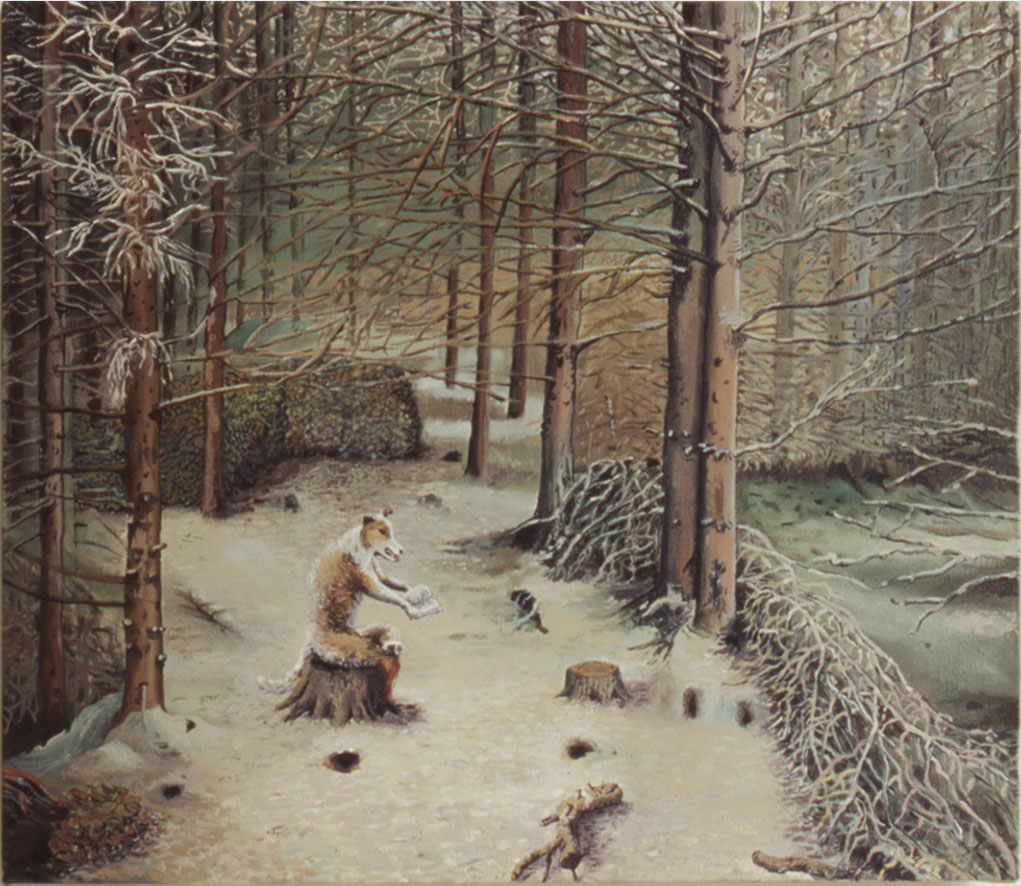
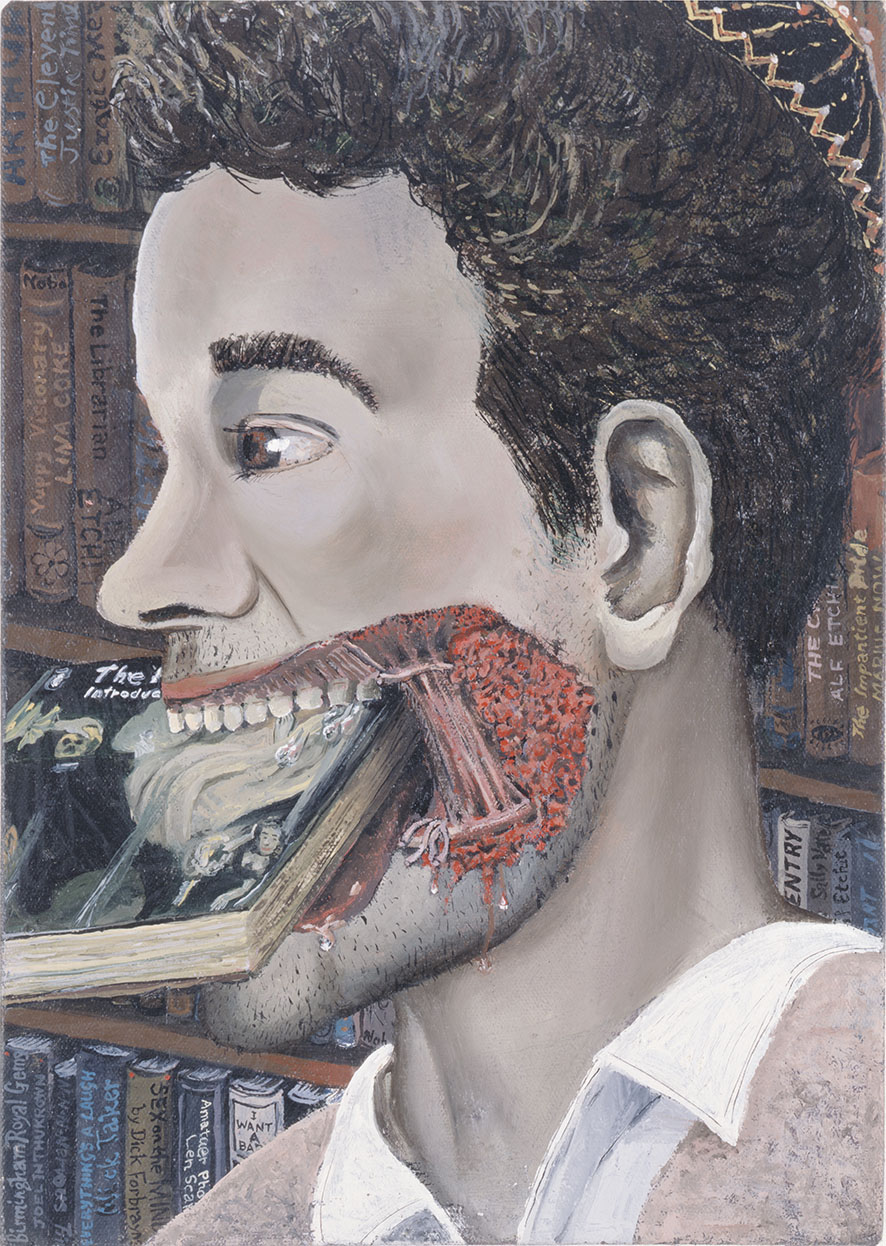
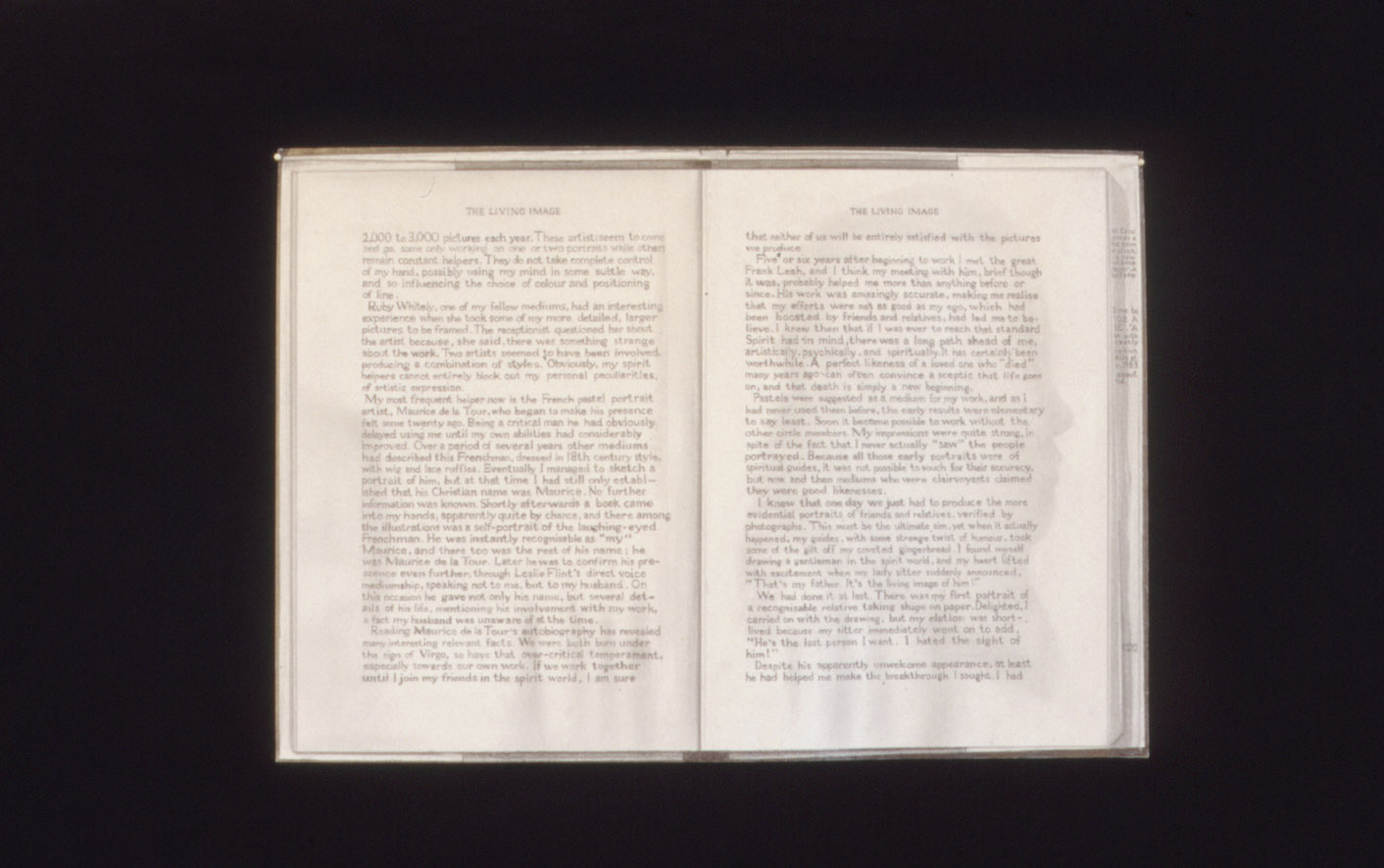
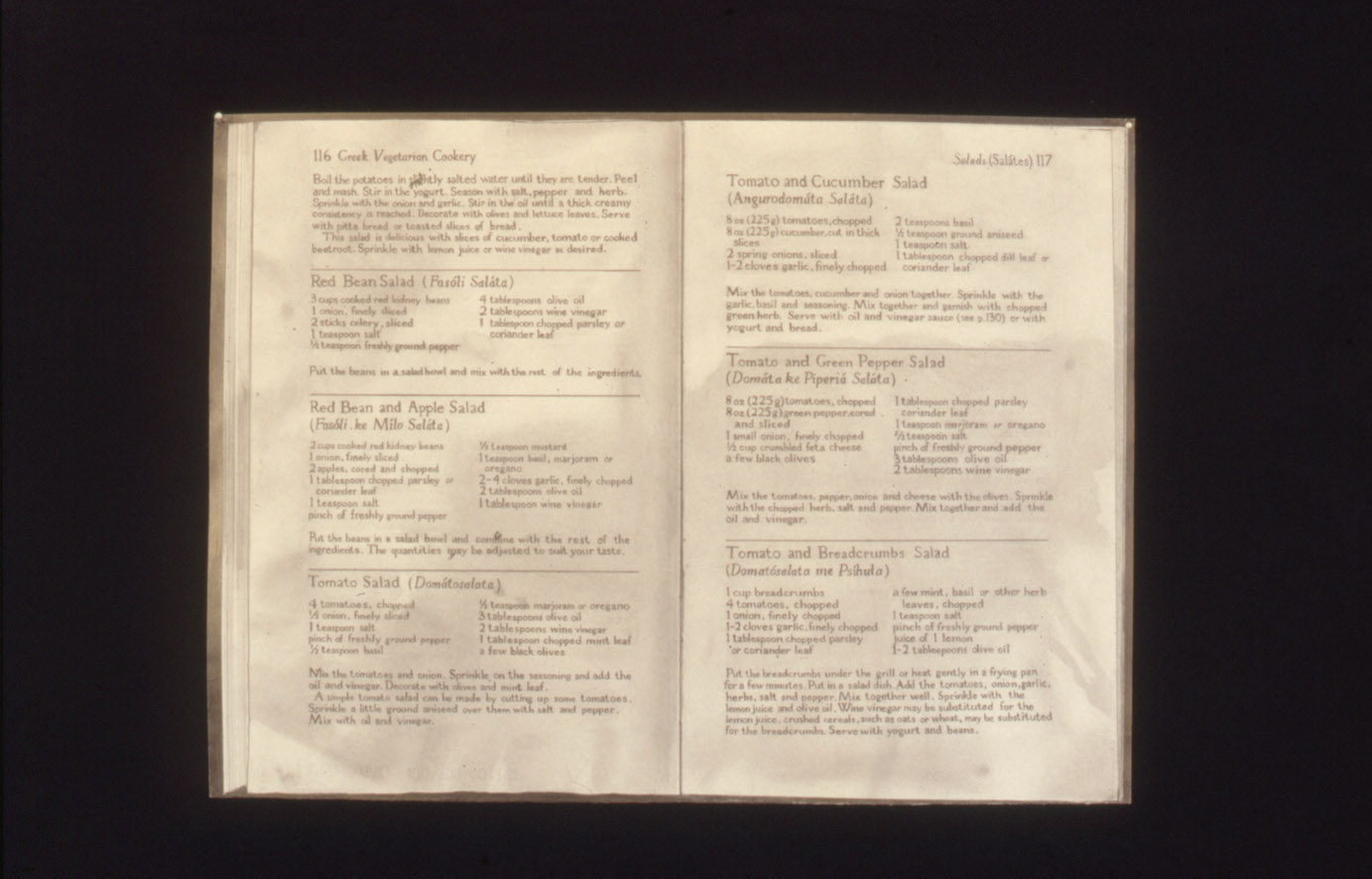
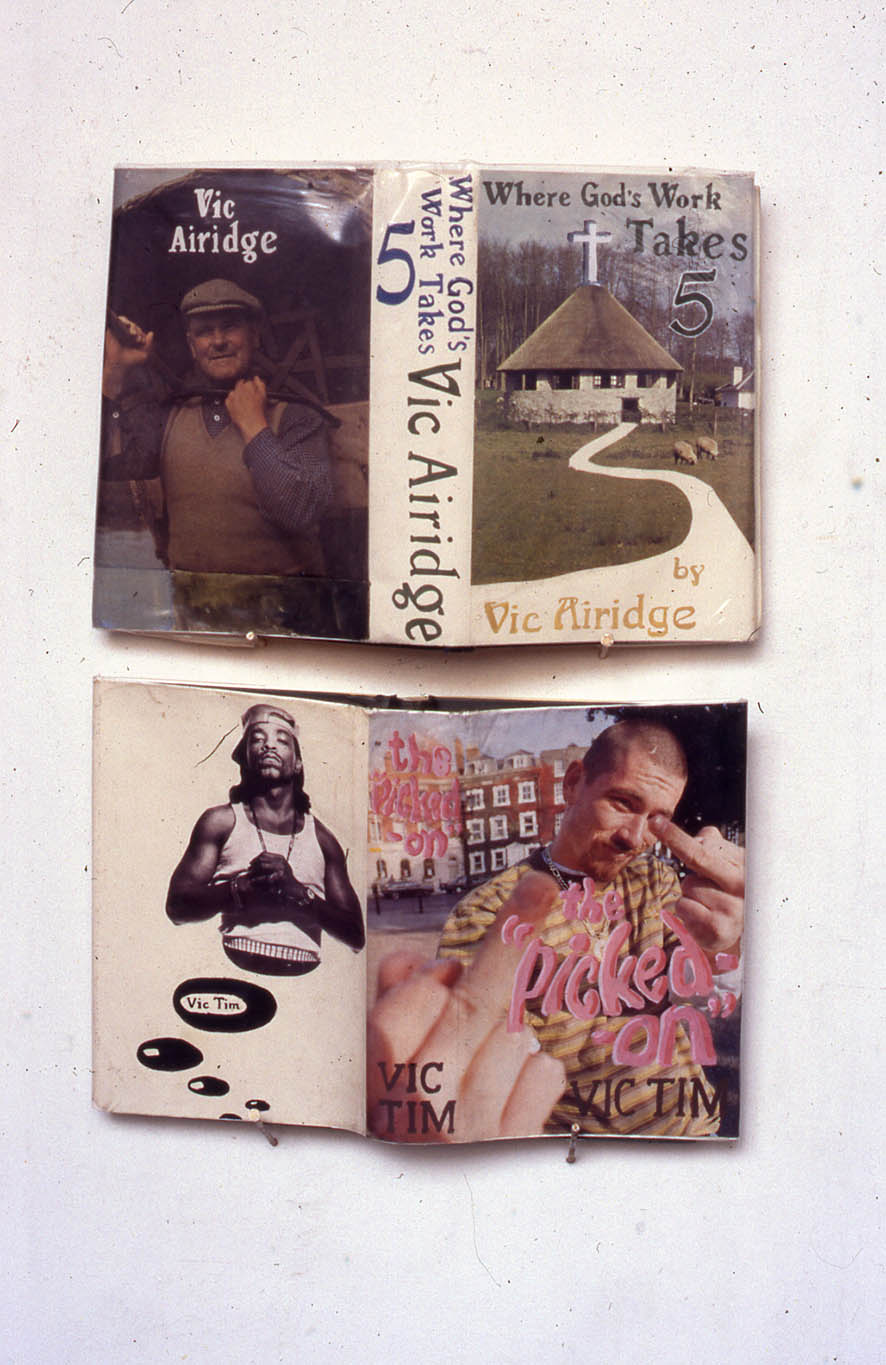
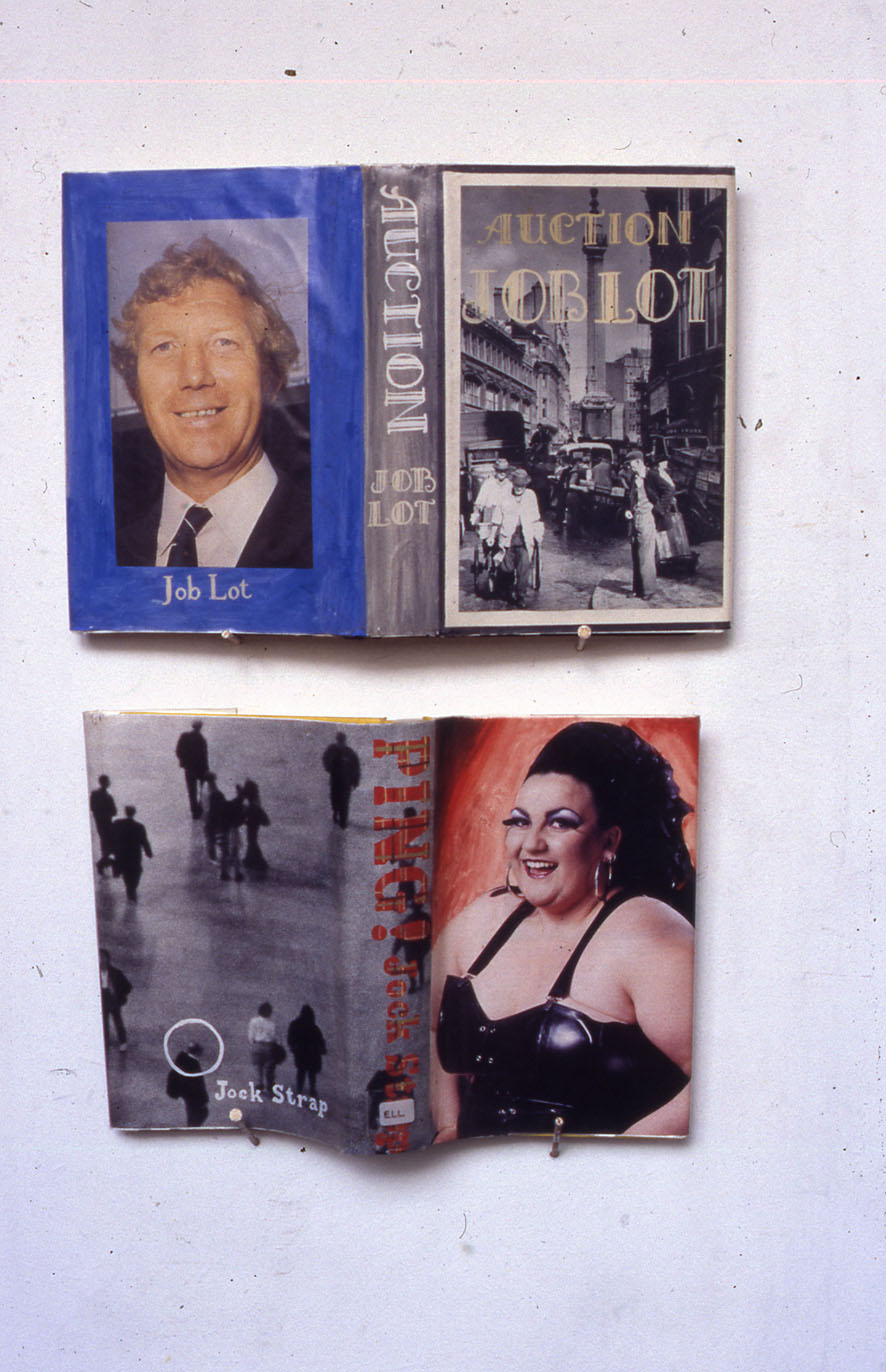
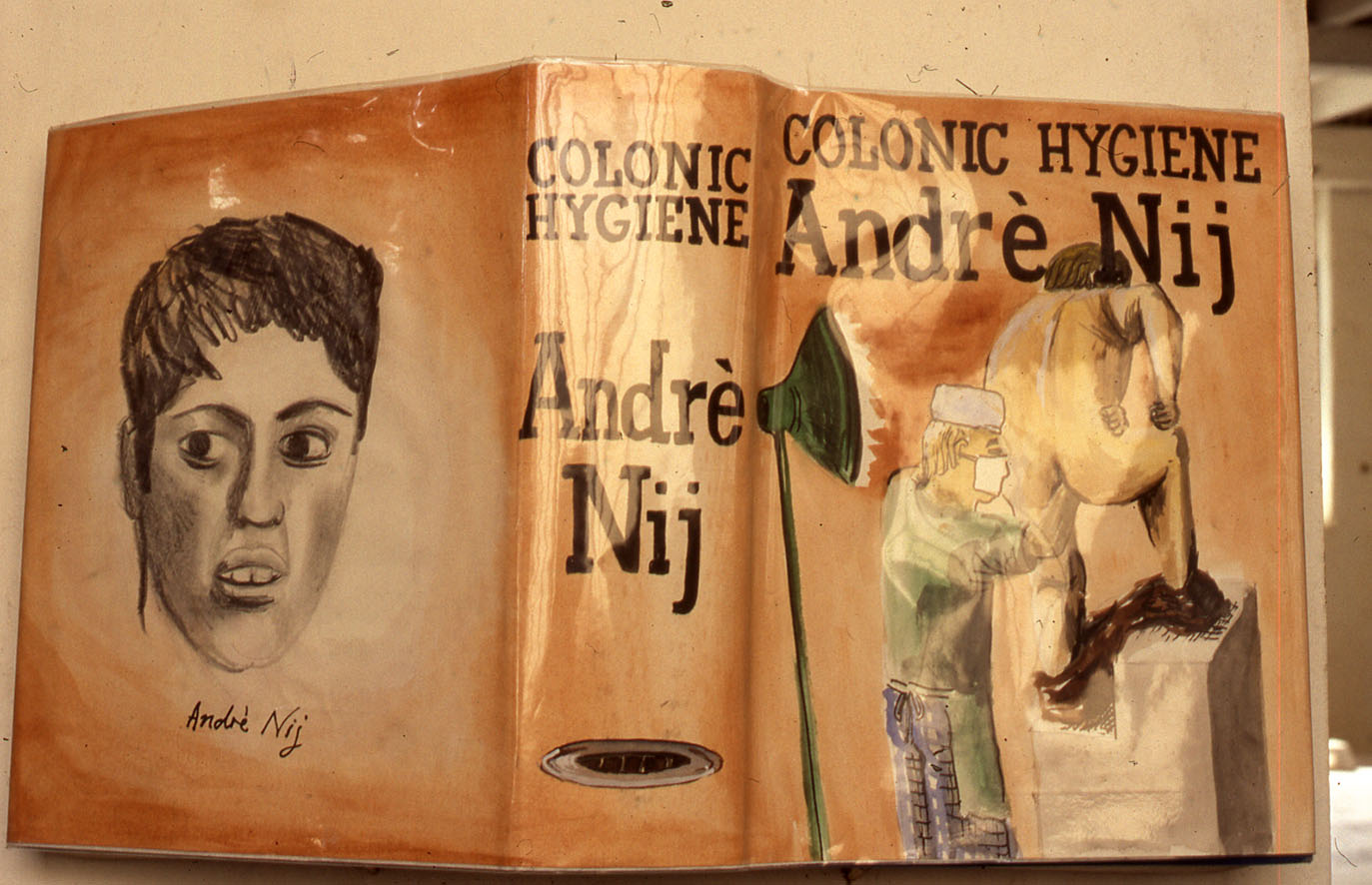
MS: In Nobson the land and architecture actually and conspicuously embody three dimensional letter forms, a font of Paul’s invention, where material form matters as much if not more than the sense and meaning that may be read into these words-in-the-land. Many parts of Nobson have at their core a name, word, phrase, sentence, plotted out in Nobson font. The letters of the font are based upon the three dimensional geometric forms of much modernist architecture, houses that have caught Paul’s attention, so they look like architectural forms.
In Nobson world building is word building. Nobson is conspicuously word-place, text-space, text-scape.
The material forms of words and letters matter. There are connections here with epigraphy — the reading of inscriptions in stone, or of hand-written manuscripts. Graffiti, writing on the wall, marking visit and territory, has here reached an apotheosis. And toponymy, concerned with place names, with the way memories are preserved in the naming of places, is involved. In Nobson these have become existential features of the environment, with letters shaping, structuring, offering sense and coherence, with words shedding light on things, offering illumination.
The letters and words in Nobson are sometimes overgrown, elaborated with ornament, falling into ruin, as in Nobson Central, incorporated in the land and environment. Legibility is in question. Some have devolved into ciphers and ruins, posing questions, rather than offering illumination.
These connections between words, language and architecture take us back to the Tower of Babel (in the ancient city of Babylon, the “Gate of God”). People, who shared the same language, built a tower to reach the heavens. God punished this hubris, this arrogance, by confounding the shared understanding and meaning of that original language, by imposing many languages upon people, who had then to work to translate before they could understand each other. In place of transparent and resonant communication came the babel, the noise of discordance. The origin of linguistic diversity and incommensurability is here associated with building and architecture.
In this excavation of a myth of architectural origins, in Nobson’s fontographic text-scapes, letters and words are much more than their function as communication and representation by virtue of their materiality, their substance, their energy. Here words and letters are not solely symbolic code, but always joined to practices beyond language and communication, charged with libidinal intensity referring not to a process of representation, but to (divine) creativity, productivity, to building in which words function as a center of energy, a productivity in which a word is not defined by what it means (its sense) but by what it does, by the effects it induces, the material environment it creates.
Words are not just the means for the expression of meaning. Separated from thought, inhabited, structuring land and architecture, ruptured from language they can be sites of events, potential explosions of affective potential — “this could happen here”.
The key to all this is the simple experience that the material world is never equivalent to its representation, where our materiality can never be identified with our words, concepts, efforts at representation, where our materiality is the source of creative energy.
In the aural work Dot to Dot the repetition of words leads to a similar emptying of meaning, a quite mesmerizing and meditative metamorphosis of word into sound.
Other connections: media materialities - epigraphy/in-scription - reading the world-as-text.
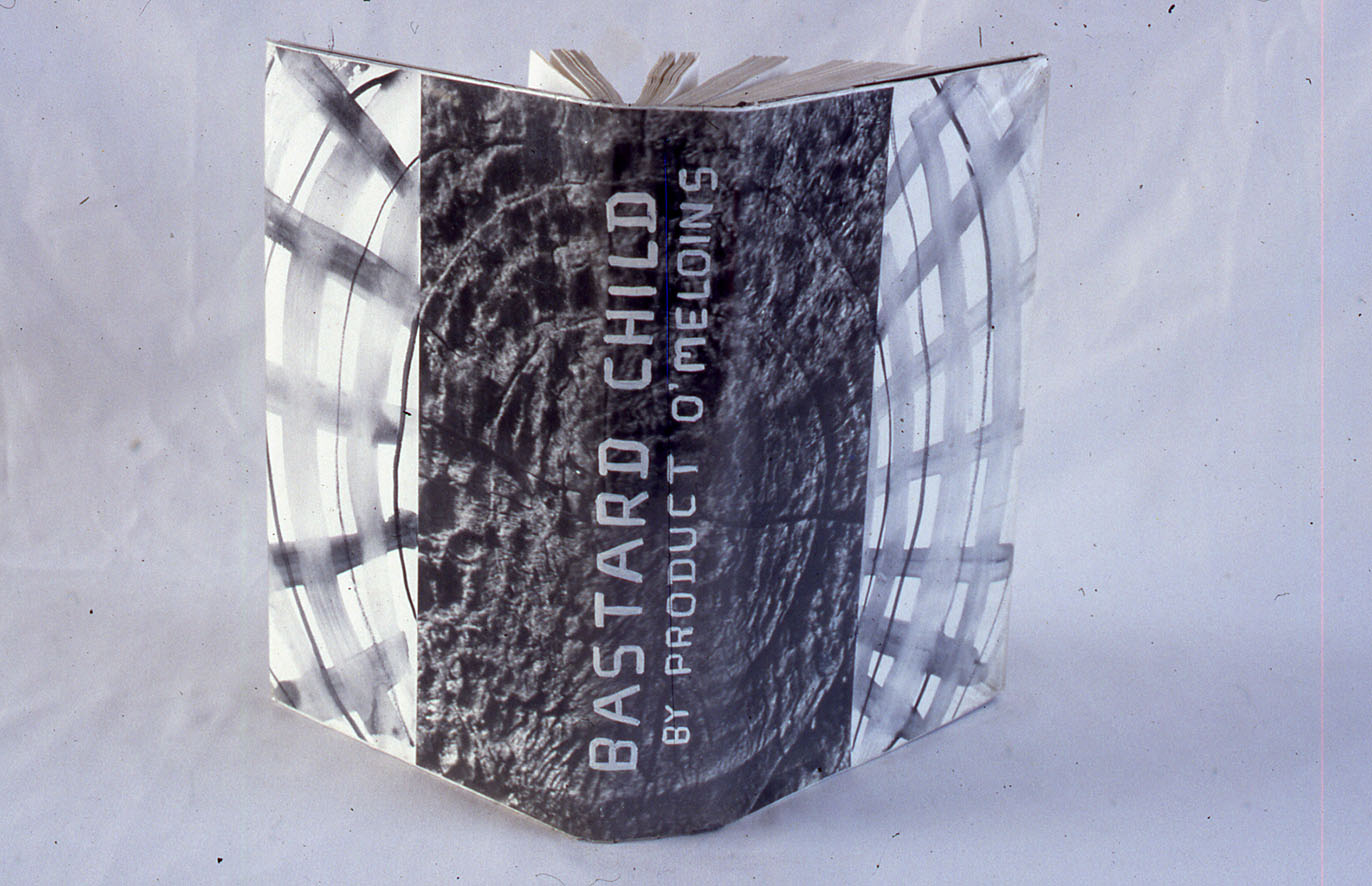
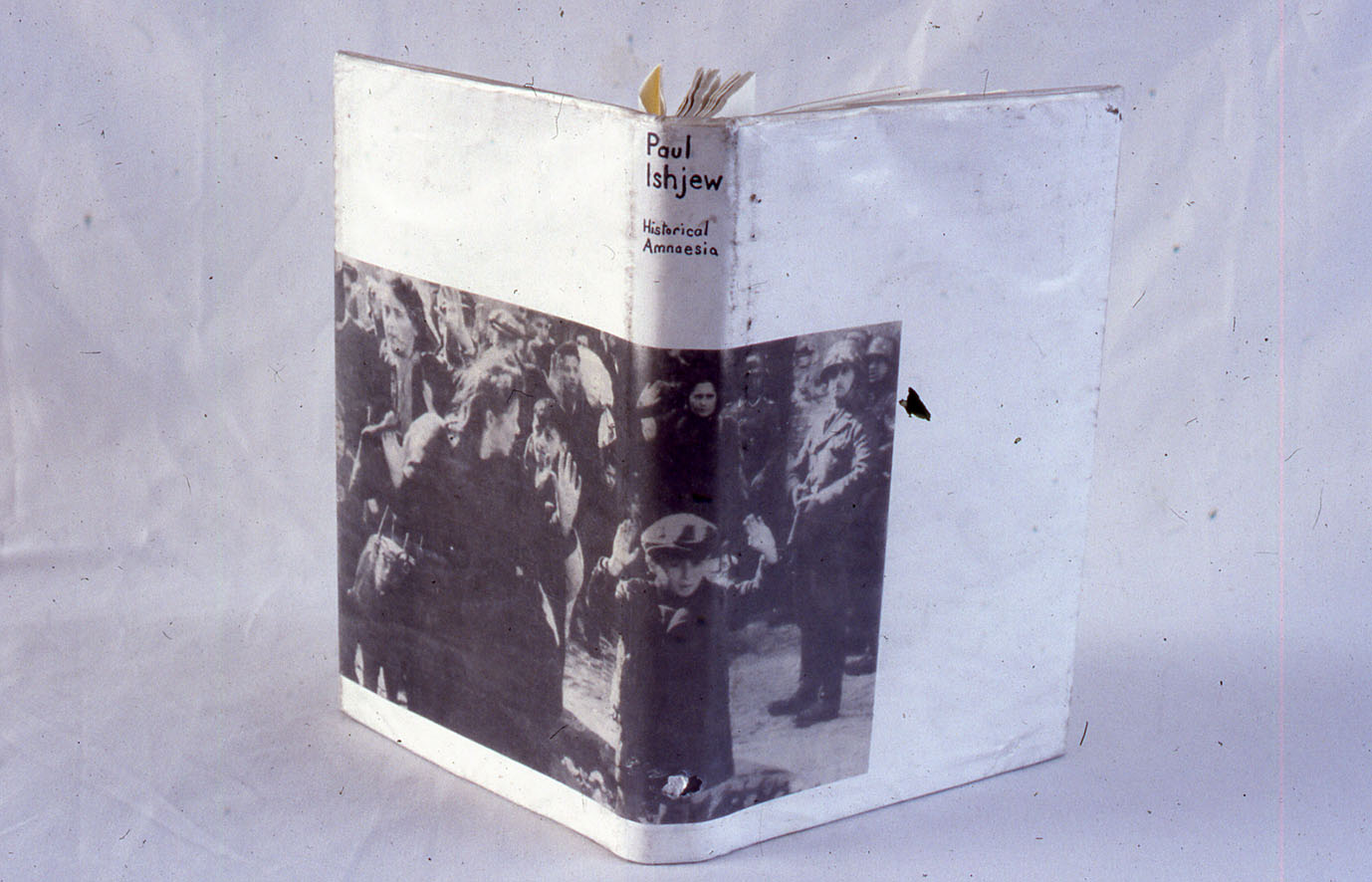
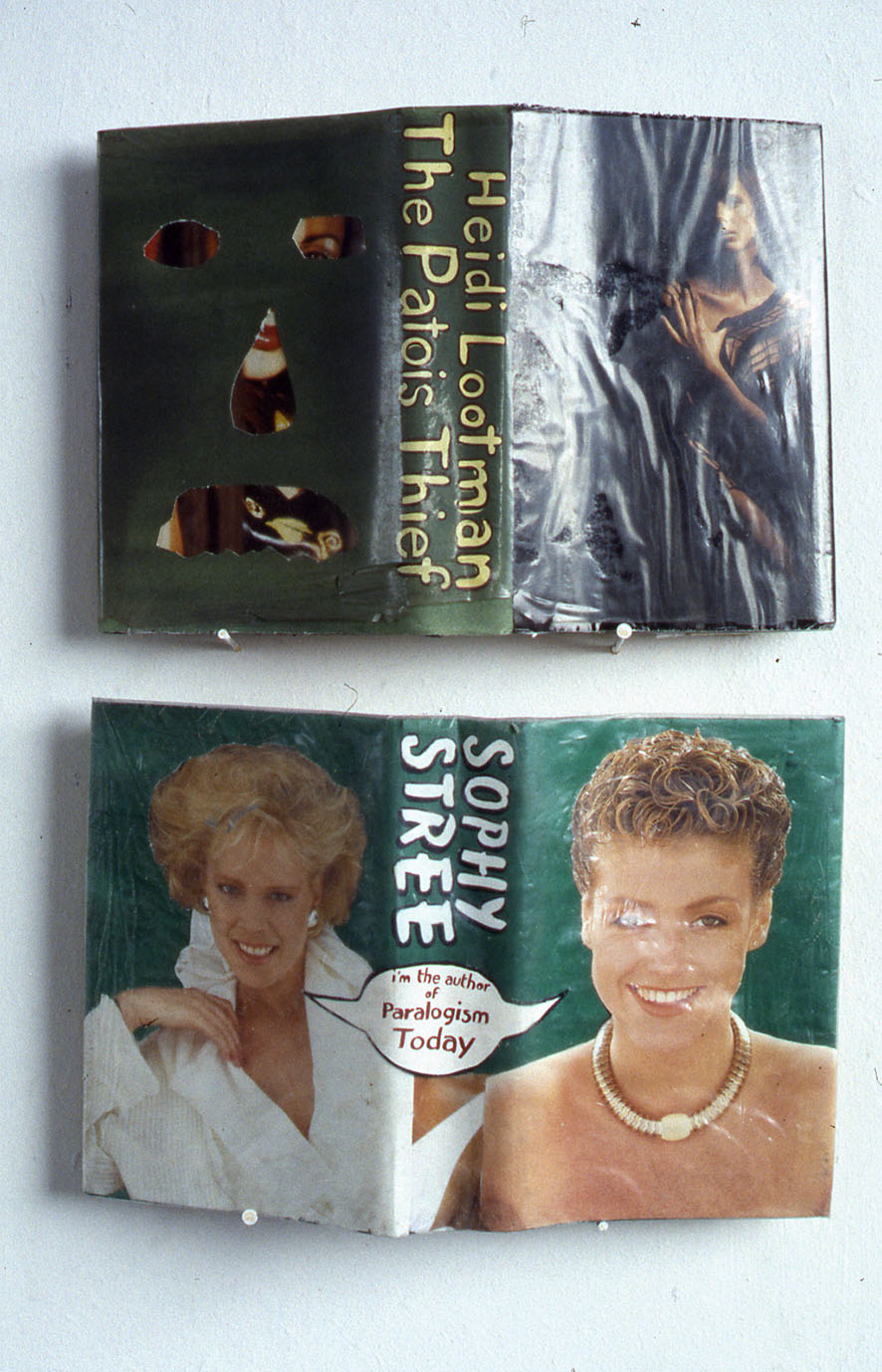
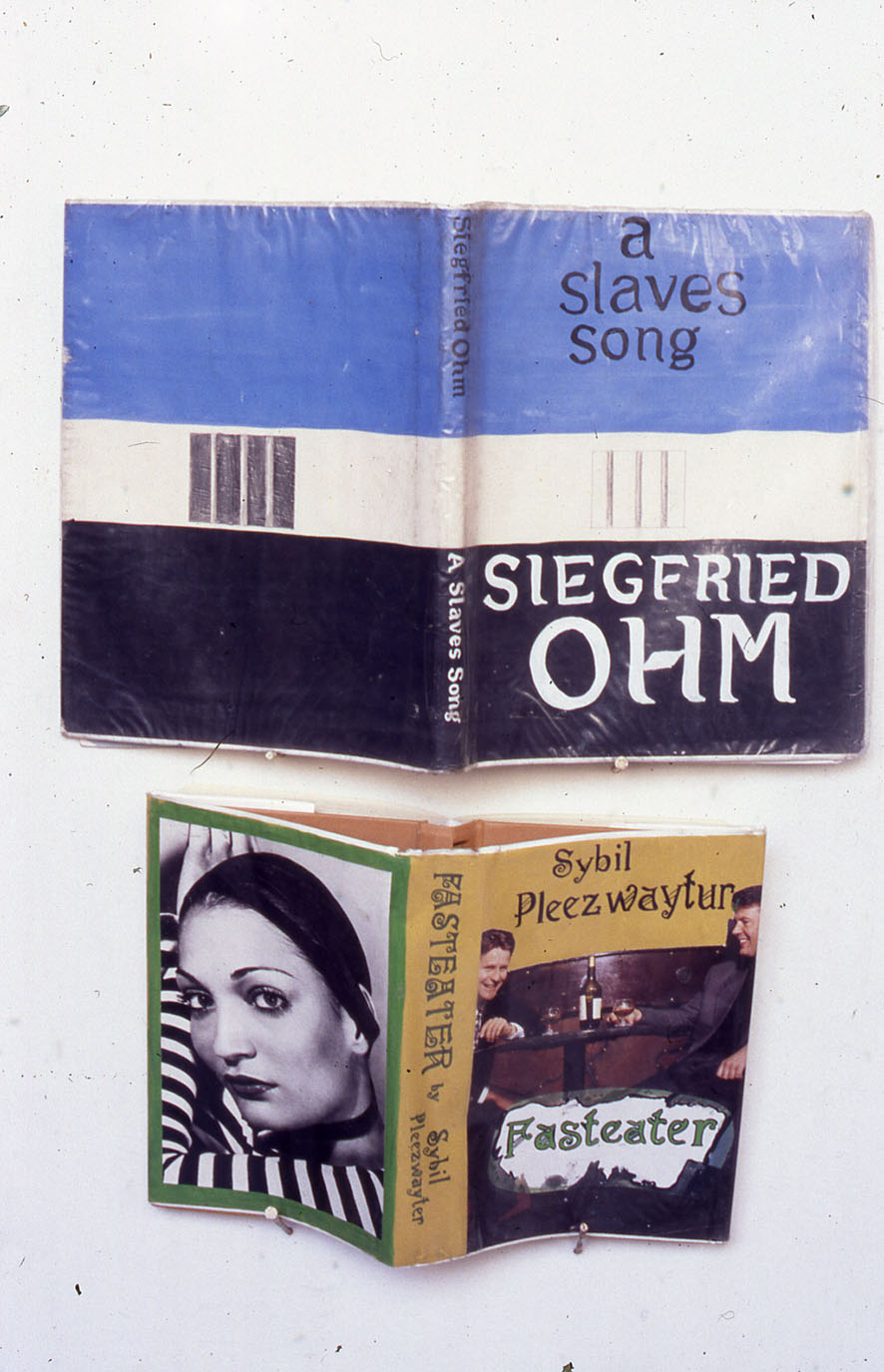
A prehistory of Nobson's word building - textual materialities: