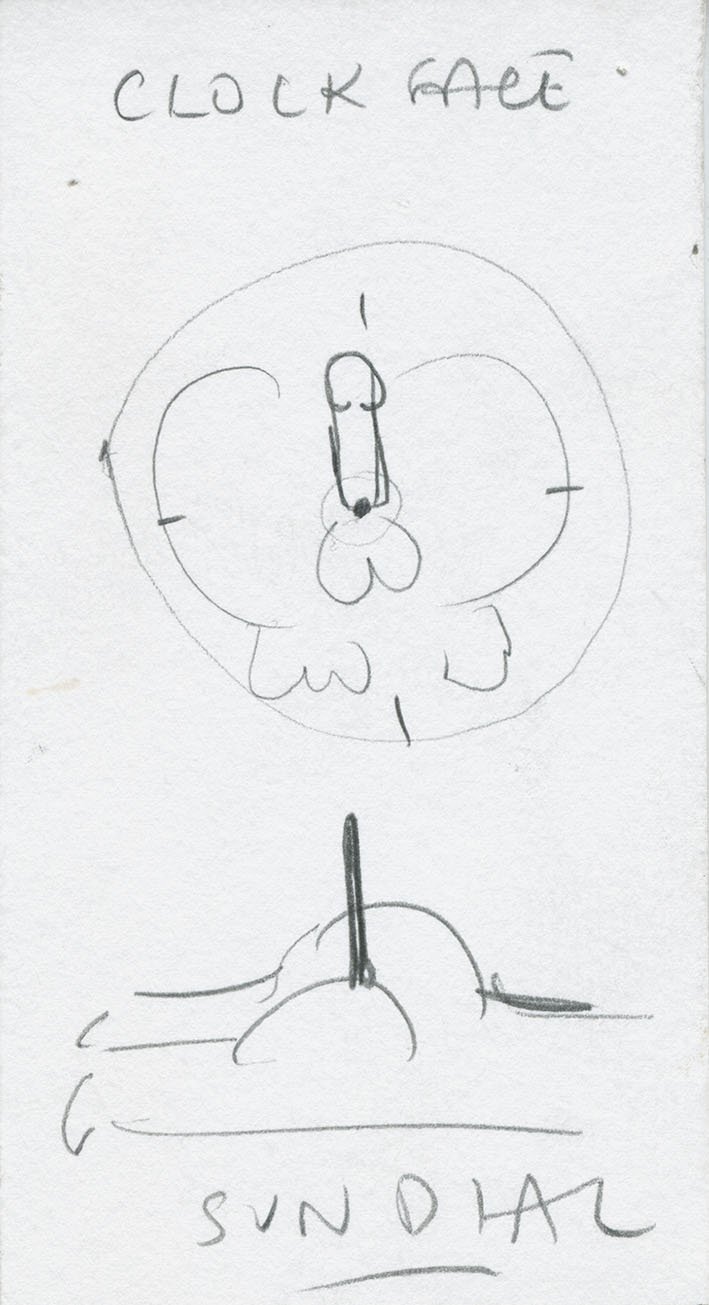
MS: There is no time of day in Nobson, or you might say that it is always the same — about 10.45 am or the time that we associate with a 45˚ shadow.
The date in Nobson is indeterminate; it has no date; there is no definitive narrative sequence that can answer the question of what went on; there is only the time of looking at the drawings, encountering the artifacts, and the time that they embody.
In Nobson there is only the moment of encounter and the material witness to time having passed. This is a conjunctural time of then-and-now, kairotic time or actuality, a kind of time rooted in another, in the material persistence, the duration of material things, artifacts.
And with the absence of temporal sequence or date, things mingle, betraying any effort to turn them into a coherent story. It is quite difficult to deal with the nonsensical rotted discarded waste, the great garbage heap that is history, unless it is converted into drawings and images, brought to order in accounts, plans and catalogs.
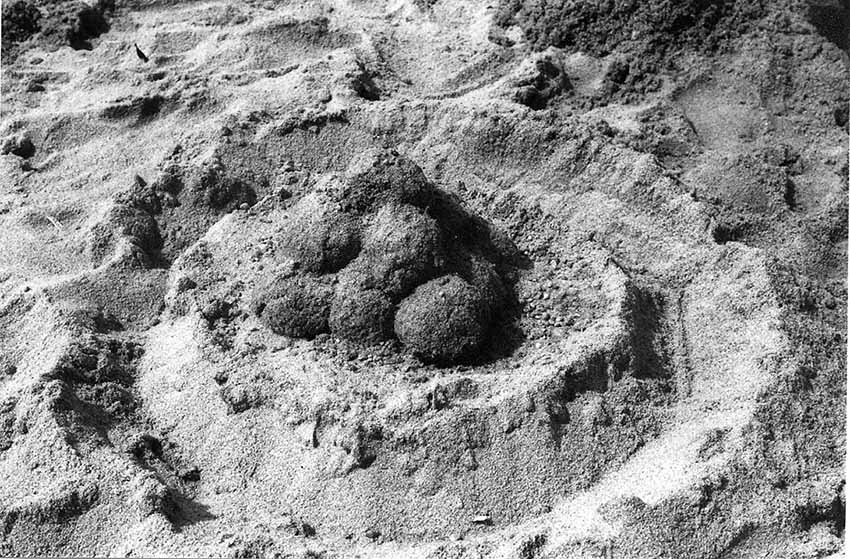
The clock face in Nobson is a circle and a central point or singularity.
More temporal connections: ruin, entropy and decay, de-illumination, the past-in-the-present, maybe stratigraphy, excavating the past (and all those Freudian metaphors).