Digital media are changing the nature of scholarship.
Increasingly, the digital scholar has a number of options available to her/him when it comes to augmenting the process of research and accelerating distribution of the results; and options are increasingly inexpensive. At Metamedia we have followed the engineering and tech industry ethos of agile design. We work toward specific solutions by working through a running version of a digitally based prototype - whether an archive, collaborative authoring platform, or (photo/video/text)blog. Since 2001 our specialty has been experimenting with collaborative architectures which we design and maintain.Mixed-media
As early as 2000 with the Three Landscapes Project, Metamedia has pioneered the use of mixed-media.
- Photography - analogue in multiple formats as well as digital - see a slideshow example
- Digital video - ease of use and interface with dv editing programs - such as iMovie or FinalCutPro - combined with the bandwidth generation on-line - like YouTube - has made dv broadcast standard practice
- Flash applications - custom flash applications integrating sound, video, images, databases; e.g. include MyGallery and New Media Transect
MetaWare
Housed at the same university where the open-source initiative and creative commons originated, we have maintained a commitment to the digital democracy ideal.
- Open source software/freeware/shareware - a litany of programs are available to the digital scholar - these range from Linux operating systems, Apache servers and MySQL databases to GIS Explorer and various wiki and blog platforms
- Social Software - various commercially available new media platforms for collaborative authoring environments
Memory and Archive
In conjunction with the Stanford Humanities Lab we pioneered Web 3.0 archives, or animated archives. The use of partially immersive and media rich archives and databases will become the standard for researchers.
- Archive/database software and on-line broadcasting - low cost software - such as FileMakerPro or MySQL- or the many on-line sharing servers - such as Flickr - enable the 'farming out' of digital repositories that can be easily integrated into various interfaces
- On-line gaming and communities - we create animated archives using popular, partially immersive environments such as SecondLife, Project Wonderland and Croquet
Sustainable Servers
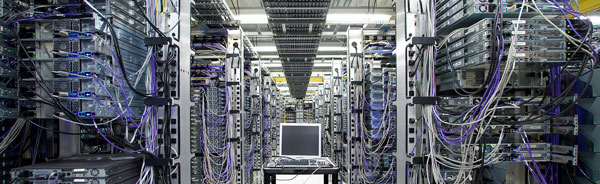
With the repositories of libraries and researchers going digital, the worry for the future scholar will be the survival of servers where such a surplus of digital information is housed. Metamedia uses a combination of commercial servers with our own 'in house' to maximize server longevity and keep it local.
- Outside of institutional settings with architecture and support, it is easiest to farm out content to a commercially hosted server
- Server hardware is the most expensive component for the digital scholar; but it can be built 'in the garage' from recycled or abandoned hard drives
- Open source server software - such as Apache - or bundled options - like the sleek Apple Xserve - make setting up a multi-functional server relatively easy
