In addition to designing your product or service, you need to be able to sell and distribute, make a profit, develop and retain key resources, skills, assets, and partnerships. This is your business model.
The Business Model Canvas (BMC) is a tool for designing, brainstorming, and tracking the evolution of your business model. This is an annotated image of the Business Model Canvas; click on each area for more information:
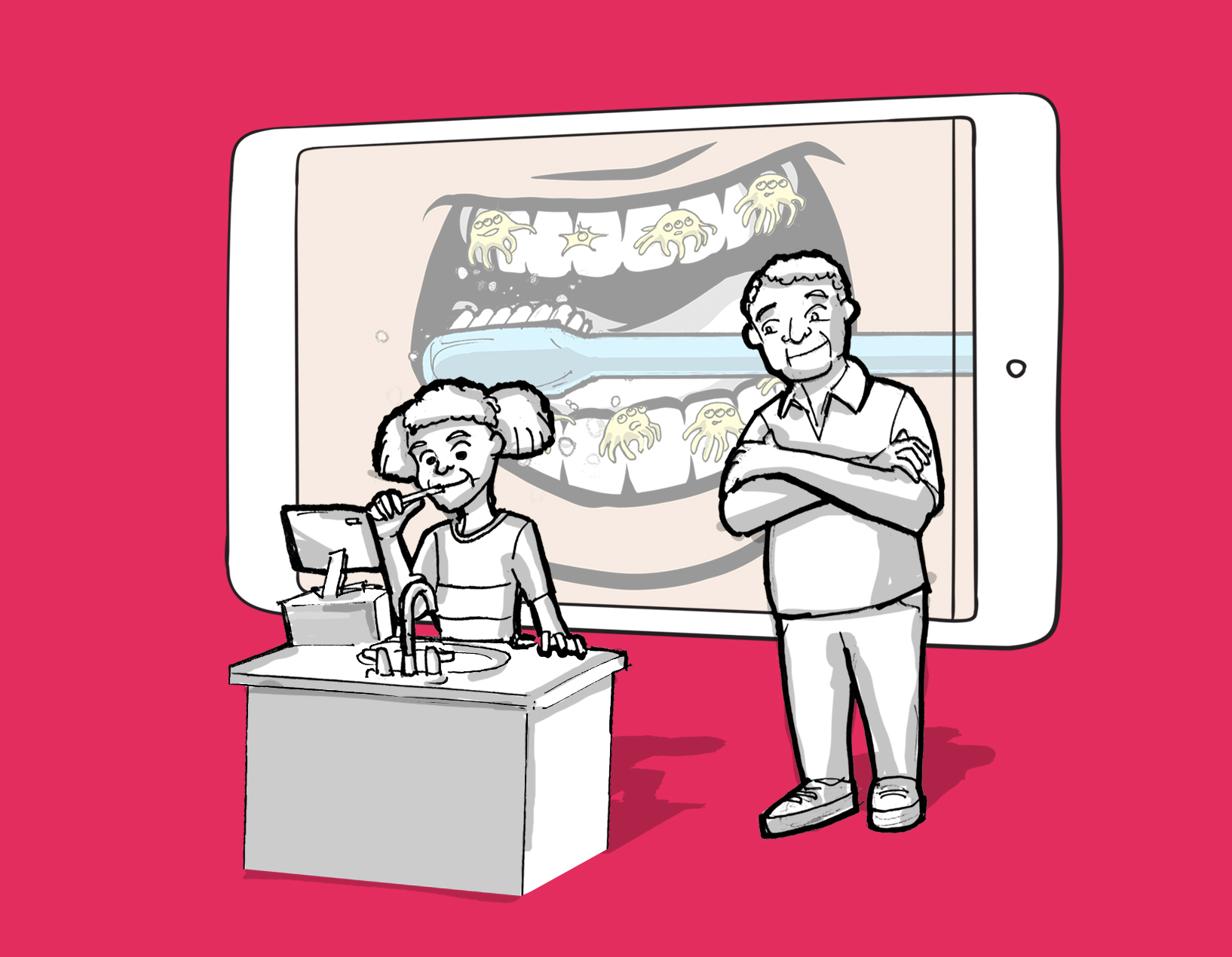
A group creates an interactive digital toothbrush for children. The software application tracks the motion and location of the toothbrush in the user's mouth.

The product is meant to improve oral hygiene by turning brushing into a series of fun virtual games, where parents can track progress and improvement.

The team proceeds to win Intel's America's Greatest Makers competition and are awarded $1 million in funding.
At this point, they decide to create a BMC. They start with listing elements of their Value Proposition:

Keeping in mind these value propositions, they determine who will benefit most from them. This brings them into Customer Segments:

When creating the BMC, colors will indicate individual customer segments, and carry through the whole canvas:

Parents

Dentists

Kids

Dental and Health Insurance Companies
The group then moves into Customer Relationships; how will they connect the customers they've identified with their Value Propositions?

From these areas, they build the remaining elements of the BMC:

Key Activities

Key Partners

Cost Structure

Revenue Streams
This is their entire result:
Click here to create an editable version of this document in your Google Drive.
While the Business Model Canvas is used to design and test the commercial viability of an external, customer-facing innovation, the Business Case Canvas (BCC) offers a similar template, for internally-focused processes and services (e.g. a new process, a new internal system, or a new organizational design). The BCC can also be used to establish the rationale for adopting a product for internal use within your organization. The BCC presents the business rationale supporting your innovation and its adoption among your organization's employees.
Customer Segments is changed to → Employee Segments
Value Proposition now focuses on values to employees, managers, and the organization
Revenue is replaced by tangible benefits (e.g. cost savings, productivity improvements)
Customer relationships changed to → employee relationships
Channels are no longer relevant
This is an annotated diagram of the Business Case Canvas; click on each area for more information:
Consider the perspective of a school district. Then think about the smart toothbrush project described above. What would a Business Case Canvas look like if a school district wanted to adopt this product for its students?
Click here to create an editable version of this document in your Google Drive.
To test this BCC, the district might conduct an experiment. How willing are teachers and nurses to actually support the adoption of the smart toothbrush? One indicator could be their ability to convince parents and students of its value.
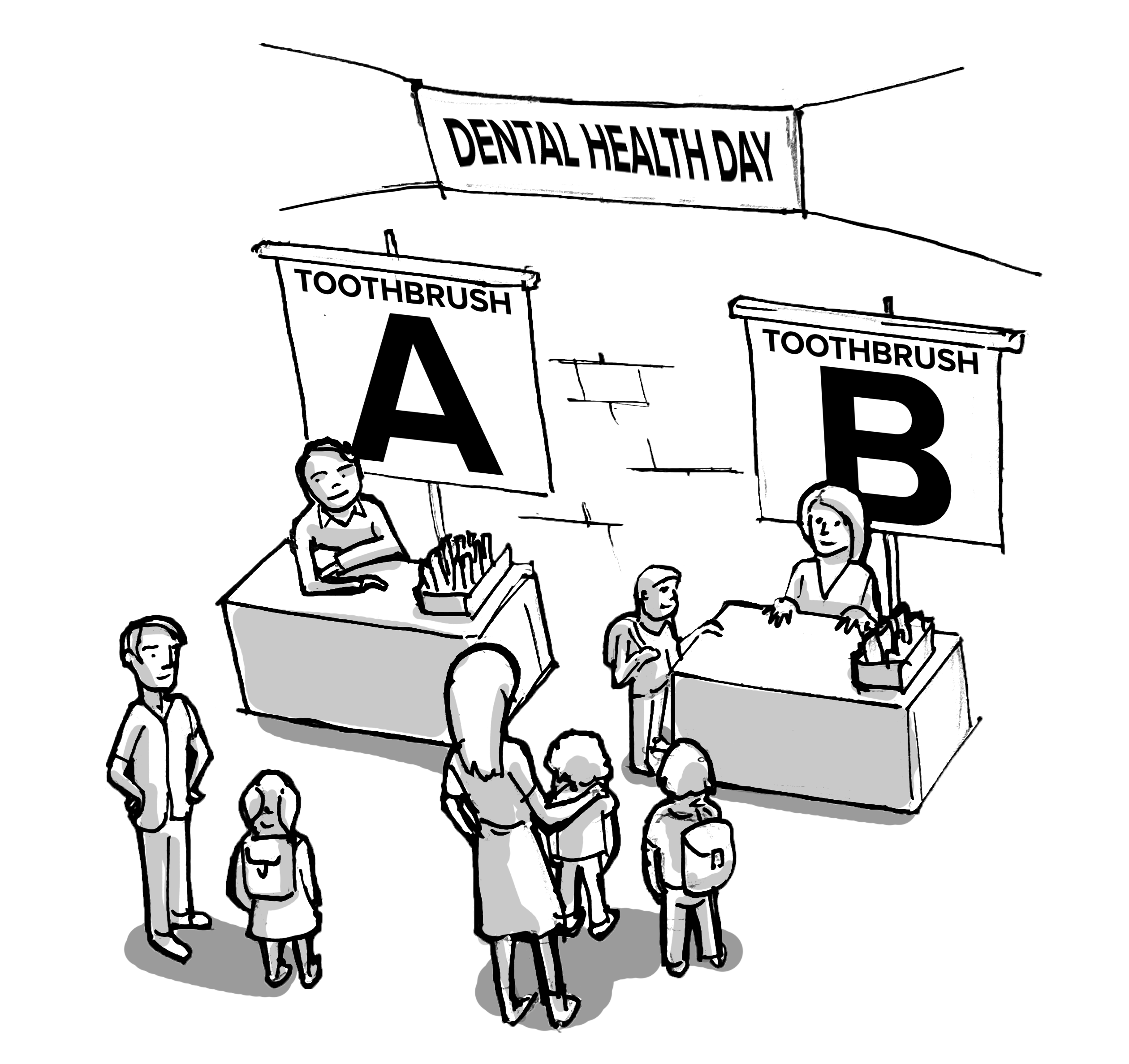
At a mock signup session, teachers and nurses are asked to organize a "Dental Health Day," including a free toothbrush giveaway. They set up tables at schools where parents and students can sign up for one of two different options – a standard toothbrush or a smart toothbrush.
The school district determines how many students sign up for each option; this will give them an idea of not only student, but teacher and nurse buy-in to the concept.