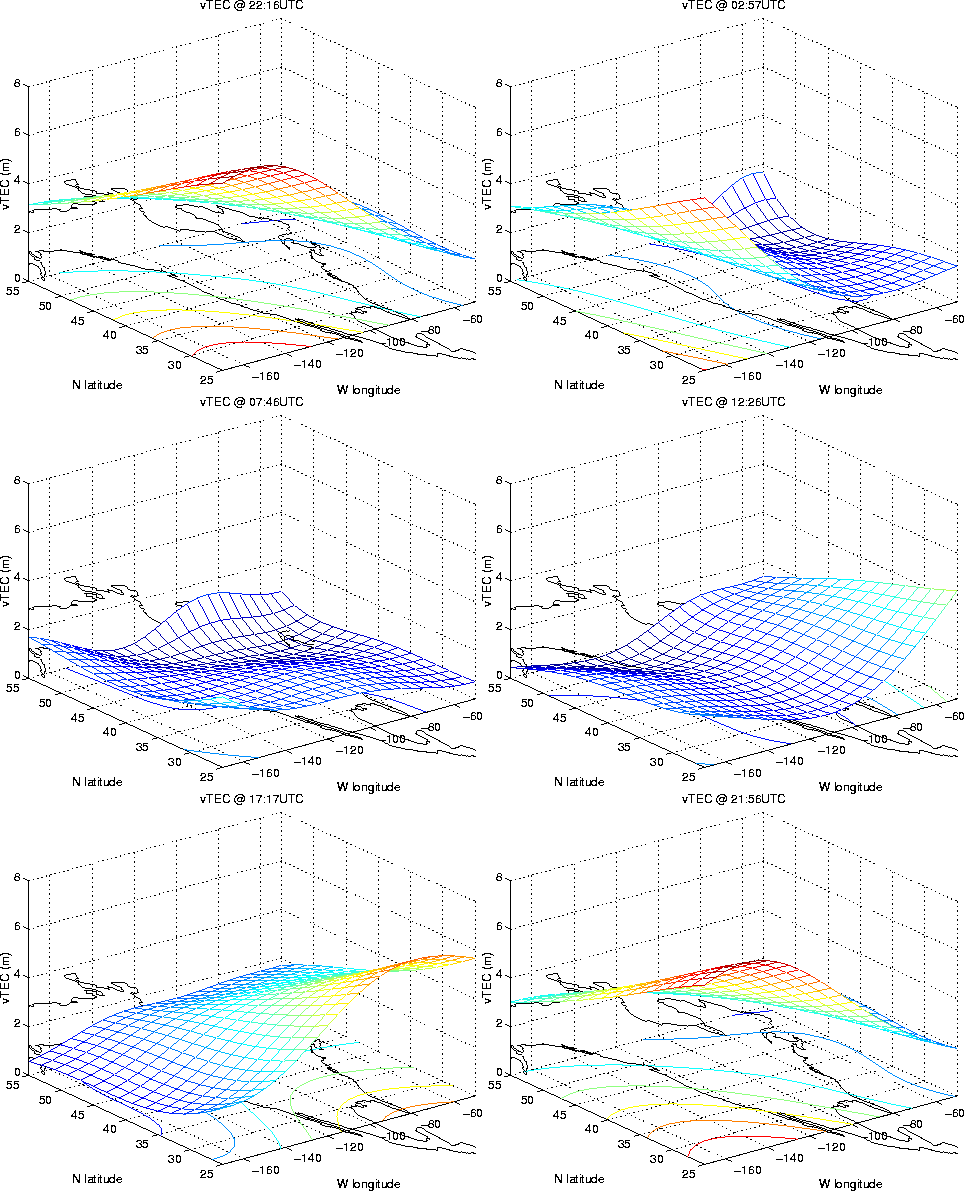
from the NSTB Reference Network
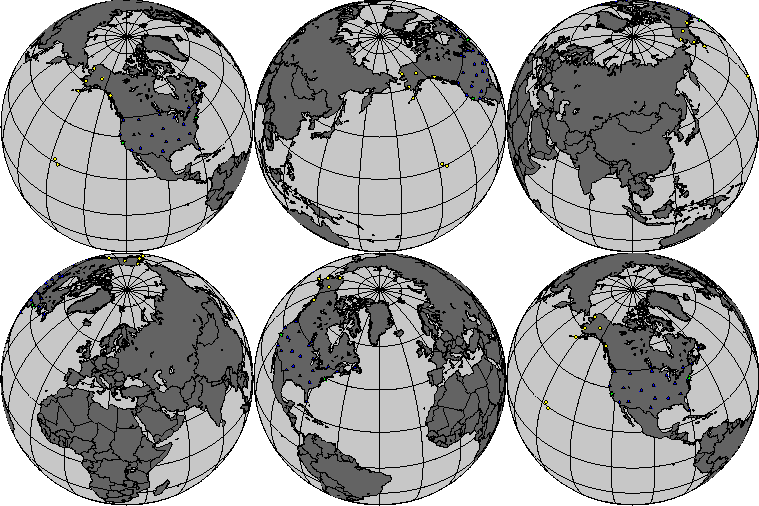
The algorithm and its realization are a generalization of the same technique, tomography, used in two-dimensional medical imaging. An important distinction above and beyond the leap from 2D to 3D is the derivation of a spectral decomposition of the electron density distribution as opposed to a finite difference (voxel) formulation. Damping higher order spectra mitigates the ill-posedness of the observation geometry inherent in terrestrial GPS sensor networks. This is analogous to Tikhonov regularization of the voxel inversion but is vastly more efficient. Although this is a primary factor for real-time implementation, there are further significant advantages in the spectral formulation which are detailed in the papers and slides found on my home page.
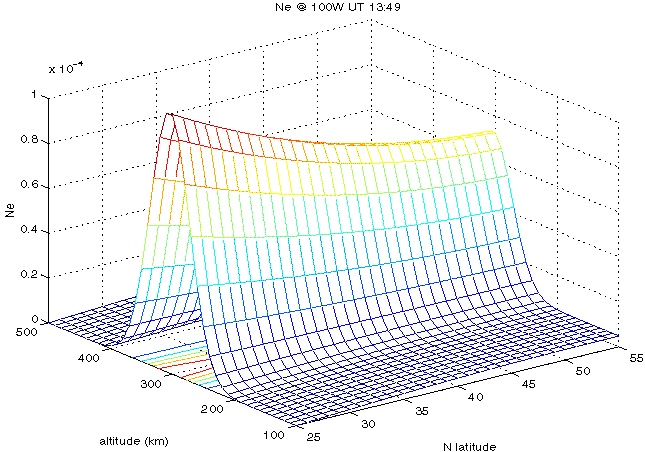
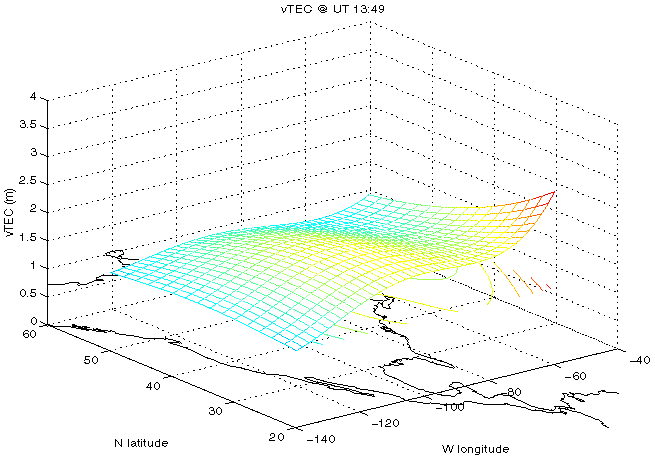
At some point I may include the background material here on the web but for now I'll simply present results and refer to the papers above. The figures below depict estimates of ionosphere's electron density distribution (Ne) and vertical Total Electron Content (vTEC) for two different times.
The first group of three correspond to one instant in the early morning (PDT) 29 July 1997, where Ne is plotted as a function of North latitude and height above Earth. In the second graphic the vertical dimension of Ne is integrated out to form the estimate of vTEC at the same instant. The third diagram compares the vTEC estimate from the tomographic estimator against an estimate generated with a two-dimensional inversion scheme that models the vertical dimension as a fixed function of elevation angle, the so-called obliquity factor.
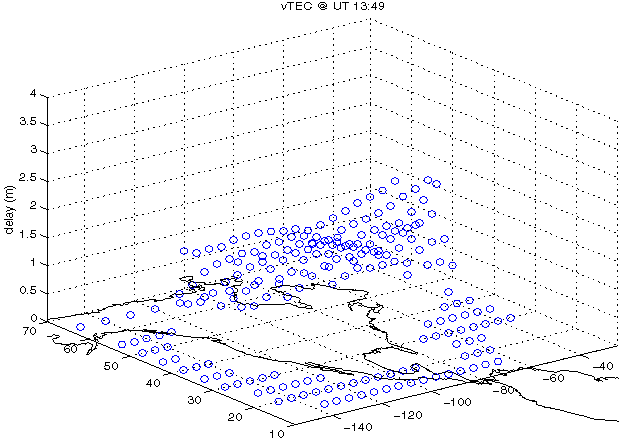
An animation (1.5Mb gif) is available which shows a time history of the vertical TEC computed from the tomographic reconstruction (equivalent to the second figure above) over all 24 hours of 25 March 1998. Note that the scale is different from that above.