| |
060a. |
|
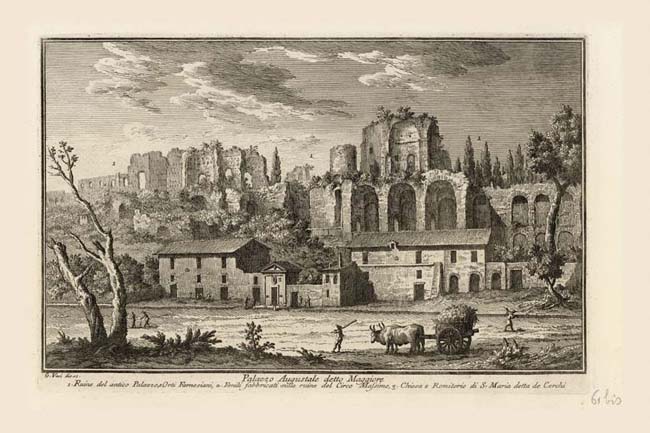
Palazzo Augustale detto Maggiore |
|
 |
|
 |
|
 |
|
| |
1. |
Ruine del anitco Palazzo |
| |
2. |
Fenili fabbricati sulle ruine del Circo Massimo |
| |
3. |
Chiesa e Romitorio di S. Maria detta de Cerchi |
The laden oxcart in the foreground reveals that we are in what was still the rural part of the city within the walls in the late 18th century. This view is taken looking toward the southern flank of the Palatine hill (Palatio in antiquity) from the orti (vegetable gardens and vineyards) which occupied the site of the ancient Circus Maximus. Dominating the full width of the hill are the grandiose remains of the "Palazzo Augustale" (1) or ancient imperial palace (Palatio: palazzo: palace). The bulk of the structures on the left and center are part of the Flavian section of the palace (69-96 A.D.), while those on the right date from the time of Septimius Severus (193-211). The ruins contrast sharply with the later row of modest farm buildings immediately below them. Vasi claims that the fenili (haylofts) (2) were built on the ruins of the Circus Maximus, but Nolli, who marks the edge of the old stadium with a speckled grey line, reveals that this is not the case. The tiny church (Nolli calls it a chapel) of S. Maria de'Cerchi (3; NN 960) and its equally small monastery no longer exist, having been demolished for the 20th century widening of Via dei Cerchi which runs along the foot of the Palatine hill. This is one of the most accurate views in the Magnificenze and corresponds closely with the palatine ruins as they exist today as can be seen in the contemporary photograph.
|
