 |
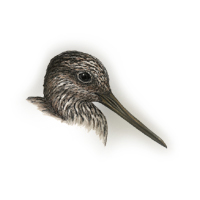
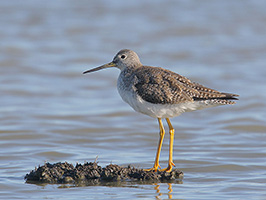
Greater Yellowlegs
Tringa melanoleuca |
|
|
STANFORD LOCATIONS: Occasional visitor to Lagunita, foraging at the lake edge in winter and in shallow water and on mud as the lake recedes in spring. |
 |
Location |
Type |
Mating System |
Parental Care |
2ndary Diet |
Strategy |
 |
 |
 |
I: 23 DAYS PRECOCIAL 2 |
 |
 |
|
|
MONOG? |
MF |
BRATES |
| BREEDING: | Muskeg, tundra. 1 brood. |
| DISPLAYS: | See Shorebird Communication. |
| NEST: | Slight depression in moss on small hummock, usu near water by branch or log, occ sheltered. Leaves blow in, or barely lined with grass. |
| EGGS: | Buff, marked with dark brown, wreathed. 1.9" (49 mm). |
| DIET: | Small fish, also insects, snails, worms, tadpoles; berries. Often forages by skimming surface in shallow water. |
| CONSERVATION: | Winters s to Tierra del Fuego. |
| NOTES: | Very noisy on nesting ground; female close sitter. If clutch lost, renests within 60'-90' of first nest. Frequently stands on one foot. Defends foraging territory in winter. Small, very vocal winter flocks. |
| ESSAYS: | Shorebird Feeding; Shorebird Migration and Conservation; Spacing of Wintering Shorebirds; Temperature Regulation and Behavior. |
| REFERENCES: | Cramp and Simmons, 1983; Johnsgard, 1981; Myers and Myers, 1979. |
| Help | Abbreviations | Species-Alphabetical | Species-Taxonomic | Essays-Alphabetical | |
| Except for Stanford Locations, the material in this species treatment is taken, with permission, from The Birder's Handbook (Paul Ehrlich, David Dobkin, & Darryl Wheye, Simon & Schuster, NY. 1988). | |||||