
Object Name:
Carving
Object ID:
14853
Case:
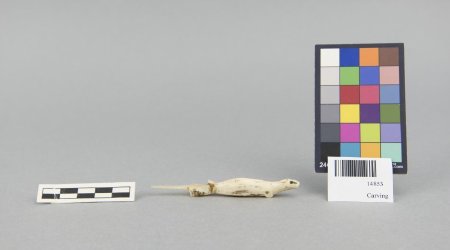
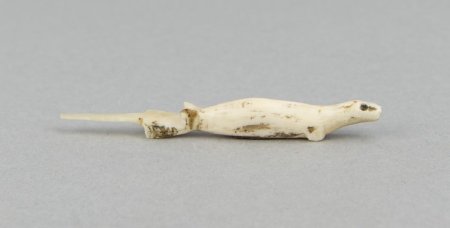
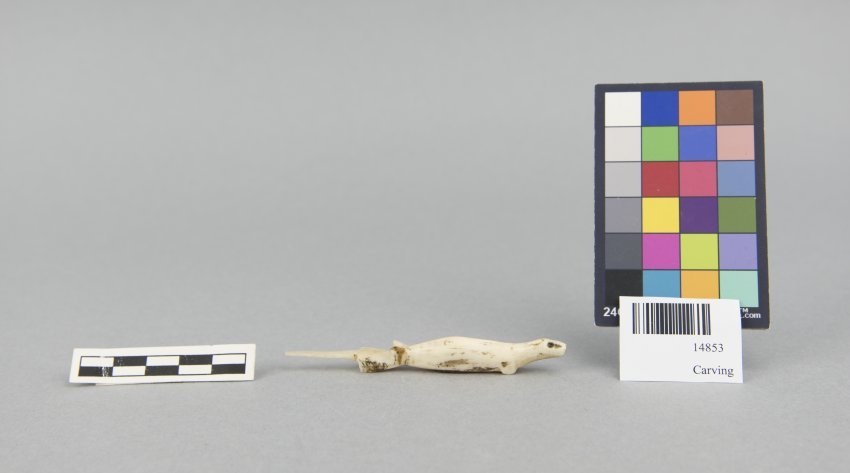
This figurine is one of a winter seasonal trio: three miniature cold–loving creatures carved of bone or walrus ivory. This little walrus has lost the tips of his tusks, but his eyes, made of orange–red glass beads, remain to lend a sense of personality (14851). A lean sea otter serves as the handle of a perforating tool (14853). And we can identify a tiny seabird as some sort of amulet from the small iron loop on his belly, which also calls to mind a perching bird's curled toes (14854). Unfortunately, we have no record of where in the circumpolar world these figurines originated or when, although we do know they entered Stanford's collections before 1939. Bone and walrus ivory carving has always been widespread throughout these regions. Small, naturalistic carvings like these three were commonly attached to hunting gear, storage containers, and boats, hung in dwellings, and even worn. They worked as charms, amulets, tools, and decoration. They also became very popular tourist souvenirs. These there were probably purchased as mementos of a trip to the North in the early 20th century.
Dimensions:
W–0.8 L–8.5 cm
Material(s):
Bone
Place of origin:
North America; Northwest
Provenance:
Collector and donor are unknown.
Collection:
Anthropology; North America; Northwest
Click to Enlarge
 14853
14853
 14853
14853
 14853
14853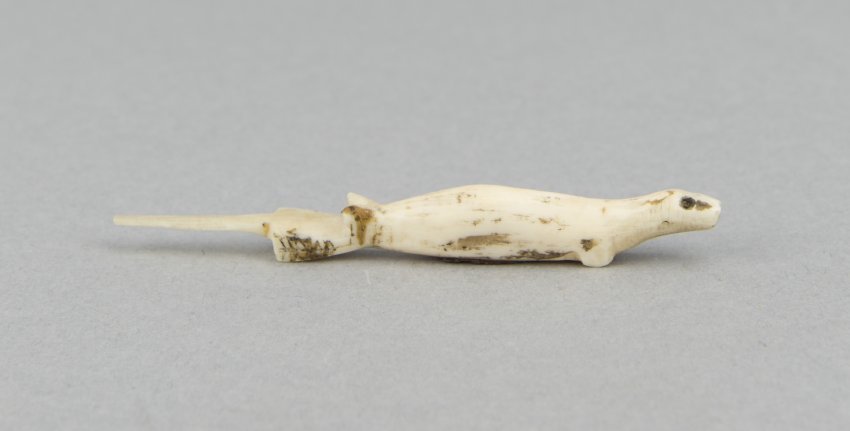 14853
14853