HUMAN ARENAVIRUSES AND THE DISEASES THEY CAUSE
|
Most arenaviruses are infectious for humans based on surveys of laboratory workers or residents of endemic areas who may have been exposed, but in most cases clinical infections have not been observed. Only six of the nineteen arenaviruses are associated with human disease. Pathogenesis of arenavirus disease in humans is believed to involve initial replication at the site of infection, which is usually due to aerosol deposition in lung.
DIAGNOSIS
Early diagnosis of arenavirus infections facilitates in efficacious and successful treatment of disease. Viral infection can be diagnosed many ways:
Enzyme Linked Immunosorbent Assay (ELISA) or Western Blot detection by probing for viral proteins in serum using fluorescent or labelled anitbodies.
Detection of anti-virus antibodies with virus samples using the above techniques
Polymerase Chain Reaction (PCR) testing. Use of radioactive DNA primers (based on viral sequences) to replicate viral DNA present in patient samples.
CLINICAL DEFINITIONS
Viral Hemorrhagic Fever (CDC Definition)
Acute infection that begins with fever, myalgia, malaise and progresses to prostration.
Evidence of vascular dysregulation and increased vascular permeability
Multisystem involvement
Hemorrhage indicates extent of small vessel involvement but not necessarily large in volume
Shock, encephalopathy, extensive hemorrhage, poor prognosis
Viral meningitis
More common than bacterial meningitis, but less severe.
Presentation of headache, fever, and neck stiffness, with or without vomiting and/or photophobia
MEDICAL INTERVENTION
Antiviral drugs
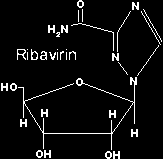
Ribavirin - A guanosine analog. Competitively inhibits viral and cellular enzymes used in replication of virus. Effects mRNA 5' capping enzyme, viral mRNA polymerase complex, and a purine synthesis enzyme IMP dehydrogenase.
Other antivirals - Acyclovir, AZT, etc.
Vaccines
Vaccines are not a feasible form of intervention thus far. The restrictions on working with these viruses (requiring Biohazard LEvel 4 facilities) makes it difficult to study the virus, mech less test attenuated or killed vaccines. More needs to be learned about the molecular biology.
Recombinant vaccines (using Vaccinia vector) for Lassa have undergone successful monkey trials, and have shown to elicit convincing immunity.
Lastly, vaccines are risky because of the recombination potential of the segmented RNA genome.
Click here to see more information on Vaccination (Prepared by McMaster University Faculty of Science)