

Created By:
Rohit Sharda
Chris Turitzin
Welcome to the Guadalupe
River Park and Gardens!
We
are excited to host you here in our community’s park. Look around you. Notice the wide variety of plants and
animals surrounding you. There are
large birds, small birds, small mammals, and other types of animals living
beside you. There are sycamore
trees, willows, live oaks, and boxalders towering above you.
These
animals and plants have been around for thousands of years. Long before European settlers migrated
to California 250 years ago, Native Americans lived all across the Santa Clara
Valley. Native Americans have been
in the Bay Area for over 10,000 years!
Because so much has changed during that time, archaeologists have had a
tough time finding artifacts from that period of time.
Around
5000 years ago, the geography of the region began to change. Water from the Pacific Ocean was just
starting to creep into San Francisco Bay, which gave the Bay the shape we see
today. People’s diets also
began to change. People started to
eat acorns and large mammals, such as elk. Archaeologists have found flint-tipped spears, darts,
abalone beads, and stone milling tools that Native Americans used in their
everyday lives. About 2500 years
ago, the climate changed again. It
became cooler and moister, and marshlands began to form. Because of this, birds, shellfish,
seals, and otters started to appear, and the diets of the people changed
again. Groups of Native Americans
joined together to form small villages, where friends could share experiences,
stories, and bond with each other.
Beginning
about 1300 years ago, a drought struck the western United States, including
California, and affected the people who lived here. But the native people prevailed and formed even larger
villages. Trade increased between
villages, and money became a more important part of their lives. Instead of dollar bills, people used
shell beads and abalone ornaments to show their wealth.
When
the Spanish arrived in California in 1769, they saw many Native American
villages dotting the Bay Area.
They set up missions to convert the natives and pueblos where Spanish
settlers could live and tried to claim the land for Spain. In this area, they formed Mission Santa
Clara and the Pueblo of San Jose.
Spanish ranchos (large ranches) were set up throughout Santa Clara
Valley. Along with Spanish
settlers came new, exotic species of plants, such as new types of grass. The Spanish also brought diseases that
wiped out many Native American populations.
In
1846, California officially joined the United States of America as the 31st
state. The Gold Rush attracted
thousands of settlers from across the country who were searching for gold. They mined the land, built boomtowns,
drained marshes, and cleared forests to find the gold. In their search for gold, people also
realized the land in Santa Clara Valley was fertile and ideal for planting
orchards. Until fifty years ago,
what we call Silicon Valley today was still mainly a farming area. But the diversity of the Silicon Valley
area existed even a century ago.
Chinese immigrants joined together in 1887 and formed Woolen Mills Chinatown
in the present-day San Jose area.
But the town only lasted for fifteen years and burned down in 1902.
Through the 20th century, the city of San Jose has grown up around the Guadalupe River. But because the population has been increasing so fast, we risk losing the plants and animals that have also grown up in this area. In the 1950s and 1960s, community leaders first began to think about developing a park along the Guadalupe River to preserve some of the natural beauty. What you see today is the work of many people over years. Engineers, park planners, gardeners, and community volunteers have dedicated their time to make the park what it is. The Friends of the Guadalupe River Park and Gardens are working hard to make sure that the park stays clean, beautiful, and offers a place for people to relax and animals to live. It is important that we preserve the park as a habitat for the wide variety of creatures and plants that live here. Enjoy the sights of sounds of the Guadalupe River Park and Gardens. Have fun coloring and looking for the plants and animals in the book!
    1 = White
    3 = Black
    7 = Brown
    8 = Red
    11 = Blue
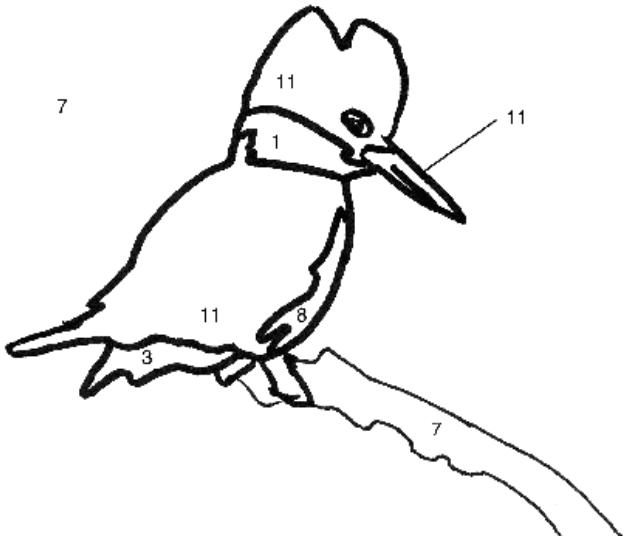
Belted
Kingfisher Nesting – normally
tunnels dug by male and female; 1 ft. across, 6 in. tall 6-7
eggs; little more than 3 weeks to hatch Diet - mostly
fish, crawfish, shellfish, squid, small birds, small mammals, lizards,
insects Habitat - rivers,
lakes, saltwater estuaries Range - depending
on season, all the way from Alaska (Aleutian Islands) to Panama and
northern coast of South America Appearance – blue-gray across chests, huge bill
compared to body size 11-13
in. long; blue-gray head, white chin, throat, neck, female has brownish
chest Voice – loud
rattle sound Fun Fact – When
the belted kingfisher flies from one tree to another tree that is a good
distance away, it utters its loud rattling sound.
3 =
Black 5 =
Green 6 =
Orange 7 =
Brown

Black
Phoebe Nesting - mud, moss, and grass nest covered
inside with cow hair or feathers to make it soft;
3-6 eggs laid at one time; a little more than 2 weeks to hatch; live in
trees Diet - insects Habitat -
shady
areas by warm water, streams, ponds, city parks, chaparral, lake banks Range - northern
California to west Texas; many in Arizona; found in tropics Appearance - 6-7
in. tall; white belly; black body Voice - sharp
“chip chip” Fun Fact – The
black phoebe “wags” its tail.
6 =
Orange 7 =
Brown 8 = Red 12 =
Yellow
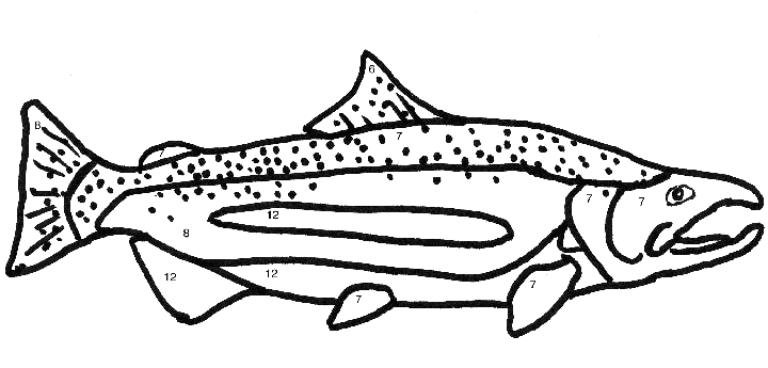
Chinook
Salmon Diet - crustaceans,
anchovies, herrings, young rockfishes, sand lances Habitat - near
ocean surface; large rivers, freshwater streams, estuaries Range - Bering
Strait to southern California Appearance - up
to 5 ft long, over 100 lbs Greenish-blue
to black top; silvery-white bottom; spots on back Fun Fact s– Chinook
salmon can migrate for hundreds of miles and then return to their homes.
Chinook salmon are on the US Endangered Species List.
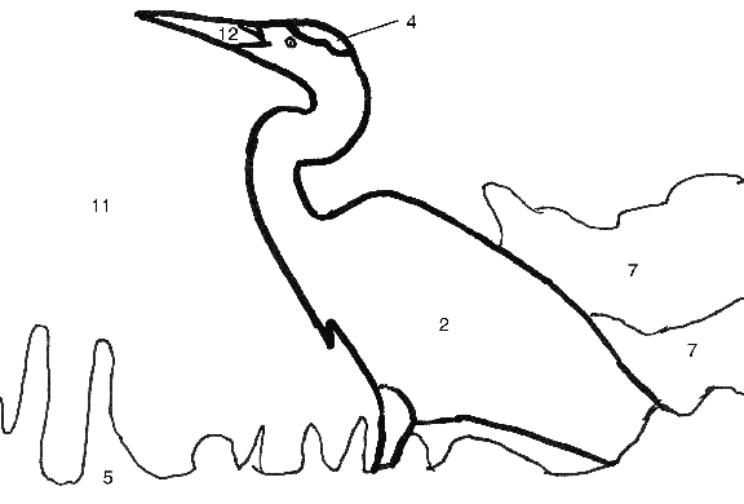
2 =
Grey 4 =
Dark Grey 5 =
Green 7 =
Brown 8 = Red 11=Blue 12 =
Yellow Great
Blue Heron Nesting - high
in trees; made from interwoven twigs 3-5
eggs; take about 4 weeks to hatch Diet - fish,
small mammals, reptiles, small birds, salamanders, snakes, insects Habitat - marshes,
swamps, lakes, river shores Range – most of North America Lifespan – up
to 23 yrs. Appearance - Height:
4 ft. Weight:
5-8 lbs. Wingspan:
6 ft. Gray
feathers, yellowish legs, yellow bill, streak of black plume extending from
between eyes down back of head, reddish legs Voice – harsh
squawk Fun Fact – Most
great blue heron nests go unnoticed until they fall down from the treetops.
1 =
White 5 =
Green 6 =
Orange 7 =
Brown 11=Blue
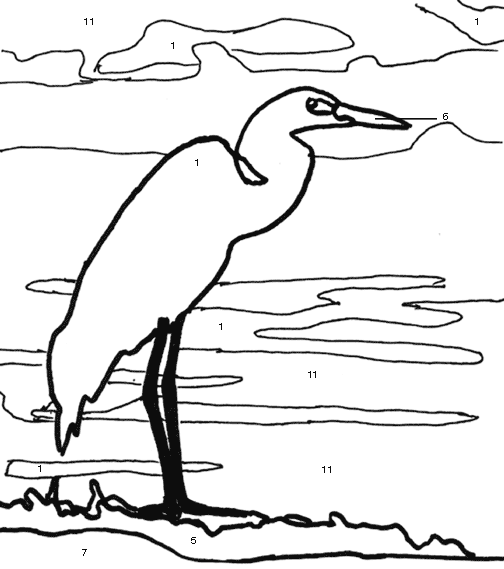
Great
egret Nesting
– large, somewhat flimsy nests made out
of twigs and sticks 3-5
eggs laid at one time; hatch after about 4 weeks Diet - fish,
small birds, aquatic invertebrates, frogs; (when drier) small mammals, snails,
nesting birds, worms, crayfish Habitat -
swamps, marshes, ponds, coastal
lagoons, savannas Range -
Oregon to
Massachusetts, South America Lifespan – up to 22
yrs. Appearance-over 3 ft. tall; 4.5 ft. wingspan Yellow
bill, black legs, white feathers Weight:
2 lbs. Voice - deep croak: frawnk frawnk
1 = White 2 =
Grey 6 =
Orange 7 =
Brown 8 = Red 12 =
Yellow
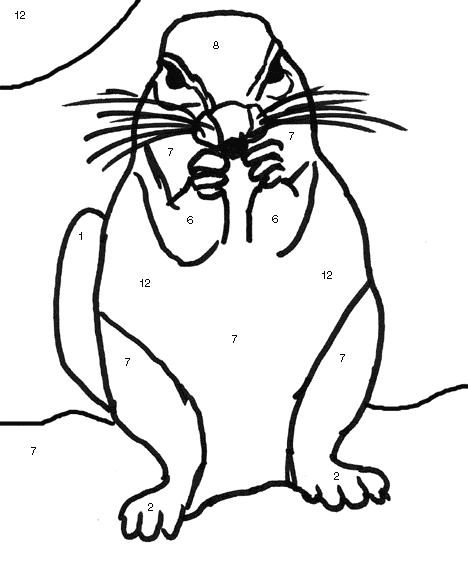
Ground
Squirrel Nesting - 5-8 young; burrows 3-6 in wide; 5-200
ft long network of tunnels Diet - leaves, stems, flowers, bulbs, roots,
seeds, fruit, berries, nuts Habitat - fields, pastures, wooded
hillsides, plains, small meadows Range - from central
Washington to western Oregon down to Baja California Appearance -9-11 in. long; brownish color; white
specks all across back, whitish streak from
arms qacross neck; bushy, brownish-gray tail Fun Fact – Scientists
in California found a squirrel burrow with 11 squirrels, 33 openings, and
741 ft. of tunnels. (That’s almost two and a half football fields!)
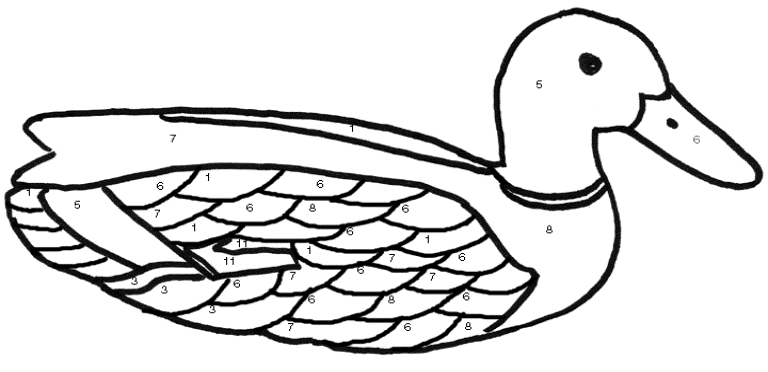
1 =
White 3 =
Black 5 =
Green 6 =
Orange 7 =
Brown 8 = Red 11 =
Blue 12 =
Yellow Mallard Nesting - made of grass and down and
usually well-hidden 8-15
eggs; takes about 4 weeks to hatch Diet - snails,
aquatic insects, grasshoppers, small fish, prefer to eat plant seeds Habitat - marshes,
ponds, lakes, flooded fields, ditches, bays Range - northern
hemisphere; during winter can be found in Central America; also found in Europe and Asia Appearance -18-27 in. long Male:
green head, white neck ring; brownish chest; gray-brown back; 3 ft. wingspan;
yellow bill, brown wings Female:
spotted brown, white tail Voice -
male: soft
reedy notes Females:
quack Fun Fact – To find
food, mallards will dip their heads underwater and search for plants.
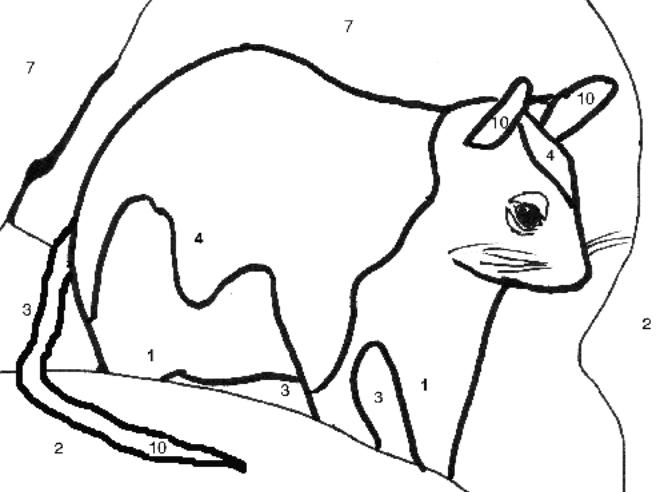
1 =
White 2 =
Grey 3 =
Black 4 =
Dark Grey 7 =
Brown 10 =
Pink Opossum Nesting - 1-14 young born after about 2
weeks make
leaf nest in hollow log, abandoned tree, or other sheltered place Diet - carrion
(roadkill), insects, frogs, birds, snakes, small mammals, earthworms, berries
persimmons, apples, corn Habitat - deciduous forests, open woods,
wastelands, farmlands, trees Range - most of US,
except areas of west (Utah, Montana, Wyoming, North Dakota) Appearance - size of cat; grayish-black fur, black
eyes, black ears, pink nose, pink feet, pink tail,
pointy nose Fun Facts - The opossum is the only North American
marsupial, meaning it carries its young in a pouch like the kangaroo. When the opossum is attacked, it
plays dead. It falls over on
its side, shuts its eyes, opens its mouth, and lets its tongue hang loosely
until the danger passes.
2 =
Grey 3 =
Black 4 =
Dark Grey 5 =
Green 7 =
Brown 8 = Red
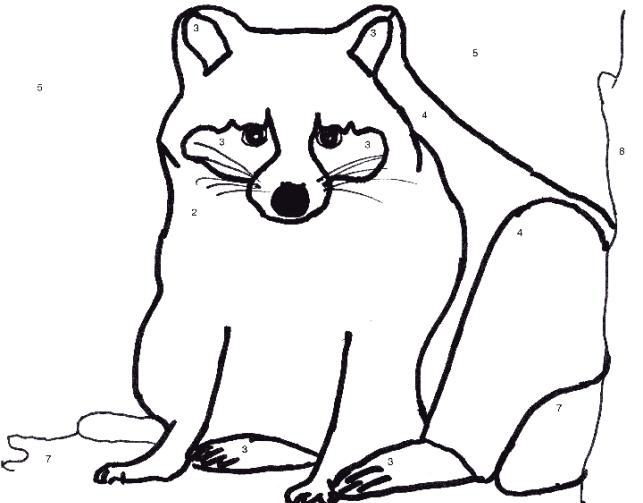
Raccoon Nesting - When female
is pregnant, makes leaf nest in hollow tree 1-8
young born after about 2 months (weigh 2 oz.) Diet - grapes,
nuts, berries, papaws (similar to papayas), grasshoppers, crickets, voles, deer mice, squirrels, other small
mammals, bird eggs, crayfish, frogs, worms,
fish, dragonfly larvae, clams, turtles, turtle eggs, acorns Habitat - wooded
wetlands, wooded streams, cities, suburbs Range - southern Canada, throughout most of
America, except parts of Nevada, Arizona, Utah Appearance -striped face with black band around
eyes and white above and below; grayish body, bushy tail with brownish-gray rings, small ears Fun
Fact
– The name raccoon
comes from the Algonquin Indian word “aroughcoune,” which
means “he scratches with his hands.” Raccoons can use their tiny hands to turn doorknobs and
open refrigerators.
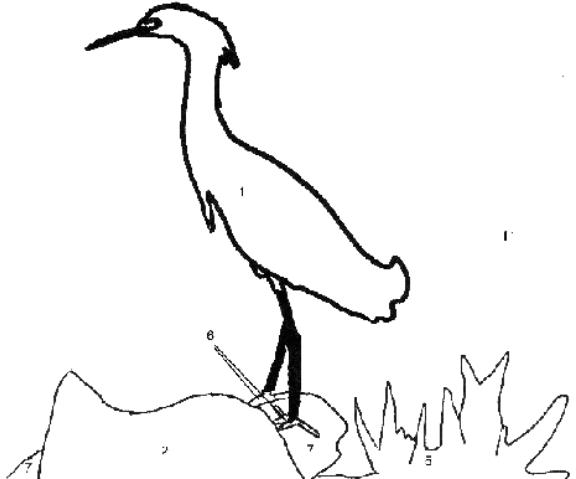
1 =
White 2 =
Grey 5 =
Green 6 =
Orange 7 =
Brown 11 =
Blue Nesting - make
nests by shrubs, small trees around water, made out of loose sticks 3-5
eggs laid at one time; 3-3.5 weeks to hatch Diet – aquatic
invertebrates (crayfish), fish, insects, crabs Habitat - marshes,
swamps, lakes, ponds, river banks Range – coastal areas from Oregon and
California to New England Lifespan – up to
22 yrs. Appearance -about 2 ft. tall; wingspan less than 4
ft. Black
bill and black legs; yellow feet, white feathers Voice – low
croak or squawk Fun
Fact
– Snowy egrets do not recognize
members of their own species very well. When a bird is flying into the nest, it must bow down
and raise the feathers on its head so that the bird already sitting there
does not attack it.
Snowy Egret

1 =
White 2 =
Grey 7 =
Brown 10 =
Pink Steelhead Trout Diet - aquatic
insects, worms, fish eggs, minnows, shiners, plankton, small fish Habitat - freshwater
streams, rivers, ocean Range - Bering
Sea to southern California Appearance -up to 4 ft long, 50 lbs. Bluish
on top, silvery-white bottom, small black spots on back, sides and fins Fun
Fact
– Steelhead trout
and rainbow trout are almost the exact same fish. The only difference between them is that rainbow trout
spend their entire life in freshwater areas, white steelhead trout spend
part of their life in the ocean before coming back to freshwater areas.
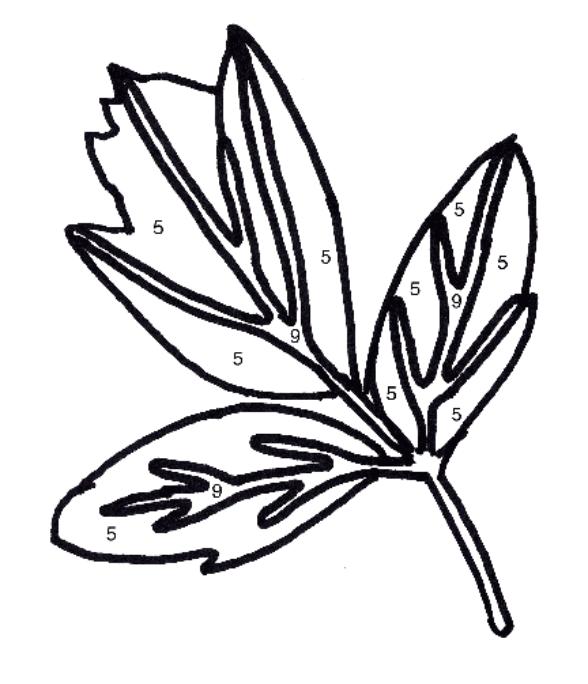
5 =
Green 9 =
Yellow-Green
Boxalder Height - 40-60 ft.
Lifespan - less than 30 years
Appearance - have three leaflets on each leaf; flowers are lime-green or yellow-green
Fun Fact- Plains Indians made sugar from the sap of the boxalder.
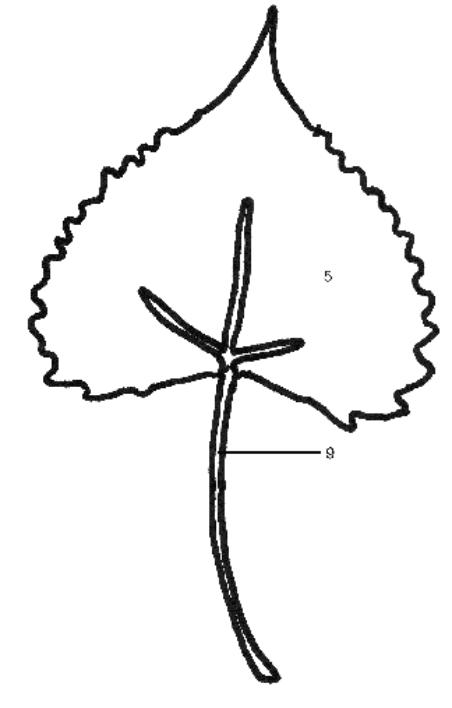
5 =
Green 9 =
Yellow-Green
Cottonwood Height - 80 ft.
Lifespan - 80-120 years
Appearance – Young branches are yellowish-grey; leaves turn golden-yellow in fall.
Diameter - 1-3 ft.
Fun Fact - The name for the tree comes from the fluffy seeds that appear in
early summer.
5 =
Green 9 =
Yellow-Green
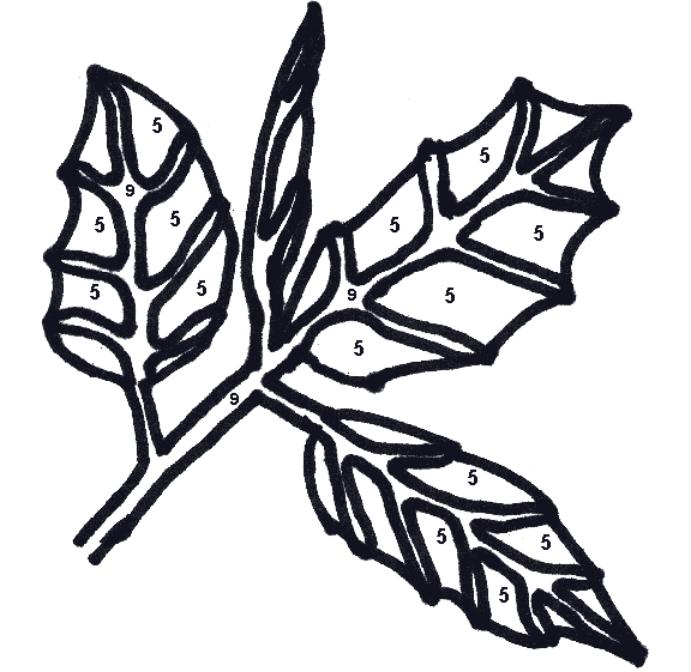
Live Oak
Height - 20-40 ft.
Lifespan - 125-250 years
Diameter - 1-4 ft.
Appearance – treetops of live oaks can span more than 150 ft.
Fun Fact - Live oak wood is so hard that it was once used to make wooden warships.
5 =
Green 9 =
Yellow-Green
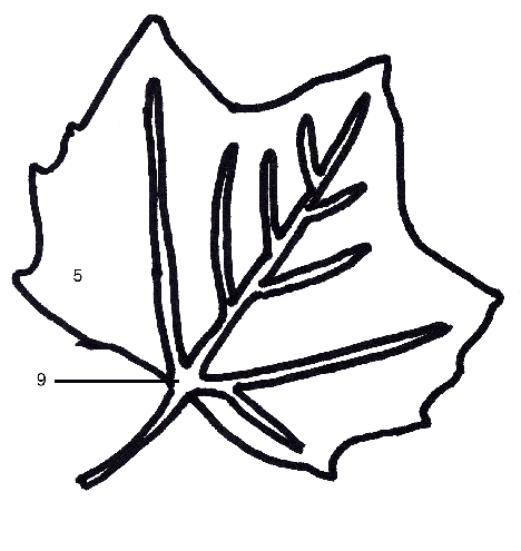
Sycamore
Height - 70-100 ft.
Lifespan - 250 years
Appearance – in fall, sycamore tree leaves turn light-green; tree has white bark.
Fun fact - Sycamore wood is used for butcher blocks. It is strong enough to handle jabs from knives.
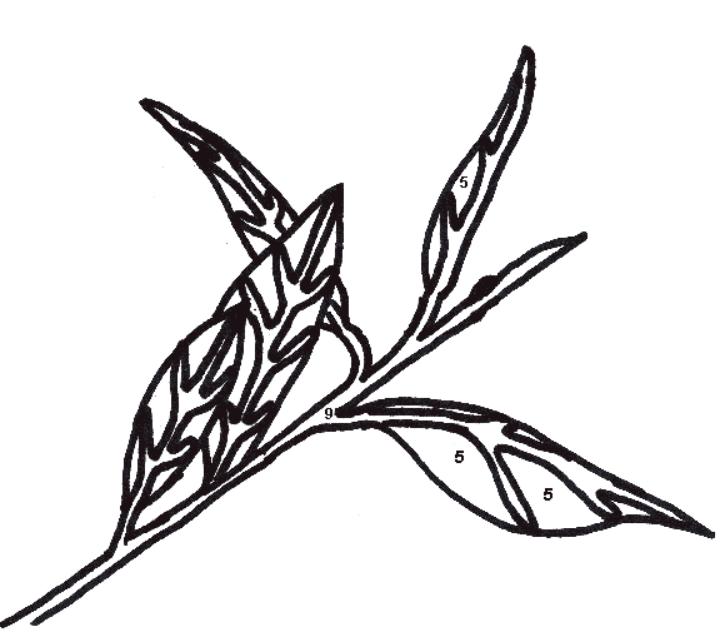
5 =
Green (All leaves) 9 =
Yellow-Green (All stems)
Willow
Height - 30-60 ft.
Lifespan - 20 years
Diameter - 1-3 ft.
Appearance – leaves are long and slender; many different kinds of willows in the park
Fun Fact - A chemical in the bark is the pain-reducing ingredient in aspirin.
For More Information...
·
Animal
Planet
(animal.discovery.com) – cool site about all types of animals and
information about shows on Animal Planet channel
·
Audubon
Society
(www.audubon.org) – great information about birds and other wildlife
·
Guadalupe
River Park and Gardens (www.grpg.org) – discover more about the park and
future events for kids
·
Happy
Hollow Park and Zoo
(www.happyhollowparkandzoo.org) – fun place to learn about animals, take
rides, and watch puppet shows
·
San
Francisco Zoo
(www.sfzoo.org) – find out about events at the zoo and learn more about
the animals