Tele-robotic ultrasound imaging for soft tissue guidance

Overhauser oxygenation and redox imaging

Research topics
-
•Quantitative longitudinal studies of tumor hypoxia and redox status as radiotherapy prognostic factors
-
•System development: acquisition techniques, image reconstruction, and image quantification
Publications and presentations
-
•K Ahn, G Scott, P Stang, S Conolly, and D Hristov, Advancing an Integrated Overhauser-Enhanced MRI (OMRI) - Prepolarized MM (PMRI) System Toward Quantitative Longitudinal Studies of Tumor Hypoxia and Redox Status, AAPM 2010 Annual Meeting, July 18-22, Philadelphia, PA, Med. Phys. 37, 3469 (2010) (download).
-
•K Ahn, G Scott, P Stang, S Conolly, and D Hristov, Development of Multi-Parametric Molecular Imager by Integrating Overhauser-Enhanced MRI (OMRI) with Prepolarized MRI (PMRI), AAPM 2009 Annual Meeting, July 26-30, Anaheim, CA, Med. Phys. 36, 2815 (2009).


Research challenge
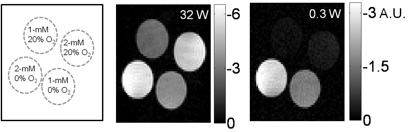
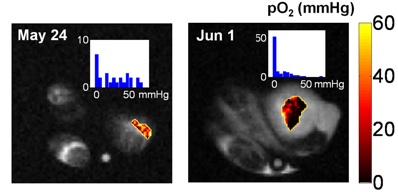
Tumor oxygenation and redox status are important determinants of the malignant behavior of cancers and their response to radiation therapy. However quantitative and repetitive oxygenation and redox imaging on short time scales poses a challenge to common molecular imaging modalities. We are addressing this challenge in the development of a magnetic resonance system that employs the Overhauser dynamic nuclear polarization effect to image microenvironmental properties reported by exogenous spin probes. We have integrated the system with previously developed pre-polarized magnetic resonance imager in order to natively co-register oxygenation and redox maps with anatomic images. The project is partially supported by AAPM seed funding.