EFS 693B - STANFORD UNIVERSITY
Listening and Communication
EFS 693B - STANFORD UNIVERSITY
Listening and Communication
EFS 693B
Week 7 Notes
CLASS OBJECTIVES
Watching movies for language learning
Introduction to FlashACE for processing practice
Research trends and advice on using captions
Notes on independent study
I. Opening: http://www.comedycentral.com/videos/index.jhtml?videoId=265106&title=ability-giving-birth-in-the-sky. Try other clips at www.comedycentral.com.
II. Watching movies for language learning: discuss
1) What are the best types of movies to watch for language learning? Why?
2) What are the worst types? Why?
3) Think about a movie you watched recently--how could you use it to improve your listening skills
4) See handout: Listening-to-Movies.doc
III. Focus on language processing: dictations and other intensive listening to build speed, accuracy, and capacity
A. Groundhog Day Punctuated presentation:
http://www.crackle.com/c/Groundhog_Day/Predictions/2476119 (pause and
reflect)
Dictation:
http://www.crackle.com/c/Groundhog_Day/The_Perfect_Man/2476112
B. FlashACE: www.stanford.edu/dept/lc/efs/FlashACE/: provides processing practice through rapid, intensive comprehension and optional dictation.
IV. Research and practice trends on captioning/subtitling for language learning
Typically show either positive effect or no significant difference for comprehension
May improve rapid reading
May interfere with picking up visual information
More positive results when students can control the subtitling
Some evidence that viewing native language subtitles first for difficult
material may be helpful (e.g., movies)
Possible procedure: native language subtitles first pass; English subtitles
second pass; no subtitles third pass
Are better than transcripts for simultaneous listening because they are superimposed on the video (Cognitive theory of multimedia)
V. Recommendations for using captions/subtitles
Don't avoid subtitles, but
Don't overuse them
Remember that they are not always exactly what is said--their purpose is to help with meaning
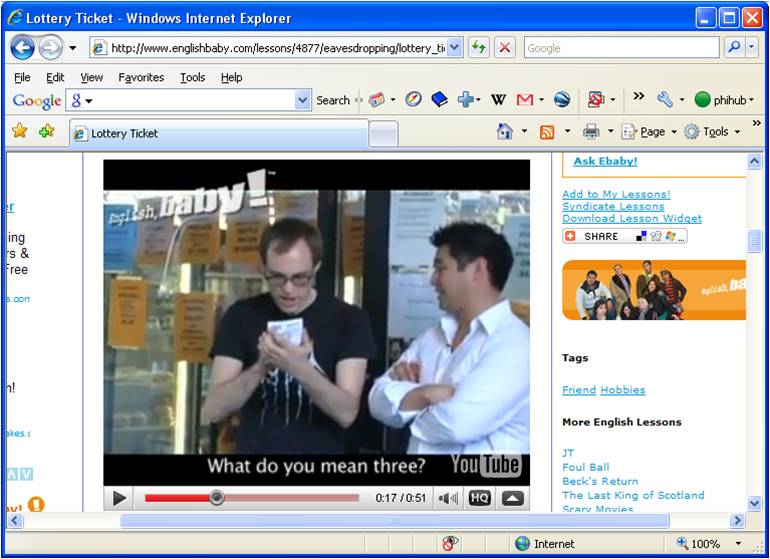
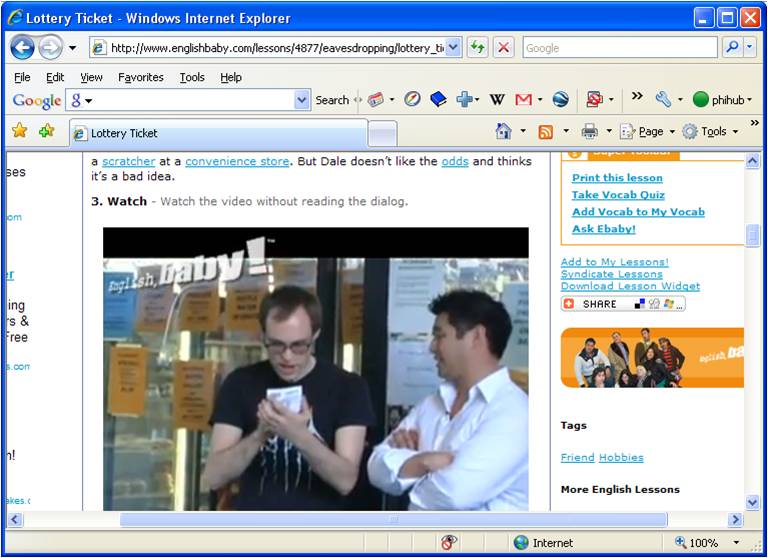
Toggle them on and off (when possible) to maintain listening focus (best sites are those that allow toggling or hiding). For comprehension and processing, it's best to listen again with them off once you comprehend a scene or clip.
To hide a caption
a) slide the window down until the caption disappears--unfortunately this also hides the pause, rewind, playbar, etc.
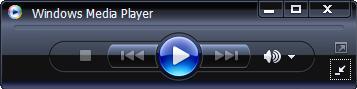
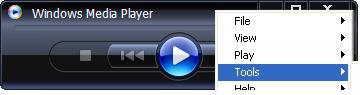
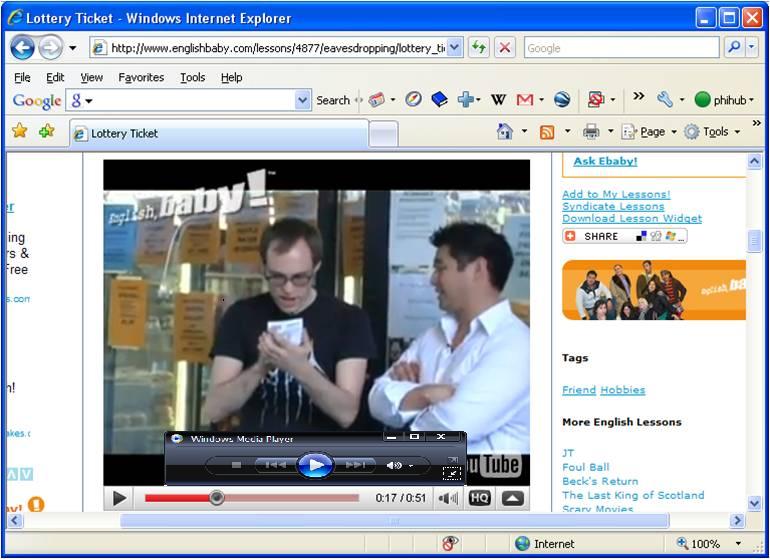
b) A better way is to use Windows Media Player to block the caption
1) Minimize the player
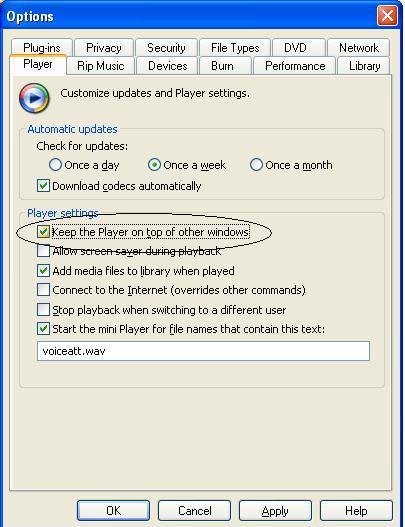
2) Right-click on the bar at the top and go to Tools and then Options
3) Under options, click the box "Keep the Player on top of other windows"
You can now use the Player window as a screen to block the captions, but the player controls will still work
VII. Closing words
A. Independent study and motivation:
- set a schedule and try to keep to it
- be sure you understand the different objectives of different activities
B. Reviewing previous work. You can go back and listen to material you have previously listened to if you want for deeper comprehension.
C. Analysis of understood material. Once you've comprehended a piece, your job isn't necessarily done: you can listen to it closely to notice things like grammar, vocabulary, pronunciation, reduced forms, linking, rhythm, intonation, tone of voice, connection of language to gesture, and so on. It's difficult to learn what you don't notice. Don't be satisfied just with basic understanding. However, don't do this for all material--vary your listening tasks along the extensive-->semi-intensive-->intensive continuum.
-----------------------------------------------------------------------------------------------------------------------------------------------
Homework
1) This week the assignment
is to do a minimum of three hours in the following way
- Do one 2.5 hour session at a single
sitting (you can take a short break if needed).
- Do 2-3 short vocabulary reviews
(10-15 minutes) on two or three other days. Continue with FlashCardDB if you
liked it.
The goal is to contrast the longer, more intensive experience with English
with the daily experience from last week. Get the report form
here.
2) Go to www.stanford.edu/dept/lc/efs/FlashACE/. Finish FlashACE Intermediate1 if needed (skip Lesson 2 for now--it has several errors). Then, go through FlashACE Intermediate Lessons 3, 4, and 5 on different days. Listen first for comprehension. Then, for each lesson, try to do dictation on at least three items. Notice what you have to listen to most closely and any mistakes you make--come prepared to discuss your experience. Do not continue to FlashACE Advanced--we'll do it later. (Note: If you already did this for 693A, you've probably forgotten most of the individual items, so try it again, or concentrate on the dictations). Come prepared to discuss your experience next week.
NOTE: I will be away at a conference Wednesday May 18, so the Wednesday class will meet on Monday, May 16 at the usual time (9:30-10:45) and place (160-328). The Tuesday class meets at the normal time.