Education
Rural Education in Guatemala
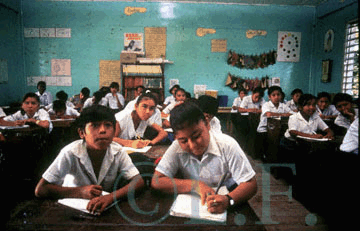
After a deeply destructive civil war that lasted over 35 years, the people of Guatemala are now rebuilding community by community. Decades of civil conflict have taken their toll particularly in rural areas, and in much of rural Guatemala, children have very little access to education. Although 62% of Guatemala’s is located in rural areas, only 1.8 % of high school students is from rural areas.
According to a recent nationwide
study, only 25% of Guatemala’s primary and secondary school teachers are
fully qualified to teach.
In recent years an average of 200 students per year have been denied the opportunity
to continue their education due to lack of space in school. With high unemployment
rates in rural areas, students need to gain extra skills like computer training
and business skills if they expect to find gainful unemployment.
A post from an American ESL teacher in Guatemala
December 05, 2002
There are private schools as well but unlike in the US, the teachers get paid
less. The standards might be higher just because there are less kids in each
class. My spanish teacher used to teach at a private school and she said she
had to leave because of the corruption and disorganization. You would not believe
how little these teachers get paid. At a private school, teachers get paid on
paper about $110 a month but in fact, they only get about $50 because the school
would pocket the rest. At a public school, they get about $200 a month but you
have to pay someone (a third person and probably government officials) at least
$150, usually more, to get a teaching job.
The sad thing is that the government has no intentions to educate it's people
because all they care is money and the less the people know the less resistance.
Guatemala has one of the most corrupt governments in the world and the most
extreme rich-poor ratio and it is actually getting worse and not better.
It is quite depressing to think that these problems exist in many other countries
around the world. It really didn't hit you until you are in one and see it first
hand.
We have daily activities at school and yesterday we had a discussion about education
in Guatemala. It was quite depressing as I had expected.
Problems range from not having enough teachers and teaching materials, poor
learning environments, government not giving enough support to discrimination
and of course, poverty.
Teaching is actually the number 1 occupation in this country but because the
public schools supported by the government and education only gets 2% of the
GDP - before corruption, there are not enough teaching jobs. An average school
in the city has 500 kids spread out over 6 grades and there are only 3 or 4
teachers. Kids in the rural areas face more problems with discrimination due
to the different indigenous languages spoken and lack of clothing for the really
poor kids. The government make great promises to get votes but doesnt do anything
in reality. They promised new books and great snacks for the kids and the schools
for 7 books and the kids get one small, stale cookie.
Our teacher who led the discussion sees this first hand because she teaches
at one of the public schools in a pueblo. One time she was invited to one of
the kid's home for dinner and they got tortilla with some cheese. And I think
that is a good meal.
Posted by Karen
General Education in Guatemala
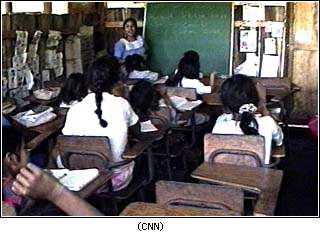
Education in Guatemala is free and compulsory between the ages of seven and fourteen. Primary education lasts for six years and it’s estimated that 79% of children this age actually attend school. Secondary education starts at age thirteen and lasts for up to six years with two cycles of three years. It’s estimated that only 23% of children of the relevant age group are in secondary school. Not all secondary education is free and that is an incredible deterrent for the average Guatemalan.
Overall, adult literacy is around 65% in Guatemala. The average rate of adult
illiteracy is 37% for males and 53% for females, which is the second highest
rate in the Western Hemisphere. There’s a big variation in literacy rates
among different groups. A Guatemalan organization specializing in Mayan women’s
concerns estimates that 95% of rural women are illiterate. Mayan children who
do seasonal migrant work with their families are least likely to receive and
education.