Interaction of canopy and plume dynamics and its impact on wildfire spread
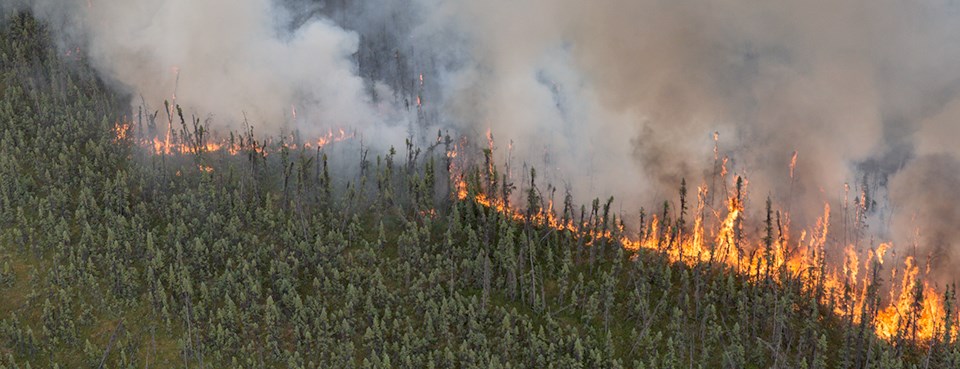
While wildfires have always been part of the natural environment, more extreme and large-scale wildfires have been increasing in frequency, globally, in the past two decades, putting more vulnerable communities and ecosystems at risk. While most of the annual instances of wildfires are small and confined, instances of disaster-level wildfires have been occurring frequently in many countries. Predictions expect that such extraordinary forest fires will only increase with increasingly adverse climate patterns, lack of wildlife management, and increasing populations in WUIs (wild-land urban interface). Within the United States, significant effort has been put into creating predictive models, response frameworks, and general research for understanding wildfire behavior. A common method of limiting wildfire spread called fuel breaks, where regions of vegetation are removed in forests, are effective but would be unsustainable at large scale.
Wildfires spread via spotting : the trajectories of settling embers from the buoyant plumes.
Research and developments in wildfire management mainly focus on three aspects impacting spread and intensity: large scale dynamics including meteorology, atmospheric stability, and terrain properties that can impact wind and weather patterns; combustion dynamics or available ‘fuel’ for the fires; and flame shape, plume dynamics, fire front dimensions, and other fluid mechanics aspects of the flames at different scales. Despite the prevalent work and literature on large synoptic and terrain scale and plume/scale aspects of wildfire spread, there is little work done on understanding the fluid mechanics of the flow and plumes at the canopy scale.
In this project we focus on the canopy scale dynamics of wildfires by examining the intersection between turbulent, buoyancy driven plumes and canopy dynamics. This work is not intended to replicate the complex nature of wildfires and all the associated phenomena such as flame dynamics, combustion, and atmospheric stability, but it is intended to increase our understanding of the interaction of buoyant plumes with a canopy. Furthermore, in a manner related to the study of submerged aquatic vegetative canopies we will examine how various heterogeneities in the canopies (as found in nature or via fuel breaks) can alter plume behavior.
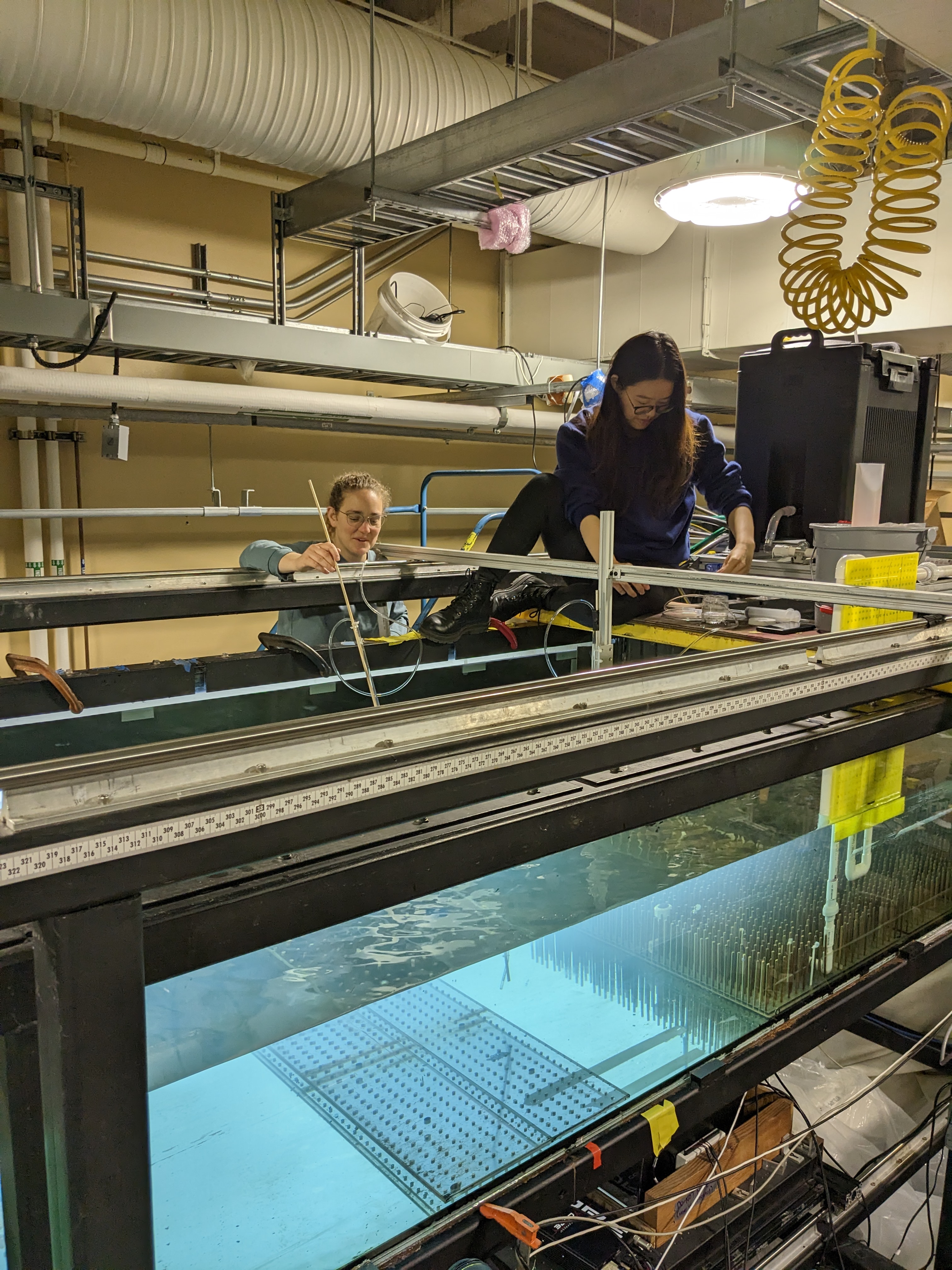
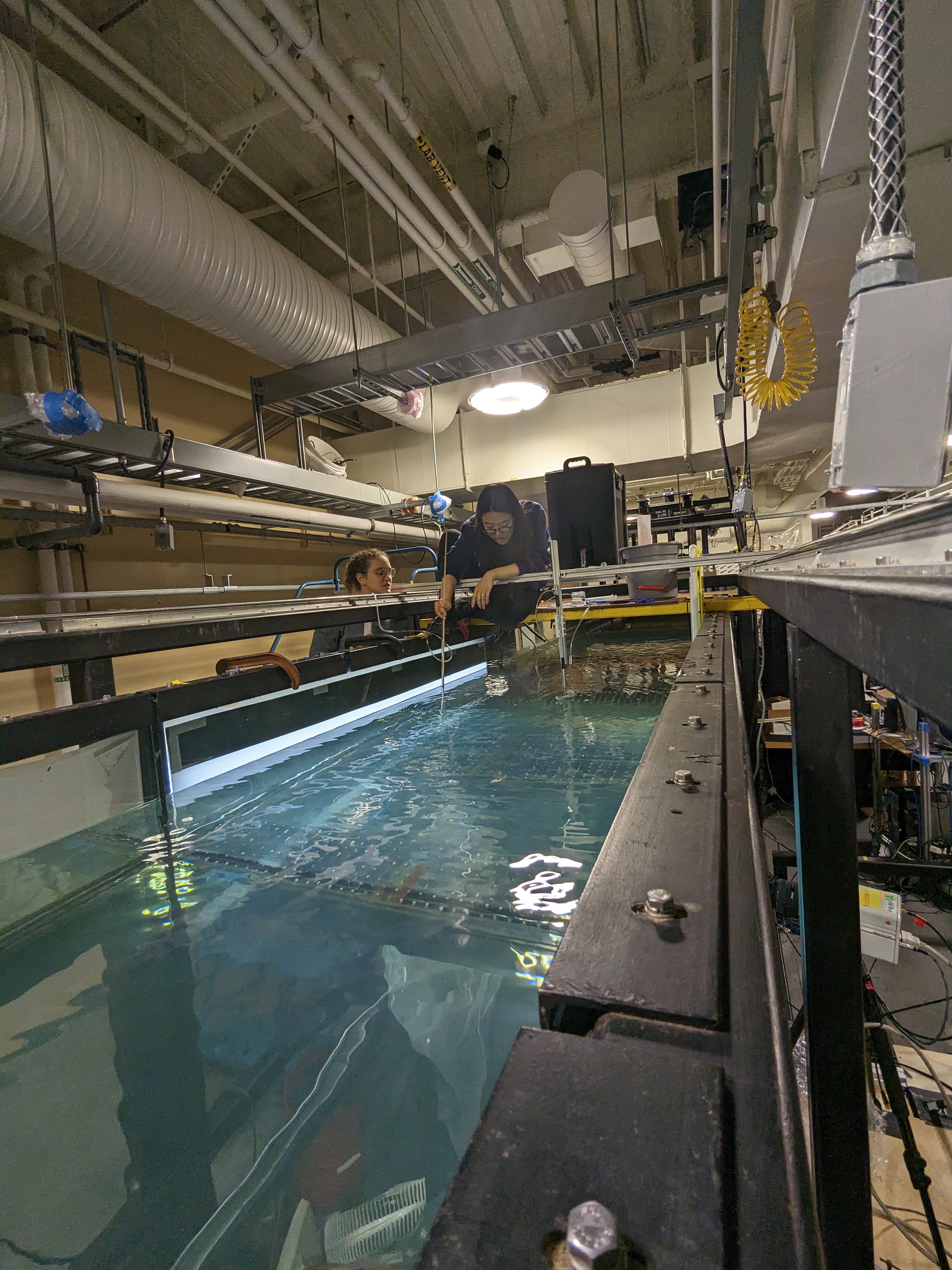
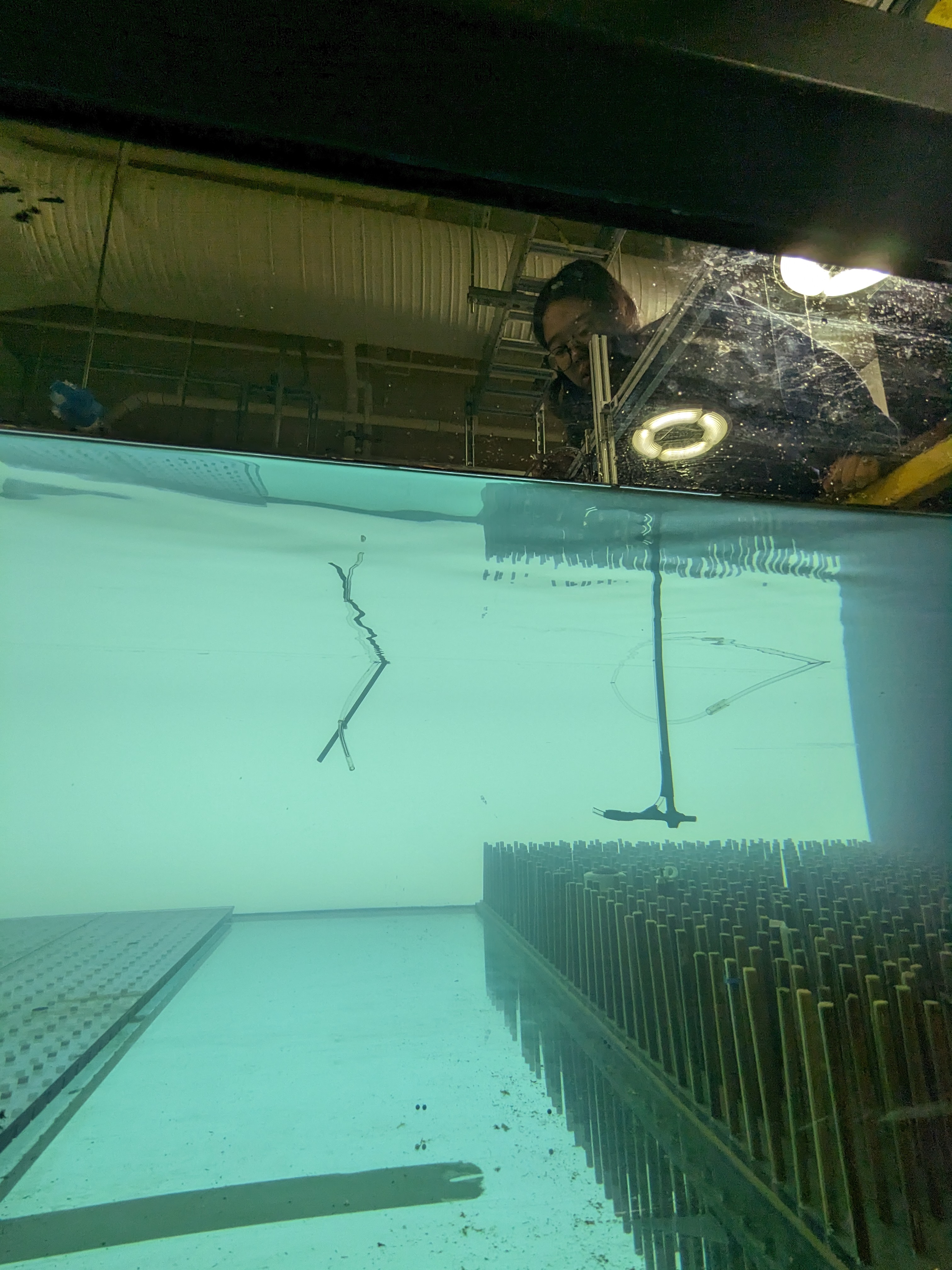
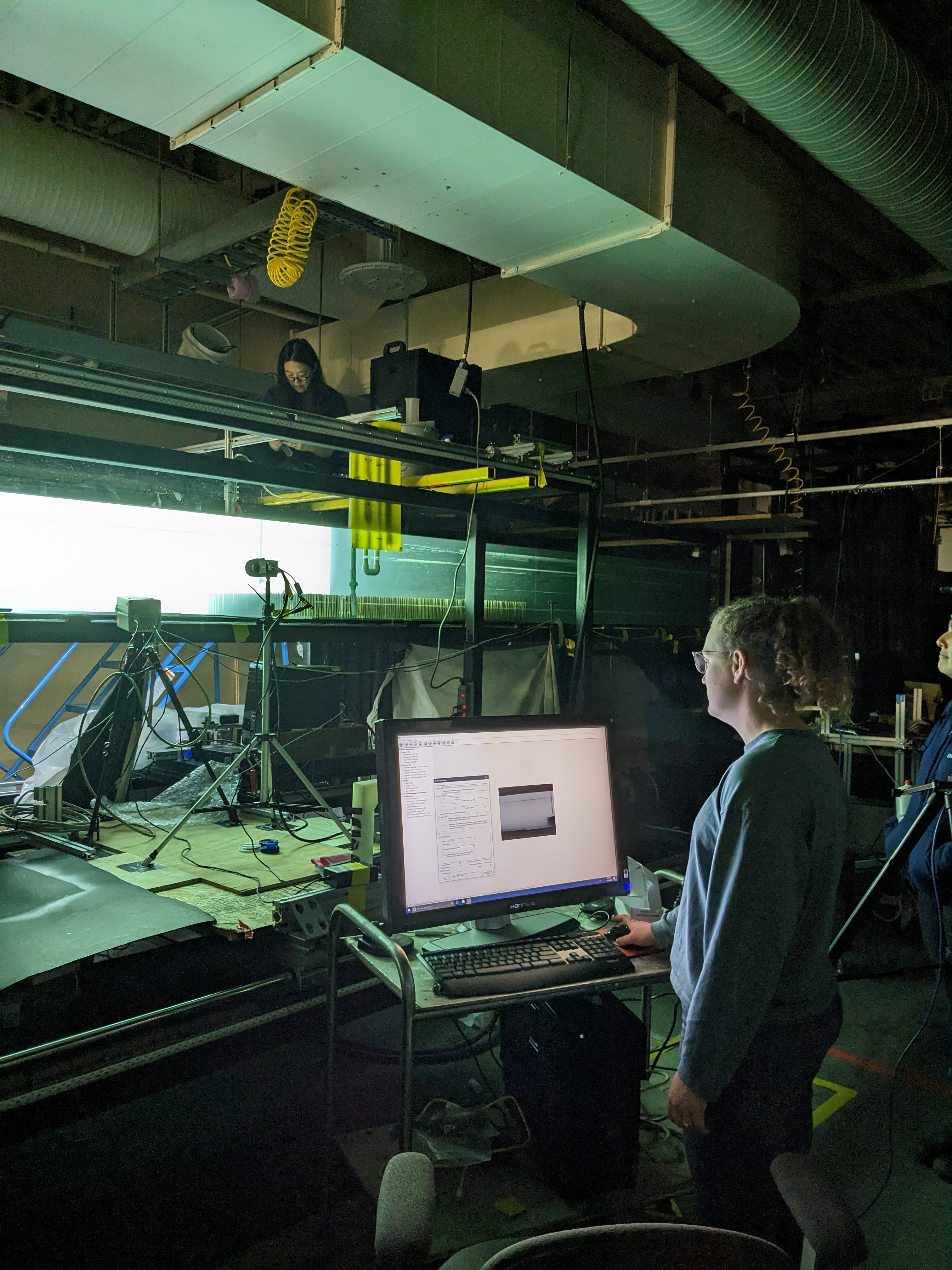
This work will help understand not only wildfire fluid mechanics, but also other canopy flows with buoyant plumes such as pollution plumes in urban canopies or heat pollution release into aquatic canopy systems.
Related publications
- Chung, Hayoon & Koseff, Jeffrey. (2023). Interaction of a buoyant plume with a turbulent canopy mixing layer. Physical Review Fluids. 8. 10.1103/PhysRevFluids.8.064501.