

Ethics in Medicine
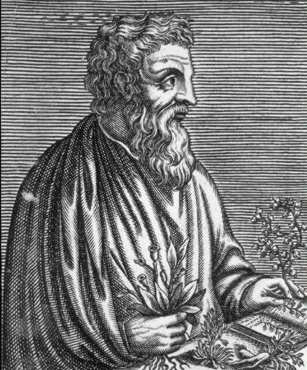
Dioscorides (link)
Dioscorides is famous for writing a five volume book in his native Greek (De Materia Medica - in the latin translation) that is a precursor to all modern pharmacopeias, and is one of the most influential herbal books in history. In fact it remained in use until about CE 1600.
 iLearn
|
Grading
Please don't think that there is a single "right" answer to any of the complex issues we will be considering. You'll need to struggle with each issue, asking yourself what the situation is like from the point of view of the patient, the family, the health care professional, the attorney, the policy maker, and society as a whole. Ethics is a part of our lives that requires us to become aware of and articulate our own deeply held values, to communicate these clearly so other people understand our beliefs and commitments, and to invite dialogue and meaningful exchange of beliefs. This is a discipline that calls for us to engage others in active and respectful dialogue. Serious ethical discussion means that you, as a participant, know the facts, reflect on and communicate your own values, offer your reasons in a clear and organized fashion to others, demonstrate understanding of positions other than your own, and be responsive, open and able to change yourself as well as others. In the assignments you do for this class, you will be evaluated on how clearly, deeply and systematically you articulate both your own position and the points of view of other people, even (or especially) those who don't agree with you. How well do you understand and state the facts? How well are you listening to and understanding others? How well are you analyzing and presenting your own response? The thoughtfulness, thoroughness and strength of argumentation you demonstrate in your assignments are also important factors. Your knowledge of the ethical positions presented in the reading and lectures also is important. Traditional option students will be evaluated on their in-class quizzes, the one short mid-term paper, and the two final essays they complete. Community service learning option students will be evaluated on their in-class quizzes, the one short mid-term paper, and their final complete journal. They will receive CR or NCR for the unit of PHIL 680 on the basis of their successful execution of their volunteer work and their field supervisor's evaluation. All work must be submitted by the announced date. Do NOT expect to receive credit for exams or papers that are turned in after the deadline.
In-class quizzes: 15% |