Navarra
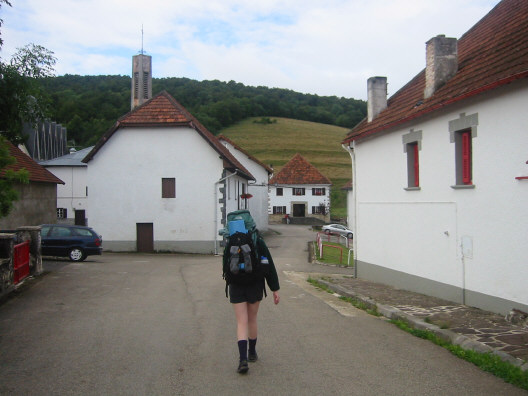
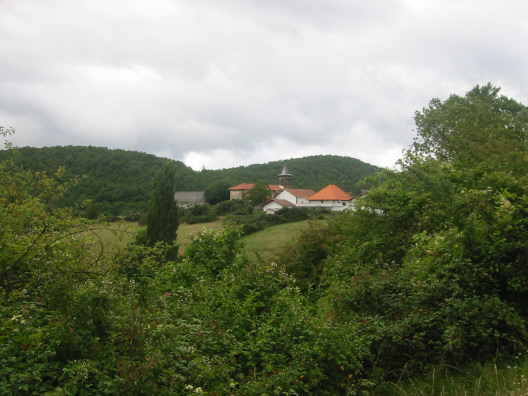
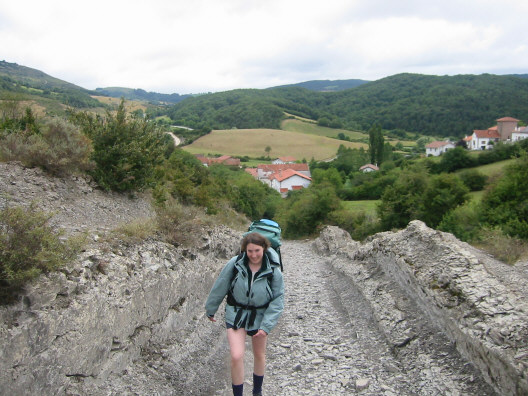
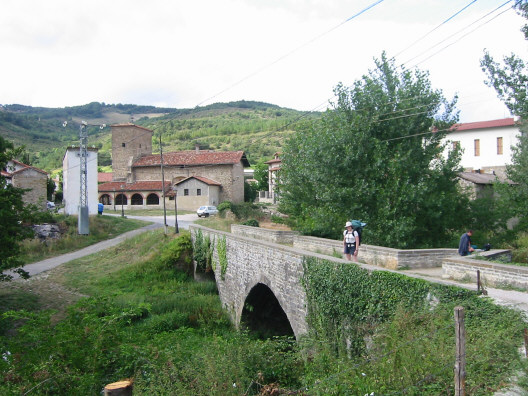
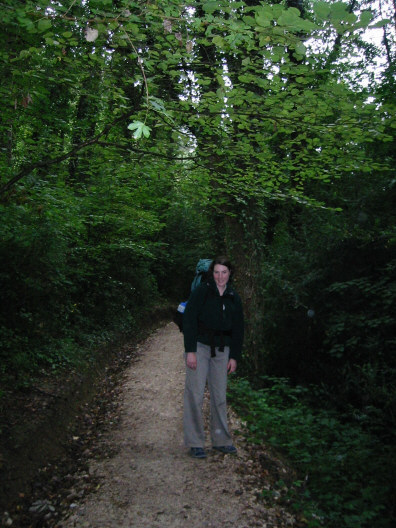
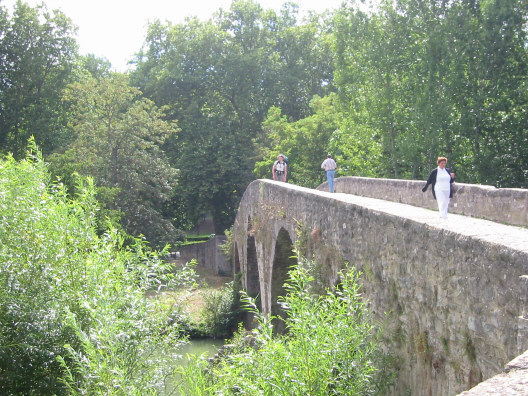
The first day into Navarra, the route took us through the foothills of the Pyrenees, on roads and forest tracks. As we followed the Rio Arga, the houses we passed through had their typical red roofs. On the way, we passed the medieval Puente de Rabia. Cattle would taken to the bridge and made to a circle around a post as a ward against rabies.
Our third night was spent in Larrasoaina, whose alcalde, Santiago Zubiri Elizalde, is a fixture on the Camino trail. The bridge over the river used to be known as the Puente de los Banditos, for it was there that pilgrims would be regularly robbed back in the bad old days.
Navarra was replete with tales of this type. According to the Codex Calixtinus, a group of Frankish pilgrims arriving at the Rio Salado in the 15th century encountered a group of Navarrese sharpening their knives by the riverside. After the Navarrese assured them that the riverwater was safe for horses to drink, the horses drank- and dropped dead after five paces. The Navarrese immediately took their newly sharpened knives and proceeded to skin them then and there. The pilgrims were not in a position to argue.
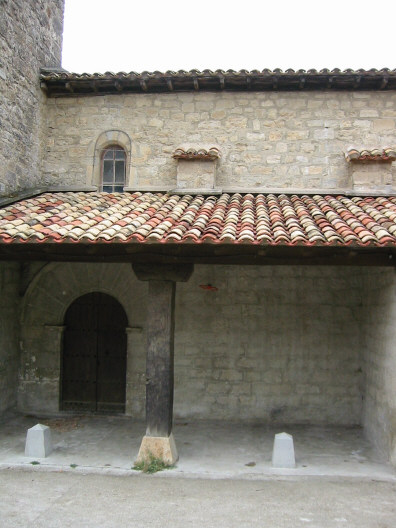
Some of the churches we passed by also sported their own basketball hoops, providing a one-stop shop for the parishes' spiritual and physical health needs.
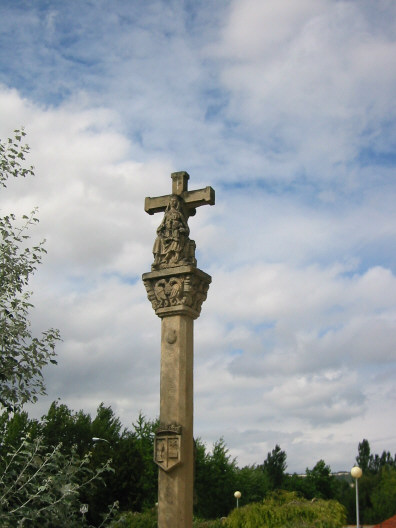
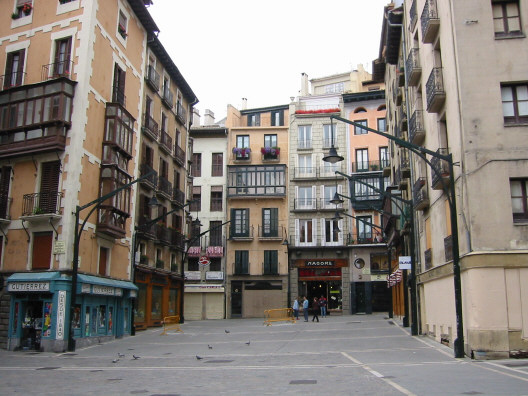
A cross on the Puente de la Magdalena guards the eastern entry into the Roman fortress-city of Pamplona. This city, the capital of Navarra and guardian of the continental approaches into Spain, has faced many a siege, and over the years developed a formidable system of defence.
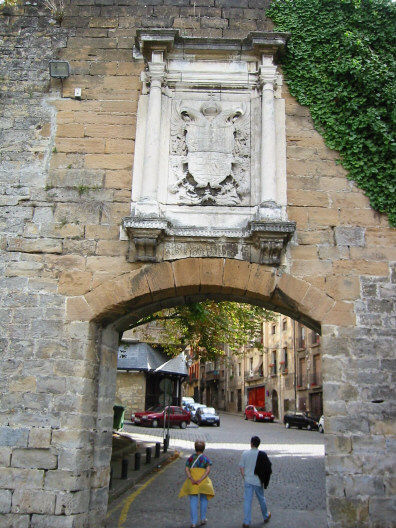
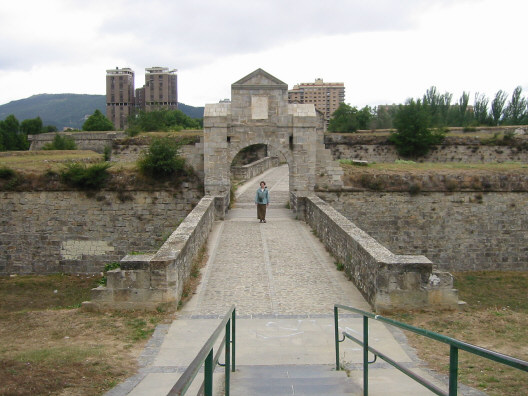
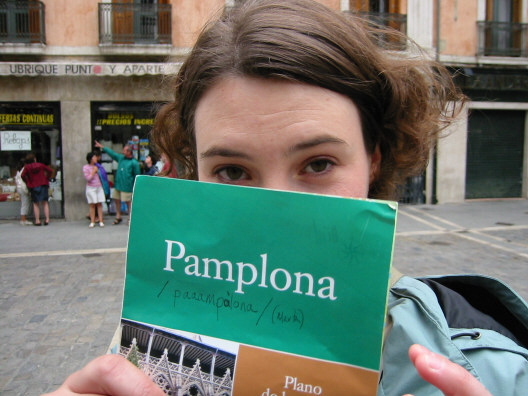
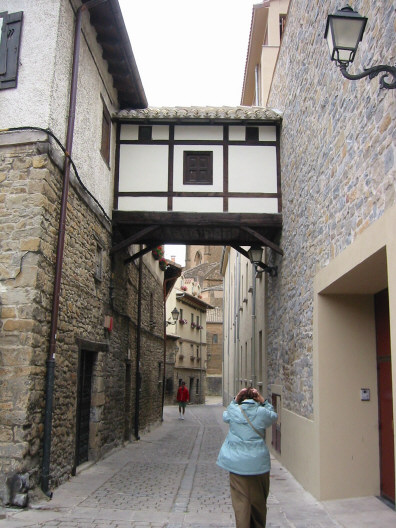
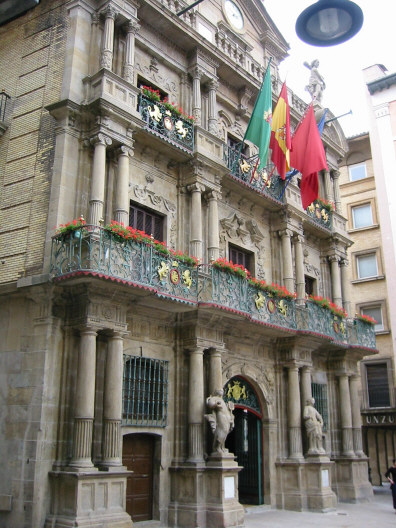
Pamplona was divided in quarters. The Navarreria (left) in the old town housed the Navarrese, while Frankish immigrants occupied an area around the San Fermin church. The ayuntiamento was built in the spirit of reconciliation between the warring districts.
It was also in Pamplona that we had our first experience of the Quemadilla.
before after
and we made a few forays into euro-chic.

Go home | Keep walking (707km)