|
Design, Technology, and Engineering benefitting individuals
with disabilities and older adults in the local community |
January 12, 2026 |
|
|
|
|
Perspectives is the newsletter of the
Stanford course,
Perspectives in Assistive Technology.
Course Enrollment Update
Week 2 Class Sessions &
Assistive Technology Faire Solicitation
This newsletter issue describes the
second week's class sessions of the Quarter.
|
Perspectives in Assistive
Technology is a Winter Quarter Stanford course - embarking on its
nineteenth year - that explores the design, development, and use of
assistive technology that benefits people with disabilities and older adults.
It consists of semi-weekly in-person discussions; lectures by
notable professionals, clinicians, and assistive technology users; a
tour of an accessible inclusive playground; student project
presentations and demonstrations; and an Assistive Technology Faire.
Students pursue team-based projects that address real challenges faced by
people with disabilities and older adults living in the local community. Check
out the course website. |
Week 2
Course Plans

Student Enrollment by the Numbers:
Student Enrollment by the Years:- Of
the enrolled students, 2 are Freshmen, 2 are Sophomores, 8 are Juniors, 13 are
Seniors, and 6 are Graduate students, with 26 opting to work on team projects.
Enrollment seems to have stabilized and there are no students on a Wait
List
Community Attendance - Community members are
most welcome to attend class sessions on campus, enrollment is not required.
There will not be a Zoom participation option this year. |
Week 2 In-person Class
Sessions
|
Tuesday, January 13th at
4:30pm PST
|
|
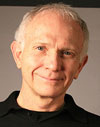
Creating Assistive
Technologies - Understanding the Problem
Gayle Curtis, MS
UX Design
Consultant |
Abstract: When we look at the drivers of
effective innovation, we see two complementary themes emerging: First, new
technologies or methods that open the way to new solutions, and second, new
insights or experiences that yield a better understanding of the problem. With
a design thinking approach, we begin by building empathy with the user and the
situation, then we use ideation, prototyping, and iteration to explore,
formulate, and test solutions.
In this class session we will look at ways to gain
understanding of user needs, goals, and values around a problem, as well as the
constraints and requirements of the situations around them. One goal for this
session is for students to identify a set of questions to explore through
interview and observation with real users of assistive technologies. Teams may
also get some good ideas about the people they might approach for both
inspiration and insight.
Biosketch: Gayle Curtis is a UX design
consultant in the San Francisco Bay Area, specializing in user interface
architecture and design strategy for online ventures and interactive products.
Recently he was Principal Interaction Designer at Yahoo!, where he also
developed a practice area in strategic ideation and disseminated it through
workshops in the US and Asia. At Stanford he has held Lecturer appointments in
Human Computer Interaction (CS) and Product Design (ME). Gayle is a graduate of
the MS Engineering Product Design Program at Stanford. |
|
Thursday, January 15th at
4:30pm PST
|
|
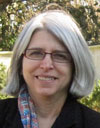
Bridging the Gap between
Consumers and Products in Rehabilitation Medicine
Deborah E. Kenney, MS, OTR/L
Stanford University, VA Palo Alto Health Care
System, and Foothill College |
Abstract: Occupational therapists (OTs) are
critical players in the transdisciplinary rehabilitation team. An OT's job is
to help people, who because of illness, injury, or aging, have experienced a
decrease in their ability to function independently in the areas of daily
living, work, play, and leisure. Treatment by an OT often includes the
prescription of assistive technology. This talk will focus on the aspects
necessary to effectively fit the technology to the individual and support the
use of this technology in the home environment, and the impediments to
providing this. She will be joined by a panel of stroke survivors: Albert A.
and Michael W. who will discuss their challenges and the assistive technology
devices they have used.
Biosketch: Deborah Kenney has been an
occupational therapist working with stroke survivors and hand patients for the
last 29 years. She currently splits her time, as a researcher, between Stanford
and the VA Palo Alto Health Care
System. She has collaborated on numerous design / development research
projects with both engineers as well as with graduate, medical, and
undergraduate students. Her work includes testing and integrating technology
into the rehabilitation setting with individuals with Parkinson's Disease, CVA
(stroke), spinal cord injury, hand and orthopedic surgery and rehabilitation,
and balance problems related to aging. Ms. Kenney currently works with
researching problems of hand rehabilitation and treatment related to post
surgical pain and thumb arthritis and continues to develop novel treatments for
post-stroke survivors privately in the community. |
Upcoming In-person Class Sessions
Assistive Technology Faire - Call for
Exhibitors

Product manufactuers and
service providers are invited to participate in the Assistive Technology
Faire - This fourteenth annual course event is scheduled for
Thursday, February 19th and will provide an opportunity for students and
community members to get an up-close look at a variety of assistive technology
devices and learn about available services. Users of assistive technology
products as well as small companies and agencies serving
individuals with disabilities and older adults are encouraged to join in on
this event. Browse to the Call for Assistive Technology
Faire Participants webpage for more information and contact me to
register.
Everyone is welcome to attend this event. Here is the
current line up and
slides from last year's
Faire. |
Please contact me with your ideas, questions, comments,
and project suggestions - or just to say hello. Please continue to stay safe
& healthy.
Dave Jaffe - Course Instructor
|
To unsubscribe from this newsletter, please email
Dave. |
|