Statement on Diversity and Inclusion
I am committed to creating a workplace and an environment that is supportive, inclusive and welcoming for all people,
regardless of their race, ethnicity, nationality, religion, gender identity, sexual orientation and political beliefs. I believe
that diversity of thought, experience and approach is an asset that enriches discourse and creates opportunities for all of us to
learn different viewpoints from each other. I strive to create an environment that enables and empowers each one of us to reach
our full potential.
-Arun Majumdar
Atomic
Imaging

Optics, imaging, and visualization to provide general tools for understanding the physics at atomic scale, especially in energy field.
Thermal
Energy

From fundamental thermoscience to the advanced heating & cooling
techniques, with the aim of efficiency and scalability.
Chemical
Reactions

Electro-chemical and thermo-chemical reactions that are fundamental for
sustainable energy.
Intelligent
Systems

Re-engineer the electric power systems towards the "smart grids" goal with data
science, machine learning, and economic analysis.
Featured News

Congratulations to Gang Wan on winning 8th Young Scientist Award from the International Society for Solid State Ionics (ISSI) in 2026!
Posted on Monday, Aug 31, 2026
Gang Wan, Research Scientist, in the Magic Lab, has received the prestigious 8th Young Scientist Award from the International Society for Solid State Ionics (ISSI) in 2026, in recognition of his innovative, interdisciplinary contributions to solid state ionics and interfacial ionics in energy transformation systems. See more details here.
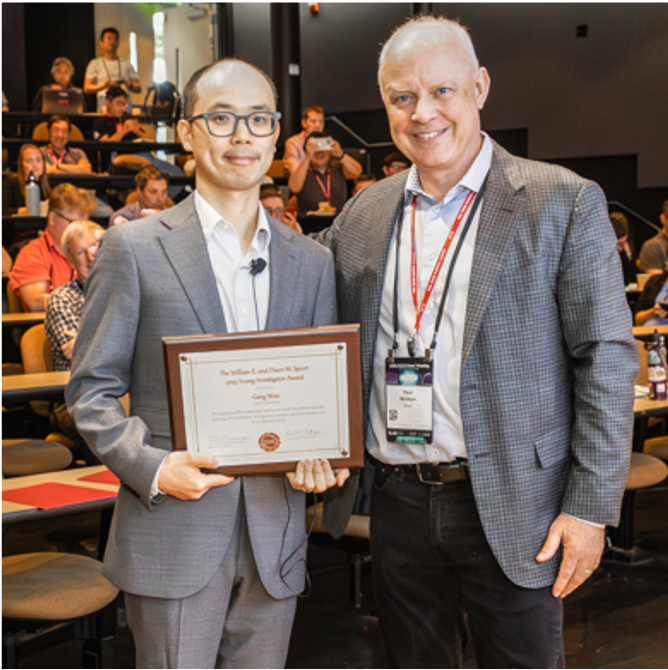
Congratulations to Gang Wan on winning the 2025 William E. and Diane M. Spicer Young Investigator Award!
Posted on Monday, Dec 8, 2025
Gang Wan, Research Scientist in the Magic Lab, wins the 2025 William E. and Diane M. Spicer Young Investigator Award, with a citation "In recognition of his outstanding work in multidisciplinary research, spanning electrochemistry, heterogeneous catalysis, materials physics, and X-ray characterization." See more details here.
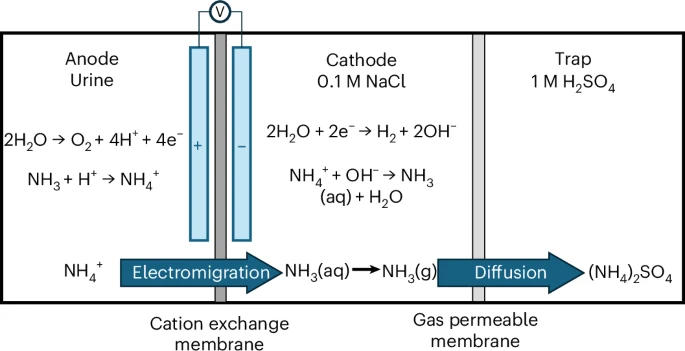
Our paper Prototyping and modelling a photovoltaic–thermal electrochemical stripping system for distributed urine nitrogen recovery is now published in Nature Water
Posted on Tuesday, August 19, 2025
Distributed solar-enabled nitrogen capture from urine helps to manage the nitrogen cycle and increases fertilizer, sanitation and electricity access. Here we provide proof of concept for a photovoltaic–thermal electrochemical stripping (ECS) system, known as solar-ECS, that recovers ammonium sulfate fertilizer from real urine independently of the electricity grid. See more details here.
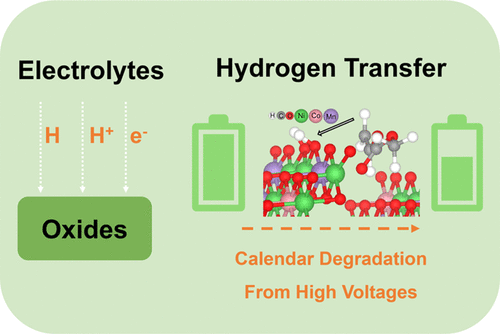
Our paper Hydrogenation of Oxides in Nonaqueous Battery Electrolytes and Beyond is now published in ACS Energy Letters
Posted on Thursday, July 24, 2025
The study of lithium-ion batteries (LIBs) has historically focused on the movement of lithium ions, which is coupled with electron transfer to reversibly store and release energy from metal oxides thousands of times. However, a recent discovery identified an additional coupled electron–ion transfer process occurring between oxide cathodes and nonaqueous electrolytes, particularly during the self-discharge process. See more details here.
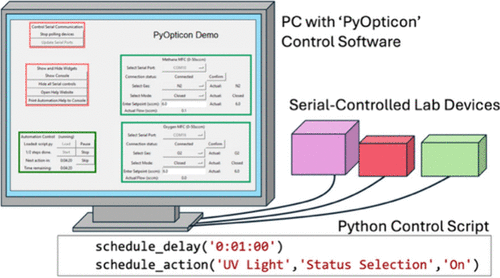
A paper on our in-house lab automation software is now published in ACS Chemistry of Materials
Posted on Wednesday, June 20, 2025
Slow and tedious lab procedures are often a bottleneck for projects aiming to develop catalysts and chemical conversion processes. In particular, many experimental workflows that are suitable for automation are nonetheless done by hand. Additionally, processing differently-formatted data from many instruments and logging programs is often cumbersome. Over the last few years, we have developed a free and open-source Python package to meet these (and other) needs in our own lab, and we have just published an article describing it. See more details here.

Our paper (EV-EcoSim) on the Design and Optimization of Electric Vehicle charging Infrastructure is published in IEEE Transactions on Smart Grid!
Posted on Monday, January 05, 2024
To enable the electrification of transportation systems, it is important to understand how technologies such as grid storage, solar photovoltaic systems, and control strategies can aid the deployment of electric vehicle charging at scale. In this work, we present EV-EcoSim, a co-simulation platform that integrates electric vehicle charging, battery systems, solar photovoltaic systems, grid transformers, control strategies, power distribution systems, and optimization to accelerate the deployment of electric vehicle charging infrastructure.

Joel has successfully defended his PhD thesis. Congratulations!
Posted on Friday, November 10, 2023
Joel Martis has successfully defended his PhD thesis. We had a group dinner together to celebrate this wonderful moment. Joel will join Nion after his graduation. Congratulations, Joel! And wish you all the best for your future career!

Our paper assessing the feasibility and benefits of methane oxidation technologies is out now in Environmental Research Letters’ special focus on methane drawdown!
Posted on Sunday, October 15, 2023
There is growing interest in mitigating the climate impacts of hard-to-abate methane emissions by breaking down (oxidizing) methane at its source or in the atmospheric itself. In this work, we identify practical constraints to any methane oxidation technology and quantify its potential benefits (economic, air quality, and global cooling).

Our paper on distribution grid mapping is published in Nature Communications!
Posted on Thursday, August 17, 2023
Granular geospatial information of distribution grids is needed for various power system applications but is largely absent today. In this work, we develop a machine-learning-based model which can accurately map distribution grids in both the U.S. and Sub-Saharan Africa. It can also be used to measure the fraction of underground power lines at the aggregate level for estimating grid exposure to wildfires. Zhecheng is the first author of this paper, and Prof. Majumdar is one of the corresponding authors. Congratulations! See more details here.
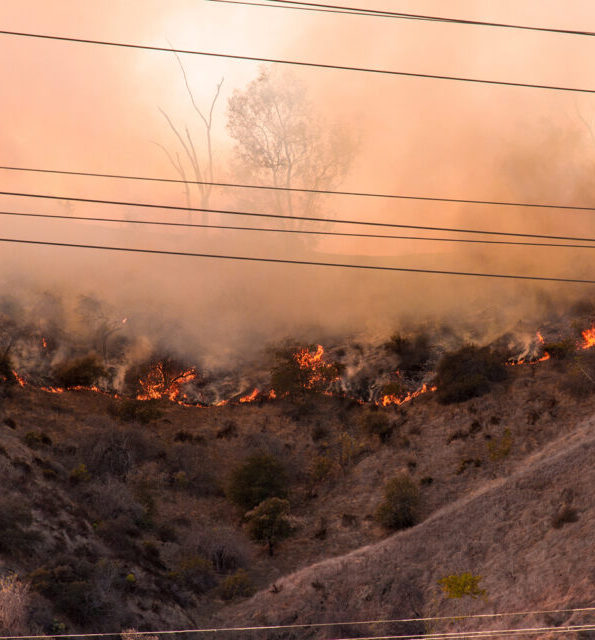
Our paper on wildfire-resilient power grids is published in Nature Energy!
Posted on Monday, August 7, 2023
Power line ignition is a major cause of destructive wildfires, exacerbated by the increasingly severe threat of climate change. With the AI-aided identification of power line status, we investigated the inequitable distribution of electric distribution grid vulnerability to wildfires in California. Built upon the insights, we further proposed a policy solution which can make power line undergrounding—an effective yet costly wildfire mitigation approach—more equitably affordable to communities across different income levels. Zhecheng is the first author of this paper, and Prof. Majumdar is one of the corresponding authors. Congratulations! See more details here.
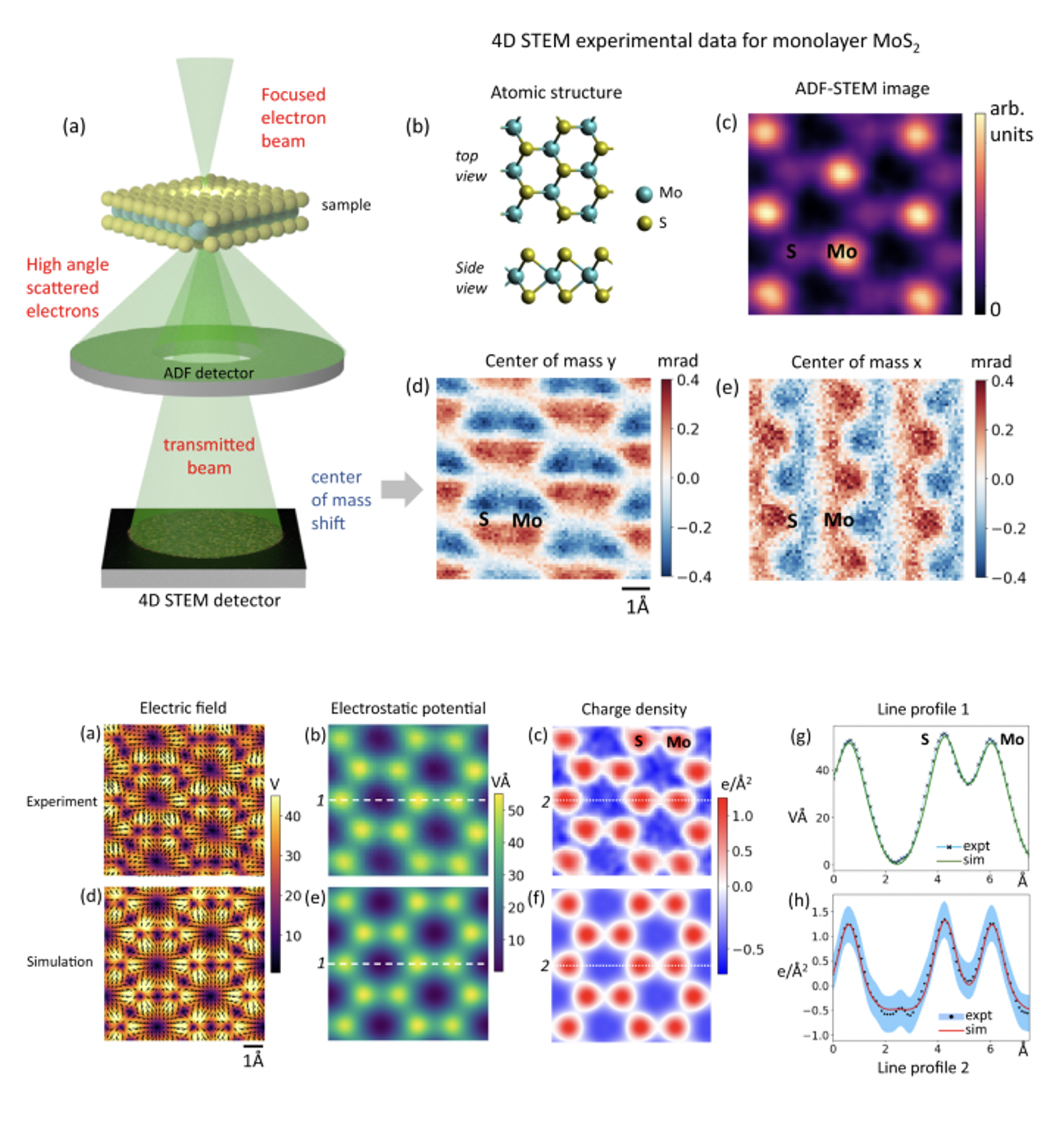
Our paper on electron charge density imaging in monolayer MoS2 at the Ångstrom scale is published in Nature Communications!
Posted on Thursday, July 20, 2023
Recent electron microscopy techniques have attracted significant attention for their ability to image electric fields at the atomic level. Here, we investigate the possibility to separate the charge density contributions of core and valence electrons in monolayer MoS2, highlighting the limitations induced by the electron probe shape. Joel is the first author of this paper, and Prof. Majumdar is the leading corresponding author. Congratulations! See more details here.

We had a group dinner to celebrate Eddie on PhD graduation!
Posted on Tuesday, June 6, 2023
We had a group dinner to celebrate Eddie's PhD graduation! We had deep dish pizzas, Eddie's favorite! Eddie has defended in last December with thesis titled "Transformations of CH4 and CO2 to chemical feedstocks and fuels". Congrats, Eddie!

We held a Magic Lab research symposium with alumni, friends, and collaborators around the world!
Posted on Thursday, May 11, 2023
Our group's alumni organized a research symposium to celebrate Arun's 60th birthday, resulting in an exciting reunion for former colleagues, close collaborators, and friends from around the world. The event featured talks and speeches by world-class scientists, industry leaders, and Arun's previous government colleagues. The symposium culminated in an insightful panel discussion on the future of sustainability, featuring John Doerr, Steve Chu, and Arun Majumdar.
A Conversation with Bill Gates on Climate Change
Global Energy Dialogues 2021
Professor Majumdar had a insightful conversation with Bill Gates on how to avoid a climate disaster. The conversation focused on Bill Gates' new book on climate change, what he's learned about this complex and far-reaching challenge, and why he remains hopeful that we can overcome climate change.
Most Important 21st Century Innovation
TED x Stanford
Turn CO2 into oil at a cost of $2/gallon? “A lot of people think this is impossible,” says Majumdar, “but it’s not! Carbon free energy is almost cheap enough to take on this challenge in a meaningful way. And the race is on among scientists and engineers to make this happen!”
Our Lab
The Magic Lab now occupies 2000 square feet of space on two floors of Stanford’s Mechanical Engineering Research Laboratory. Our facilities have dedicated areas for wet chemistry, optics, cryogenics, and general electromechanical assembly, in addition to office and conference areas.


