
Speakers
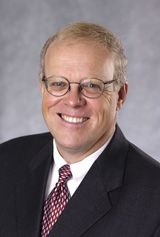
John L. Hennessy joined Stanford’s faculty in 1977 as an assistant professor of electrical engineering. He rose through the academic ranks to full professorship in 1986 and was the inaugural Willard R. and Inez Kerr Bell Professor of Electrical Engineering and Computer Science from 1987 to 2004. He served as chair of computer science from 1994 to 1996 and, in 1996, was named dean of the School of Engineering. In 1999, he was named provost, the university’s chief academic and financial officer. In October 2000, he was inaugurated as Stanford University’s 10th president. In 2005, he became the inaugural holder of the Bing Presidential Professorship.
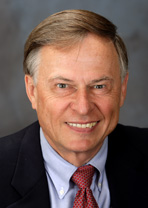
Plummer is the Frederick Emmons Terman Professor of Engineering and the John M. Fluke Professor of Electrical Engineering. Since 1999 he has led the school, laying out a strategy of pursuing four research priorities: Human Health, Environment and Energy, Information Technology and Nanoscience and Nanotechnology. In 2002 he helped lead the formation of the Department of Bioengineering, which is jointly run with the School of Medicine. Prior to becoming dean, he served as the chair of the Department of Electrical Engineering. Plummer's research interests are in silicon integrated circuit devices and technology. His primary interests are in developing physically based models for silicon structures and fabrication processes to enable computer simulation of new device and structure ideas. He is the author or co-author of over 300 publications and holds several US patents.
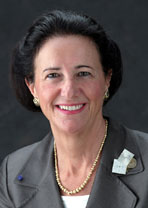
Dr. M. Elisabeth Paté-Cornell was born in Dakar, Senegal, in 1948. She attended public high schools both in Dakar and in La Rochelle, France. Her undergraduate degree is in mathematics and physics (BS, Marseilles, France, 1968), and her first graduate degrees are in applied mathematics and computer science (MS and Engineer Degree, Institut Polytechnique de Grenoble, France, 1970; 1971). In 1971 she came to study and live in the United States, where she has been a citizen since 1986. She received a Masters degree in Operations Research (OR) in 1972 and a Ph.D. in Engineering-Economic Systems (EES) in 1978, both from Stanford University. She then was an Assistant Professor of Civil Engineering at MIT, before joining the Stanford faculty in 1981, where she became Professor (in 1991) and then Chair (in 1997) in the Department of Industrial Engineering and Engineering Management (IEEM). In 1999, she was named the Burt and Deedee McMurtry Professor in the School of Engineering at Stanford University. She is presently Professor and Chair of the Department of Management Science and Engineering, as well as a Senior Fellow (by courtesy) of the Stanford Institute for International Studies.
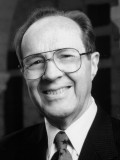
William J. Perry
Professor Emeritus, Management Science & Engineering, and 19th U.S. Secretary of Defense
William Perry is the Michael and Barbara Berberian Professor (emeritus) at Stanford University. He is a senior fellow at FSI and serves as co-director of the Nuclear Risk Reduction initiative and the Preventive Defense Project. He is an expert in U.S. foreign policy, national security and arms control. He was the co-director of CISAC from 1988 to 1993, during which time he was also a professor (half time) at Stanford. He was a part-time lecturer in the Department of Mathematics at Santa Clara University from 1971 to 1977. Perry was the 19th secretary of defense for the United States, serving from February 1994 to January 1997. He previously served as deputy secretary of defense (1993-1994) and as under secretary of defense for research and engineering (1977-1981). He is on the board of directors of LGS Bell Labs Innovations and several emerging high-tech companies. His previous business experience includes serving as a laboratory director for General Telephone and Electronics (1954-1964); founder and president of ESL Inc. (1964-1977); executive vice-president of Hambrecht & Quist Inc. (1981-1985); and founder and chairman of Technology Strategies & Alliances (1985-1993). He is a member of the National Academy of Engineering and a fellow of the American Academy of Arts and Sciences.

Ms. Richardson joined Silver Lake in 2007 as an Advisor focused on the firm's growth equity strategy, SilverLake Sumeru. Ms. Richardson has spent more than 20 years in the software industry, including positions as a key player in several well-known and highly successful companies. Richardson was chief executive of E.piphany, a developer of customer relationship management software. She also held senior sales positions at Netscape Communications Corporation from 1995-1998, during which time Netscape's sales grew from $80 million to over $500 million annually. Karen was instrumental in establishing Netscape's presence in the enterprise in verticals such as Telecommunications, Financial Services and Media/Communications. Prior to her position at Netscape, Karen was VP of Worldwide Sales at Collabra Software, Inc.; worked with Lotus Development Corporation in a variety of sales and marketing roles as well as at cc:Mail, and 3Com Corporation. Ms. Richardson is currently chairman of the board of directors of San Francisco-based Hi5 Networks Inc., whose Hi5 web site is the world's third-largest social-networking site. She is also on the board of directors of i2 Holdings Limited (UK), and on the board of Virtuoz, an enterprise software company that develops artificial intelligence applications for customer support and sales. Karen holds a BS in Industrial Engineering from Stanford University and award distinctions from the Stanford Industrial Engineering Department and the American Institute of Industrial Engineers (AIIE).
Faculty Presenters
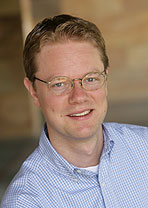
Kay Giesecke is an Assistant Professor of Management Science & Engineering at Stanford University. He is on the faculty of Stanford's Financial Mathematics Program. Prior to joining Stanford in 2005, he was with Cornell University's School of Operations Research and Information Engineering. Kay's research and teaching address the quantitative modeling and estimation of financial risk, in particular credit risk. His research group CreditLab has been funded by grants from JP Morgan, Morgan Stanley, Mizuho, Moody's, Credit Suisse and American Express. He was awarded the Gauss Prize of the German Society for Actuarial and Financial Mathematics in 2003, and is the recipient of the 2007 Stanford Graduate Teaching Award. Kay has served as a consultant to banks, investment and risk management firms, and governmental agencies in the area of risk management and derivatives valuation and hedging. He is a member of the Scientific Advisory Board of Julius Finance, and serves on the editorial boards of Operations Research, Operations Research Letters, and IIEE Transactions.
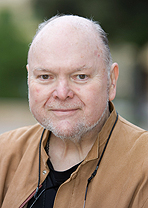
Howard is one of the founders of the decision analysis discipline. His books on probabilistic modeling, decision analysis, dynamic programming, and Markov processes serve as major references for courses and research in these fields. His current research concerns life-and-death decisions and the development of a precise decision language.
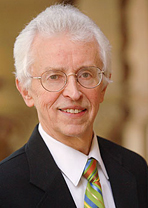
Hecker's research interests include plutonium science, nuclear weapon policy and international security, nuclear security (including nonproliferation and counter terrorism), and cooperative nuclear threat reduction. Over the past 15 years, he has fostered cooperation with the Russian nuclear laboratories to secure and safeguard the vast stockpile of ex-Soviet fissile materials. His current interests include the challenges of nuclear India, Pakistan, North Korea, and the nuclear aspirations of Iran.
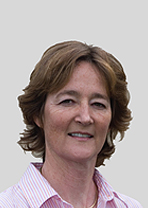
Margaret L. Brandeau is Professor of Management Science and Engineering. She holds a B.S. in Mathematics and an M.S. in Operations Research from the Massachusetts Institute of Technology, and a Ph.D. in Engineering-Economic Systems from Stanford. She is an operations researcher and policy analyst with extensive background in the development of applied mathematical and economic models, and a distinguished investigator in HIV. Among other awards, Professor Brandeau has received the President's Award from the Institute for Operations Research and Management Science (INFORMS) for contributions to the welfare of society, the Pierskalla Prize from INFORMS for research excellence in health care management science, a Presidential Young Investigator Award from the National Science Foundation, the Department of Management Science and Engineering Graduate Teaching Award, and the Eugene L. Grant Faculty Teaching Award. She is a Fellow of INFORMS. Professor Brandeau has published numerous articles in areas of applied operations research and policy analysis, has co-edited the books Modeling the AIDS Epidemic: Planning, Policy, and Prediction and Operations Research in Health: A Handbook of Methods and Applications, and has served as Principal Investigator on a broad range of funded research projects. She has served on the board of several journals, including Operations Research, Management Science, and Health Care Management Science. Her HIV research focuses on using mathematical and economic models to assess the value of different HIV and drug abuse interventions, both in the U.S. and abroad. Recently she has studied policies for control of Hepatitis B both in the US and abroad, and preparedness planning for potential bioterror attacks.
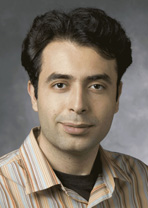
Saberi is interested in the design and analysis of efficient algorithms especially in the areas of algorithmic game theory and approximation algorithms. His interests also include modeling, design, and algorithmic analysis of large-scale complex networks such as the Internet, WWW, or peer-to-peer networks.

Charles Eesley's research interests focus on strategy and technology entrepreneurship. In the broadest sense, he is interested in the "ideas sector" of the economy. His research seeks to uncover which individual attributes, strategies and institutional arrangements optimally drive the rate and direction of technology commercialization. He examines how entrepreneurs in developed and developing economy contexts commercialize R&D intensive products, with a particular interest in who successfully innovates in new markets and the challenges of long R&D cycle projects. He is the recipient of a Ewing Marion Kauffman Foundation Dissertation Fellowship Award in 2007 and the Best Student Paper award from the Society for the Advancement of Socio-Economics in 2008 for his work on entrepreneurship in China. His research appears in Strategic Management Journal, Research Policy and the Journal of Economics & Management Strategy. Prior to his Ph.D. at MIT Sloan, he worked at the Duke University Medical Center, publishing in medical journals and in textbooks on cognition in schizophrenia.
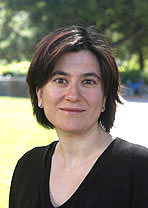
Professor Erhun's research interests include internet-enabled supply chains, supply chain management and logistics, and just-in-time systems. She has worked on design and operational issues in Kanban systems, and an implementation of a “total cost of ownership” perspective by coordinating decisions across functions of the distribution system at a grocery retailer. Currently, she focuses on the implications of sequential capacity procurement in stochastic and capacitated supply chains.
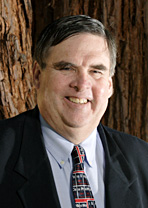
John Weyant
Professor (Research), Management Science & Engineering; Senior Fellow, Freeman Spogli Institute for International Studies by courtesy; Senior Fellow, Precourt Institute
Weyant came to Stanford in 1977, primarily to help develop the Energy Modeling Forum. Prof. Weyant was formerly a Senior Research Associate in the Department of Operations Research, a member of the Stanford International Energy Project and a Fellow in the U.S.-Northeast Asia Forum on International Policy. He is currently an adviser to the U.S. Department of Energy, Pacific Gas & Electric Company, and the U.S. Environmental Protection Agency.
His current research is focused on global climate change, energy security, corporate strategy analysis, and Japanese energy policy. He is on the editorial boards of The Energy Journal, and Petroleum Management. His national society memberships include the American Economics Association, Association for Public Policy Analysis and Management, Econometric Society, International Association of Energy Economists, Mathematical Programming Society, ORSA, and TIMS.
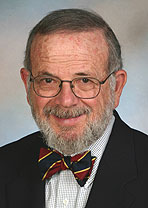
Richard W. (Dick) Cottle was born in Chicago in 1934. He received his elementary and high school education in the neighboring village of Oak Park. Dick enrolled at Harvard College to take up political science and premedical studies in order to become a physician (or possibly a foreign service officer if that didn't work out). As it happened, both of these alternatives were abandoned because he was strongly attracted to mathematics and ultimately received his bachelor's degree in that field. He stayed on at Harvard and received the master's degree in mathematics in 1958. This was the Sputnik era, and Dick was moved by a passion to teach secondary-level mathematics. In the first of a series of fateful decisions, he joined the Mathematics Department at the Middlesex School in Concord, Massachusetts where for two years he taught grades 7-12. Midway through this period he married his wife Suzanne (Sue). At this time he began to think of returning to graduate school for a doctorate in mathematics. He decided to study geometry at the University of California at Berkeley and was admitted there. Just before leaving Middlesex, Dick received a telephone call from the Radiation Laboratory at Berkeley offering him the part- time job as a computer programmer for which he had applied. Through this job, he became aware of linear and quadratic programming and the contributions of George Dantzig and Philip Wolfe. Before long, Dick left the Rad Lab to join Dantzig's team at the Operations Research Center at UC Berkeley. Under the tutelage of George Dantzig (and the late Edmund Eisenberg), Dick developed a symmetric duality theory and what was then called the "composite problem". These topics along with a reëxamination of the Fritz John conditions, formed the core of his doctoral dissertation. The composite problem involved a fusion of the primal and dual first-order optimality conditions. It was realized that the resulting inequality system could be studied without reference to the primal-dual structure out of which it was born. The name "complementarity problem" was suggested by Dick and introduced in a joint paper with Habetler and Lemke. After Berkeley, Dick's work took two closely related directions. One was the study of quadratic programming; the other was what we now call "linear complementarity". The interesting role played by classes of matrices in both these areas has always held a special fascination for Dick. In quadratic programming, for instance, with Jacques Ferland he obtained characterizations of quasi- and pseudo-convexity of quadratic functions. Dick (and others) were quick to recognize the importance of matrix classes in linear complementarity theory. It was he who proposed the name "copositive-plus" for a matrix class that arose in Lemke's seminal paper of 1965. The name first appeared in the classic paper of Cottle and Dantzig called "Complementary Pivot Theory of Mathematical Programming". The subjects of quadratic programming and linear complementarity (and the associated matrix theory) remain central to his research interests.
Alumni Presenters
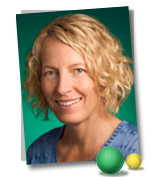
Shona L. Brown joined Google in 2003 and took on the responsibility of building both the People Operations and Business Operations groups. Prior to joining Google she was a partner at McKinsey & Company, a management consulting company, where her focus was working with consumer technology companies on growth, innovation and transformation. Shona is the author of Competing on the Edge: Strategy as Structured Chaos, which introduced a new strategic model for competing in volatile markets. She is a director of the following non-profit organizations: San Francisco Jazz Organization, The Bridgespan Group and the Exploratorium. She also serves on the board of PepsiCo. Shona has a bachelor's degree in computer systems engineering from Carleton University in Canada, an M.A. in economics and philosophy from Oxford University (which she attended as a Rhodes scholar), and a Ph.D. and postdoctoral degree from Stanford University's Department of Industrial Engineering and Engineering Management.

As an active community member and executive, Donna is passionate about providing a world class platform that is the “go to” place for local communities. Donna joined BigTent from Mohr, Davidow Ventures where she was a Partner for almost nine years, helping startups lay the foundation for market success. Prior to MDV, Donna was VP of Marketing at Clarify Inc., a successful enterprise software startup that she helped build from zero to $100M revenue and was listed on the NASDAQ. She started her career in product management at Sun Microsystems. Donna teaches Global Entrepreneurial Marketing in the School of Engineering at Stanford University. She enjoys playing with her two children and husband and is on their school Foundation board. She is a former board member of the Children's Discovery Museum of San Jose. Donna holds a B.S. in Industrial Engineering with Distinction from Stanford University and an M.B.A. from Harvard Business School

Lawrence M. Wein
Paul E. Holden Professor of Management Science, Stanford Graduate School of Business
Professor Wein received his PhD in Operations Research from Stanford in 1988 and has taught the core MBA course in operations management throughout his entire career, both at MIT's Sloan School of Management from 1988 to 2002, where he was the DEC Leaders for Manufacturing Professor of Management Science, and at Stanford since 2002, where he is currently the Jeffrey S. Skoll Professor, Professor of Management Science. He also is a Senior Fellow at Stanford's Center for International Security and Cooperation. His main research interests are in manufacturing, health care, and homeland security. In all three areas, he has published widely and impacted practice. His HIV work on drug-switching policies led to a successful multicenter clinical trial. His smallpox work influenced the George W. Bush administration’s post-attack vaccination policy; his anthrax work led to plans in Washington, D.C., to use postal workers to distribute antibiotics after a large attack; and his testimony before a congressional committee on his biometric analysis of the US-VISIT Program was instrumental in the switch from a two-finger to a ten-finger system. He has won several research awards and was Editor-in-Chief of Operations Research from 2000 to 2005.
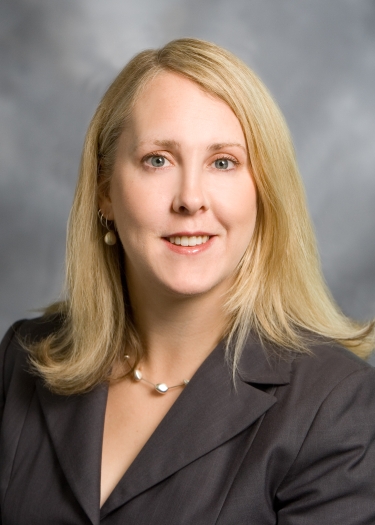
Anne G. Robinson is the Director of Information and Data Strategy for Cisco’s Customer Value Chain Management organization. Her team is responsible for driving the development of CVCM capabilities in strategic performance management, business intelligence, data strategy, and advanced analytics.
Anne’s contributions to Cisco reflect her standing as a subject matter expert and thought leader in Business Intelligence (BI) and Operations Research, including statistical forecasting and the application of advanced analytics to the measurement and optimization of value chain processes.
After joining Cisco in 2004, Anne applied her expertise in advanced analytics to the programs that later evolved into the Demand Management & Planning, and Risk Management teams. In her current position, she has continued to lead the transformation of CVCM performance management and BI capabilities to drive our business objectives and customer-driven strategy. Her contributions include leadership for the development of the Executive Metrics Dashboard and Balanced Scorecard. As the driving force for many foundational and cross-functional BI requirements, she has helped establish CVCM’s presence and recognition as a leader in the Cisco BI framework.
A PhD in Industrial Engineering from Stanford University, Anne is a member of the Board and Vice President for Marketing and Communications for INFORMS, an organization of academics and professionals from across industries focused on applying advanced analytical methods to make better business decisions. She serves on the SAS Analytical Customer Advisory Board and the SAS-Teradata Product Advisory Board, and is a topical editor for the forthcoming Encyclopedia of Operations Research and Management Science.

Ted Dintersmith is a partner with Charles River Ventures, a leading early-stage venture capital firm. Ted has twenty-three years of venture experience, focusing on software, information services, direct and web-based marketing, and publishing companies. He has been an early, active investor in many successful start-ups including ten that went public and seventeen profitable acquisitions. From 2002-2006, Ted served on the Board of directors for the National Venture Capital Association, chairing its Public Policy Committee and national competitiveness initiative. In the past, Ted was ranked by independent industry analysts as the top performing venture capitalist in the United States in the 1995-99 period. He has been a frequent speaker at conferences on the topics of venture capital and innovation.
Prior to his career in venture, Ted was general manager of the Digital Signal Processing Division of Analog Devices, which he directed from the start-up phase to a leading position in a rapidly-growing sector of the semiconductor industry. His work experience also includes two years as a Congressional staff assistant, where he contributed to science and technology policy.
Ted earned a Ph.D. in Engineering from Stanford University, concentrating on mathematical modeling of economic systems. His undergraduate degree is from the College of William and Mary, where he graduated Phi Beta Kappa with High Honors in Physics and English and received the Lord Botetourt Award for the graduating senior achieving the highest academic distinction. Ted, his wife, and two young children, recently completed a ten-month trip around the world, and now live in Virginia and Rhode Island. Ted has been on the Board of many non-profits, he was an early supporter of Barack Obama, serving on the campaign’s National Finance Committee.

Teresa’s career in information technology encompasses over fifteen years with Hewlett-Packard in product management and business development managing relationships with global Fortune 100 clients. During her tenure at HP, Teresa co-founded a new business venture, Secure Products Operation (SPO), grew it from zero to nearly $100M, and led the marketing transition team executing SPO’s spin-off to Hughes Data Systems. Prior to joining HP, Teresa held management positions with Price Waterhouse Consulting.
Since 2000, Teresa has dedicated her time to community service, serving a number of non-profit organizations focused primarily on children and education. She was president of the San Francisco Opera Guild from 2006-2008, an organization that provides arts education to over 50,000 Bay Area children. Currently, Teresa serves on the Board of Directors of the San Francisco Opera and on committees at the San Francisco Conservatory of Music and the California Academy of Sciences. For her contributions and leadership as a philanthropist, Teresa was recognized earlier this year as one of “The 100 Most Influential People” in the San Francisco Bay Area.
Teresa received both her BS and MS in Industrial Engineering from Stanford University. Pursuing her interest in healthcare technology, Teresa completed a Stanford graduate program in bioengineering, referred to as Biodesign, in June 2010.

John has over 25 years of experience as an investment banker and investor focused primarily on the insurance industry. Over his career, John has established an extensive background in corporate development, corporate governance, private equity and investment banking. Prior to forming SFRi, John served in various senior management roles for Swiss Re and Swiss Re-related entities where he oversaw acquisitions, strategic investments, dispositions and selected new business development initiatives sponsored by Swiss Re from 1995 to 2004. Prior to Swiss Re, John served as managing director and co-head of the insurance investment banking group at Smith Barney, where he provided corporate finance, merger and acquisition and other strategic advice to clients primarily operating in the insurance industry with a focus on middle market and emerging growth clients. John currently serves as a director of Validus Holdings, a publicly traded reinsurance company based in Bermuda, Tawa PLC, a publicly traded insurance company based in the United Kingdom engaged in managing the run-off of non-life insurance companies and portfolios of policies, and Conning Holdings Corp., a specialty asset management firm owned by Aquiline Capital.
John also serves on the Board of Directors of the San Francisco Opera, where he is the Chair of the Endowment Committee, on the St. John's University School of Risk Management Board of Overseers, as well as on the USA Water Polo Board of Directors. He holds a B.A. in history and an M.S. in industrial engineering from Stanford University. John is married with 5 children.
Student Presenters
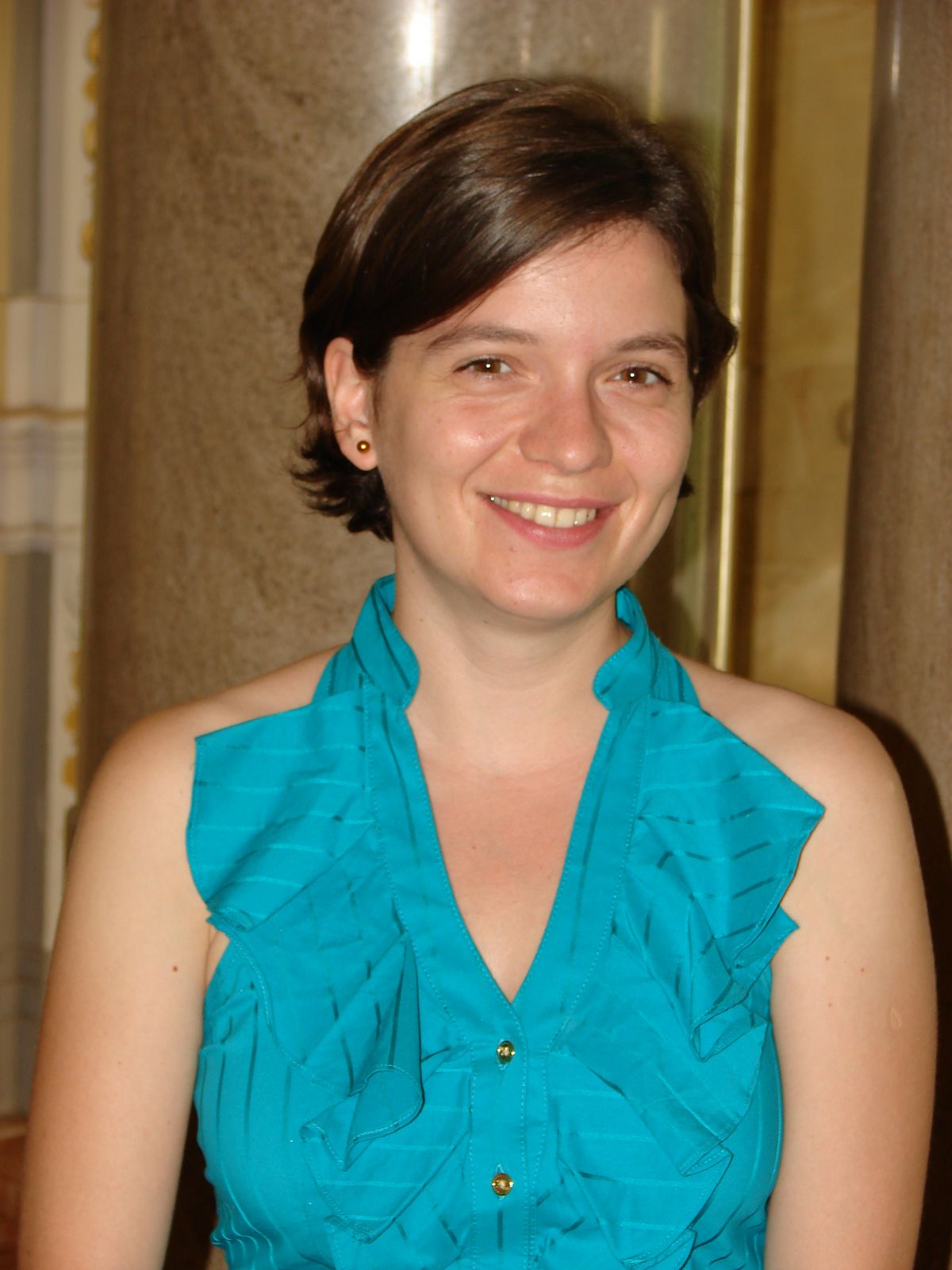
Sabina is a PhD candidate in Policy and Strategy. Her research develops and applies operations research tools to health care policy modeling, with a particular emphasis on resource allocation for the control of infectious diseases such as HIV. Sabina is an international student from Romania and is supported by a Stanford Graduate Fellowship. She has now spent a quarter of her life at Stanford, having graduated in 2005 with a BS with distinction in MS&E and a MS degree in Chemical Engineering. She received the Deans’ Award for Academic Achievement, the President’s Award for Academic Excellence, and has been elected a member of the Tau Beta Pi Engineering Honor Society. Post graduation, she spent two years in Romania working at Procter& Gamble, as an Assistant Brand Manager for Gillette, then she returned to Stanford for her doctoral studies.
Dominic is a member of the Operations Strategy and Decision Support team at Google. As a doctoral student in MS&E’s Operations Research group, he applied techniques from optimization and economics to problems in network service industries. Prior to pursuing graduate study, he worked as an analyst at MIT Lincoln Laboratory. Dominic holds degrees from the University of Pennsylvania in mathematics, computer science, and philosophy.
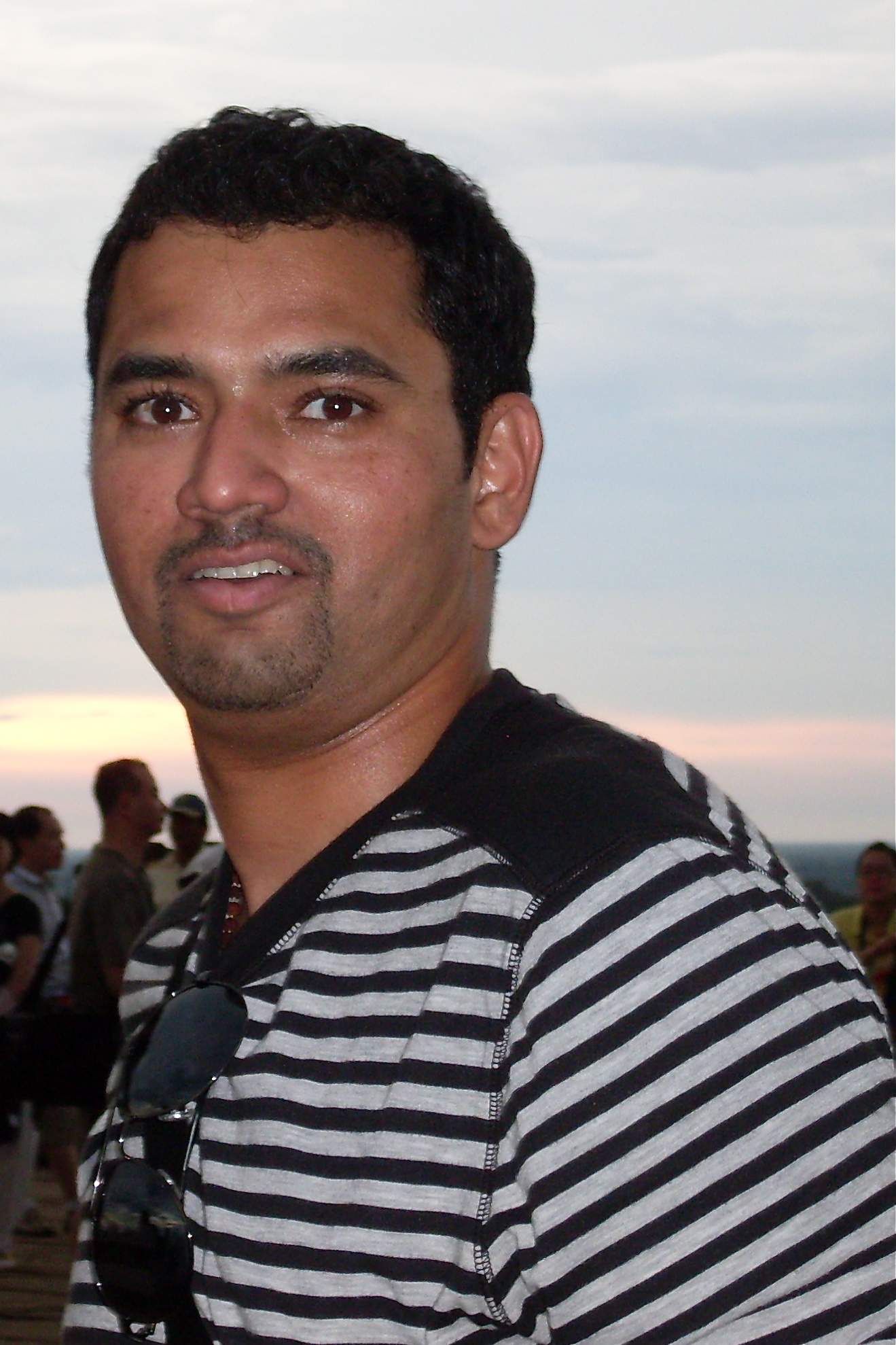
Pranav Dandekar is a PhD candidate in Information Science & Technology. He is broadly interested in algorithms, game theory and social network theory, particularly in the context of the web. More specifically he is interested in the design and analysis of trust, reputation and incentives in online systems. He became interested in these problems while working on ranking product reviews and reviewers based on community votes as part of Amazon's Community Reputation team. He worked at Amazon in Seattle for 3.5 years before heading back to school to pursue a PhD. He received his B.Eng from SGSITS, Indore, India in 2002 and his MS from the University of Florida, Gainesville in 2004, both in Computer Science.

Hugo is a PhD Candidate in the Production and Operations Management group. His research interests include supply chain management, pricing of bundles of products and services, and retail pricing and revenue management. Currently, he is working on a joint research project between Lockheed Martin and Stanford University on information and risk management in project-based supply chains with uncertain timing of demand. Hugo has also collaborated with Nike Inc. in developing models to compare the value and financial risk of more responsive and flexible supply chain strategies. Before his doctoral studies, Hugo co-founded PricingUC, a vendor and consulting firm specializing in demand modeling and pricing optimization software for the Chilean retail industry. He also holds a BS and an MS degree from the Pontificia Universidad Católica de Chile, graduating with the Best Student Award in Industrial Engineering.
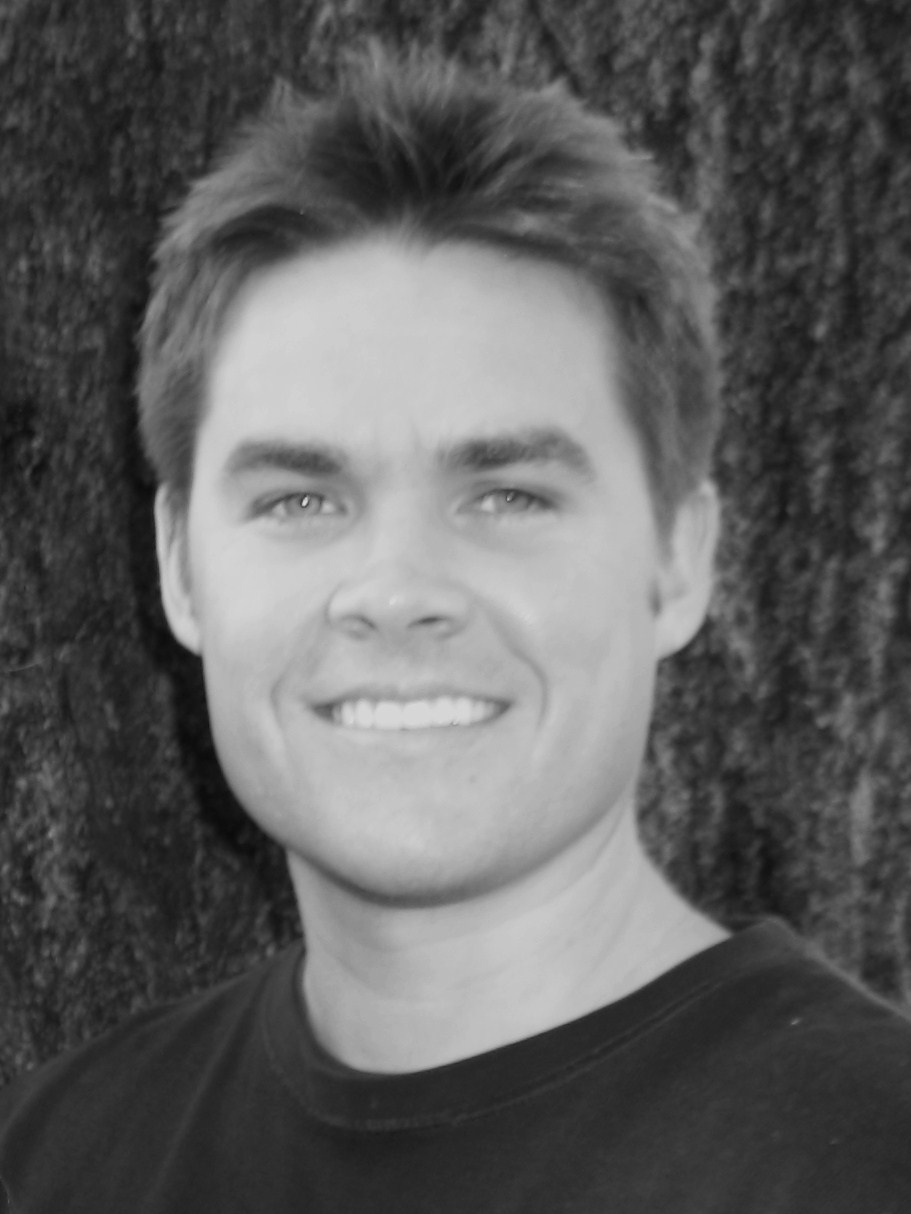
Rory is a PhD Candidate in the Stanford Technology Ventures Program. His research explores how competition gets played out in new technology markets, and he examines how entrepreneurs create new markets and business models in these contexts. He is the recipient of an NDSEG Fellowship, a Kauffman Fellowship for entrepreneurship research, and a Lieberman Fellowship for leadership and teaching. Before doctoral studies, Rory completed an MBA at Stanford where he co-founded a DSP company, which won Stanford's $25,000 business plan competition. He also holds two degrees from the University of South Florida, graduating valedictorian of the college of engineering.
Somik Raha completed his Ph.D. in Decision & Risk Analysis in 2010. His dissertation titled "Achieving Clarity on Value" used methods from sociology and philosophy to help discover, appreciate and communicate sources of value. In particular, his work introduced "Value Diagrams" to help decision makers capture their value frames. Based on his doctoral work, Somik is now working on starting "The Value Foundation," to help decision makers make sure that their decisions are aligned with their core values.
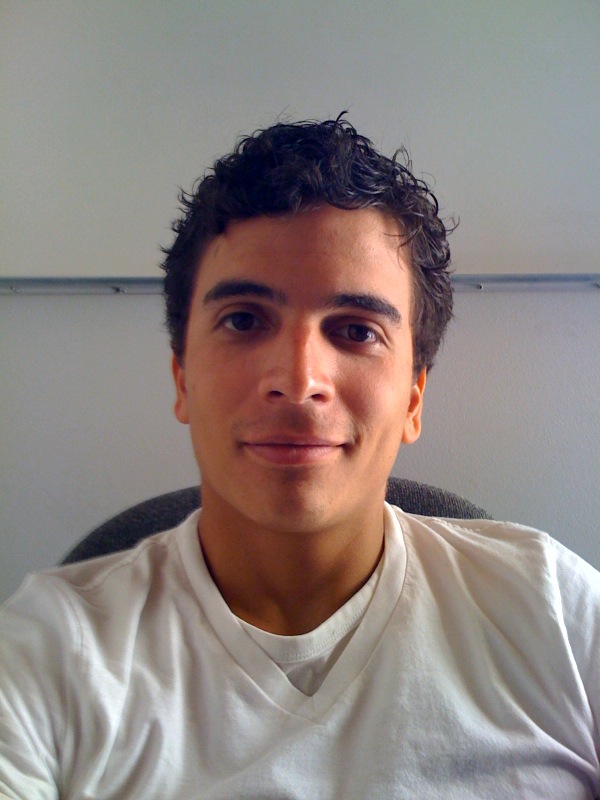
Gustavo Schwenkler is a Ph.D. candidate in Economics and Finance. His interests concentrate on financial engineering and risk management. Currently, he is working on developing mathematical models for a precise assessment of credit risk, an area that has gained attention due to the recent economic crisis. Gustavo was awarded a Mayfield Stanford Graduate Fellowship to pursue his Ph.D. studies at Stanford. He completed his undergraduate studies in applied mathematics at the University of Cologne, Germany, and has had some practical experience working at different banks, like Deutsche Bank.

Ann Miura-Ko is a co-founding partner at FLOODGATE where her investment interests include the innovations in e-commerce, security, and big data. In addition to serving at FLOODGATE, Ann is a lecturer in the School of Engineering at Stanford University, where she got her PhD focused on mathematical modeling of computer security. She teaches High Tech Entrepreneurship with Steve Blank and is a frequent lecturer in courses such as Technology Venture Formation, High-tech Entrepreneurship, and the Mayfield Fellows Program. Many of her students have gone on to secure Angel and VC funding for their ideas.Prior to joining FLOODGATE and her stint at Stanford, Ann worked at Charles River Ventures and McKinsey and Company.