
Field School
Pueblo of Abó, New Mexico
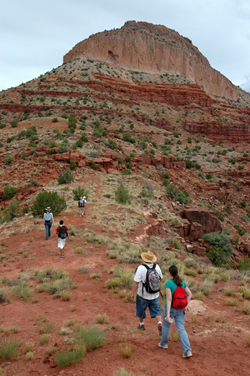 The Field School is located in the Salinas district of central New Mexico, located east of the Rio Grande and southeast of Albuquerque. The major field site, Abó Pueblo, is located 10 miles west of the town of Mountainair. Abó Pueblo is part of the Salinas Pueblo Missions National Monument. Undergraduate and graduate students will receive training in archaeological field methods, focusing particularly on excavation and mapping. Students will also learn artifact recording and analyses while actively participating in a long-term research study of the late prehispanic and early colonial periods in the Salinas district.
In 2009, six Stanford undergraduates participated in a survey of Pueblos occupied and attacked during Francisco Vasquez Coronado’s Entrada of 1540. Previous generations of historians and archaeologists have largely ignored the social and cultural legacies of colonial violence during the 16th and 17th centuries. My latest book: The Pueblo Revolt and the Mythology of Conquest: An Indigenous Archaeology of Contact (2009 University of California Press) examines the relationship between social violence, used as a means of intimidating and controlling Indigenous populations in the Americas, and larger social movements of rebellion such as the Revolt of 1680. This field season included visits to several previously undiscovered Entrada period villages to further explore these topics.
Chief among these was a survey of metal objects discovered by Albuquerque City Archaeologist Matt Smaeder. Smaeder has mapped the location of specific sites within of the village of Moho that were the sites of intense battles. Moho, an ancestral Tiwa village on the banks of the Rio Grande in New Mexico was the scene of a large massacre of Pueblo people during the winter of 1541. Using remote sensing and metal detecting devices, the specific tactics and events of the battle can be recreated using modern forensic and ballistic science.
From there, students travelled to several contemporary Feast Dances and were hosted by families from Santa Clara, San Juan and Cochiti Pueblos. In the Jemez Mountains (near Los Alamos National Laboratory), the crew collected obsideon samples from several of the villages occupied during the Revolt of 1680 in order to detect shifts in mobility and trade during the colonial period.
Finally, the crew met with archaeologists from the Navajo Nation Archaeology Program near Flagstaff Arizona. They visited the 13th century site of Keet Seel, after a 13 mile journey and hike through the remote canyon lands of the western Navajo reservation.