01 · Domain
From self-improvement to a focus
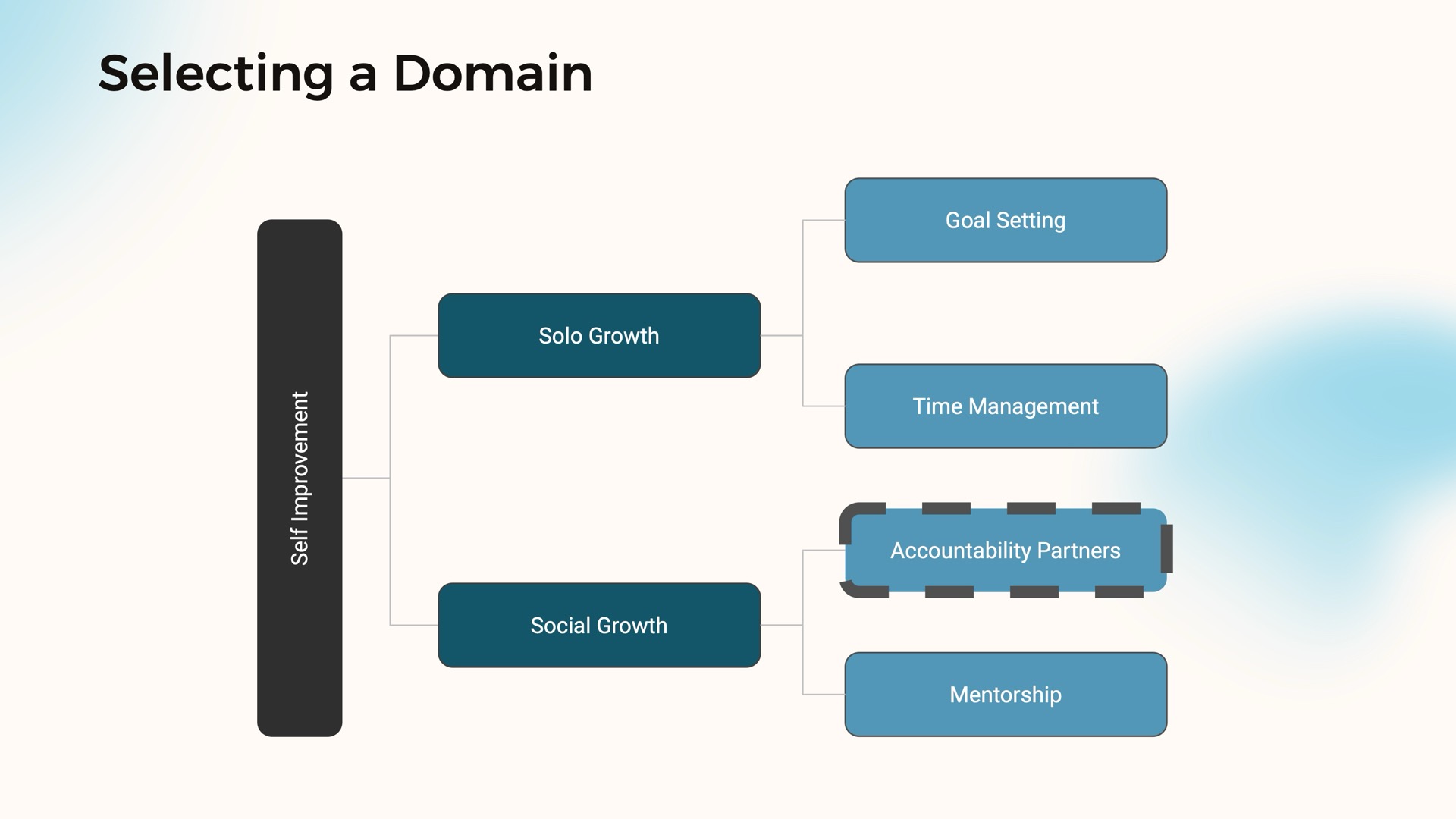
Starting domain: self-improvement
We split self-improvement into solo growth (goal setting, time management) and social growth (accountability partners, mentorship), and began our interviews from accountability partners.
02 · Methodology
Eight interviews on a train
Participants
Eight commuters across a range of ages and professions.
Location
Caltrain, Palo Alto to South San Francisco and back. We interviewed anyone willing.
Extreme users
A licensed mental health therapist, and an entrepreneur with a family.
Apparatus
Our questions and phone voice memos.
Roles
Usually an interview lead plus a second interviewer for follow-ups. Some interviews were solo.
What we asked
- What self-improvement goals have you worked on?
- What problems have you run into?
- What motivates you, and what has helped?
- How do you quantify success?
- Do you respond better to soft or hard reinforcement?
| Interviewee | Interviewer |
|---|---|
| Peter | Ben |
| Bob | Roland |
| Ishmail | Josh & Ben |
| Anne | Fadumo & Roland |
| Emily | Ben & Fadumo |
| Rohan | Josh & Ben |
| Isabelle | Josh |
| Mary | Fadumo (no recording) |
03 · Interview results
Who we met
Names are pseudonyms.
Extreme user
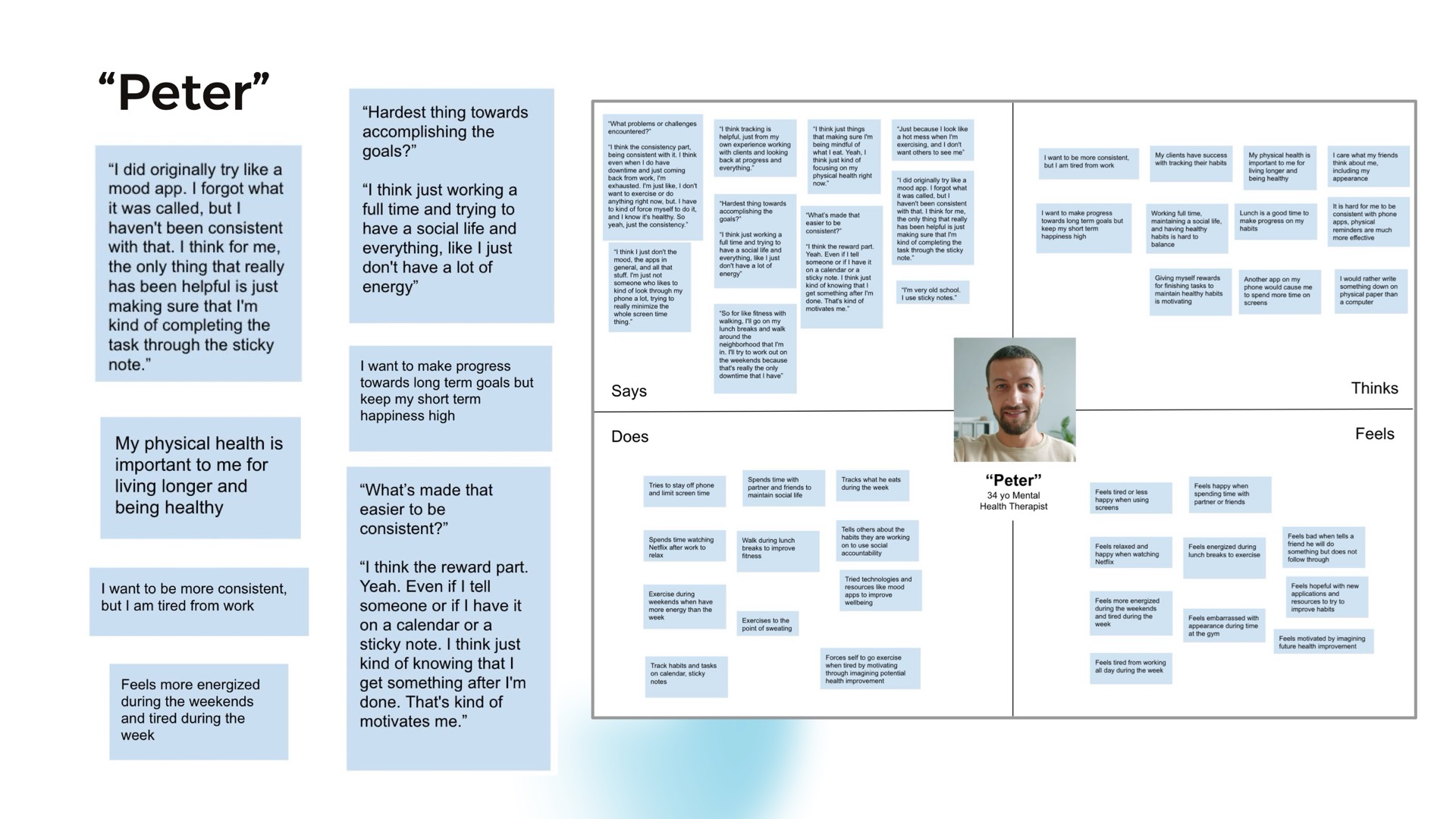
"Peter", 34, mental health therapist
Lives in San Jose. Swims, watches Netflix, mindful of eating and exercise.
"The only thing that really has been helpful is just making sure that I'm kind of completing the task through the sticky note."
Non-user
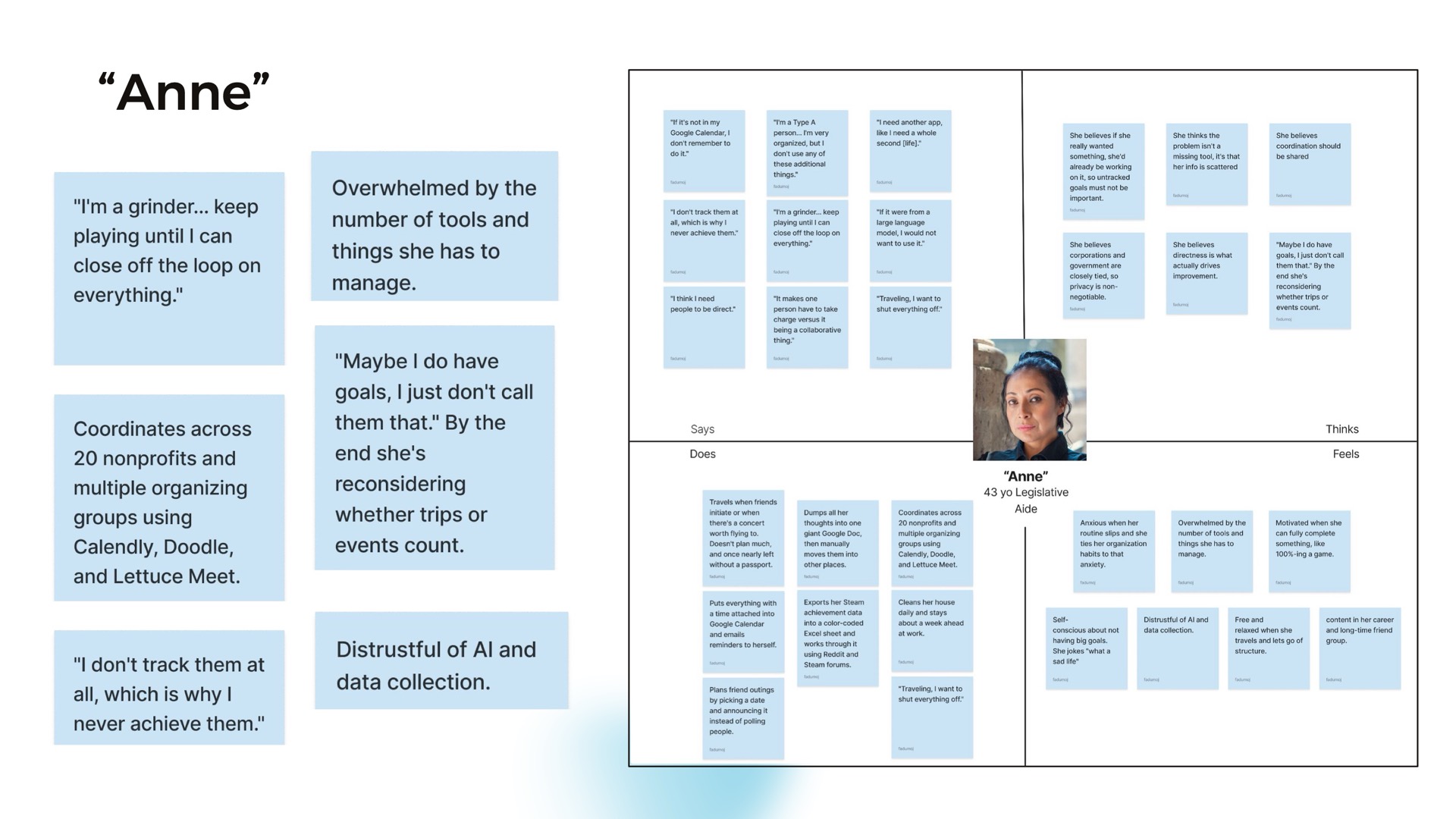
"Anne", 43, legislative aide and organizer
Lives in San Francisco. Plays video games and travels a lot.
"Goals, those are different than tasks or to-dos, and I don't track them at all, which is why I never achieve them."
Average user
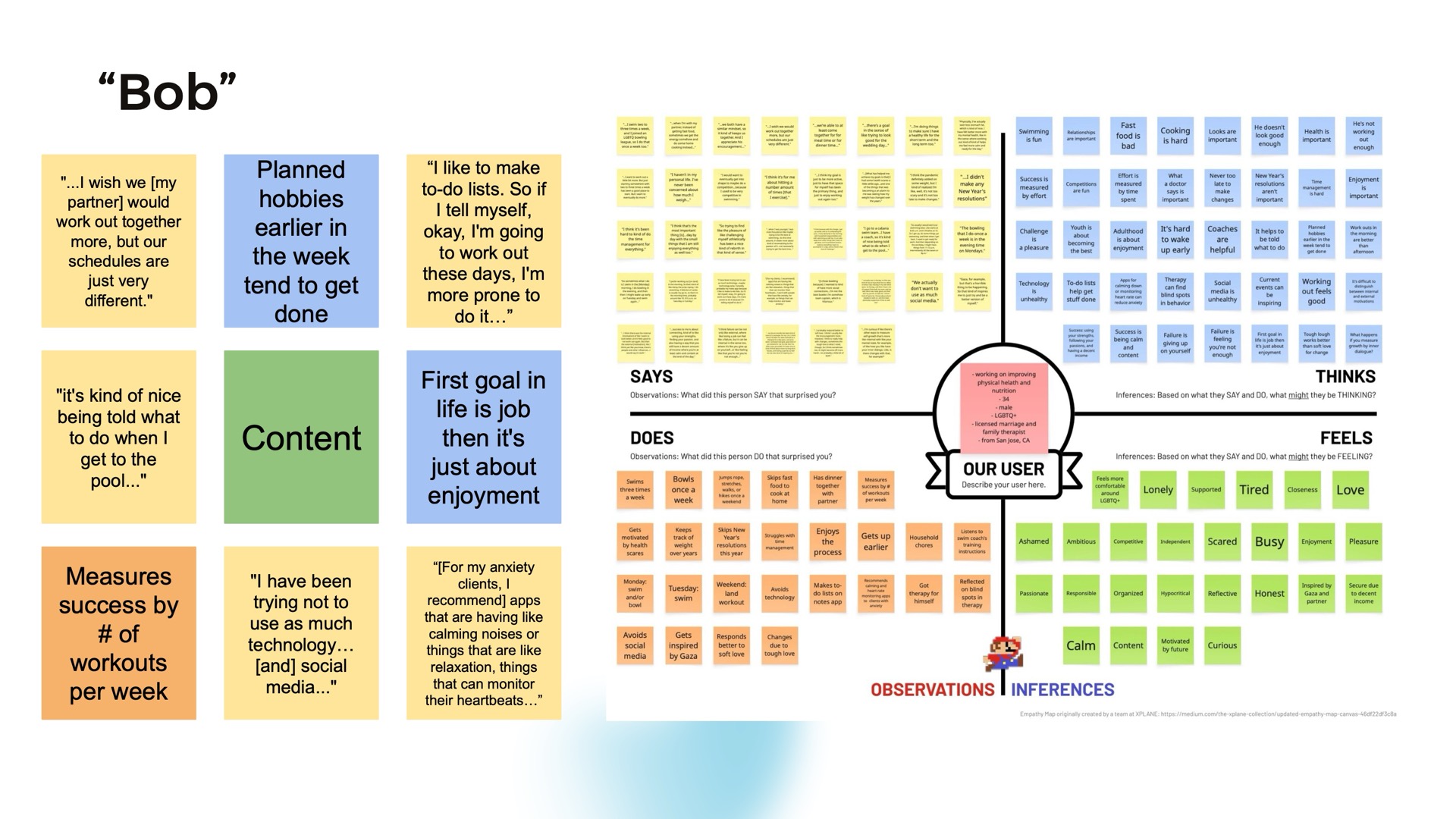
"Bob", 34, marriage and family therapist
Peter's partner. Swims, reads, games, loves cats. Measures success by workouts per week.
"It's kind of nice being told what to do when I get to the pool."
Low / non-user
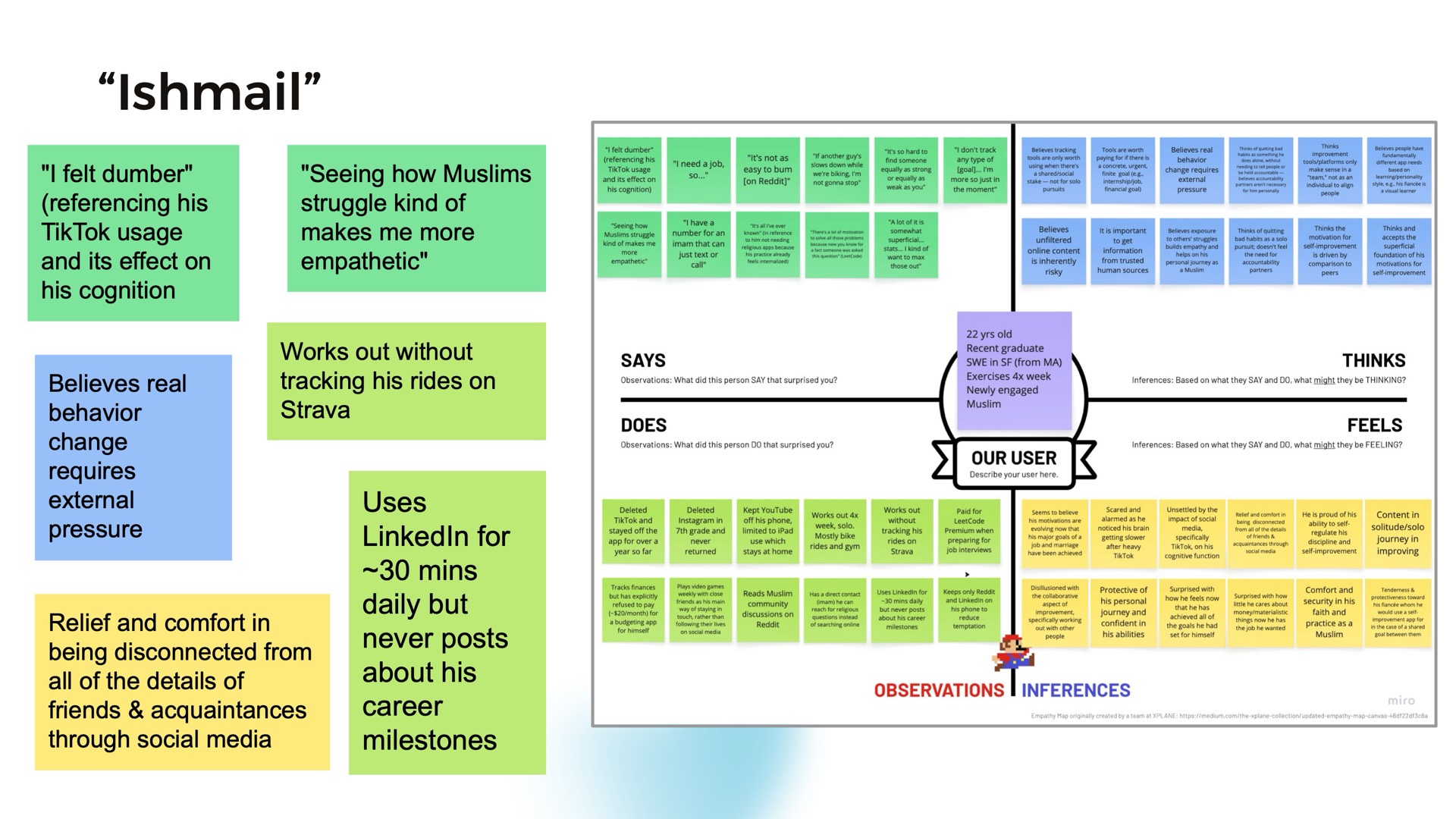
"Ishmail", 22, software engineer
Recently moved to San Francisco, newly engaged. Exercises four times a week without tracking.
"It's so hard to find someone equally as strong or equally as weak as you."
Also interviewed
"Emily", 40s, owns a beauty agency in New York · "Rohan", 42, entrepreneur with kids (extreme user) · "Isabelle", 26, genetic counselor · Mary, 23, Stanford student.
Who we reached
Ages 23 to 43, a 50/50 gender split, students, professionals and parents, and White, South Asian, Latin and Muslim backgrounds.
Where they live
San Francisco, San Jose and New York, with long stretches in Texas, Colombia and Massachusetts.
04 · Empathy maps
What they say, think, do and feel
05 · Key insights
From observation to inference
| From | Observation | Inference |
|---|---|---|
| Peter, Bob | Write to-do lists on sticky notes or in Apple Notes. | Writing down what to do helps get it done. |
| Bob, Ishmail | A job was the first life goal; then goals turned to wellbeing and enjoyment. | Self-improvement goals change before and after getting a job. |
| Ishmail, Peter, Bob | Only used or recommended apps for quantifiable goals. | Apps work best for tracking quantifiable improvement. |
| All | Struggle to balance time across commitments. | Saving time, or working within it, could help habits stick. |
| Peter, Bob | Lack of energy was the main reason Peter missed habits. | Solving low energy removes a big barrier. |
| Anne, Bob, Peter | Content with life because of work and social life. | Supporting professional and social goals may improve wellbeing. |
06 · Summary
Five key learnings
01
Quantified progress motivates
02
Rewards drive progress
03
Tech-averse people need one simple function
Or an alternative in the real world.
04
Consistency is the hardest part
It's worn down by lack of time and energy.
05
Work and social progress matter
They're meaningful goals that raise life satisfaction.
Reflection
- The script gave us a base; we fit 8 interviews into 2 hours.
- People were surprisingly willing to talk.
- We adapted with open-ended how and why follow-ups.
Slides
The full A1 presentation
Use the arrows, the thumbnails or your keyboard's arrow keys.