Melding Academia and Corporate
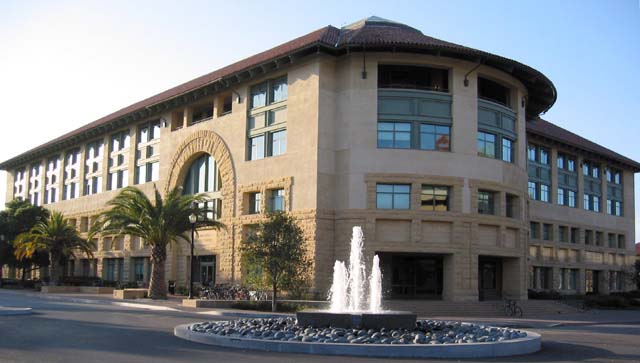
Gates Building – CS Department
The Stanford Industry Innovation Lab is pleased to offer you - subject to capacity constraints - the opportunity to participate in CS210: Project-Based Computer Science Innovation & Development. In this two-quarter, upper level depth sequence, you'll have the opportunity to engage with Stanford faculty and students and their extraordinary network. The course emphasizes the spirit of innovation and excellence that combine so powerfully at Stanford and the larger Silicon Valley to produce many of today's foremost computer science driven technologies.
In this course, Stanford students are introduced to the tools, methods and strategies needed to form and successfully manage software design and development projects to the standards of industry. Our students are highly skilled at navigating the entire software design and development process, from conceptual brainstorming to comprehensive documentation and development. In one two-quarter project, student teams typically put in well over a person-year (3-5 students, 35% effort level) in addition to significant contributions from faculty and other aspects of the Stanford network.
The Teaching Team

Jay Borenstein
Jay Borenstein instructs the course aided by Masters and PhD graduate students as teaching assistants. Before joining Stanford, Jay was the founder and CEO of Integration Appliance (NASDAQ: INTA, www.intapp.com). The course also leverages Jay's and Stanford's extensive network to bring in industry leaders and visionaries as guest lecturers and advisors to the student teams. Additionally, when practical, teams are connected with an industry coach with specific experience in areas the students wish to explore - these volunteers typically have graduated from the Stanford CS department and have between five and thirty years of professional experience with vast networks in the Bay Area and the global technical community. In short, you will be working with an extraordinary team.
Affiliated Faculty:
Successful Project Features

Companies work with the instructor to craft broad project concepts that are intended to expose students to topics and challenges that are highly relevant in the current software landscape. Companies that have expertise in these areas add to the academic experience by serving as an additional resource for students as they evolve their software concept. CS210 industry supporters have access to all the projects in the class which can be of interest in and of itself, and have the opportunity to build relationships with students interested in their field.
Real Software, Real Knowledge
Student teams drive the project forward implementing a development philosophy that emphasizes an aggressive functional prototype release cycle. In every step of the process, the work product becomes more refined and more real. At the end of the project, student teams present their functional final prototype at the Stanford Software Fair in June to which all Computer Forum members are invited.
Concurrently, actions and ideas are continuously documented and summarized in a project specific Wiki that evolves alongside the product. The complete documentation of the project is part of the final class deliverable. To quote Donald Knuth (CS), the goal is to "capture the intelligence of the design, not just the outcome of the design."
Liaison Guidelines
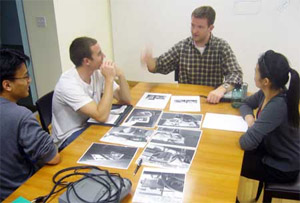
Liaison Meeting
The success of a project in CS210 can be amplified by an effective company liaison. Sharing experience from the field can help the student teams avoid pitfalls and open up their vision to new possibilities. Communication styles can vary according to what works best for a particular liaison, but two things all liaisons should plan on is a real time (either face-to-face or via video call) meeting with the student team during the initial stages of the project in late January/early February and and an in person visit from the student team in late March to present and receive feedback on their project to date.
Company Financial Commitment
Forms of Industry Innovation Lab membership:
- Standard one year engagement: $75,000
Ideate, collaborate, protype for one 6 month edition of the CS210 course - Three year engagement: $150,000
Ideate, collaborate, protype over a three year period which includes three editions of the CS210 course and opportunities for additional course collaborations - CS210 + Stanford Computer Forum members. For companies new to the Forum, the financial commitment is $75,000 which includes all of the benefits of being a member of the Computer Forum AND one, two-quarter project in CS210. For existing Computer Forum members, the financial commitment is $50,000 for one, two-quarter project in CS210 alongside all the existing Computer Forum benefits. This financial support covers all costs and includes university infrastructure charges, teaching team time, laboratory services, travel, cloud computing resources and any other prototyping requirements.
Project Proposal Timing
In order to ensure a project slot in the course, it's requested that you confirm participation in CS210 for the upcoming academic year prior to December 1st. Teams are reserved on a first-come, first-served basis and the nature of the project concept. Upon approval you will receive documentation through the Computer Forum to process the financial elements of the transaction. Your support confirms a project in CS210. After confirmation of the project, you will communicate with the instructor as the project concepts are finalized.
If you would like to begin the project development process, please contact the 210 instructor, Jay Borenstein, at cs210borenstein@stanford.edu or the Computer Forum at forumstaff@cs.stanford.edu