Thursday, April 5th, In-Class
One of the interesting takeaways from the Chapter on How People Learn was the section on Experts and Teaching. The book states that "Expertise in a particular domain does not guarantee that one is good at helping others learn it. In fact, expertise can sometimes hurt teaching because many experts forget what is easy and what is difficult for students." In thinking about both higher education and professional environments, I have found this to be overwhelmingly true. As people get comfortable in their jobs or in their functional expertise they often remember the struggle that they had to get up the learning curve, but not the steps they took to actaully learn the material. Thus, we see new generations of employees going through the same challenges that former employees had. Understanding the learning process and how people can get up the learning curve will enhance knowledge and experience for all.
Dan Gilbert Thanks for this thought. I can imagine many opportunities to make reflection explicit in a variety of settings so that experts can better mentor novices. What role does an organization's mission and culture have in making learning more explicit and how can the spaces the organizations inhabit make that mission easier?
Tuesday, April 10th Reading Reflection
The PowerPoint presentation on Ideo is a great summary of some of the key aspects of how to bring together a team to successfully brainstorm creatively. I think the most important point I took away from it is that no idea is a bad idea and to promote creativity you need to throw out every silly idea and try to build on it.
The following video (http://www.ideo.com/media/nightline.asp) is a great supplement to that reading. This video clip, from a nightline episode, focused on Ideo and took the viewer through Ideo's brainstorming and design of a new shopping cart. I think it's a great enhancement to the Ideo reading and really brings to life how they look at creating innovative design. I will also post this clip on the "Something Interesting" section of our course website.
Thursday, April 12th Homework
Reflection on Best Museum experiences: The experience that first came to mind when I read this topic was my middle school trip to the Metropolitan Museum of Art in New York City. I had been to the museum a few times with my parent, and I think I appreciated the quality and age of the items, but still didn't find it exciting. For extra-credit in one of my classes, we given an assignment to visit the museum and to complete a questionnaire as we toured the exhibits. The questionnaire basically took us on a walking tour of three of the major exhibits. Each question required us to draw an aspect of the sculpture/painting or answer a question about it that was written in the information box below it. The entire process took about three hours and you completed it independently with your friends. Furthermore, the exhibits reinforced things that we were learning in class at the time (i.e. one of the exhibits focused on Ancient Eqypt). The interactive nature, combined with the fun of a "scavenger hunt activity, made that one of my most memorable and enjoyable museum experiences.
Dan Gilbert Nice combination of exhibit and activity. Thinking about the Rogoff article, how did the intersection of various cultures impact your experience at the time and now that you have been part of so many other cultures since middle school, how do they all impact your memory of the experience?
Matt Williams Annie, It is funny how much an activity or focus can filter out much of a museum as large as the MET and refine your trip to an objective. It makes me think the MET and all their art expertise can provide patrons with scavenger hunts through certain exhibits to focus their trip. I think its odd that small things such as a scavenger hunt and extra credit are enough to motivate generally disinterested middle school students to learn about art yet the MET does very little to educate the motivated adults that are not compulsory attendees.
Christy Johnson: Hi Annie, what an interesting experience! It is amazing how many different experiences we can have in the same space. For example, it sounds like the met was a different place when you went with your parents vs. when you went with your class. Did you have a purpose when you went with your parents? Interesting implications for designers as they consider the various motivations around people's visits to learning spaces.
Annie Adams: Thanks for the feedback everyone. Matt and Christy, I think you both made great points. What was particularly striking about this experience was that the additional learning component (or scavenger hunt) really changed and enhanced myprevious experience. When I originally went with my parents, I didn't have a purpose, and it was a passively, pleasant experience. On the other hand, the scavenger gave me a goal and enhanced my learning of the exhibits.
Another two interesting museum experiences that I thought of during the class discussion was my visit to the "Bodies" exhibit and to the "Monet" exhibit. The similarities between my experience in these two exhibits is that they both took you through a journey in very different ways. This journey showed you the progression of art or of the human body and where each particular piece/painting/exhibit fits in helps people to gain a better appreciation for what they are seeing. As I also mentioned on Matt's page, I visited the Monet exhibit at San Fransisco's Legion of Honor back in September 2006. You had to make an appointment to see the exhibit and you only had one-half-hour to go through the show. The time-frame gave you a good perspective of the commitment you would be making to see the exhibit. The exhibit was arranged such that the paintings were grouped by the decades of Monet's life that he created them. This allowed the viewer to see the progression of Monet's technique through different stages and how diferent locations and experiences shaped his work. Furthermore, they found three-five paintings that Monet completed on the same place, which allowed you to see how the artist developed the one famous image we saw. All in all, this Monet experience is one example of how I appreciate the opportunity that a museum can provide to understanding the progression of art to appreciate the art. I visited "Bodies" exhibit in New York City through a sense of intrigue about the concept, and it certainly did enhance previous knowledge that I had. This exhibition of real human specimens "immerses visitors in the complexities of the human body, telling us the amazing story of ourselves with reverence and understanding." It presents what could be a fairly disturbing site (real human bodies) in a way that is comfortable, interesting, and truly educational. The layout of the exhibit caused the visitor to walk through the entire exhibit along a certain path. The path walked you through a learning about the components of the human body from bones, to the muscles, to the circulatory system, to the organs, to the whole being, to the new baby. Thus, you can gain a real understanding of the layers and components of the human body. Furthermore, the correlation in seeing the exhibit with a person's personal knowledge of their bodies (or simply high school biology class) with what you are learning in the exhibit is another reason that this exhibit was so powerful.
Thursday, May 10th, Assignment
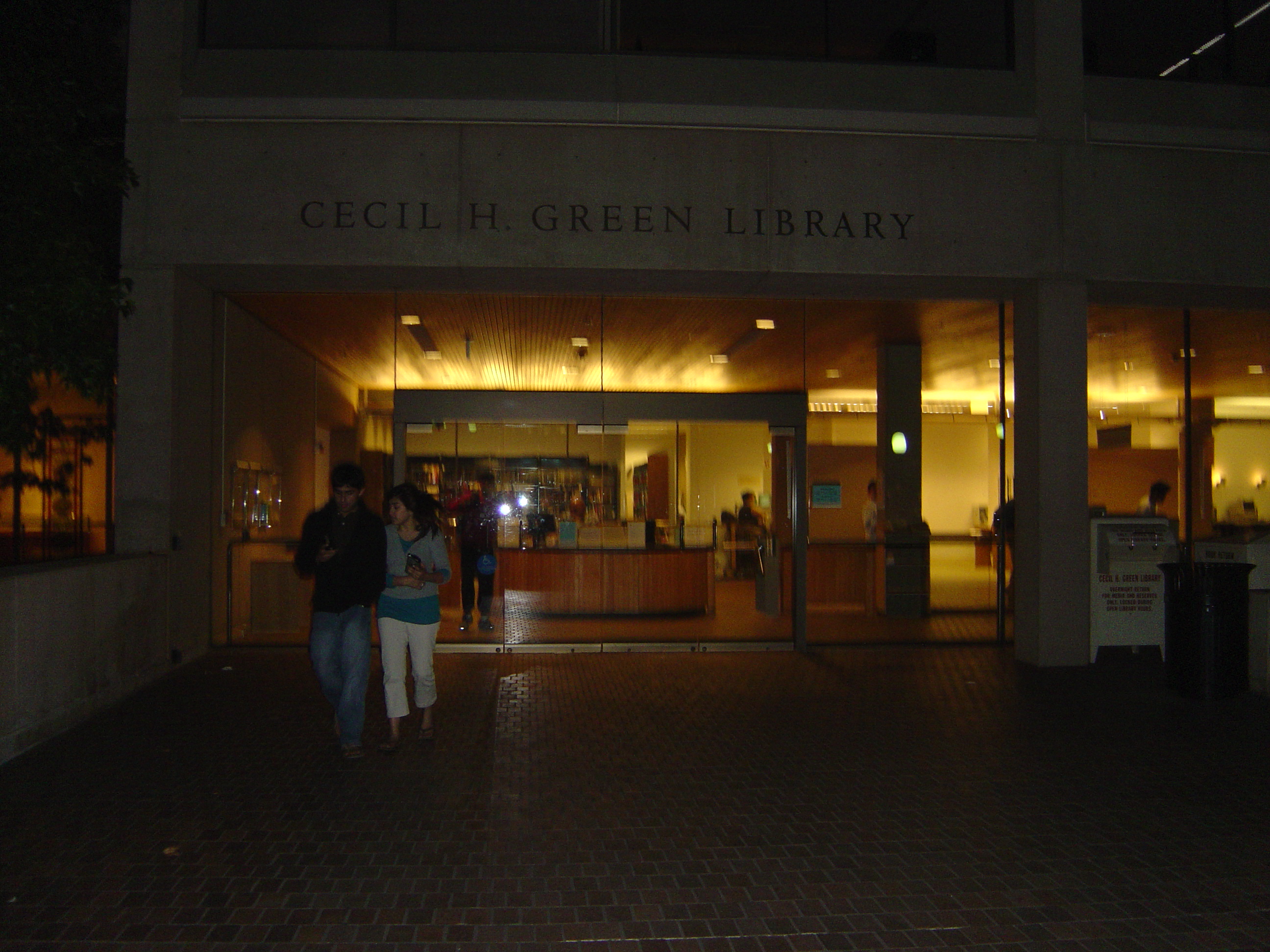
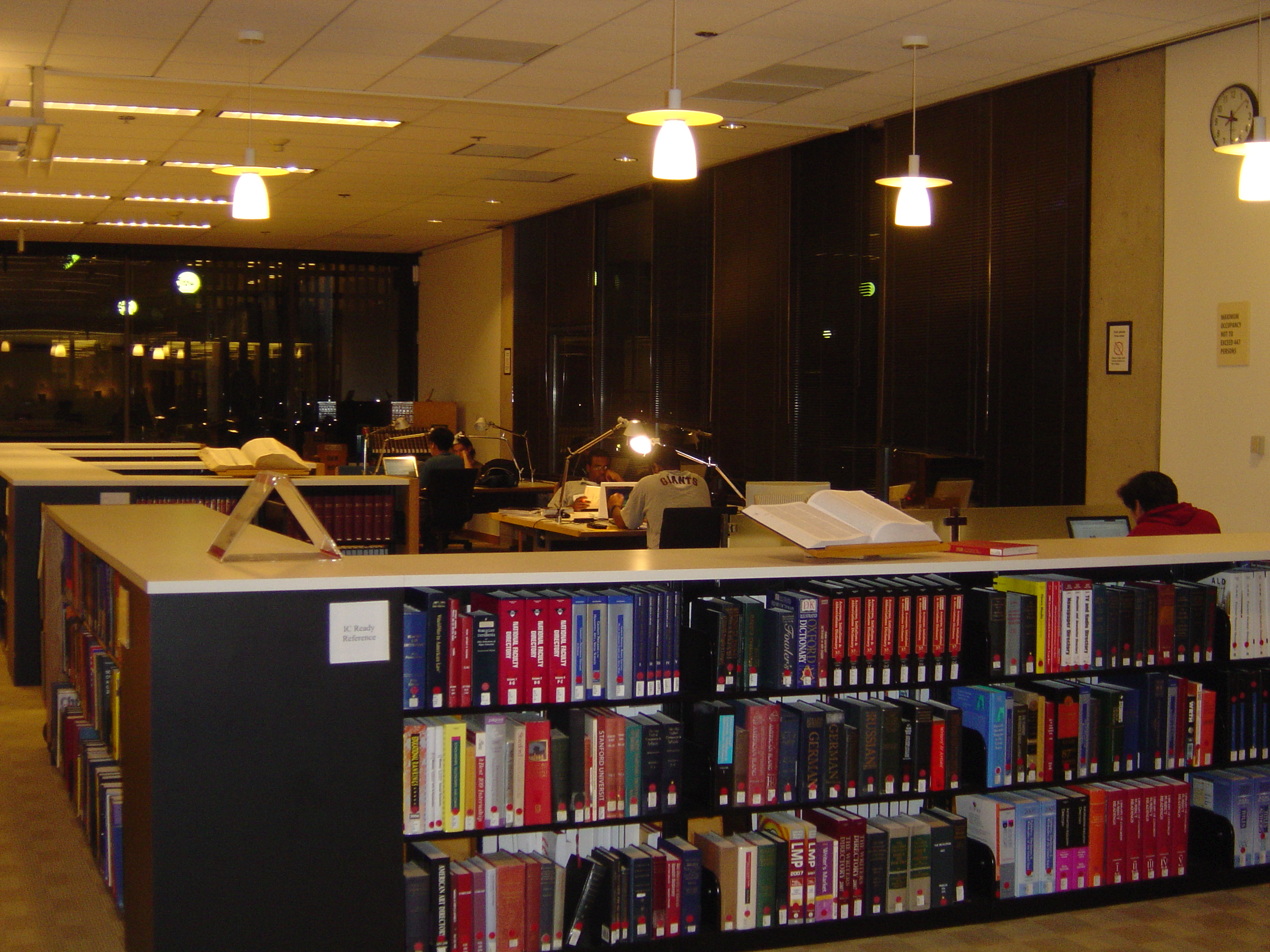
Green Library:

Meyer Library:


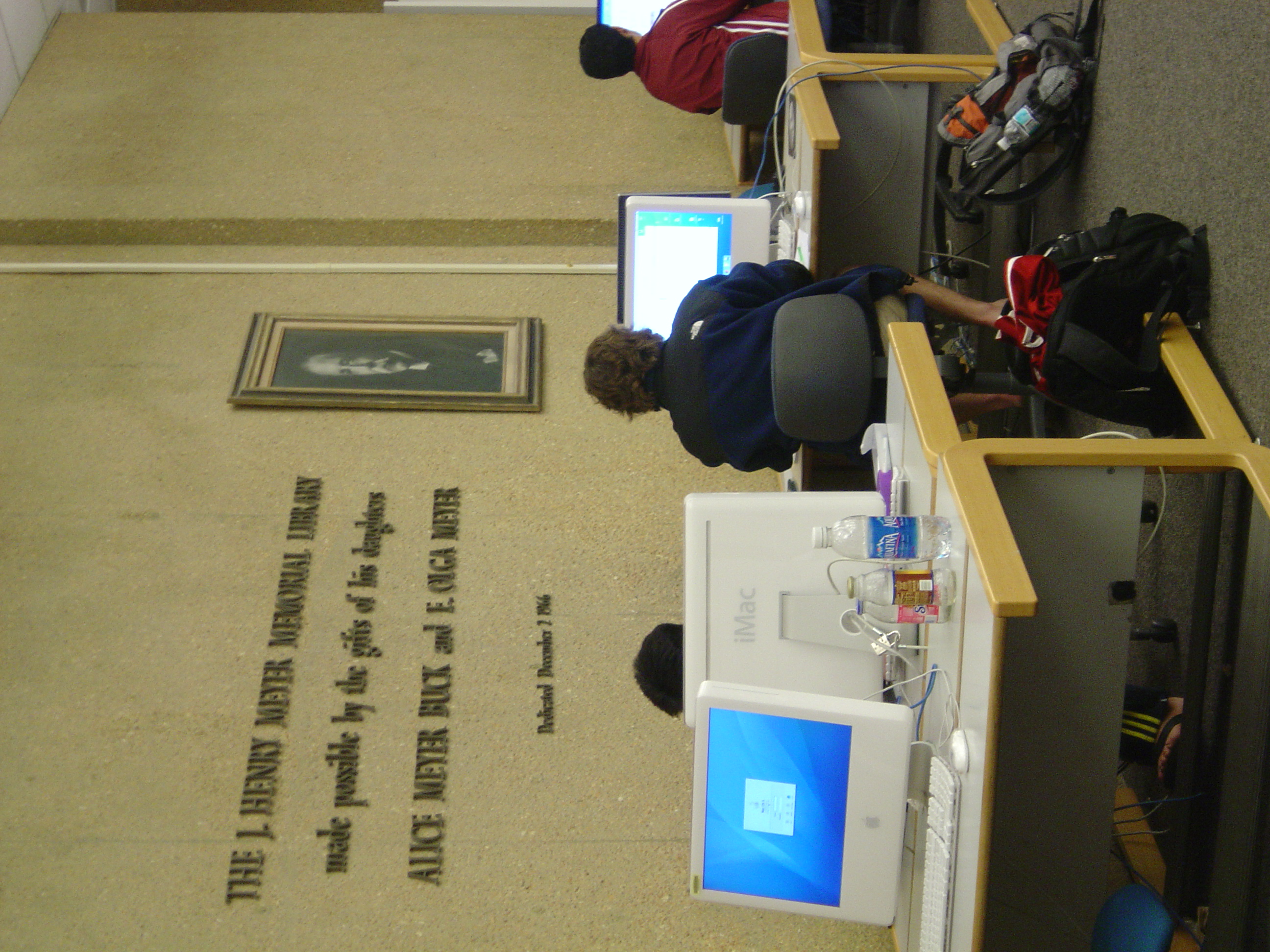
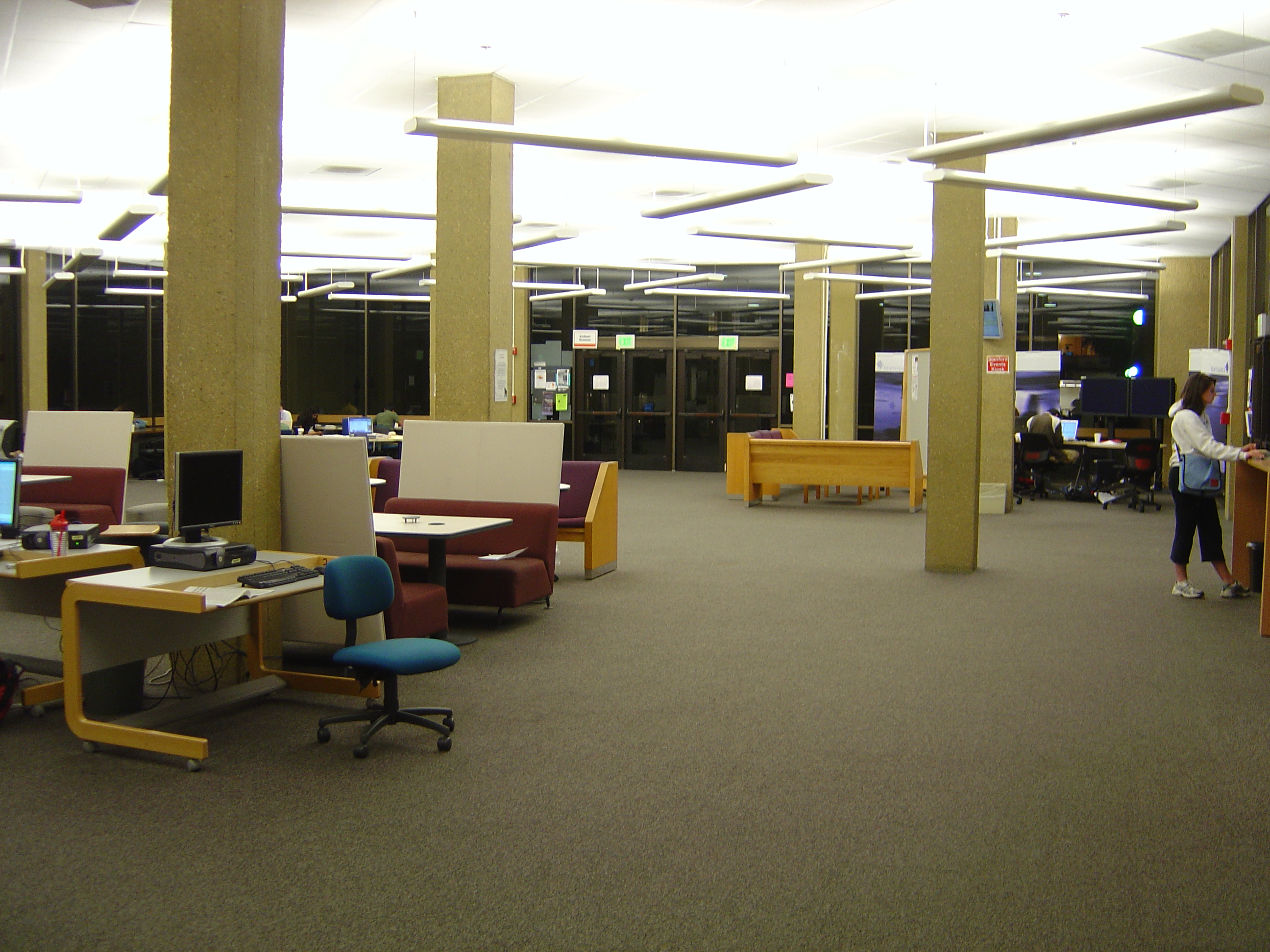
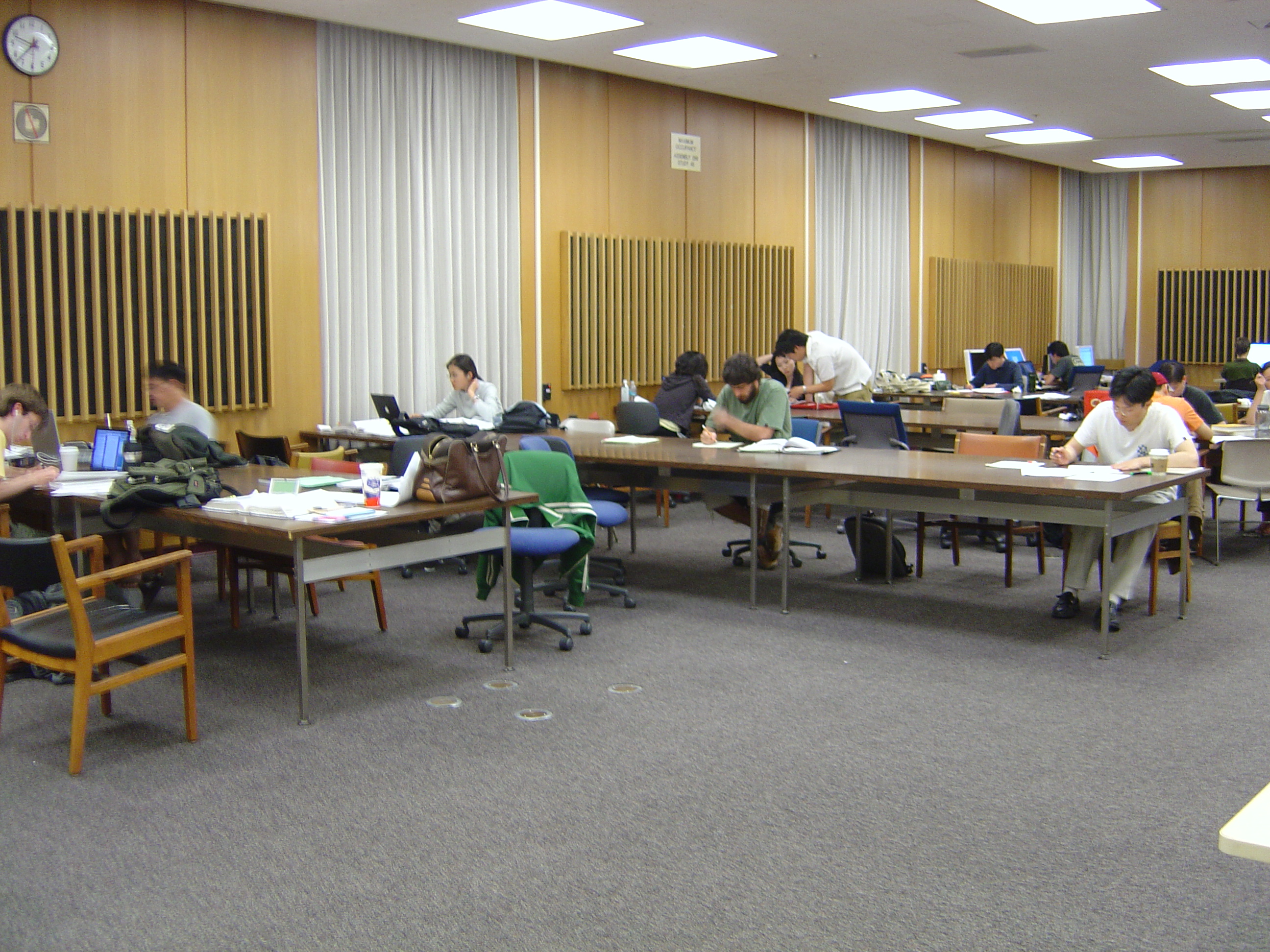
The Meyer Library is more of a quiet study and technology environment than one's typical impression of a library.
As you enter the library the room is spacious with moveable tables, desks, and large screen personal flat-sceen monitors. The second floor is also a room full of moveable tables, desks, and large screen personal flat-sceen monitors.
While the space is set-up to allow people to work together and collabortatively, there is definitely a feeling that encourages you to stay quiet. Neverthless, I saw many people working both individually and collectively in the main room.
One clear difference in this library is the lack of books. Unlike traditional libraries, the first wo main rooms that you come across have no stacks of books. While some of the side rooms and the fourth floor east asian studies room did contain books, the literature seemed a secondary purpose for the space.
The spaciousness of the room feels inviting, and I would consider spending time there when I need a space to study and focus on research that I might have to complete. Neverthless, I might need to bring a pair of headphones to counteract the silence.