Cantor Visit
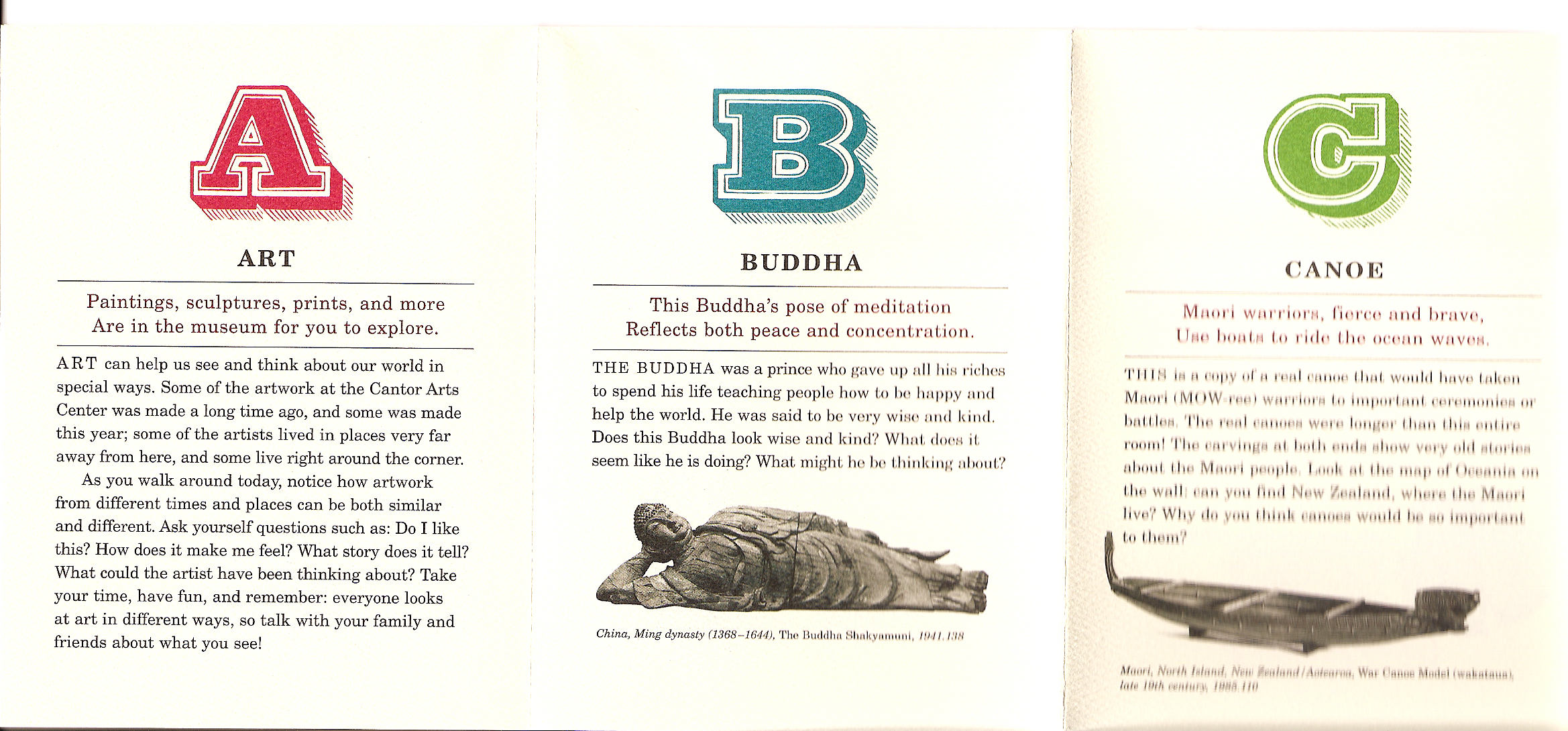
What I liked: • The layout, lighting, how there was plenty of space to walk around and it wasn’t too crowded. • Signs explaining the pieces, and the parts of the world they came from • ‘ABC’ pamphlet that started out with A for Art—What is Art? This is a question I often ask myself in museums, and I liked their answer: “Art can help us see and think about our world in special ways.” I also liked the questions it suggested people ask themselves (Do I like this? How does it make me feel? What story does it tell? What could the artist have been thinking about?) I also really like how the booklet reminds people to talk to family and friends about what they see, and to have fun!
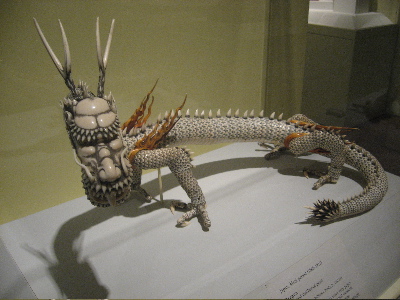
What I didn’t like: • It would have been nice to have had some more information on the techniques used to make the art, especially the pottery, and my favorite piece, this amazing movable dragon made out of pearl and springs. • I had a lot of questions, but since I wasn’t on a tour, there wasn’t anyone to ask. I wish there had been some sort of a question drop box where I could put my questions and know I’d get an answer before I left, or within a few days. • The art classes and workshops the museum offers sound really interesting, but they’re way too expensive for me. Besides, I’m not sure I’d have the time to devote to them, though I think they’d really help me get over my fear of (both making and understanding) art.
What I learned: • Random facts o Zen is called Chen in China, and it means “meditation.” There’s a story about the founder of Zen that seems very similar to Jesus’ resurrection, except they found a sandal in his crypt instead of a shroud. o Napoleon’s brother—and the former kind of Italy and Spain, I think—moved to New Jersey after his brother lost power. I thought this was kind of funny, which is why I remembered it. o elated to the first fact, it was so much easier for me to understand pieces that involved Western themes and stories (the penance of St. Peter, the cruxifiction), than it was the Eastern pieces, unless there was some parallel as in the case of the founder of Zen—whose name I have of course already forgotten.
• Pieces o Amazingly intricate coral piece depicting courtly life in Japan. o Indonesian(?) armor with human hair. Creepy. o Daimyo armor actually used much later than feudal times in Japan for ceremonial purposes. o Rather dashing painting of Napoleon where the golden decorations on his uniform look a lot like the pattern on the elaborate golden frame. o Tibetan trunk with a phoenix painted on it. Wondered where they’d heard about phoenixes. Wonder what the plural of ‘phoenix’ is.
What I remembered/thought about the next day: • The beautiful laquered horse in the first gallery I visited. • How much my mom would like all the Rodin sculptures and how I never really asked her why she liked him so much, and I should. • Wow, I can’t believe Stanford really has The Thinker. I really like the way he’s leaning so far forward it makes him look like he’s trying to physically throw himself into whatever problem he’s trying to solve, or whatever it is he’s thinking about. I wonder what kind of theories the thousands of people who have seen him have come up with for what he’s thinking about. • The snuffbox collection. I think it’s so amazing that such a grand scale of cultural exchange had to happen to result in these tiny, beautiful works of art. Europeans had to come in contact with Americans to bring tobacco back to Europe, then they would have to have spread tobacco use to Asia, not to mention the thousands of years of cultural development within Asia that led to the porcelain techniques used.
What I would add/change: • The ABC booklet was great, but tiny and hidden at the front desk! I would make the A for Art a huge sign at the entrance, and put the others by the pieces they represent. • I’d add a section in each area on the techniques the artists used to create their work. I’d also have free classes, workshops and demonstrations each day (assuming my museum had all the money in the world) so people could really start to understand what goes into creating these pieces. • I’d have more information on the cultural exchange that went into the making of some of the pieces, like the snuffboxes. I think the best way to do this might be a short video and/or a timeline. • I’d have a physical and electronic faq dropbox/kiosk (so people could write their questions however they felt most comfortable. Then, maybe at a certain time of day, a curator could answer some selected questions, and you could go see if yours was being answered and/or ask another question. Questions they didn’t get to could go into an online database which you could access at home, or from the gallery. In fact, it would be the same kiosk where you ask your question. • Answers to people’s questions could also be used to improve audio tours of the museum. • There should also be a way for people to leave their comments on different pieces of artwork. Maybe each room could have a physical or guestbook for people to leave their impressions. • “Thinker Day”—a day for (big and little) kids to come and write and draw what they think the Thinker is thinking!