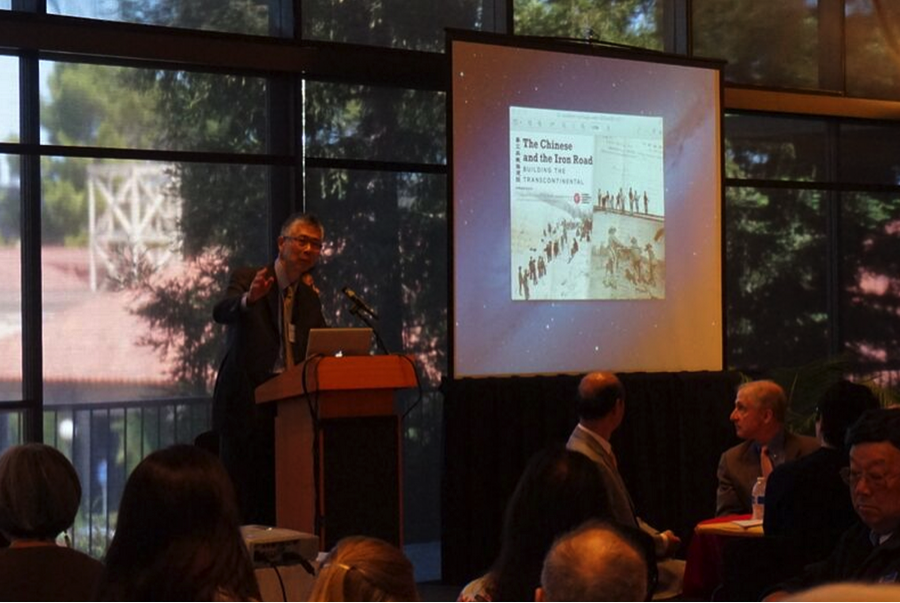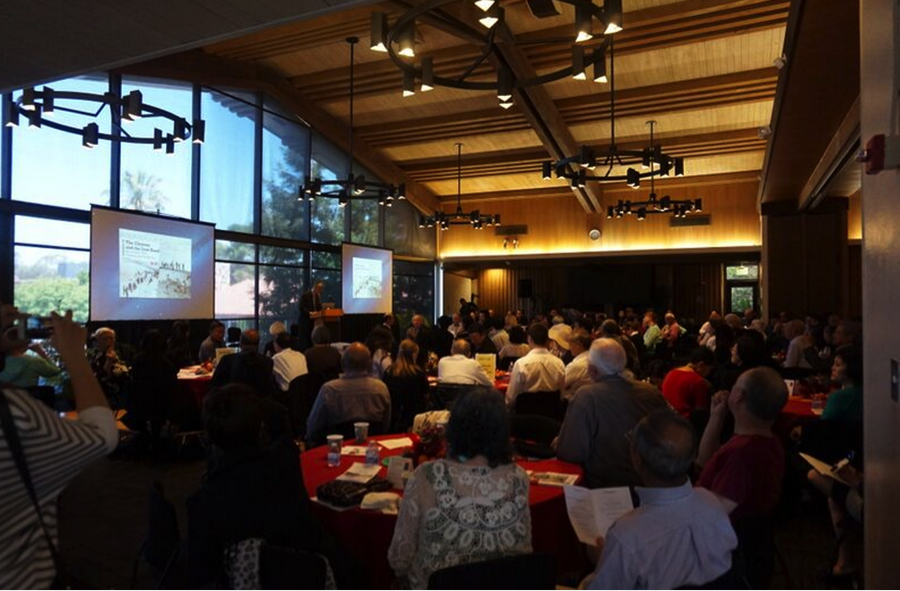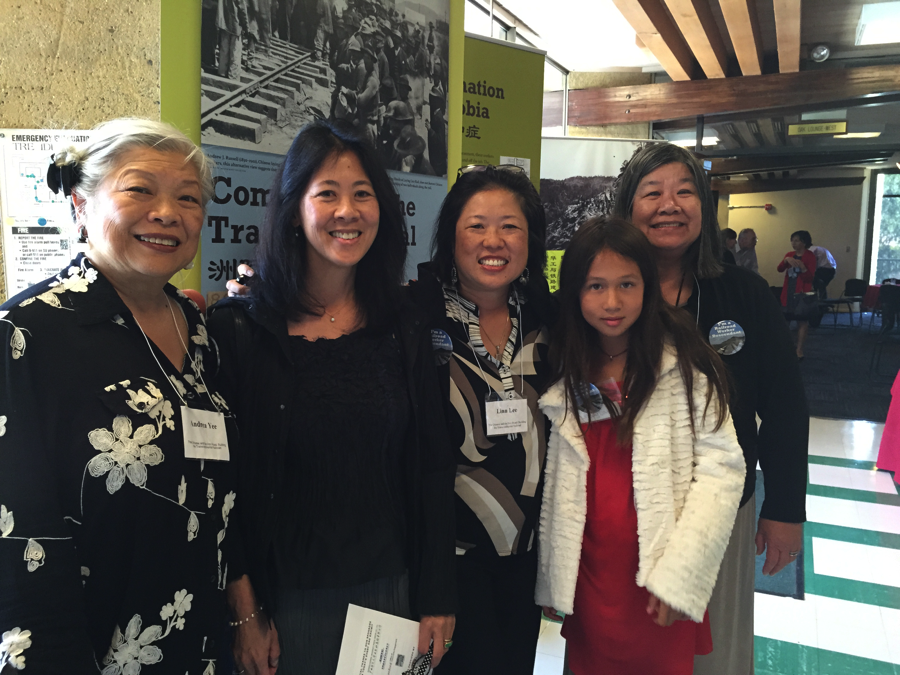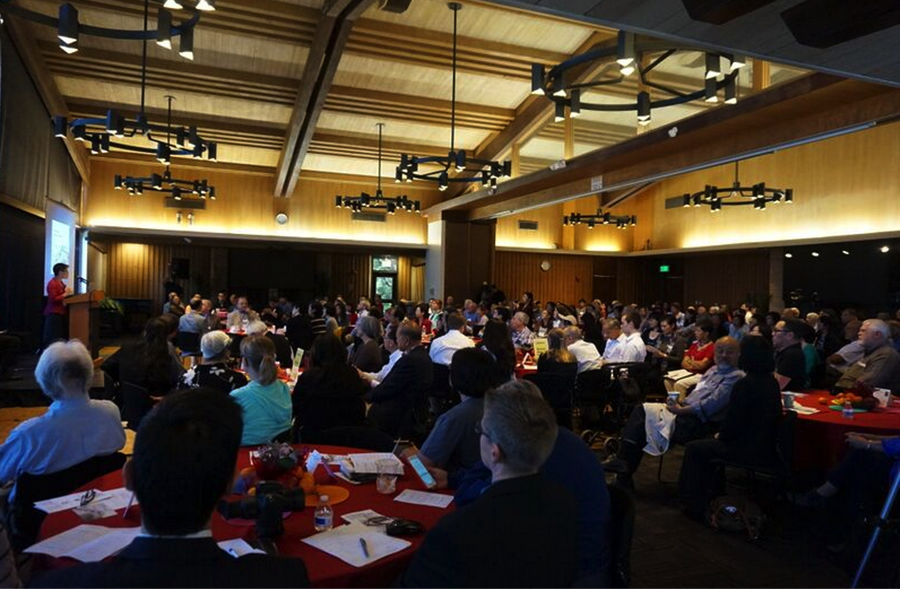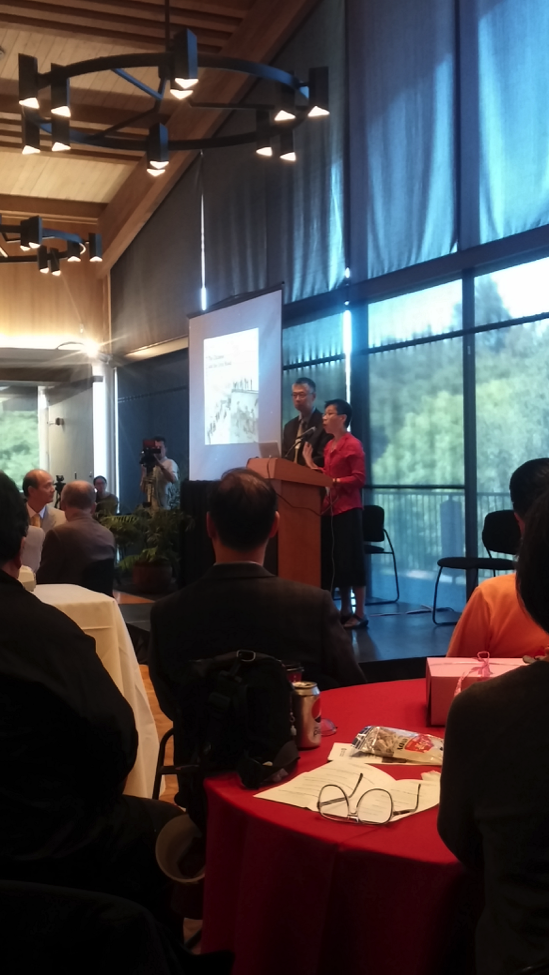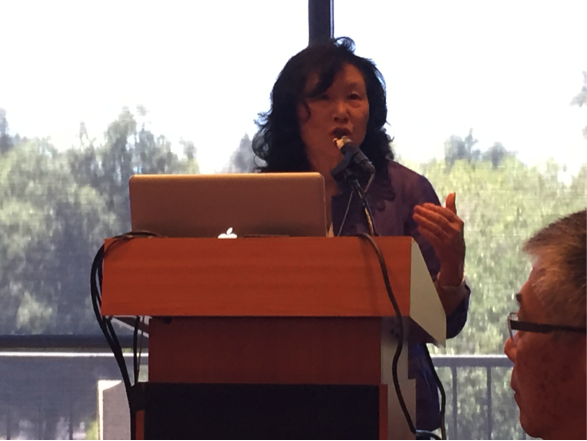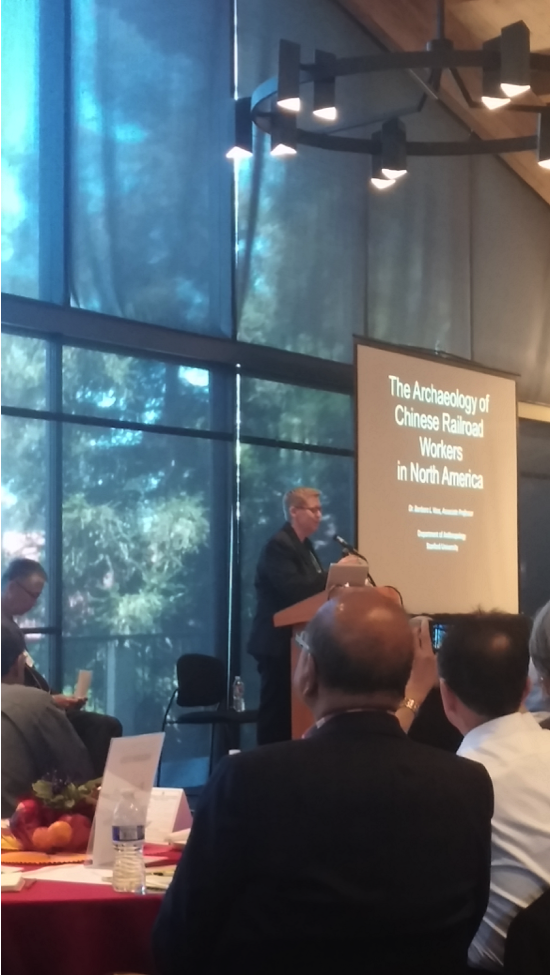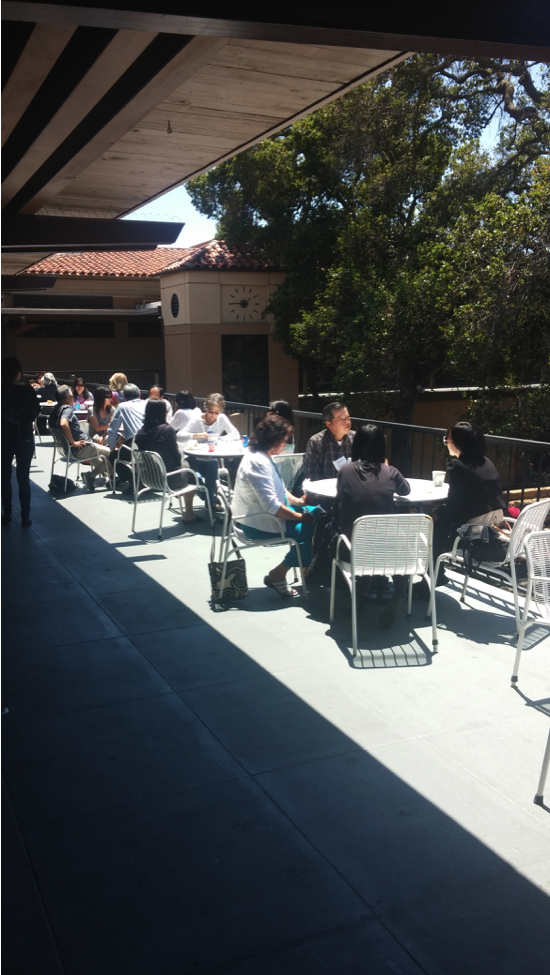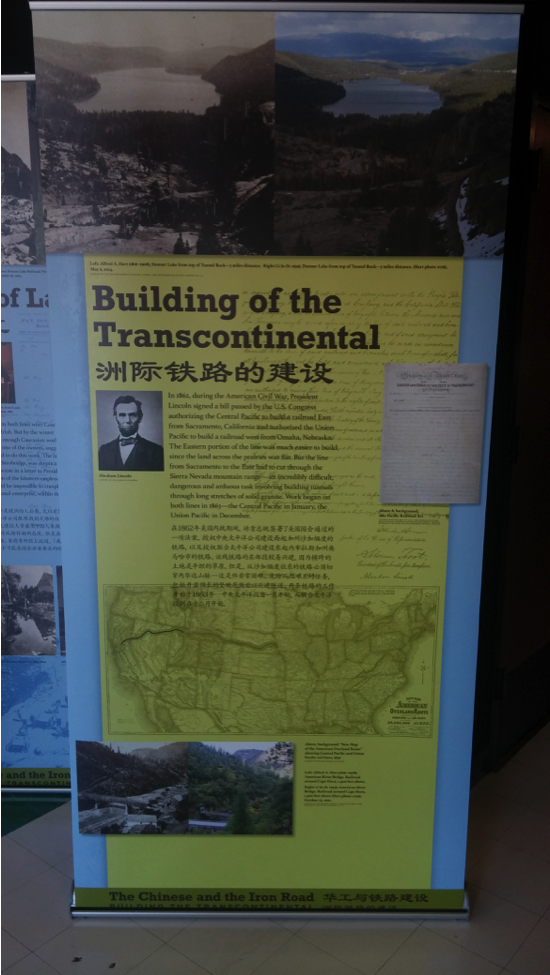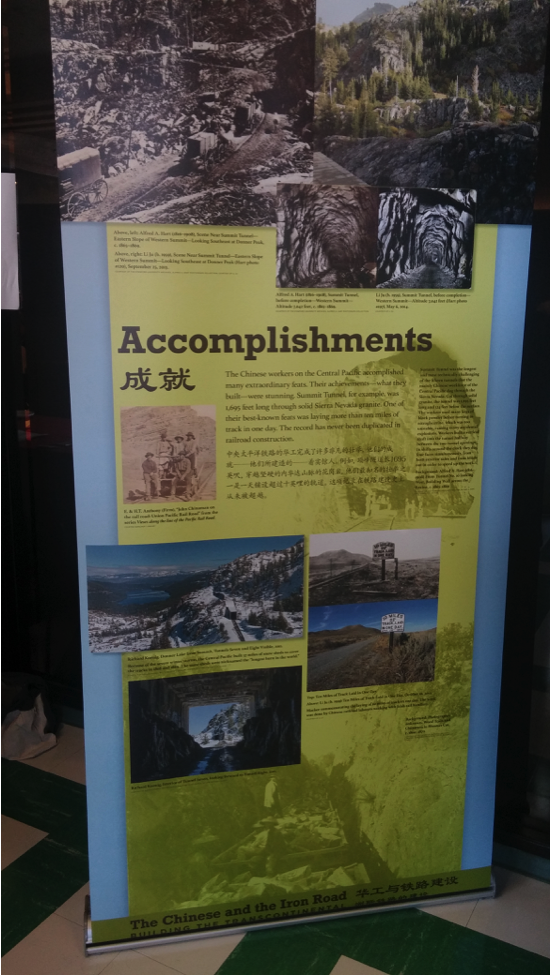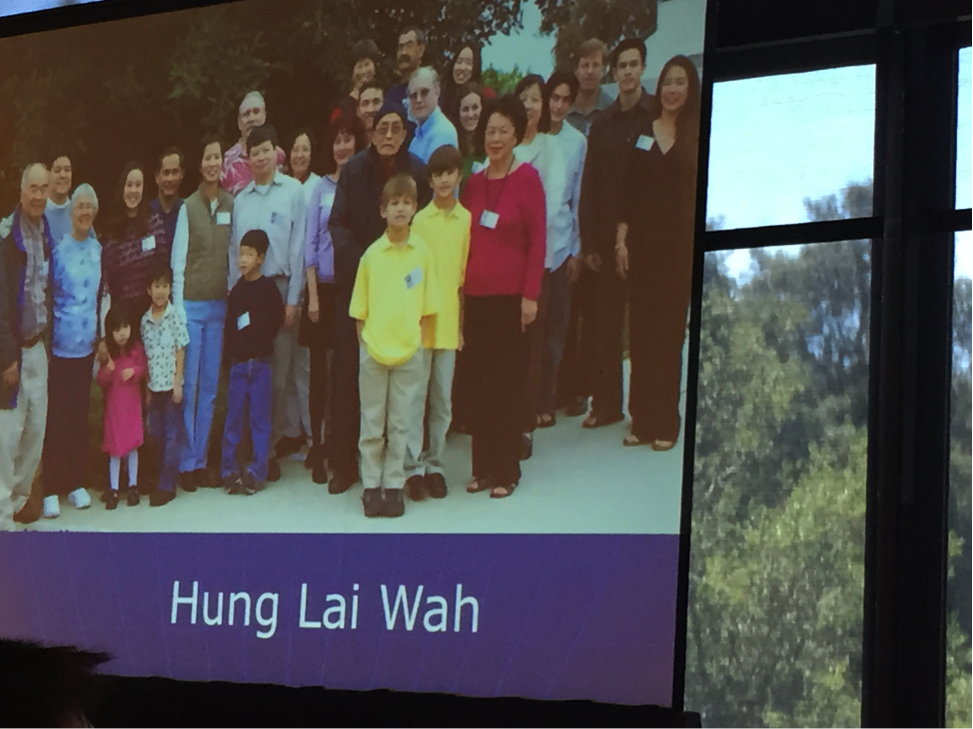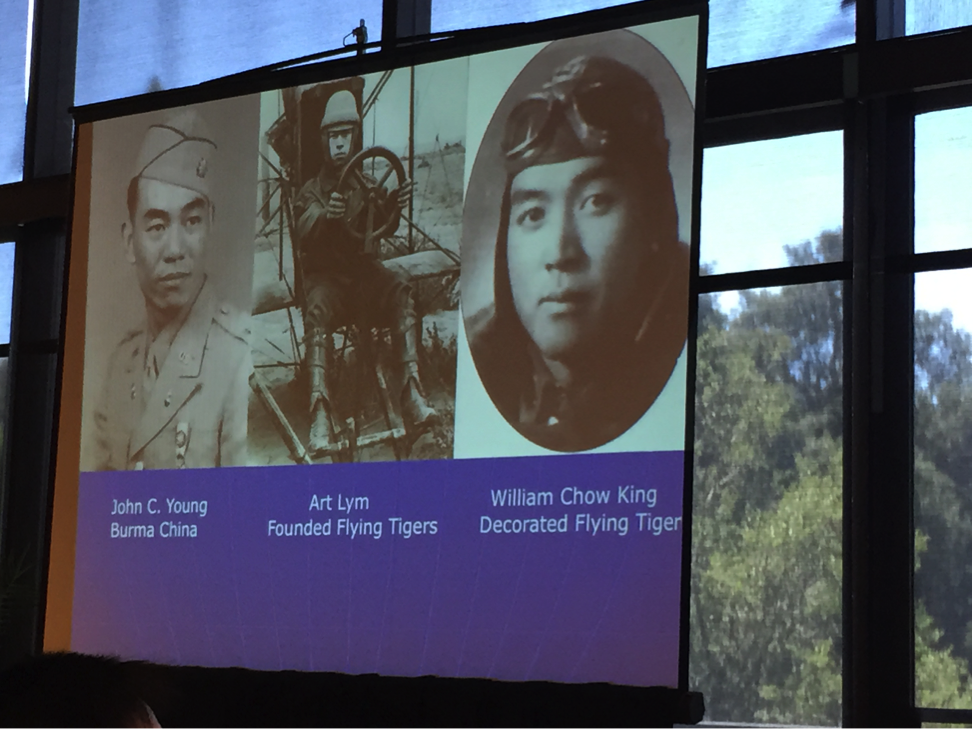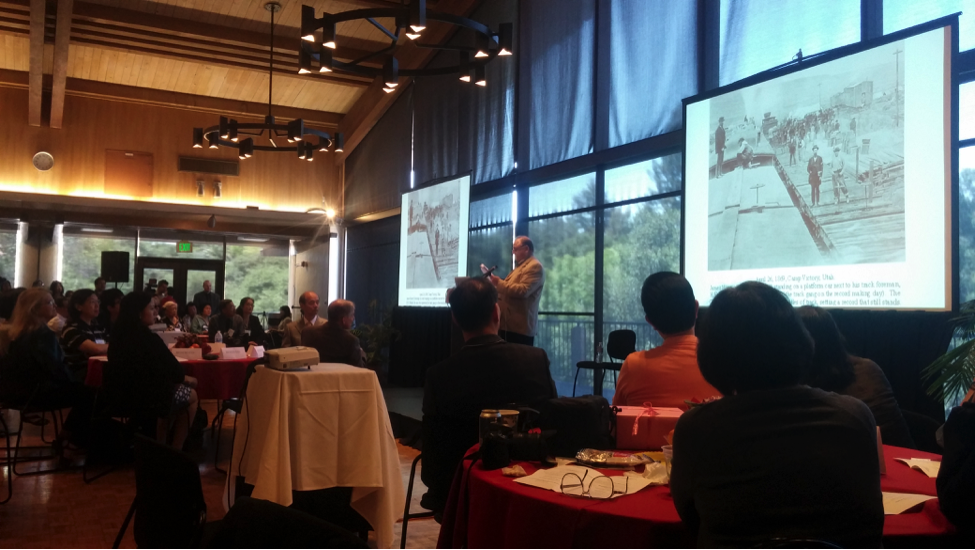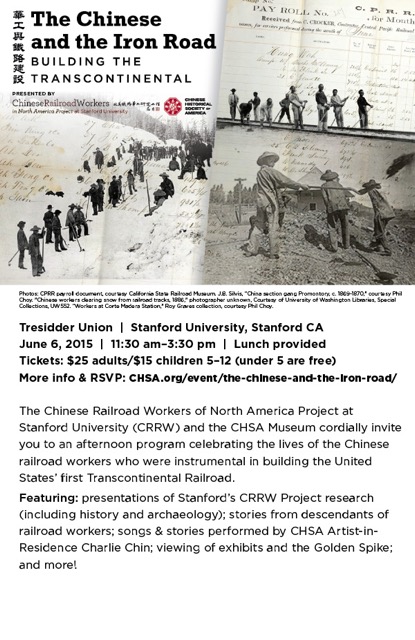
Almost 250 attended “The Chinese and the Iron Road: Building the Transcontinental” at Stanford University on June 6, 2015. The event, co-sponsored by the Chinese Railroad Workers in North America Project at Stanford University and the Chinese Historical Society of America (CHSA), commemorated the 150th anniversary of the employment of large numbers of Chinese laborers on the construction of the Central Pacific portion of the transcontinental railroad. The overflow crowd included more than 50 descendants of the railroad workers.
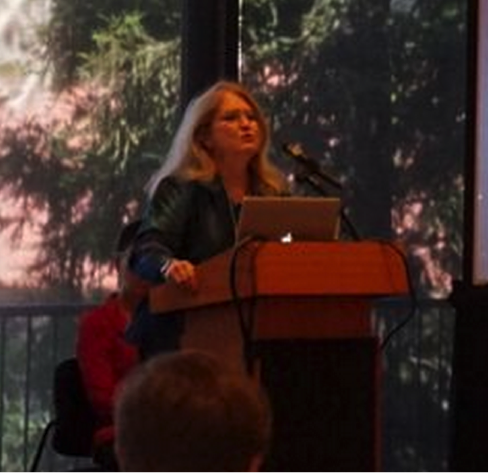
The event opened with welcoming remarks by Project Co-Director Professor Gordon H. Chang and CHSA’s Executive Director Sue Lee, as well as an overview of the Project’s work by Co-Director Professor Shelley Fisher Fishkin.
Richard Saller, Stanford Dean of the School of Humanities and Sciences, welcomed the audience to “this unprecedented event,” highlighting “the crucial role that the Chinese who built the Central Pacific Railroad played in creating the fortune with which Leland Stanford founded our university.” Dean Saller offered the important statement that “today marks the first time that Stanford University has formally honored their memory.” To those descendants in attendance he expressed “our appreciation of the grueling work your ancestors did to make the first railroad linking the nation’s east and west coasts possible.”
Chinese Consul General Luo Linquan noted that the participation of Chinese workers is “of great historic significance.” He observed, “Without their contribution, America’s development and progress as a nation would have been delayed by years.”
These railway workers are the predecessors of the early Chinese immigrants in California. They not only helped reshape the geographic and social landscape of the West, but also blazed a trail for the very existence and development of overseas Chinese living in the U.S. Their diligence, dedication, team spirit and commitment represent the traditions and personalities of the Chinese nation. They are pioneers for the people-to-people exchanges and friendship between China and the U.S.
Ambassador Luo emphasized the significance of good relations between the United States and the need for both countries “to build a new model of major-country relations featuring no conflict, no confrontation, mutual respect and win-win cooperation.”
Associate Director Dr. Hilton Obenzinger presented a narrative in word and image of Chinese participation in building the railroad. Professor Barbara Voss, director of the Project’s archaeology network, presented aspects of the work of historical archaeologists and plans to conduct more research along the railroad route. Available at the event was the newly released special issue of Historical Archaeology on the Chinese railroad workers, which presents articles on the work done so far. The event included the premiere of a new film ‘The Work of Giants” on the Chinese building the Summit Tunnel in the Sierras. Produced by Laurence Campling for Donner Memorial State Park, the film features archaeologist Scott Baxter and historian/railroad worker descendant Connie Young Yu touring the tunnel and remains of work camps as they relate the story of the difficult and dangerous construction of what was at that time an engineering marvel.
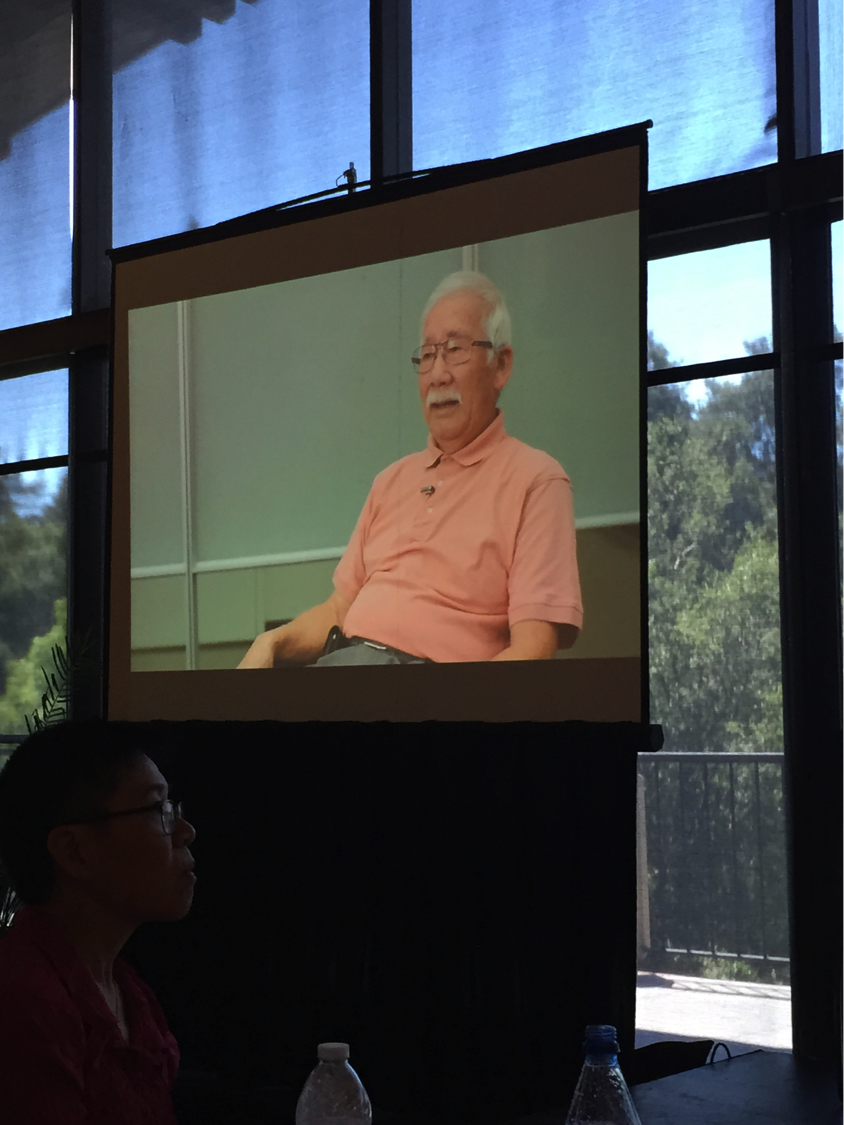
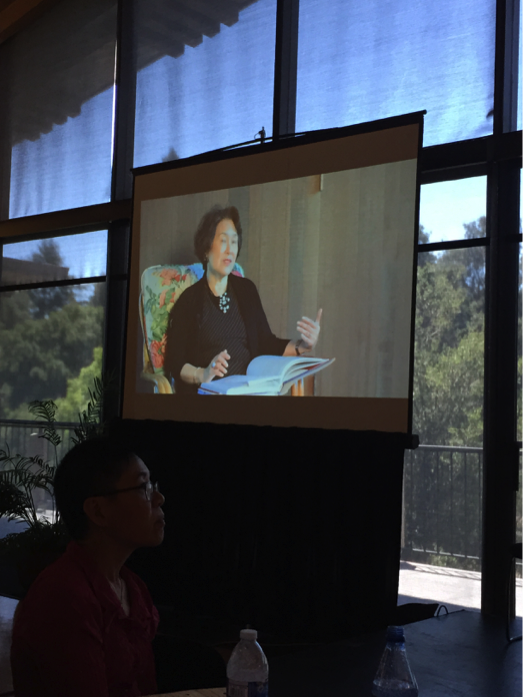
A moving highlight of the program was the introduction of railroad worker descendants. Filmmaker Barre Fong and Connie Young Yu presented excerpts of oral histories of families of descendants of railroad workers gathered as part of the joint effort of the Project and CHSA. Two descendants, Paulette Liang and Russell Low, mesmerized the audience with their family stories accompanied with photographs. Railroad worker descendant and musician and storyteller Charlie Chin performed about the Chinese and the railroad, including a re-interpretation of the old song “I’ve Been Working on the Railroad.”
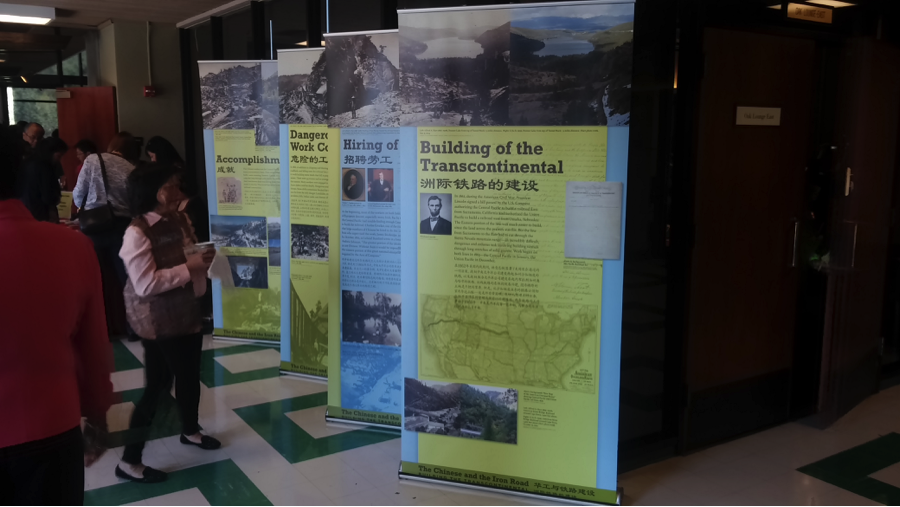
The audience savored a hearty lunch and mingled to talk with descendants and view the outstanding seven-panel exhibit on the Chinese working on the railroad produced by the Project and designed by CHSA graphic designer Amy Lam. (The exhibit is now on display at the CHSA in San Francisco.) At the end of the program many joined in a guided tour of the campus and the university’s relationship to the Chinese workers by Berkeley graduate student Christopher Lowman, including a stop at the East Asia Library to enjoy a photographic exhibition, “The Chinese Railroad Workers Memorial Exhibit: Revising the Stories We Tell Ourselves,” curated by Stanford undergraduates Eve Simister and Noelle Herring and, finally, at the Cantor Arts Center an opportunity to view the famed Golden Spike that commemorated the completion of the railroad on May 10, 1869.
Richard Saller, Dean of Humanities and Sciences Stanford University
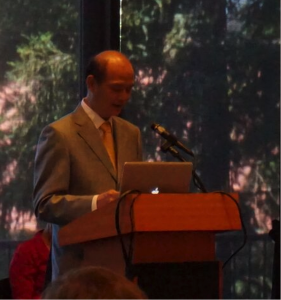
PRC Consul General Luo Linquan
Scrapbook of Images from The Chinese and the Iron Road: Building the Transcontinental (click to see full size render):