
June 2015: “美斯坦福大学纪念华工赴美建铁路150周年” (人民网 People’s Daily)
“中新网6月8日电 据美国《世界日报》报道,美国铁路华工150周年,斯坦福大学北美铁路华工研究工程及美国华人历史协会学者,6日和来自全国的数十名华工后代一起回顾这段重要的历史。” Read the full story 看全文 »
“中新网6月8日电 据美国《世界日报》报道,美国铁路华工150周年,斯坦福大学北美铁路华工研究工程及美国华人历史协会学者,6日和来自全国的数十名华工后代一起回顾这段重要的历史。” Read the full story 看全文 »
“Chinese railroad workers played a vital role in the 1860s construction and completion of the first transcontinental railway in the US. Their herculean efforts in helping to shape the physical and social landscape of the American West should always be remembered, and their heart-wrenching stories should be told and retold »
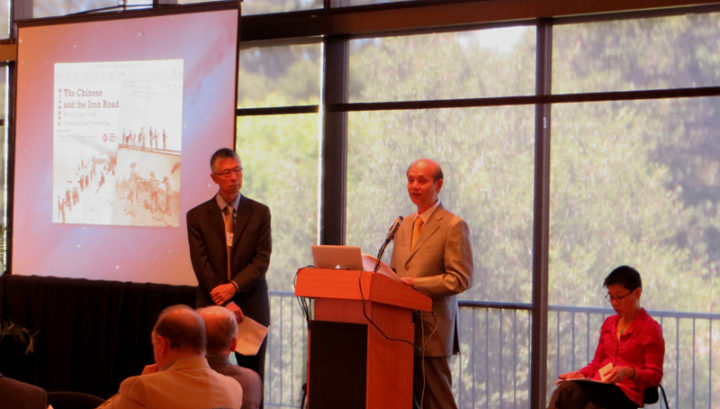
“On June 6th, 2015,Consul General Luo Linquan attended Stanford University event to commemorate the 150th anniversary of the introduction of Chinese workers into the first transcontinental railroad across the United States. Deputy Consul General Zha Liyou, Dean of Stanford School of Humanities and Sciences Richard Saller, Director for Institute for »
“Built in the mid-1800s, the Transcontinental Railroad was among the most ambitious enterprises of American engineering – as well as an important source of Leland Stanford’s wealth. Well over 10,000 Chinese laborers performed the grueling and dangerous work of tunneling through the granite of the Sierra Nevada. They were paid »
Professor Richard Saller, Professor Gordon H. Chang, Professor Shelley Fisher Fishkin, Leaders of Chinese History Society of America, Dear friends, ladies and gentlemen, It is my great pleasure to be with you at prestigious Stanford University to commemorate the 150th anniversary of the introduction of large number of Chinese workers »
“The greatest engineering feat of the 19th century began in 1863, when the Central Pacific and the Union Pacific railroads broke ground. Two years later, contractors began hiring large numbers of Chinese migrants, many from California, to help with the monumental construction project.” Read the full story »
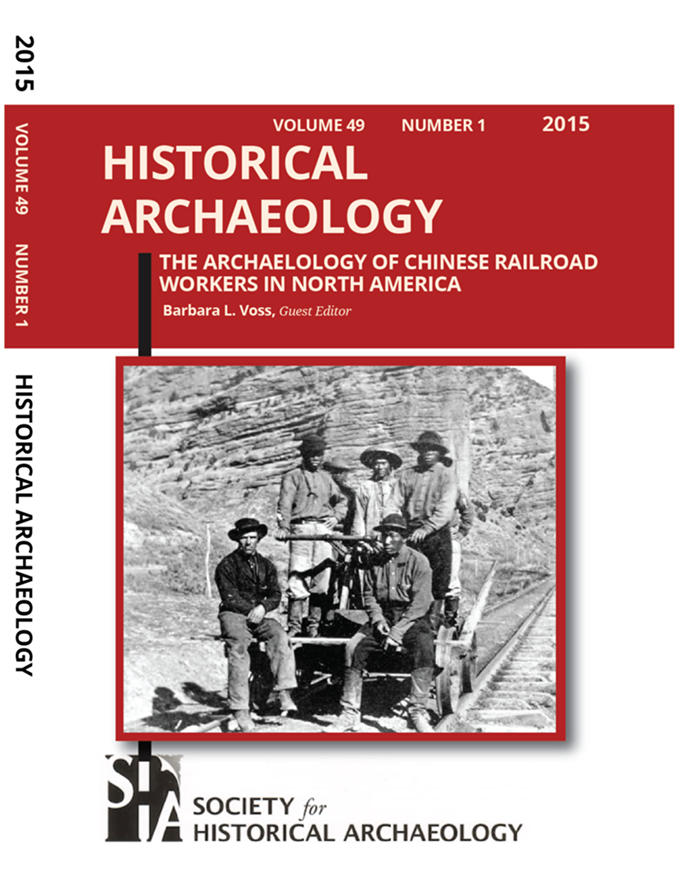
In commemoration of 150th anniversary of the introduction of Chinese workers to the first transcontinental railroad, the Society for Historical Archaeology has published a special thematic issue of its journal, Historical Archaeology. “The Archaeology of Chinese Railroad Workers in North America” features sixteen original articles, including never-before-published accounts of some »
李炬,男,1959年出生,北京人,自由摄影师,历史影像研究者。 2010年在美国旅行时,1860年代华工修建的铁路,引发浓厚兴趣。研究了大量中央太平洋铁路的历史照片和资料,对阿尔弗雷德·哈特(Alfred Hart)1860年代拍摄的照片特别有兴趣。 2012-2014年三次驾车沿太平洋铁路从加州萨克拉门托到犹他州盐湖城,其中一次到内布拉斯加州奥马哈,沿途寻觅太平洋铁路华工的足迹,拍摄了大量照片。作为志愿者,为铁路华工故乡的《南方日报》记者做向导和顾问, 10多天连载报道铁路华工的历史,让人们更多地了解了一百五十年前的历史往事。 与黄安年教授合作编写《沉默道钉的足迹》,近期将在中国铁道出版社出版。 2013年秋李炬在西拉内华达山顶唐纳关废弃的铁路隧道旁,远景为唐纳湖 Li Ju is seen by the abandoned railroad tracks near the Donner Pass from Summit Tunnel in fall, 2013 Li Ju, born in 1959 in Beijing, is a freelance photographer and independent scholar on historical photographs. He is a computer engineer with a »
by Ethan Blue Ethan Blue, Senior Lecturer in History at the University of Western Australia, met with Gordon H. Chang of the Project in January 2015 to discuss his research on mass deportations in the U.S., particularly how railroads were employed. Ironically, Chinese workers were integral to the building of »
by Calvin Miaw All the accounts of building the first transcontinental railroad interpret the role of the Chinese in its construction, and those interpretations are often highly contested, reflecting different assumptions and attitudes, as well as data. There’s a lot at stake: how one views the building of the transcontinental »