|
Stanford GNSS Monitor System
Stanford University has developed an on demand capability for observing GNSS signals using the Stanford GNSS Monitor Station (SGMS). This effort was lead by Alan Chen. The SGMS has a 1.8 m steerable parabolic dish antenna with an L band feed. The antenna has approximately 7 degree beamwidth and provides about 25 dB of gain over conventional patch antennas.
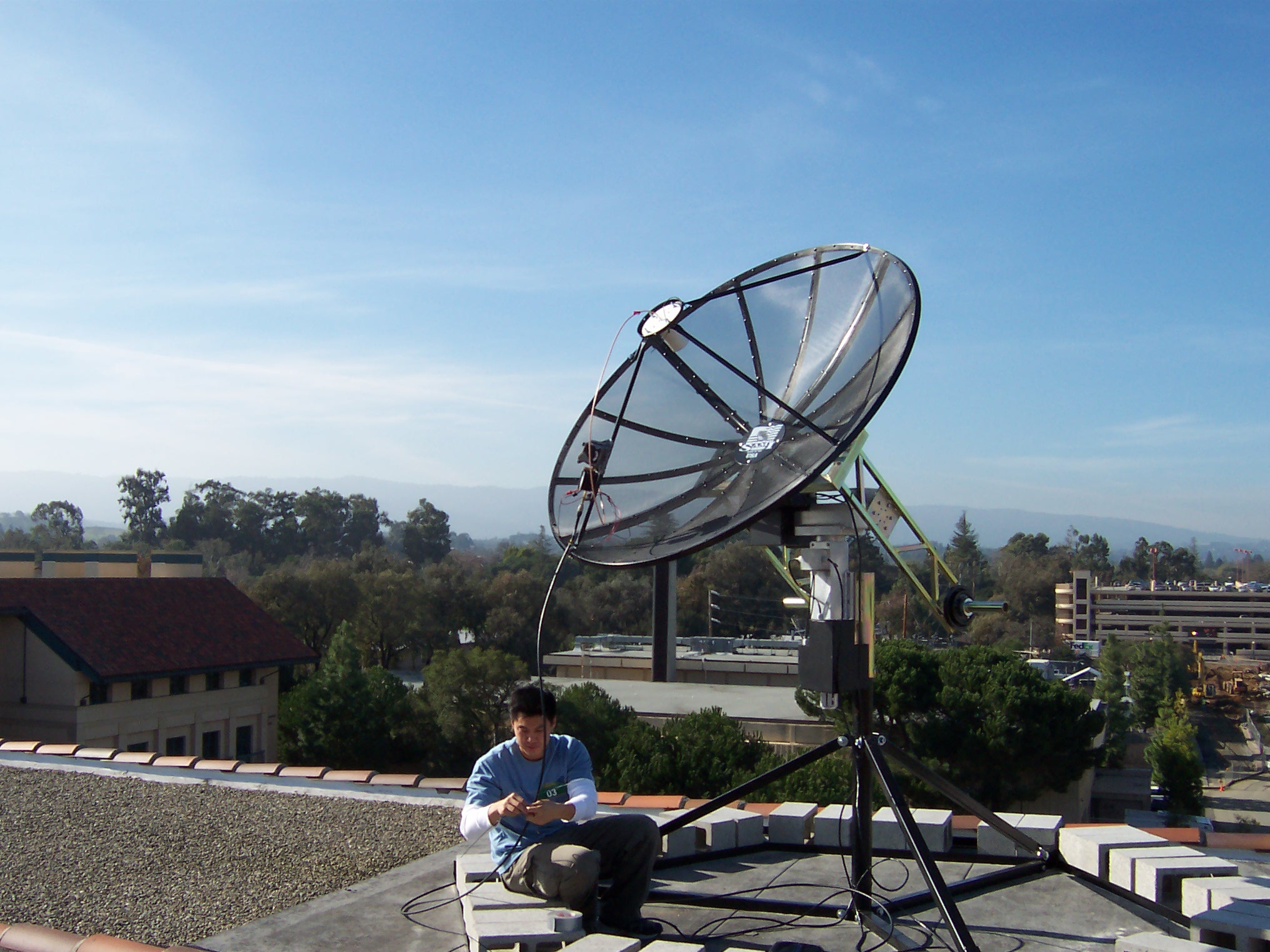
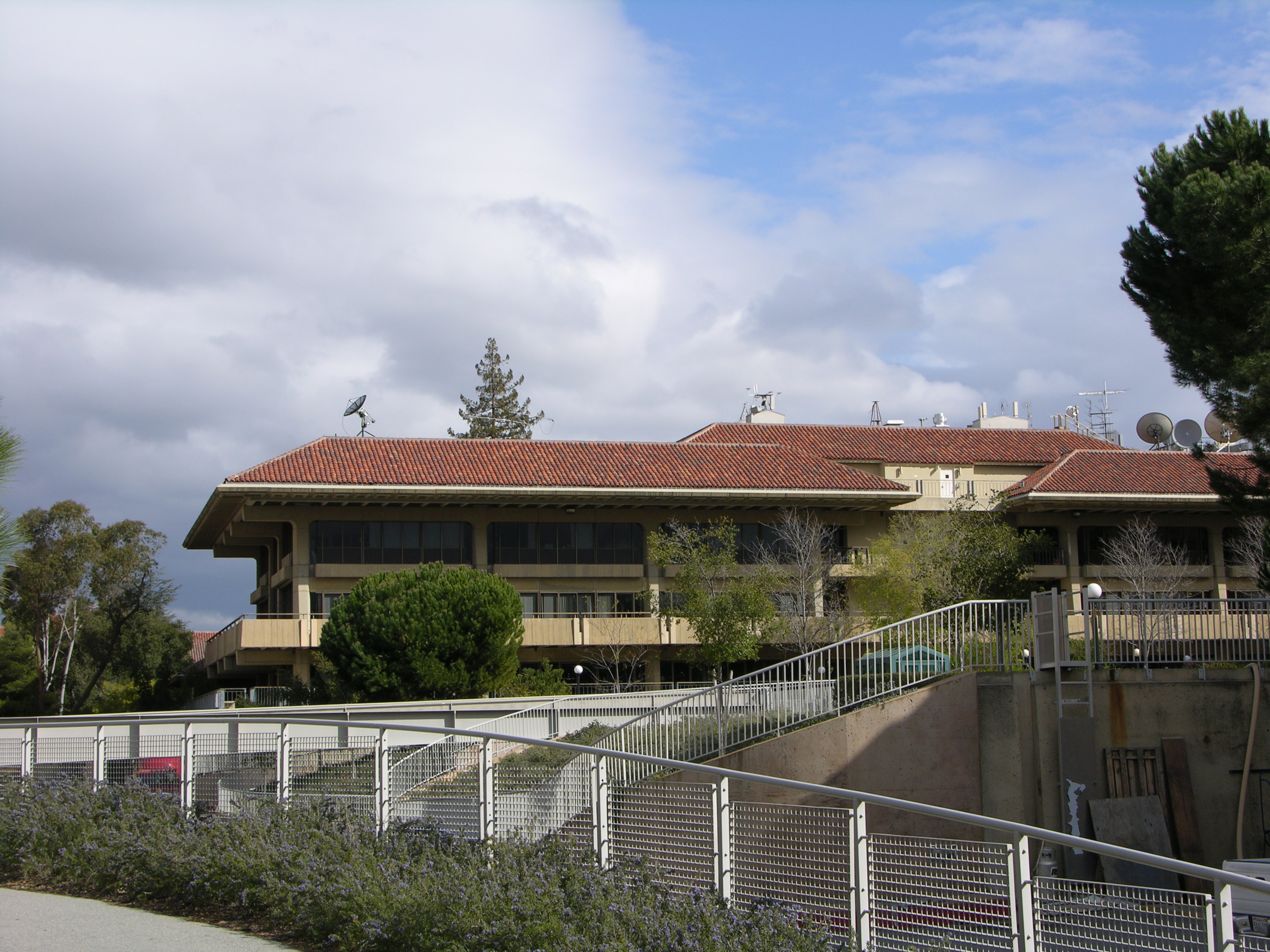
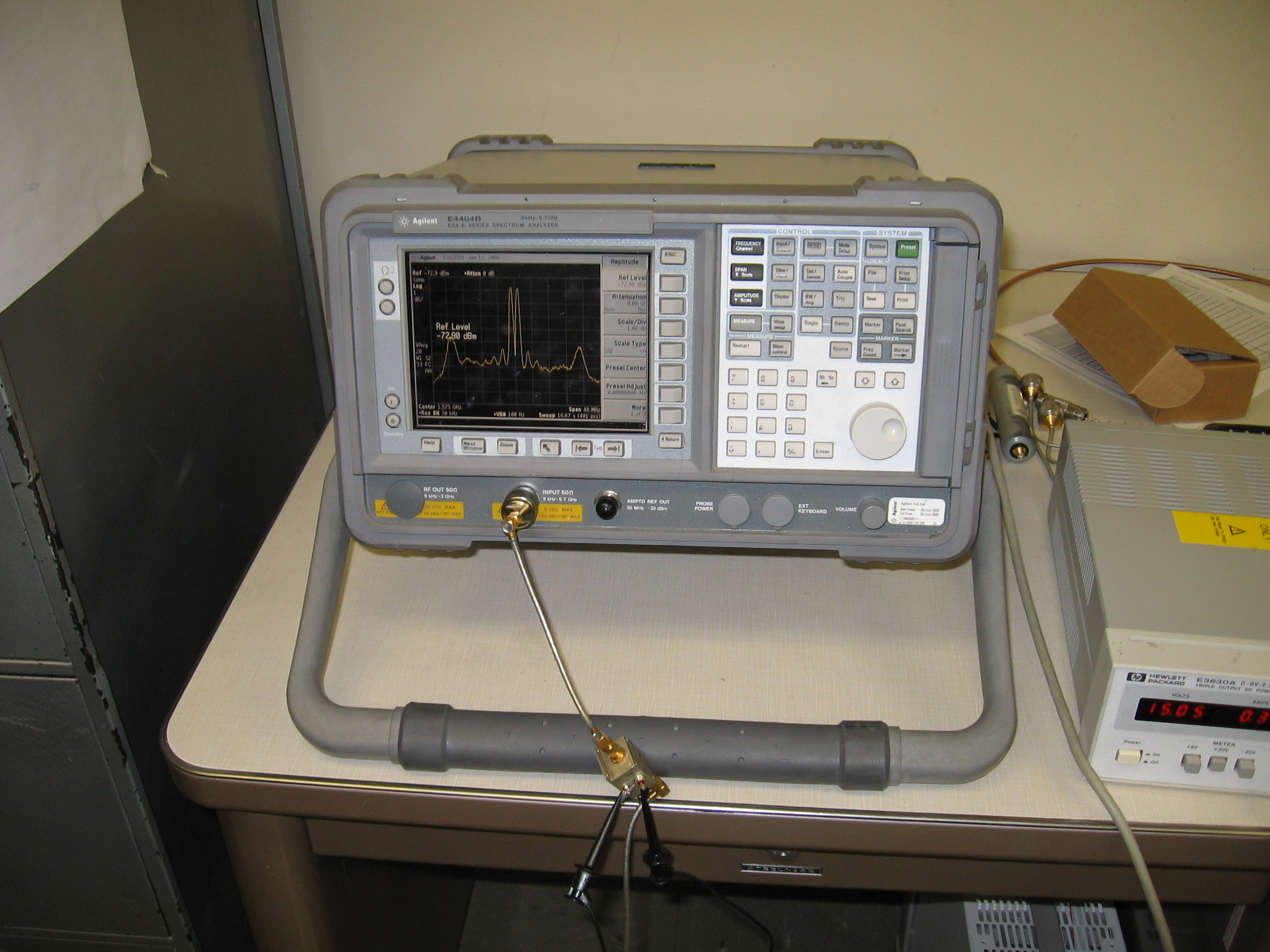
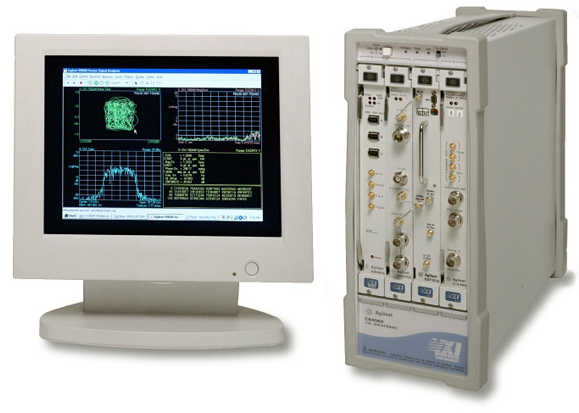
The control station is located directly below the parabolic dish antenna. The control station provides manual and automatic control of the antenna. The antenna motors can be driven by a satellite tracking software. As such, the antenna can automatically follow a selected satellite. The feed from the antenna can be connected to either a Hewlett Packard spectrum analyzer or an Agilent 89600 vector signal analyzer (VSA). Data is collected from the antenna using the vector signal analyzer. The control station also provides power for signal amplification.
This dish allowed us to view the signal from the Galileo In-Orbit Verification Element A (GIOVE-A), the first Galileo test satellite, on its first day of transmission on January 12, 2006.
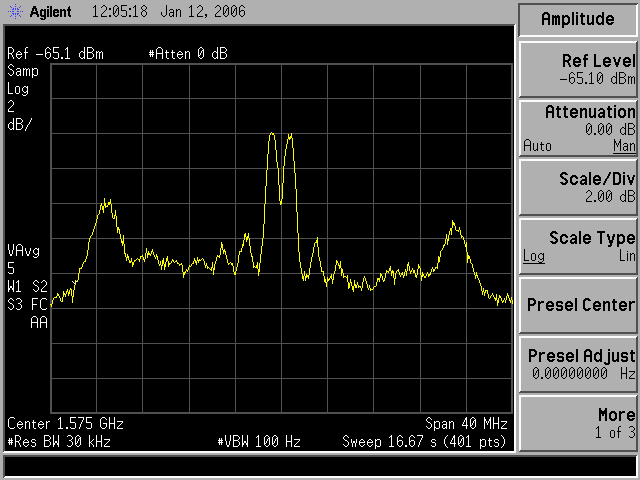
GIOVE-A L1 spectrum as seen on Jan 12, 2006
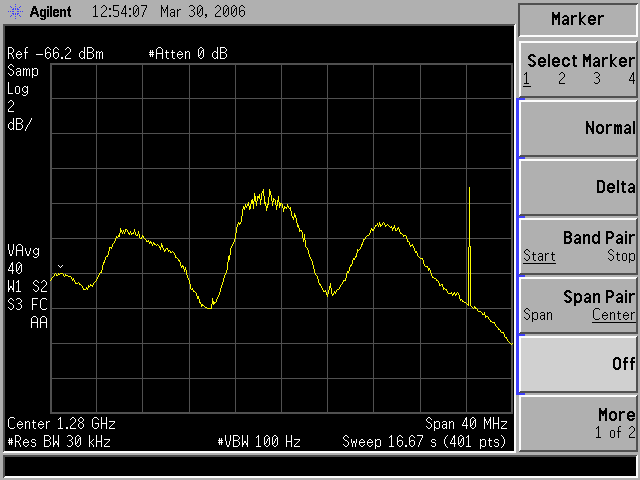
Averaged GIOVE-A E6 spectrum as seen on Jan 12, 2006
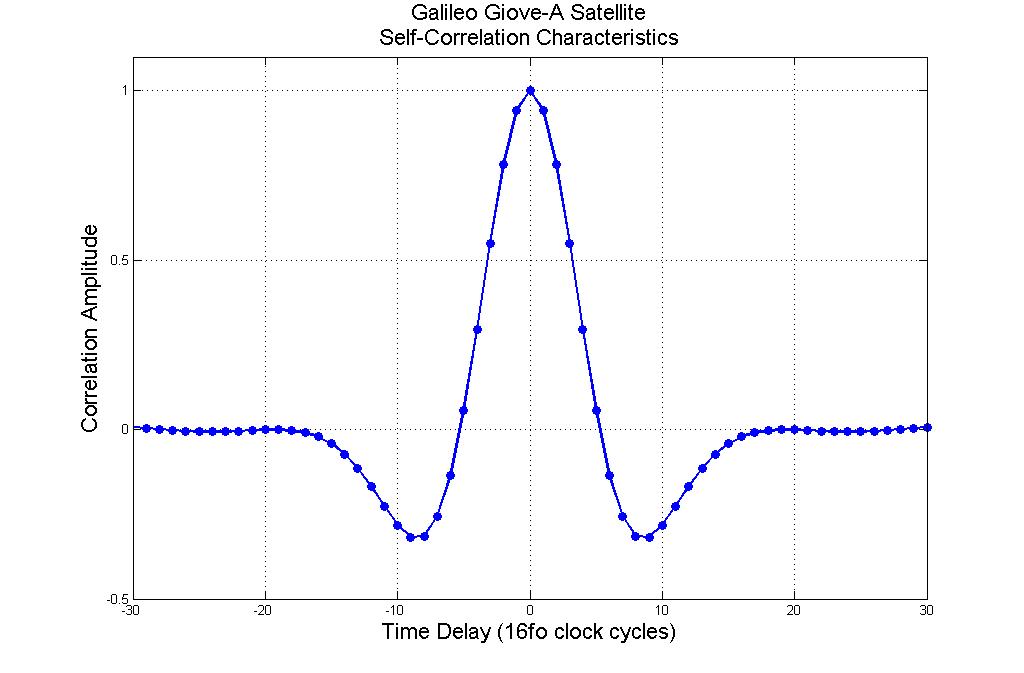
Data taken from Jan12-13 allowed us to estimate the open service L1
code. Gary Lennon
made the determination from processing this data. The autocorrelation
function of this code is shown.
Grace Gao used the estimated code to determine the code generator. She found linear code generators that produced codes that were within 2% of the estimated code. The 150 ft (45.7 m) parabolic reflector dish antenna (“Stanford Dish”) located on Stanford University Radio Science field and operated by SRI International was used to verify that the code was in fact linear and the 2% difference was due to our estimation. Her work and results are seen here.
The SGMS will be used for a variety of GNSS signal characterization and analysis. It will help with the assessment of nominal signal performance. It is important to gain an understanding of the directly observed signal to understand its error modes and to perform rapid diagnosis of signal anomalies. This is important when the navigation signal is used for a safety of life application such as aviation. It will help to understand the interference environment that new civilian signals (L5) will have to operate in.
top |




