|
Field
Guide IDs: BREEDING:
: Marshes, lakes. 1
brood. DISPLAYS:
Elaborate mutual
displays performed by 2 or more birds in
predictable sequences: "rushing," "weed dance," and
"greeting" as in Western Grebe. NEST:
Floating platform
in shallow water as in Western Grebe. EGGS:
Bluish-white,
chalky, nest-stained buff/brown. 2.3" (58
mm). DIET:
Mostly fish,
aquatic inverts, few amphibians, feathers. Young
fed adults' feathers. CONSERVATION:
Winters s to c
Mexico. Blue List 1973-82, Special Concern 1986.
Plume hunters devastated populations. NOTES:
Colonies of tens to
hundreds of nests; gregarious year-round. Recently
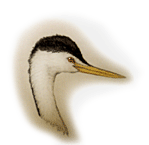
split into two species (Clark's and Western;
Clark's is the light-faced form); single-note
advertising call prevents hybridization. Tend to
feed farther from shore than Western Grebe,
suggesting possibility of reduced foraging overlap.
Range overlaps widely with Western Grebe but rare
among n populations. Bare skin patch on head of
young flushes dark red when begging or in distress.
Chicks carried and fed on adults' backs. STANFORD.
NOTES: ESSAYS: Eating
Feathers;
Visual
Displays;
Transporting
Young;
Plume
Trade;
Species
and Speciation;
Blue
List. REFERENCES:
American
Ornithologists' Union, 1985; Nuechterlein, 1981b;
Storer and Nuechterlein, 1985. |