General Rules

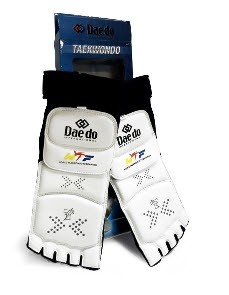
  • All black belt divisions and adult colored belt divisions (18 and older) will be using Daedo sensor hogu point scoring systems (PSS), so these competitors must bring Daedo electronic foot sensor socks. Daedo headgear will not be used. It is highly recommended that competitors purchase foot socks from the Daedo website. There will also be a limited number for sale at the tournament. Junior color belts will not be using the sensor hogu system and will not need to bring Daedo electronic foot sensor socks.

  • All competitors in sparring must weigh in. Weigh-ins will be held Friday before competition (May 22) from 6pm-9pm and on Saturday (May 23) from 7:00-8:30 am and 5:00-6:00 pm. THERE WILL BE NO WEIGH-INS ON SUNDAY.
  • Competitors that are not at or below their registered weight will be subject to disqualification.
  • Juniors will be given a 2-pound uniform weight allowance. The minimum clothing requirement is a pair of uniform pants and a T-shirt.
  • Competitors weighing in on Friday and Saturday will have two chances to make weight during the stated weigh-in hours.
  • Standard USAT (modified WTF) sparring rules will apply, including differential scoring in appropriate divisions. The latest version of the new USAT Competition Rules is available.
  • There are NO point ceilings, but there is a 12-POINT GAP rule after the first round if there are only two rounds for the match, and at any time after the second round if there are three rounds for the match.
  • The match numbering system will apply. Competitors must arrive at the ring with their coach three matches prior to their match number. Match numbers will be posted on the monitors and jumbotron on the floor and in the warm-up area. Competitors who are not present at the time of their match may be disqualified.
  • New USAT Rules Implemented

  • The objectives of the new rules and regulations is improve the dynamics of the sport of Taekwondo: to make it more exciting for the spectators, faster moving without a lot of down time and even out the advantage of taller players.
  • 10 Kyong-Go's or 5 Gam-Jeon's will be allowed for each match for both competitors.
  • When the CR declares Kalyeo, the computer operator will stop time after one second. When the CR declares Kye-sok, the operator will start time immediately.
  • Shi-gan will only be used in two occasions: a. After an 8 count, the CR can ask for Shi-gan if the player needs to fix his gear or the center referee needs to ask for IVR when no points are scored or b. If the commission doctor asks extra time to finish his fixing up to the player, then the center referee can change the Kye-shi to Shi-gan before it expires the 60 second mark
  • Lifting a leg to impede an attack for more than 3 seconds will be KG'ed; same for lifting the leg and hopping on the other leg for more than 3 seconds; same for lifting leg and doing cut kick action without actual attacking for more than 3 seconds.
  • Pain is not injury. If a player falls down due to pain, he will be asked firmly and hand signalled to "Stand up" to continue the match. No more Kye-shi unless: a. bloody nose or cuts or b. dislocation of bones or sprained ankles or c. broken bones
  • Attack after Kalyeo is determined by the "straight arm" hand signal by the center referee. If the player lifts his foot after the straight arm of the CR, he will be punished: a. If his foot touches the opponent body, he will be given GamJeon. b. If his foot does not touch the opponent body, he will be given KyongGo. (Please note it is up to the discretion to give KyongGo).
  • Attacking a fallen opponent. If the foot hits the opponent when he is down, the kicker will receive a GJ penalty. If the attacker fakes a kick when his opponent is down, he will be punished with a KG.
  • Falling down: A player will be given a KG for falling down regardless of his intention or repeated actions
  • Player is punishable by KG for asking referee to pause the match to fix equipment. Center Referee has the discretion to stop the match if he sees equipment needs to be fixed.
  • For more information, please see the list of USAT Competition Rules.

    Mandatory Equipment for Sparring (all ages):

  • Standard white, V-neck taekwondo uniform (black collar for black belts, white collar for everyone else including red belts) in good condition.
  • Properly-fitting chest protector with red and blue scoring zones that wraps around and covers the entire back except the spine of the athlete in the valid scoring area. This rule will be strictly enforced for the safety of every competitor.
  • Foam, cloth, or vinyl shin protector and forearm guard. Forearm guards with hand protectors attached are not allowed.
  • WTF-approved open-finger gloves are optional for color belt competitors and mandatory for black belts age 15-32.
  • Junior color belts: Open-toe foot protectors (aka socks) or foam, cloth, or vinyl instep pads, but not both. If instep pads are taped on, they must adhere to the rules published below. Daedo electronic foot sensor socks are not mandatory for junior color belts.
  • Black belts and Adult color belts: All black belts and adult colored belts will be using Daedo sensor hogu scoring systems, so those commpetitors must bring Daedo electronic foot sensor socks. It is highly recommended that competitors purchase them from the Daedo website. There will also be a limited number for sale at the tournament.
  • Knee pads and elbow pads are optional, but if worn, they must be made of foam, cloth, or vinyl.
  • Groin protection (required for males), worn under uniform.
  • Properly-fitting USAT or WTF foam head gear, with no damage or cracks. White, red or blue only.
  • Clear or white mouth guards must be worn by all competitors.
  • Head gear, gloves, and foot protectors can be white, red, or blue, and, if not white, must correspond to the color of the chest protector. If both foot protectors and gloves are worn, they must be of the same color (white, red, or blue).
  • Examples of acceptable and unacceptable chest protectors for color belts:

    Acceptable
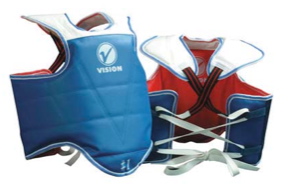
    Unacceptable
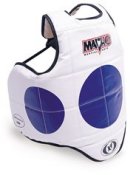
    All competitors are responsible for adhering to these Athletic Taping and Padding Rules (file in Adobe's PDF format).

    Scoring/Contact Rules:

    Kyorugi divisions will be formed around these belt levels: Yellow/Green, Blue/Red, and Black. The Tournament Director reserves the right to modify divisions at his discretion. A sudden death overtime match will be used to determine the winner in case of a tie score.

    Age Belt Contact Rounds Duration Break
    Junior: 6-7 All belts No head contact 3 60 sec 30 sec
    Junior: 8-11 Color belts No head contact 3 60 sec 30 sec
    Junior: 8-11 Black belts Light head contact 3 60 sec 30 sec
    Junior: 12-14 Color belts Light head contact 3 60 sec 30 sec
    Junior: 12-14 Black belts Light head contact 3 90 sec 30 sec
    Junior: 15-17 Color belts Light head contact 3 60 sec 30 sec
    Junior: 15-17 Black belts Full head contact 3 90 sec 30 sec
    Adult: 18-32 Color belts Full head contact 3 60 sec 30 sec
    Adult: 18-32 Black belts Full head contact 3 90 sec 30 sec
    Exec: 33+ All belts Light head contact 3 60 sec 30 sec

    Adult Black Belt Weight Categories

    Weights are in pounds. The Tournament Director reserves the right to modify divisions at his discretion.

    Men 135.5 and below 135.6 - 150.5 150.6 - 165.5 165.6 - 180.5 180.6 - 195.5 195.6 and above
    Women 108.5 and below 108.6 - 120.5 120.6 - 135.5 135.6 - 150.5 150.6 - 165.5 165.6 and above

    Points

    Area Valid Scoring Technique Turning kick (back kick or 360 roundhouse)
    Body (all divisions) 1 point +2 bonus point
    Head (no head contact rules) Kyung-go if light contact, Gam-jeom otherwise N/A
    Head (light head contact rules) 3 points N/A
    Head (full head contact rules) 3 points +1 bonus point