

 |
||||||||||||||
|
Viscous Fingering in a Reacting System |
||||||||||||||
| Viscous Fingering in a Reacting System Jeremy Templeton This project involves using spectral methods (numerical methods that use fourier transforms) to solve an instablity that occurs in porous media flows. This instability occurs when a fluid of low viscosity is flowing behind a fluid of high viscosity. In this case this difference is caused by different concentrations of chemical species. In the instability then, the solution of low viscosity invades the solution of high viscosity in long, finger-like structures. When no chemistry is involved, this flow is of interest in extracting petroleum from underground. However, when the chemical species reacts, more complicated patterns are formed. These include droplets of one solution that move into and through the other solution, and a moving chemical wave that propogates faster than the fluid velocity. The goal of this project is to develop and test a more complex chemistry model and observe what happens. |
||||||||||||||
 |
||||||||||||||
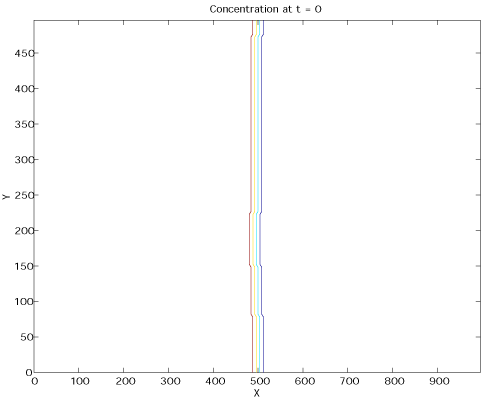
| Place mouse over the image above to see an example of viscous fingering. High concentration fluid is on the left, and low concentration fluid is on the right. | ||||||||||||||
 |
||||||||||||||
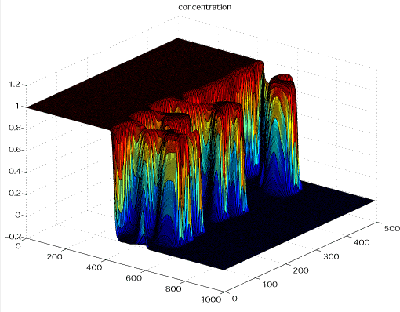
| This shows the concentration represented as a surface. 1 (far side) is the maximum and 0 (near side) is the minimum. The fingers can be seen extending from the high concentration to the low concentration. | ||||||||||||||
 |
||||||||||||||
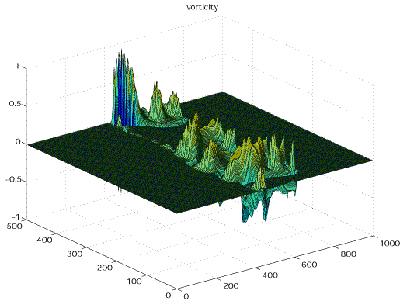
| This is a contour plot of vorticity represented as a surface. | ||||||||||||||
|
|
||||||||||||||

- Computational Acoustics
- Viscous Fingering in a Reacting System
- Plasmas and Materials Processing
- LES Methods
- Numerical Simulation of Environmental Flows
- Combustion
- Very Large Scales in Turbulent Wall Flows
- LES of Turbomachinery
- Structure Based Turbulence Model
- Numerical simulation of heat transfer around film-cooled gas turbine blades
|
Center for Turbulence Research | Center for Integrated Turbulence Simulations
Accelerated Strategic Computing Initiative  Flow Physics & Computation, Mechanical Engineering Department, Stanford University, Building 500 Stanford, California 94305-3030 Mechanical Engineering | Chemical Engineering | Aeronautics & Astronautics |
|

