 LOng
RAnge Navigation: LORAN LOng
RAnge Navigation: LORAN
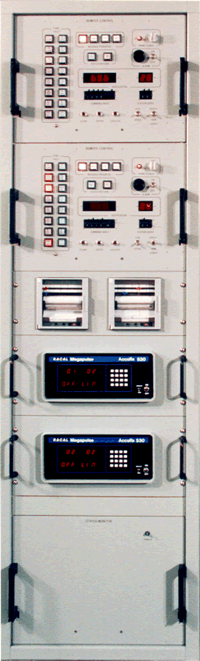
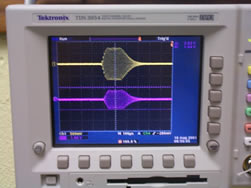
The LOng RAnge Navigation radionavigation system (Loran) is a terrestrial, high power, hyperbolic navigation
system operating in the 90 to 110 kHz frequency band. The Loran system became operational in 1958 and has been in service
since then primarily serving the maritime community.
Loran is well suited for the role of back up to GPS. It is a terrestrial low frequency navigation system that utilizes
whose signal pulses are high powered and not line of sight dependent. Hence it is not susceptible to the same vulnerabilities
as GPS while being able to provide similar capabilities in both navigation and timing/frequency services. One drawback
for aviation is that Loran has never been certified for approaches and prior attempts in the late 1980s to certify Loran for
approach failed due to several deficiencies in the system. New technology and upgrades to the system has mitigated or
eliminated all of the noted deficiencies. The FAA has chartered the Loran Integrity Performance Panel (LORIPP) to determine
if Loran can meet the aviation requirements for Non Precision Approach
 (NPA)
in light of new technology and reasonable system changes. Stanford University plays a prominent role in the leadership
of the LORIPP as well as the research conducted by this group. (NPA)
in light of new technology and reasonable system changes. Stanford University plays a prominent role in the leadership
of the LORIPP as well as the research conducted by this group.
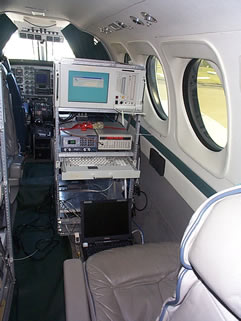
The Loran efforts at Stanford University are focused on developing Loran for aviation. This work provides additional redundancy
to GPS in safety or economically critical applications, particularly aviation. This helps create a safe and robust infrastructure
for aviation and other navigation and timing applications based primarily on GPS.
Primary areas of work are:
- System Design
- System Integration
- Atmospheric Noise
- Analysis of Groundwave Effects
- Hazard Analysis
RESEARCHERS
 SUMMARY SUMMARY
The Aeronautics and Astronautics Department at Stanford University is internationally recognized for academic and research excellence,
and the GPS Laboratory plays an increasingly important role in developing and demonstrating new capabilities for space-based
navigational systems. In addition to fundamental advances in positioning and navigation technologies, the Lab plays
a critical role in the operational readiness of the Wide Area and Local Area Augmentation Systems (WAAS and LAAS). The GPS
Lab includes recipients of the Charles Stark Draper Prize (’03), the Johannes Kepler Award (’91 and ’00),
and the Thurlow Award (’86 and ’96). In the area of Loran, it includes recipients of the International Loran
Association (ILA) William Polhemus (’00) and ILA President’s Award (’03). For further information on Stanford
 University’s
GPS Laboratory, please contact Prof. Per Enge; for information on Loran research, please contact Dr. Sherman Lo University’s
GPS Laboratory, please contact Prof. Per Enge; for information on Loran research, please contact Dr. Sherman Lo
PRIMARY COOPERATING GROUPS
SPONSOR
top
|




