Object Name:
Fishing line
Object ID:
13467
Dimensions:
W–0.5 L–1050 cm
Place of origin:
Oceania; United States; Hawaii?
Material(s):
Vegetal/Fiber
Collection:
Anthropology; Oceania
Case:
A Fishing Line
Think about the stuff you own and the things you use on a daily basis. Do these items reflect your cultural beliefs? Do they show what you hold sacred? Psychological research suggests that one's material objects can reveal something as intangible as personality, character, and even values (Gosling). Anthropological research relies on this idea to extrapolate conclusions about historical culture based on archeological artifacts and remains. In evaluating an object, we can interpret not only the physical and social activities of the owner, but the deeply rooted attitudes and beliefs as well. In this vein a fishing line, collected from somewhere in the Pacific at the turn of the 20th century and stored in Stanford University's Archeology Collections, can tell us more about ancient island peoples than their dietary preferences. The line is identified as Hawaiian. Although this attribution is in doubt, a closer look at the materiality of fishing lines in Hawaii reveals a deeply held belief that people should be in balance with nature. The natural environment serves not only as a source of sustenance but also as a source of spiritual and cultural energy that must be valued and respected.
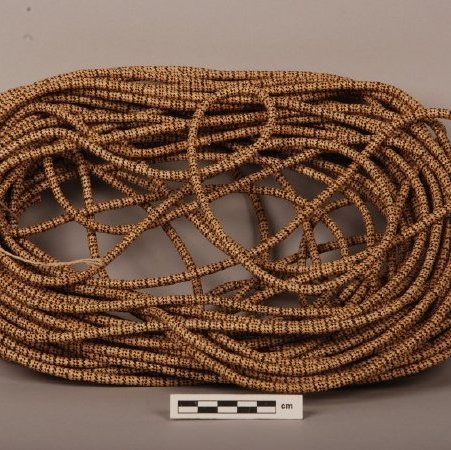
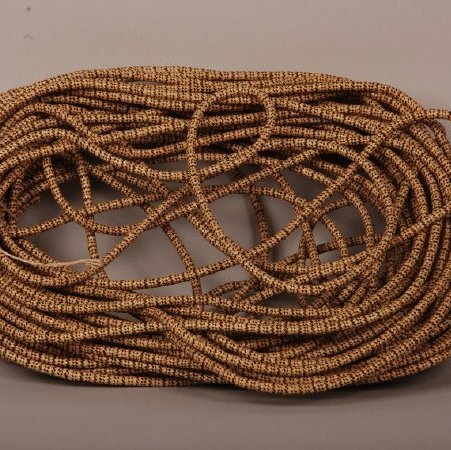
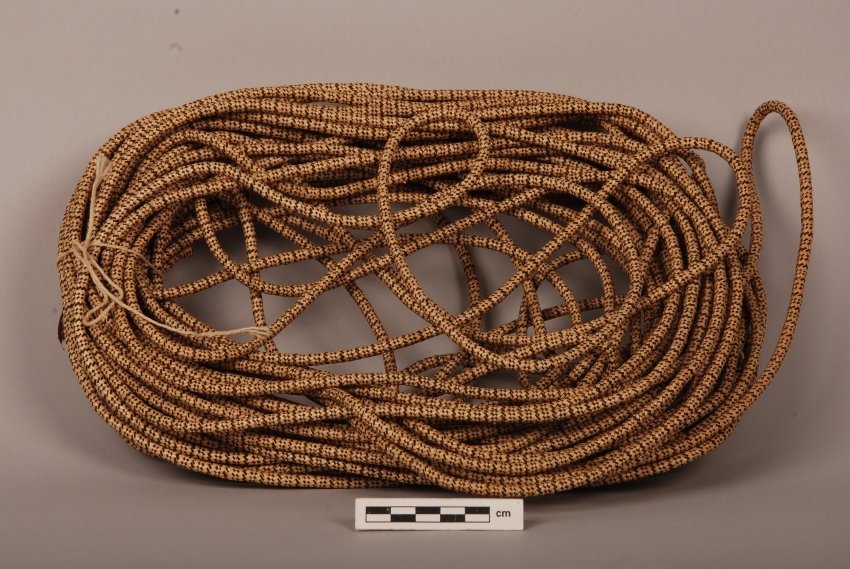
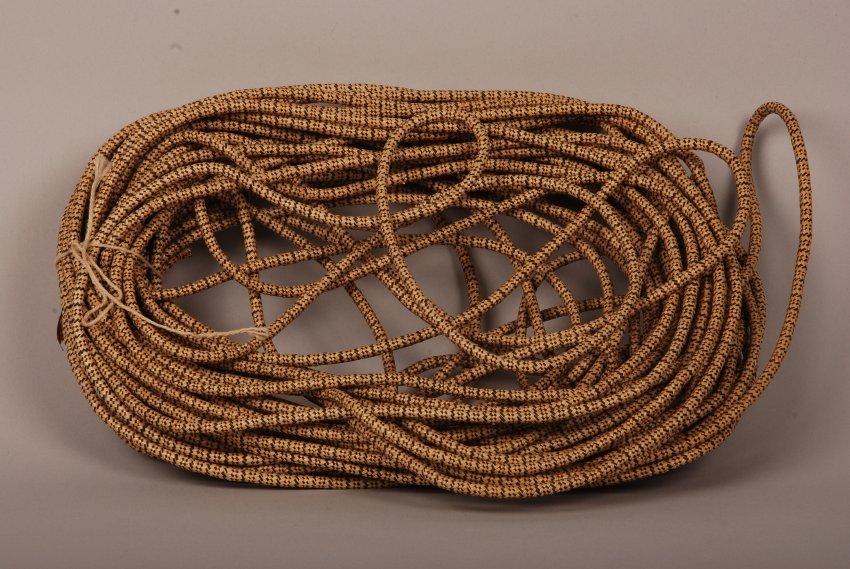
The line was made from the land. To make this sturdy and durable rope, a skilled weaver would need to obtain fiber from plants–if the line were from Hawaii, it would be the olona, a naturally occurring plant on the Hawaiian Islands. This plant, however was not abundant and only grew in a few places where the conditions were just right. The fibers were highly valued for their durability and could be used in all sorts of work, but most importantly as fishing lines and nets. For this reason, the fibers were highly valued trade items within the community (Maly and Maly). Cultivators would strip the bark from olona plants, then soak, dry, and comb the materials until the long fibers were removed and separated. The fibers were then woven into long ropes to be used for fishing (Hawaii History). As you can see by looking at this preserved item in the Stanford Archeology Collection, the finished product is a beautiful and intricate masterpiece.
This process was clearly laborious and required skills and techniques that were passed down through generations. People learned from a young age how to appreciate and work with the Earth's bounty. This process underscores the Hawaiians' intimate relationship with the natural world. Fishermen relied on resources from the land to make fishing tools. These items were crucial in providing the community with fish–their primary source of protein. In return, nature was revered as a provider that should be respected and cared for.
This relationship of mutual respect between people and their environment is highlighted not only in the creation of this object, but also in the way the object was used. This rope, unlike the massive and destructive drift nets of today, created a direct connection between fisherman and fish.
If you've ever gone fishing, you might remember the first time you felt a tug at the end of your line. That feeling–that jolting sensation of making contact with this other world–is one shared less and less in modern times. Through use of single–line catch techniques, the Hawaiians displayed the deeply personal and direct relationship with their food. With this object, each fish was hand caught and pulled in by the fisherman to be consumed or gifted. This exemplifies the cultural notion that "respect and care for nature, in turn meant that nature would care for the people" (Maly and Maly). In historical times, Hawaiians could only eat what was within the rope's reach. The object is a symbol of the degree to which the culture could exploit the natural resources. The constraints inflicted by their tools, however, provided unique opportunity to develop and embrace an empathetic and respectful relationship with the environment.
At over a hunderd years old, this fishing line represents more than a tool to acquire food. Through the process of creating the line from olona plant fibers and then using it for fishing, the people who made and used it relied on the land's natural resources to achieve a direct connection to the sea. This relationship brought them sustenance and prosperity and demonstrates the cultural–historical importance of fisheries and land. The manufacturing process and the mechanism of use demonstrate the ancient Hawaiian's worldview. They exemplify values based on sustainable consumption and a fundamental respect towards nature. From this item, an ancient human–environmental relationship is decoded.
––– Amanda Denney
References Cited
Gosling, Sam. 2009. Snoop: what your stuff says about you. London: Profile.
HawaiianHistory.org. Fishing Methods. http://www.hawaiihistory.org/index.cfm?fuseaction=ig.page&PageID=380. Accessed 3 May 2017. Web.
Ulukau: The Hawaiian Electronic Library. A history of fishing practices and marine fisheries of the Hawaiian Islands (Ka hana lawai'a a me n' ko'a o na kai 'ewalu). Volume 1. http://www.ulukau.org/elib/cgi–bin/library?e=d–0maly1–000Sec––11en–50–20–frameset–book––1–010escapewin&a=d&d=D0&toc=0. Accessed 3 May 2017. Web.
Think about the stuff you own and the things you use on a daily basis. Do these items reflect your cultural beliefs? Do they show what you hold sacred? Psychological research suggests that one's material objects can reveal something as intangible as personality, character, and even values (Gosling). Anthropological research relies on this idea to extrapolate conclusions about historical culture based on archeological artifacts and remains. In evaluating an object, we can interpret not only the physical and social activities of the owner, but the deeply rooted attitudes and beliefs as well. In this vein a fishing line, collected from somewhere in the Pacific at the turn of the 20th century and stored in Stanford University's Archeology Collections, can tell us more about ancient island peoples than their dietary preferences. The line is identified as Hawaiian. Although this attribution is in doubt, a closer look at the materiality of fishing lines in Hawaii reveals a deeply held belief that people should be in balance with nature. The natural environment serves not only as a source of sustenance but also as a source of spiritual and cultural energy that must be valued and respected.
The line was made from the land. To make this sturdy and durable rope, a skilled weaver would need to obtain fiber from plants–if the line were from Hawaii, it would be the olona, a naturally occurring plant on the Hawaiian Islands. This plant, however was not abundant and only grew in a few places where the conditions were just right. The fibers were highly valued for their durability and could be used in all sorts of work, but most importantly as fishing lines and nets. For this reason, the fibers were highly valued trade items within the community (Maly and Maly). Cultivators would strip the bark from olona plants, then soak, dry, and comb the materials until the long fibers were removed and separated. The fibers were then woven into long ropes to be used for fishing (Hawaii History). As you can see by looking at this preserved item in the Stanford Archeology Collection, the finished product is a beautiful and intricate masterpiece.
This process was clearly laborious and required skills and techniques that were passed down through generations. People learned from a young age how to appreciate and work with the Earth's bounty. This process underscores the Hawaiians' intimate relationship with the natural world. Fishermen relied on resources from the land to make fishing tools. These items were crucial in providing the community with fish–their primary source of protein. In return, nature was revered as a provider that should be respected and cared for.
This relationship of mutual respect between people and their environment is highlighted not only in the creation of this object, but also in the way the object was used. This rope, unlike the massive and destructive drift nets of today, created a direct connection between fisherman and fish.
If you've ever gone fishing, you might remember the first time you felt a tug at the end of your line. That feeling–that jolting sensation of making contact with this other world–is one shared less and less in modern times. Through use of single–line catch techniques, the Hawaiians displayed the deeply personal and direct relationship with their food. With this object, each fish was hand caught and pulled in by the fisherman to be consumed or gifted. This exemplifies the cultural notion that "respect and care for nature, in turn meant that nature would care for the people" (Maly and Maly). In historical times, Hawaiians could only eat what was within the rope's reach. The object is a symbol of the degree to which the culture could exploit the natural resources. The constraints inflicted by their tools, however, provided unique opportunity to develop and embrace an empathetic and respectful relationship with the environment.
At over a hunderd years old, this fishing line represents more than a tool to acquire food. Through the process of creating the line from olona plant fibers and then using it for fishing, the people who made and used it relied on the land's natural resources to achieve a direct connection to the sea. This relationship brought them sustenance and prosperity and demonstrates the cultural–historical importance of fisheries and land. The manufacturing process and the mechanism of use demonstrate the ancient Hawaiian's worldview. They exemplify values based on sustainable consumption and a fundamental respect towards nature. From this item, an ancient human–environmental relationship is decoded.
––– Amanda Denney
References Cited
Gosling, Sam. 2009. Snoop: what your stuff says about you. London: Profile.
HawaiianHistory.org. Fishing Methods. http://www.hawaiihistory.org/index.cfm?fuseaction=ig.page&PageID=380. Accessed 3 May 2017. Web.
Ulukau: The Hawaiian Electronic Library. A history of fishing practices and marine fisheries of the Hawaiian Islands (Ka hana lawai'a a me n' ko'a o na kai 'ewalu). Volume 1. http://www.ulukau.org/elib/cgi–bin/library?e=d–0maly1–000Sec––11en–50–20–frameset–book––1–010escapewin&a=d&d=D0&toc=0. Accessed 3 May 2017. Web.
Date:
Late 19th–Early 20th century
Provenance:
Received from Timothy Hopkins. Deaccessioned to Anthropology Department on 6/1993.
Click to Enlarge